That's So Raven
“That’s so Raven… it’s the future I can see.”
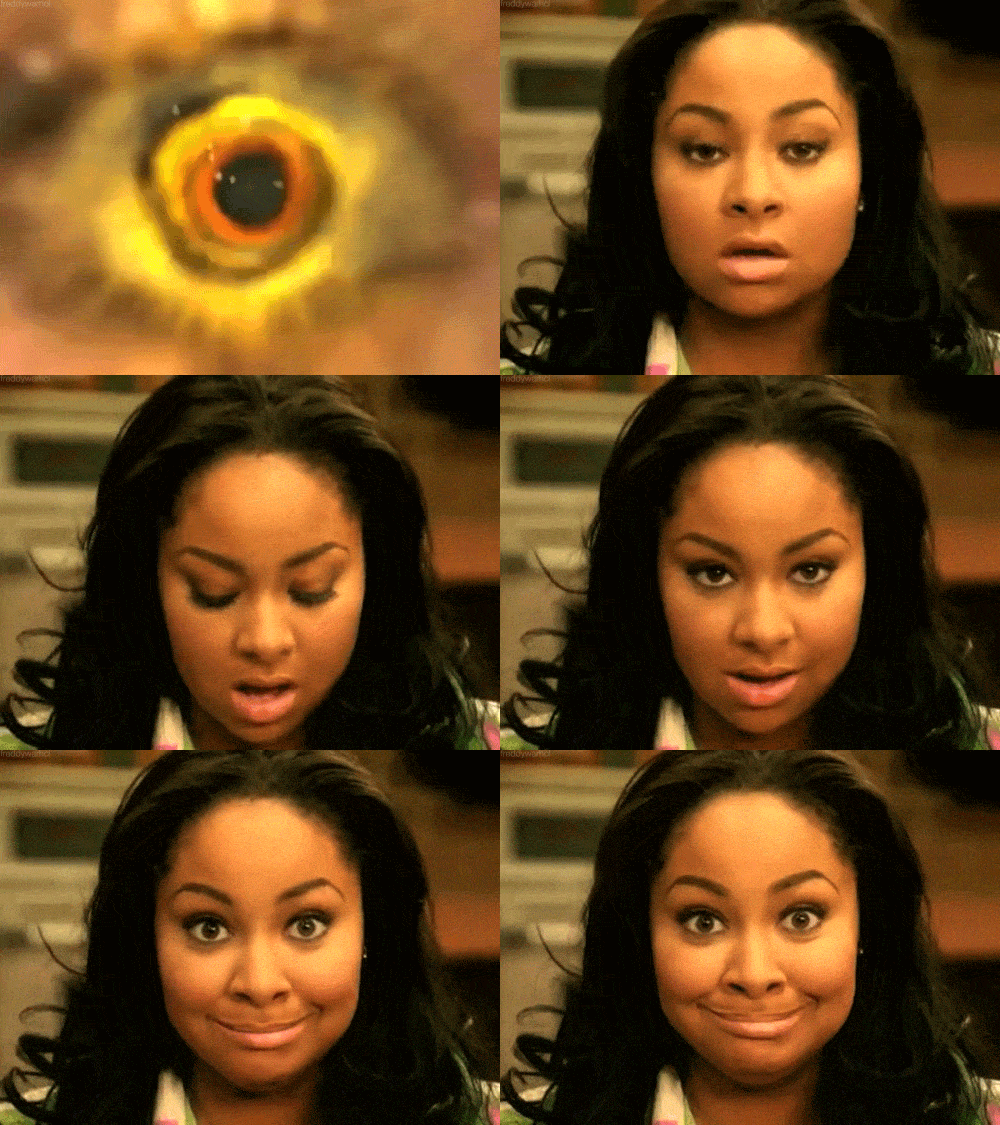 The theme song made it sound like the real superpower was predicting the future. But if scientists ever develop technologies that allow humans to borrow traits from other species, my choice would be different. I would not choose wings, sharper eyesight, or animal strength. I would choose a raven’s mind. Ravens are among the most intelligent animals on Earth. They show remarkable abilities in memory, planning, and problem-solving. Thinking about a human-raven hybrid raises an interesting question. What would it mean to borrow intelligence from another species, and what would that say about the boundaries of being human?
Birdbrain, But Like Make It Brilliant
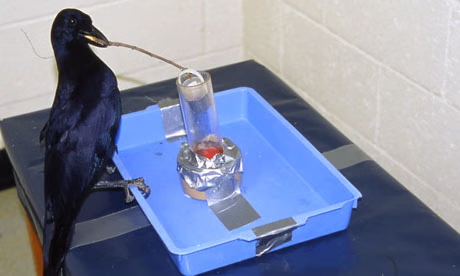 Calling someone a “birdbrain” is usually meant as an insult. In the case of ravens and other corvids, the phrase may deserve reconsideration. Researchers have found that these birds possess impressive cognitive abilities that rival those of many mammals. Ravens and crows demonstrate advanced memory, tool use, and long-term planning. Some studies show that corvids can remember thousands of food locations and recognize individual human faces for years (Philp, 2025). They can also share information about threats with other birds, creating a kind of collective memory within their groups.
Scientists and philosophers studying animal cognition have begun to ask what the world might feel like from a raven’s perspective. Evidence suggests that corvids possess complex emotional lives and forms of consciousness. They can anticipate the intentions of others, hide food strategically, and remember what they stored, where they stored it, and when they hid it (Veit, 2025). These abilities suggest a mind capable of reflection and planning. If human enhancement technologies ever allowed us to borrow traits from other species, the raven’s cognitive toolkit would offer powerful possibilities.
Calling someone a “birdbrain” is usually meant as an insult. In the case of ravens and other corvids, the phrase may deserve reconsideration. Researchers have found that these birds possess impressive cognitive abilities that rival those of many mammals. Ravens and crows demonstrate advanced memory, tool use, and long-term planning. Some studies show that corvids can remember thousands of food locations and recognize individual human faces for years (Philp, 2025). They can also share information about threats with other birds, creating a kind of collective memory within their groups.
Scientists and philosophers studying animal cognition have begun to ask what the world might feel like from a raven’s perspective. Evidence suggests that corvids possess complex emotional lives and forms of consciousness. They can anticipate the intentions of others, hide food strategically, and remember what they stored, where they stored it, and when they hid it (Veit, 2025). These abilities suggest a mind capable of reflection and planning. If human enhancement technologies ever allowed us to borrow traits from other species, the raven’s cognitive toolkit would offer powerful possibilities.
How Much Humanity Would I Trade?
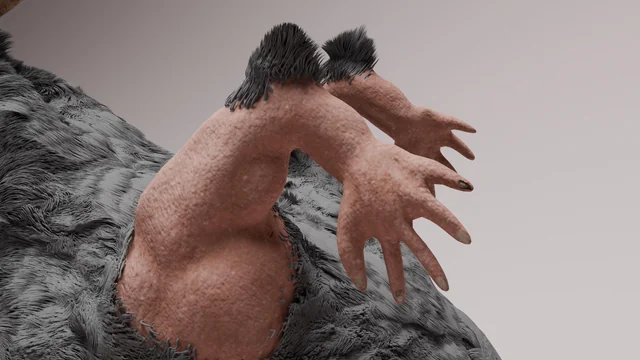 Even with those abilities, I would not want to become completely raven-like. The idea of hybridization becomes interesting when it pushes the boundaries of humanity without fully replacing it. If this hypothetical technology existed, I would choose a mostly cognitive hybridization. My body and social identity would remain human. The traits I would borrow involve memory, spatial awareness, and the ability to plan strategically across long stretches of time.
This kind of hybrid identity connects with ideas we’ve explored throughout the course. Haraway’s cyborg theory argues that boundaries between human and nonhuman identities are more flexible than we often assume. Hybrid identities can challenge rigid categories and open new ways of thinking about personhood. Works such as Blade Runner and Ghost in the Shell raise similar questions. Characters who possess artificial bodies or enhanced cognition still display memory, emotion, and self-awareness. These stories suggest that humanity may depend less on biological origin and more on conscious experience. Borrowing the mental abilities of a raven would push that idea further and invite us to rethink which qualities truly define being human.
Even with those abilities, I would not want to become completely raven-like. The idea of hybridization becomes interesting when it pushes the boundaries of humanity without fully replacing it. If this hypothetical technology existed, I would choose a mostly cognitive hybridization. My body and social identity would remain human. The traits I would borrow involve memory, spatial awareness, and the ability to plan strategically across long stretches of time.
This kind of hybrid identity connects with ideas we’ve explored throughout the course. Haraway’s cyborg theory argues that boundaries between human and nonhuman identities are more flexible than we often assume. Hybrid identities can challenge rigid categories and open new ways of thinking about personhood. Works such as Blade Runner and Ghost in the Shell raise similar questions. Characters who possess artificial bodies or enhanced cognition still display memory, emotion, and self-awareness. These stories suggest that humanity may depend less on biological origin and more on conscious experience. Borrowing the mental abilities of a raven would push that idea further and invite us to rethink which qualities truly define being human.
I'm So Raven?
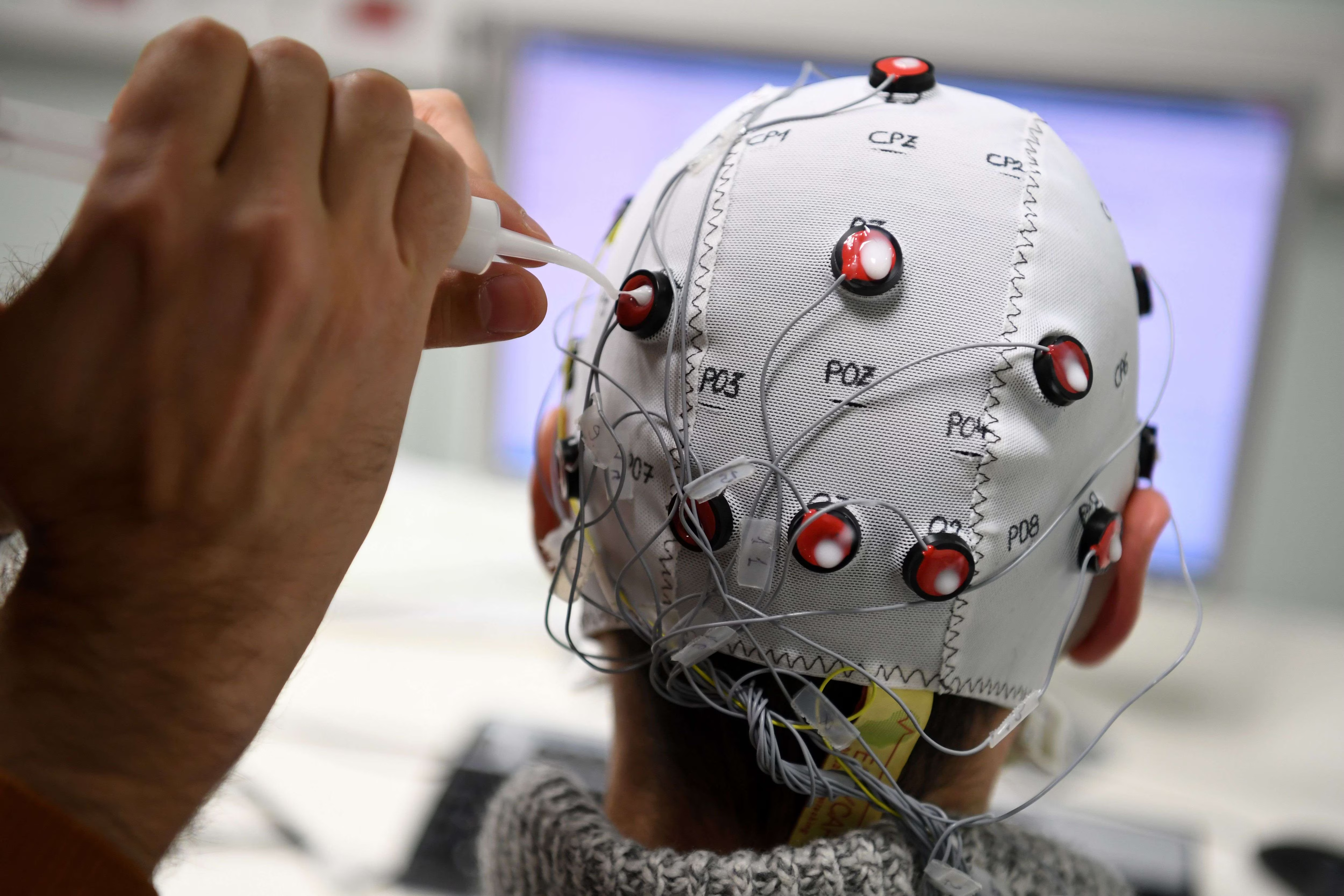 The larger question involves access. If technologies could enhance human abilities by combining traits from other species, who would actually receive those upgrades? Current discussions about human enhancement already raise ethical concerns. Technologies such as brain-computer interfaces or cognitive augmentation could produce individuals with significantly improved abilities, which may reshape power structures in areas like warfare, labor, and education (“Reports on Military Medicine Findings”, 2025).
Researchers also warn that access to enhancement technologies may depend heavily on financial resources. If these technologies remain expensive, they could widen existing social inequalities by allowing wealthy groups to enhance their capabilities while others remain excluded (“Chongqing University Researchers”, 2025). In that case, the future might resemble many cyberpunk stories in which technological upgrades become another way to reinforce social hierarchies.
Thinking about a “raven upgrade” therefore raises broader questions about the future of human enhancement. If humans gain the ability to borrow the strengths of other species, the benefits may depend on how societies regulate and distribute those technologies.
The larger question involves access. If technologies could enhance human abilities by combining traits from other species, who would actually receive those upgrades? Current discussions about human enhancement already raise ethical concerns. Technologies such as brain-computer interfaces or cognitive augmentation could produce individuals with significantly improved abilities, which may reshape power structures in areas like warfare, labor, and education (“Reports on Military Medicine Findings”, 2025).
Researchers also warn that access to enhancement technologies may depend heavily on financial resources. If these technologies remain expensive, they could widen existing social inequalities by allowing wealthy groups to enhance their capabilities while others remain excluded (“Chongqing University Researchers”, 2025). In that case, the future might resemble many cyberpunk stories in which technological upgrades become another way to reinforce social hierarchies.
Thinking about a “raven upgrade” therefore raises broader questions about the future of human enhancement. If humans gain the ability to borrow the strengths of other species, the benefits may depend on how societies regulate and distribute those technologies.
Maybe the theme song captured something important after all. The future might be something we can see approaching. Understanding how we choose to evolve may matter more than predicting what comes next.
References
Philp, T. (2025, September 27). Intelligence of these birds is something to crow about. Brantford Expositor. https://advance.lexis.com/api/document?collection=news&id=urn%3acontentItem%3a6GV6-Y033-RRPR-41V5-00000-00&context=1519360&identityprofileid=NZ9N7751352
Veit, W. (2025, May 23). What's it like being a raven or a crow? The Conversation - United Kingdom. https://advance.lexis.com/api/document?collection=news&id=urn%3acontentItem%3a6FW7-1473-RRW3-23W4-00000-00&context=1519360&identityprofileid=NZ9N7751352
(2026, February 9). Reports on Military Medicine Findings from University of Massachusetts Lowell Provide New Insights (Enhancing Soldiers for Future Warfare: Good Science; Bad Ethics?). Defense & Aerospace Daily. https://advance.lexis.com/api/document?collection=news&id=urn%3acontentItem%3a6HW3-G6Y3-SCJW-H1PG-00000-00&context=1519360&identityprofileid=NZ9N7751352
(2025, July 28). Chongqing University Researchers Provide New Data on Legal Issues (Research on Equality Issues and Legal Governance of Emerging Bioenhancement Technologies). NewsRx Policy and Law Daily. https://advance.lexis.com/api/document?collection=news&id=urn%3acontentItem%3a6GC9-1KT3-RT4V-W3T1-00000-00&context=1519360&identityprofileid=NZ9N7751352
AI Attestation
The content of this post is my own, and AI was used only to assist with planning and editing.