The Internals of Intersectionality

- Posted in BP03 by

The Internals of Intersectionality

As I look around at our political and social landscape today, I see many things, that can be traced to one another or linked to movements in the past, and one thing can always be found within it all. Despite such a concept being seemingly new-age, it has always existed; only now its name is more widely recognized: Intersectionality.

Intersectionality in the Election

Thanks to (in my experience) the last voting cycle, intersectionality was a big topic before and after the election, as many people investigated the voter makeup to predict which demographics would or should vote for who, which matters as it has to do with every part of your identity, race, gender, class, heritage, sexuality, etc and how all these classifications interact with each other and shape the way you view society and the way it views you, in other words they were looking to see if minorities voted in what they perceived would be their best interest based on the candidates, ie. Expecting Hispanics to vote against Trump based on his immigration policies or trying to spot misogyny based on strained support (even from other women) for Kamala Harris simply because she's a woman.

How Is It Fluid? What Good Does It Do?

While such a concept may not seem “fluid” these examples show how it functions, as its treated almost as a membership when it comes to certain issues, where a discussion may be about privilege, a black women can speak to how she views it from the lens of being an African American and also from the lens of being a woman, as both identities carry a history of oppression in different ways. The practice of acknowledging intersectionality allows for the fluidity of beliefs, morals, and opinions, as instead of assuming one's whole identity, you acknowledge the parts of it as well. This can be pushed further when bringing immigration and heritage into the mix as well, as you can't assume an African immigrant would hold the same opinions as an African American. In other words, this development breaks barriers in the way we understand one another and helps marginalized communities to resonate and unify against their shared oppression, as unnecessary as it may seems it gives context to every interaction and statement one makes.

Intersectionality Is Her Middle Name

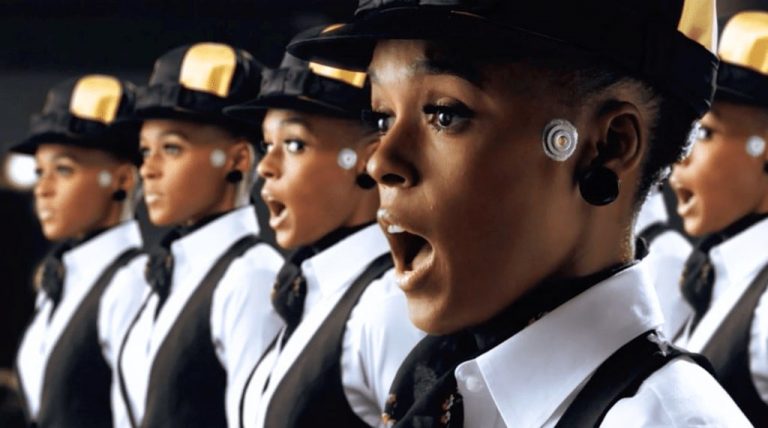
Intersectionality I feel was a big part in the making of Janelle Monae’s ArchAndroid, alongside her closely related The Electric Lady and Metropolis: The Chase Suite. Where we follow a persona of Janelle’s making named Cindi Mayweather, a Black, Android, created to entertain in a cyberpunk world where machines are separated from humans when they aren't serving them. Even in the exposition we have examples of intersectionality taking place, with struggles of being not only a black woman but also an Android, which comes with an entirely new level of oppression. This identity informs the way she consumes and moves through the society she lives in. This conceptual trilogy’s main character is what I envision an embodiment of intersectionality will grow into in 20-30 years, as all of Cindi’s strife from her different identities turns her into a revolutionary who rises above her perceived ceiling in the name of liberation.

Sources:

Dittmar, Kelly. “Gender Is a Persistent Force in Presidential Elections.” Forbes.com, 30 Oct. 2024, www.forbes.com/sites/kellydittmar/2024/10/30/gender-is-a-persistent-force-in-presidential-elections/.

Masquelier-Page, Alice. “How 5 Key Demographic Groups Voted in 2024: AP Votecast.” The Associated Press, 11 Nov. 2024, www.ap.org/news-highlights/spotlights/2024/how-5-key-demographic-groups-voted-in-2024-ap-votecast/.

I Hear My People, But I Don’t See My People

- Posted in BP03 by

A contemporary example of fluid identity and liberation through hybridity can be seen in the global circulation of Korean pop music, or K-pop. Many Korean idols who pursue hip-hop and rap-aligned sounds adopt stylistic elements rooted in African American culture, including African American Vernacular English, fashion, and choreography. This blending challenges boundaries of race, nation, and authenticity. Identity in this context becomes something performed and assembled from cultural fragments rather than fixed to biology or ethnicity. As a result, K-pop demonstrates how identities can be constructed through crossing boundaries, while also exposing tensions between representation and lived experience.

Hybridity on the Global Stage

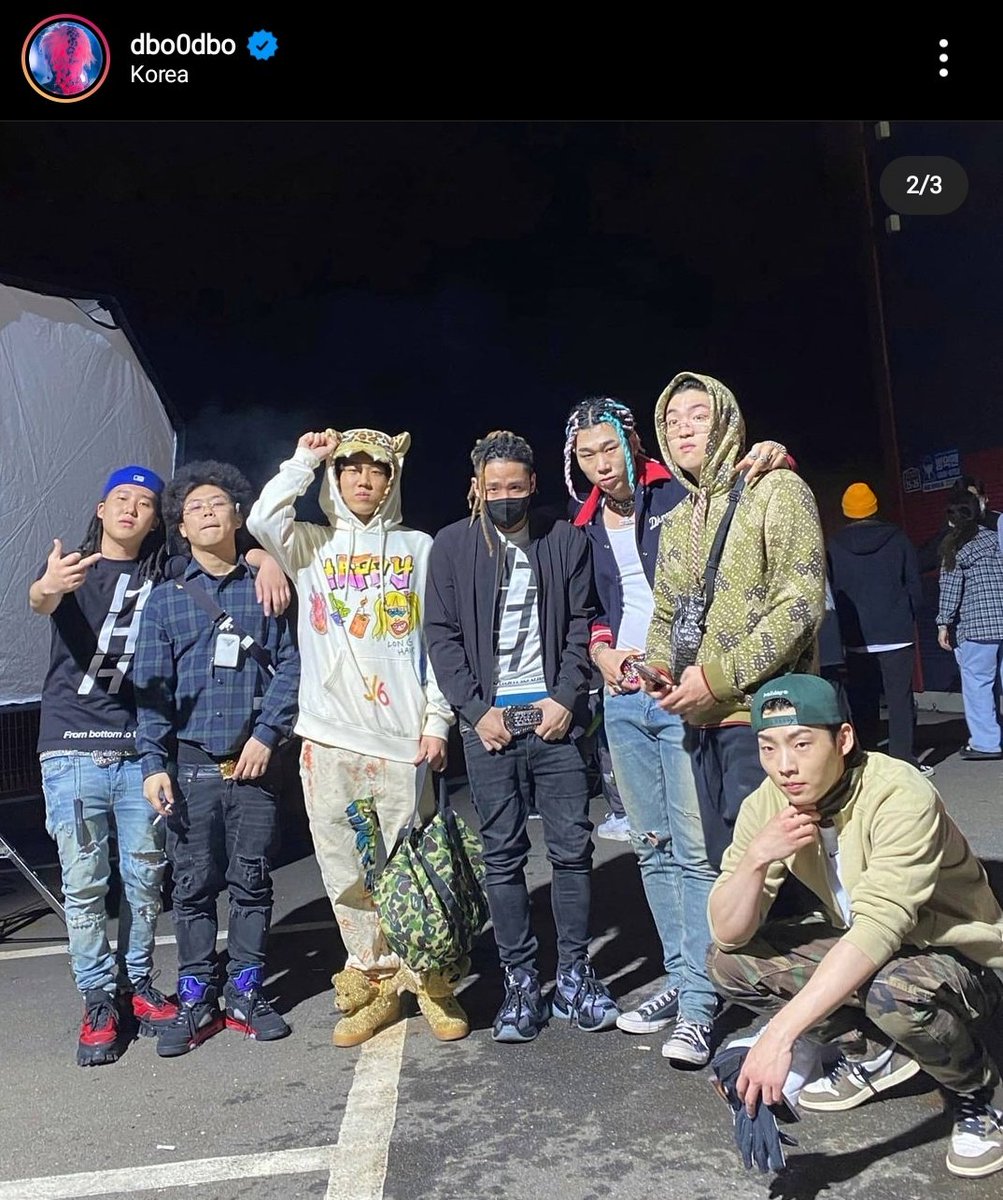
The history of Black cultural borrowing in K-pop is well documented. As O. Gaines argues in The Tufts Daily, “Black culture has heavily influenced K-pop’s music, fashion and overall aesthetic since its inception,” yet that influence often goes uncredited or is misunderstood as neutral globalization rather than racialized borrowing. This pattern is not new. In the 1990s, J. Y. Park, founder of JYP Entertainment, performed in blackface alongside background dancers, a moment that revealed how Blackness could be treated as costume within the industry’s early formation. Decades later, Park again received criticism for posting a remix of DNA by Kendrick Lamar, featuring non-Black performers styled with afros and dreadlocks. In these instances, Black cultural aesthetics function as wearable signifiers layered onto Korean bodies. enter image description here

Image: Screenshot from J. Y. Park’s Kendrick Lamar remix performance, originally shared by @CallMeGizzzy on X (formerly Twitter), [June 14, 2021]. Used for commentary and educational purposes.

K-pop artists construct hybrid identities by performing Black musical and aesthetic traditions alongside Korean language and culture, creating fluid identities that cross racial and national boundaries. Groups like BTS incorporate hip-hop choreography, rap flows, and streetwear aesthetics rooted in Black American culture into their global pop identities. This challenges racial boundaries by staging Black cultural forms through non-Black artists, national boundaries by translating African American genres into Korean contexts, and linguistic boundaries by blending Korean and English in rap and pop lyrics. It also destabilizes authenticity boundaries, presenting identity as performance rather than essence.

At the same time, hybridity in K-pop does not only function as appropriation. It also creates new transnational spaces of belonging. In her thesis on fandom and identity, Varma explains that K-pop communities allow fans to “negotiate identity and belonging across national and racial lines,” producing forms of attachment that are not confined to geography or ethnicity. This reflects the liberatory potential of hybridity: identities are no longer anchored solely in nation or race but are assembled through shared media, aesthetics, and affective communities.

This phenomenon closely echoes the theory advanced in A Cyborg Manifesto by Donna Haraway, who argues that identities are hybrid assemblages rather than pure categories. K-pop artists function like cultural cyborgs, assembling identities from multiple systems such as Korean tradition, Black American music, global capitalism, and digital media networks. However, while Haraway celebrates hybridity as boundary-breaking and potentially liberating, K-pop demonstrates that hybridity can also reproduce unequal cultural exchange when certain identities carry historical oppression.

The work of Janelle Monáe offers a revealing contrast. Through Afrofuturist performance, Monáe uses hybridity to center Black identity and reclaim agency. In contrast, K-pop often circulates Blackness globally as a performable identity layer signaling coolness and authenticity. Monáe mobilizes hybridity as resistance from within Black experience, while K-pop illustrates how Blackness can become a globally consumable aesthetic detached from lived history.

The Future of Wearable Identity

Looking ahead 20–30 years, identity may become even more modular and technologically mediated. The rise of AI-generated performers and virtual idols suggests that artists may soon construct personas that are partially human and partially algorithmic. If hybridity already allows cultural identities to be assembled and worn, future technologies may allow identities to be coded, customized, and projected across virtual environments. This could expand freedom of self-expression and create new forms of solidarity across borders. Yet it will likely intensify debates about ownership, authenticity, and historical accountability.

AI Attestation: The AI ChatGPT was utilized to plan and edit this posting. https://chatgpt.com/share/699b4620-def4-8009-9ff7-6e16afa28e35

Citations

Gaines, O. (2022, March 16). K-Weekly: Black appropriation in K-pop (Part 1). The Tufts Daily. https://www.tuftsdaily.com/article/2022/03/k-weekly-black-appropriation-in-k-pop-part-1

Varma, T. (2024). IDENTITY AND BELONGING Identity and Belonging: South Asian Americans Navigating K-pop Industry and Fandom. https://sites.lsa.umich.edu/commmediathesisprogram/wp-content/uploads/sites/1393/2025/01/VARMA-2023.pdf

Toto We’re Not In Kansas Anymore

- Posted in BP03 by

The natural way of the world is for organisms to evolve, with human beings being a prime example. We’ve managed to morph from individuals with limited speech and lithics to individuals with advanced thought processes and understanding of extreme technology. It’s no wonder that as time continues so does technological advancement and its integration into everyday life. However, I wonder if such is the reason that we as a society are beginning to become desensitized to the overconsumption and integration of AI. It’s no longer being used as an intellectual tool, but as a creator of art. And no, I’m not just talking about the production of little avatars for a profile picture.

As of late, there have been more instances in which people are using AI to generate music and personas for fictional musicians and advertising the music as their own creation to audiences. A popular example of this issue is Xania Monet. The creator of the artificial musician, recently explained that the AI persona is her means of expressing her creativity and sharing her story. I don’t mean to be close minded, but I think one of the most beautiful things about humanity is the way the mind and spirit works to produce emotion through fine arts, dancing, and music. These creations are then shared between cultures, ultimately strengthening the bond between peoples. I can’t help but feel as though the use of AI takes away from that beauty as the act lacks the need for creativity. Not to mention, AI is not producing the voice of these AI artists from thin air. The programs are utilizing the voices of human singers and merging them together to produce one voice.

In my opinion, the existence and use of AI singers connects directly to Haraway’s concept of the cyborg. We’re witnessing a direct blur between humanity and technology in the form of art, and more and more it’s becoming harder to separate humanness from the inanimate nature of technology. For instance, if one puts lyrics into a program and simply asks the program to produce a voice, is it still that artist? Or what if one simply asks an algorithm to create both lyrics and a voice based on a prompt, is it fair to say that the art produced belongs to the human or does it belong to the AI? Even more so, would it even be art if it substantially lacks the influence of a human being.? I think about this often.

Once again I don’t want to be closed minded but I can’t say that it isn’t concerning and overwhelming to see just how much AI is becoming integrated into our norms. In this specific case, it makes me wonder what music will look like in the future. There are people, who work their whole lives to be noticed for their music, taking the time to train their voice and hone their craft and yet they never have the privilege of seeing their dream come to light. And now, you have artificial musicians being produced and receiving record deals as if they aren’t inanimate objects. Will that be the future? A future where those who live and breathe music are no longer fortunate enough to produce it, to be recognized for it. I feel as though AI is the easy way out for so many people. They use artificial intelligence as a crutch, refusing to do the work for themselves and to pour their essence into the things they love, instead relying on an algorithm. There just seems to be a lack of genuineness.

So far, there has been some legislation being drafted in order to monitor and decrease the abuse of AI in music. The law mostly focuses on the AI regeneration of music that resembles the music of artists. So in retrospect, there will definitely be those who oppose the usage of AI in music, but I fear that wouldn’t be enough. There are a plethora of consequences of AI that threaten more than just the authenticity and creativity of music, but the actual livelihoods of marginalized individuals. Even with such consequences being shared, there is still continued development of AI programs and data centers. So I guess only time will tell. But for now, we’re in a place far from what we’re used to. Far from home.

*AI was not used in any way to generate this post. This includes formatting, the organization of ideas, as well as the gathering of sources.

Citations:

Hight, J. (2024). AI music isn’t going away. Here are 4 big questions about what’s next. NPR. https://www.npr.org/2024/04/25/1246928162/generative-ai-music-law-technology

Voynovskaya, N. (2025). AI Is Coming for the Music Industry. How Will Artists Adapt? Kqed.org. https://www.kqed.org/arts/13982572/ai-is-coming-for-the-music-industry-how-will-artists-adapt

Designing the Self: Black Avatars, Digital Embodiment, and the Politics of Becoming

- Posted in BP03 by

When Identity Becomes Something You Design What if identity isn’t something you discover, but something you actively create? That idea might sound futuristic, but it’s already happening,just not in the dramatic, sci-fi way we often imagine. It shows up in something as everyday as avatars, Bitmojis, and virtual identities. The ability to design how you look, present, and exist online is a quiet but powerful example of what Donna Haraway describes as the cyborg: a fusion of human and machine that breaks down traditional boundaries (Harway, 1985). In these digital spaces, identity is no longer fixed to the physical body. You can choose your skin tone, hairstyle, body type, and overall aesthetic. For many people, especially Black women, this isn’t just customization. It’s control over representation in a world where that control hasn’t always existed. This is where Haraway’s theory becomes real. The boundary between human and machine isn’t collapsing in some distant future.It’s already blurred every time we log in and decide how we want to be seen(Haraway, 1985).


Hybridity as Power: From Janelle Monáe's Android to Digital Selves Janelle Monáe’s The ArchAndroid helps make sense of why this matters(Monáe, 2010). Her android identity isn’t about becoming less human, it’s about reclaiming identity in a world that already treats certain bodies as “other.” Instead of trying to fit into existing categories, Monáe’s android challenges those categories entirely. Digital identity works in a similar way. It allows people to move beyond expectations tied to race, gender, and respectability. For example, Black women can:

  • wear natural hairstyles without workplace judgment
  • experiment with aesthetics that might be criticized offline
  • exist outside narrow beauty standards

In this sense, digital avatars are not escapes from reality. They are extensions of the self that offer new forms of agency. At the same time, this isn’t identical to Monáe’s vision. Her work is deeply rooted in collective struggle and resistance, while digital identity can sometimes become more individualized by being focused on aesthetics or personal branding rather than shared political transformation. Still, both highlight how hybridity can be a tool for self-definition rather than limitation.


The Limits of Freedom: Who Controls the Digital World? Even with all this flexibility, digital identity isn’t completely free. As Safiya Noble explains in Algorithms of Oppression, technology often reflects the same inequalities we see offline (Noble, 2018). Algorithms tend to push certain looks, certain bodies and certain aesthetics to the top. Even avatar systems haven’t always included darker skin tones or a wide range of features. So yes, we can design ourselves,but we’re still doing it inside systems shaped by bias, capitalism and visibility metrics. That creates a tension that honestly feels very cyberpunk. Identity is more flexible than ever, but it’s still influenced by systems we don’t fully control. Haraway imagined hybridity as liberating, but in reality, that freedom is not absolute. It exists, but it has limits.

The Future: Living as Multiple Selves Looking ahead 20–30 years, identity will likely become even more flexible. With advances in AI, virtual reality and digital environments, people may not be tied to just one version of themselves. We could see:

  • multiple identities for different spaces (professional, creative or anonymous)
  • AI-generated versions of ourselves interacting online
  • virtual worlds where digital identity feels just as real as physical presence

In that kind of future, identity becomes something you update instead of something you’re stuck with. That opens the door for new forms of freedom, especially for people who have been boxed in by rigid categories. But it also raises real questions about ownership, authenticity and access. Who actually gets the freedom to design themselves, and who is still limited?

Conclusion: More Than Representation, It’s Self-Determination What makes this moment powerful is not just that boundaries are breaking,it’s that people are actively reshaping them. Haraway’s cyborg and Monáe’s android are no longer just abstract ideas(Haraway, 1985; Monáe, 2010). You can see them in how people build their identities online every day. Digital identity is not about becoming less real,it’s about having more control over what “real” means for you. As a college student navigating spaces where identity is constantly being judged and interpreted, that matters. It gives you room to experiment, push back against expectations and define yourself on your own terms. At the end of the day, hybridity isn’t just about technology,it’s about freedom.

Sources: Haraway, D. (1985). A manifesto for cyborgs: Science, technology, and socialist feminism in the 1980s. Socialist Review, 15(2), 65–108.

Monáe, J. (2010). The ArchAndroid [Album]. Wondaland Arts Society/Bad Boy Records.

Noble, S. U. (2018). Algorithms of oppression: How search engines reinforce racism. New York University Press.

AI was only used to format the flow of the paragraphs in this post.
Black, Woman, Other

- Posted in BP03 by

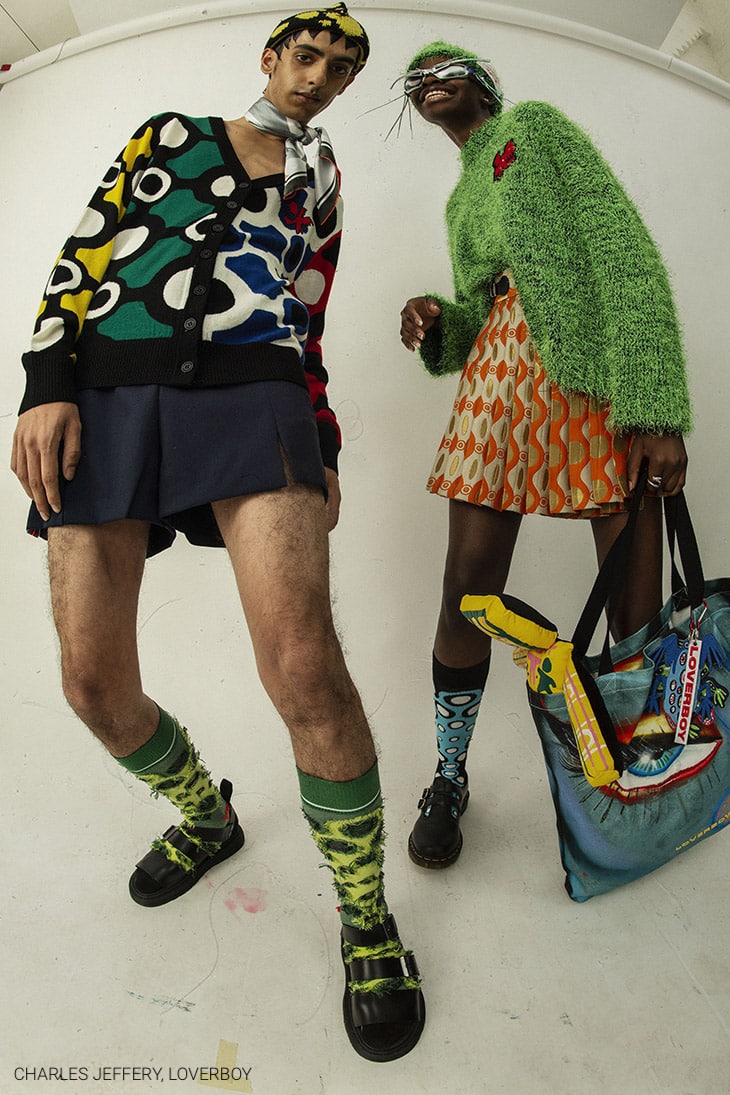
There are many instances in which fluidity is an enabler for liberation. The idea of being fluid, of not fitting into distinct categories, naturally is liberatory in a world where categories and labels determine social hierarchy. Though it has been a discussed topic for a while, gender fluidity and conversations about how gender is experienced have become even more prevalent today especially among Black queer communities. The new understandings of gender and its fluid categories have freed many from conservative constraints on what is expected of specific genders and what is possible for specific genders. Though this has been a significant shift in the queer community, it is clear that the larger population has not adopted the same ideologies as there are many conversations and pushes for people to identify in distinct categories. This is most prevalent in conservative communities. One of the most glaring recent examples being when rapper Nicki Minaj joined Erika Kirk at AmericaFest and was quoted saying, “Boys, be boys…it’s okay be boys…There’s nothing wrong with being a boy. (Bynum 2025)” enter image description here

It becomes clear that gender fluidity, whether that be through dress or actual gender identity is frowned upon by those who seek to keep us under harsh conservative ruling. We have seen historically and in this class that labels are able to keep us confined into specific categories. Categories that define how others are meant to treat us and the humanity that we are allotted. Historically many labels have sought to oppress rather than understand, creating hierarchal systems that leave some advantaged and others disadvantaged. These labels also do not allow for hybridity as they exist within strict, immovable confines when assigned to others.

One particular example of this fluidity has been seen in Black non-binary people. Many Black non-binary people who were assigned female at birth have been discussing their feelings of being non-binary but also still aligning with the label of being a Black woman. One Tik Tok creator outlines their feelings about this being that most of their lived experience is as a Black woman and those experiences have shaped who they are as a person inherently (Black 2021). Though many would turn their nose up at this idea, when we think about how the freedom to be fluid aids in understanding these nuances that are not available with rigidity. In this fluidity we see people outside of their immediate labels, but understand them deeper as humans based on their lived experiences and understandings of themselves. This idea is present in both Monáe’s album through the mixing of android with human, with real and imagined and in Haraway’s idea of hybridity.

Being able to be outside of the binary in a world where the binary seeks to minimize and oppress you is an extremely liberating thing. Not only does gender fluidity reject this oppression, but it brings to question what it really means to be a man or woman outside of the roles that society has assigned to those labels.

No AI was used in the creation of this blog post.

References Black, V. [@hypochrisy]. (2021, June 8) [Video]. TikTok. https://www.tiktok.com/@hypochrisy/video/6978955145086356741?_r=1&_t=ZT-9476bOhY3sE Bynum, Z. (2025, December 29). Backlash grows after Nicki Minaj’s Turning Point USA appearance; Bernice King responds. Cbsnews.com. https://www.cbsnews.com/atlanta/news/atlanta-faith-leaders-respond-as-nicki-minaj-faces-backlash-over-turning-point-usa-appearance/