First, please verify you are human.
Read these letters:
CYdte
How many cars are present?
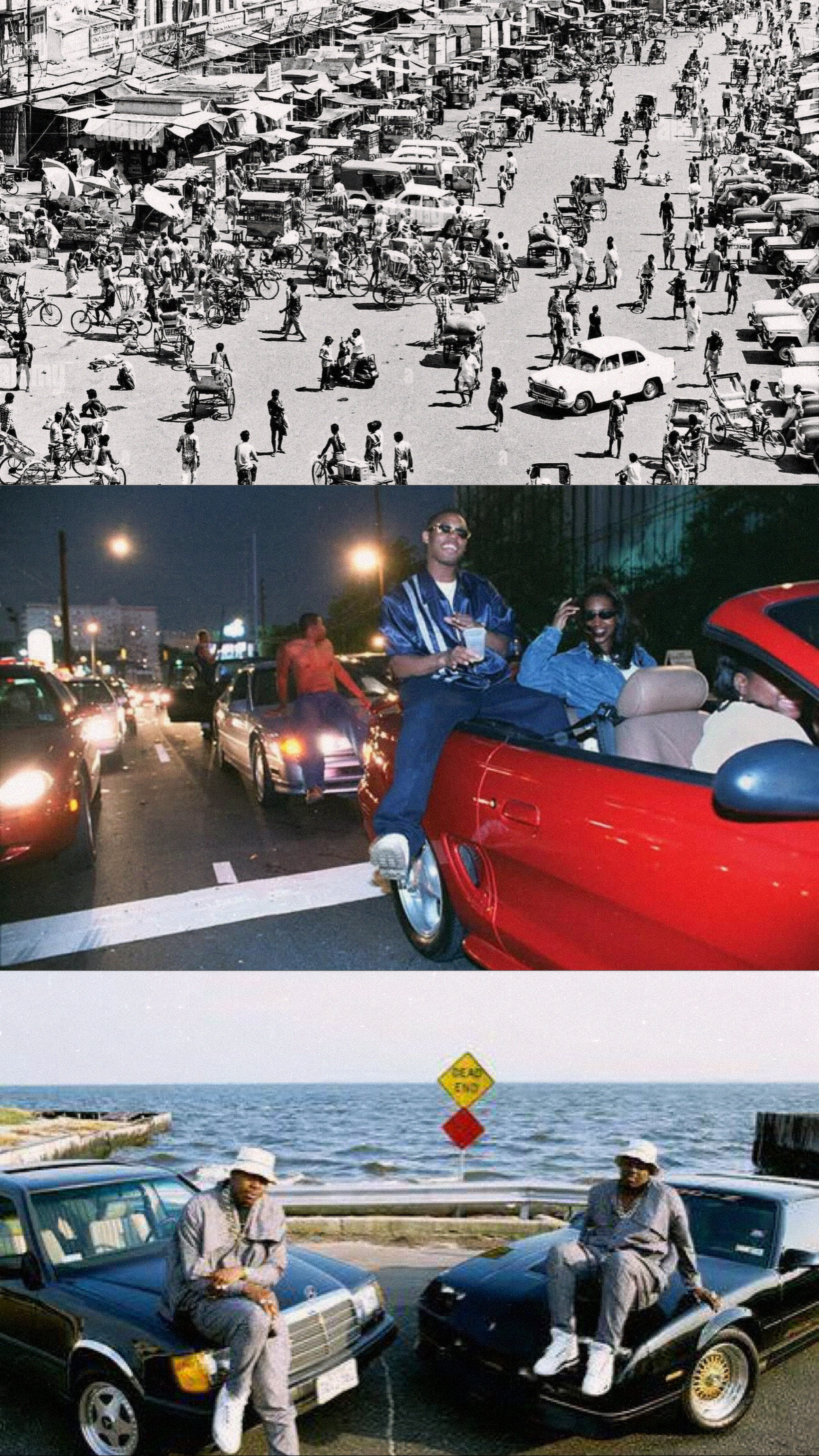
Guessed the right answer?
You are human.
You may continue.
We are heading towards a cyberpunk corporate dominance…
it serves off the current integrations happening all around us.
Not in the dramatic, neon, fully dystopian way we see in Blade Runner or Neuromancer. Not yet, anyway. But in something quieter. Something that blends into daily life so easily we barely question it.
Cyberpunk is defined as high-tech, low-life. And honestly, that definition feels less like fiction and more like a direction. Technology fills silence. It replaces interaction. It predicts behavior. It shapes what we believe is real. From helping with small daily tasks to becoming the “silent filler” in rooms full of people, it’s everywhere. And that everywhere-ness is where the shift begins.
And even that opening, being asked to verify that you are human, says something. We are constantly interacting with systems that need to distinguish between human and machine. That line is no longer obvious. It’s being tested, checked, and blurred in real time.
The Corporate Hand Behind the Screen
If we look at tech companies’ influence on democracy, especially through AI, things start to feel a little too familiar.
Generative AI has introduced a new layer of complexity into the information environment. It allows faster creation of high-quality content—by anyone. That sounds empowering, but it also means misinformation can spread faster, look more convincing, and become harder to detect.
According to the Carnegie Endowment for International Peace, AI has the potential to challenge the integrity of elections and further enable digital authoritarianism (Carnegie Endowment). That’s not some far-off prediction; that’s something already unfolding.
The more polluted the digital ecosystem becomes with synthetic content, the harder it is to trust what we see. And when trust fades, democratic systems start to weaken. Not all at once, but slowly, through doubt.
This connects directly to companies like XAI and others leading AI development. They aren’t just creating tools; they’re shaping communication, perception, and even truth. That level of influence starts to mirror corporations in cyberpunk narratives, like the Tyrell Corporation, where innovation moves faster than accountability.
Surveillance, Control, and the Right to Exist Publicly
It goes deeper than information. Surveillance technology, especially facial recognition, adds another layer.
Facial recognition has already been shown to undermine the right to peaceful assembly. Public spaces, which should allow expression and protest, are becoming monitored environments. Watched. Recorded. Stored.
There’s growing concern about how tech companies assist governments in expanding surveillance capabilities, sometimes enabling suppression of dissent. When corporations build the tools and governments use them for control, the line between corporate power and state power starts to blur.
In Australia, the High Court has emphasized how essential protest is to democracy, highlighting that beyond voting, it’s one of the only ways people can express political views. If surveillance discourages that, then democracy itself begins to shift.
This is where cyberpunk stops feeling fictional.
Is This Hyperbole… or Just Early Stages?
So, are we actually heading toward cyberpunk-level corporate dominance?
This isn’t just exaggeration. But it’s also not fully realized.
What we’re in right now feels like a transition phase. The systems are being built. Tested. Normalized. AI, surveillance, and digital platforms are becoming so embedded in everyday life that questioning them almost feels unnecessary.
That’s the difference. In cyberpunk, the world is already broken. Here, we’re watching it bend in real time.
Is This an American Problem?
What do you think?
From my perspective, not entirely.
While there are many tech companies based in the United States, the effects are global. Different countries respond differently:
• Some embrace surveillance technologies as part of governance
• Others push back with stricter privacy laws and regulations
• Some lack the infrastructure or protections, allowing these systems to expand unchecked
So while the influence may originate in specific places, the impact spreads, and adapts, to different political and cultural systems.
What Enables Corporate Power?
Corporate dominance doesn’t just happen, it’s built through:
• Rapid technological advancement that outpaces regulation
• Control over massive amounts of data
• Global reach beyond national boundaries
• Everyday reliance on users
We depend on these systems, which makes them harder to question and even harder to limit.
What Keeps It in Check?
There are still safeguards:
• Government regulation (even if it lags behind)
• Legal systems and court rulings
• Public awareness and critique
• Activism and advocacy
But when corporations and governments begin to intertwine, those safeguards weaken. Regulation becomes slower.
Oversight becomes complicated. Power becomes shared in ways that aren’t always transparent.
The Role of Critique
This is why conversations like this matter.
Cyberpunk wasn’t just created for entertainment; it was created as critique. A warning. A projection of what happens when power concentrates and accountability fades.
Preventing dystopia isn’t about stopping technology; it’s about questioning how it’s used, who controls it, and who it affects. Strong voices in these spaces matter. Awareness matters.
Dystopia doesn’t arrive loudly. It builds quietly, through normalization.
Final Thought
When corporations influence democracy, shape truth, and enable surveillance, it becomes a planned structure.
Cyberpunk didn’t invent these ideas; it amplified them. And today, those patterns are becoming harder to ignore.
So the real question isn’t whether we’re heading toward that future.
It’s whether we recognize it while it’s still forming.
Sources
Carnegie Endowment for International Peace. Can Democracy Survive the Disruptive Power of AI? 2024, https://carnegieendowment.org/research/2024/12/can-democracy-survive-the-disruptive-power-of-ai.
Artsy. EPMD Image. https://d7hftxdivxxvm.cloudfront.net/?quality=80&resize_to=width&src=https%3A%2F%2Fartsy-mediauploads.s3.amazonaws.com%2FbkXzKHJkSvI6mftJ6mzMVg%252Fepmd--1127x1000.jpg&width=450.
Alamy. Crowded Street in a Commercial District of a Small Town in India in the 90s. https://c8.alamy.com/comp/2MN2116/crowded-street-in-a-commercial-district-of-a-small-town-in-india-in-the-90s-2MN2116.jpg.
AI Attestation: Ideas are my own, AI sued to edit and enhance
 Do you feel as though you can be anonymous? If you wanted to scrub yourself from the internet forever, could you? The simplest answer is no. (Maybe if you’re in witness protection, but that is the government changing your life, and not you). There is always a chance that your data can be hacked, stolen, or your face put on the internet. For a specific example, I will address the Rayban Meta Glasses. Meta itself has been no shy stranger for its encroachment on user data. Mark Zuckerberg, the founder of Meta, testified in a trial questioning Meta’s data concerns in 2024 (Milman, 2024). There is simply no denying that if you own any Meta device or service, that there is a significant chance that there is excessive data collected on you. That includes: Facebook, Instagram, Rayban Meta Glasses, WhatsApp, and Threads, for short. Meta was accused of sending the data of over a million Facebook users to servers in the United States (Milman, 2024). Data and privacy is something that is an essential human right. There should be an option for such to be compromised. Your data should never be compromised without your knowledge and used in something unknown. Although this should be a standard, it is not, and remains a prominent issue. This issue has also been set physically. Specifically looking at Meta glasses, the company that has already breached users’ privacy countless times, has created a product that can further breach people's privacy. Upon initial release, many people were unaware of the use of Meta glasses, considering they look like regular glasses or shades. A person can record someone’s face and actions without anyone but them being aware. So not only is there a big company that is able to breach your data, they made a product allowing anybody that owns it to encroach on your privacy without your knowledge. This is not solely a western issue. The lawsuit against Meta in 2024 was called by the European Consumer Organization (ECO). Meta owns two social media platforms, that is not going to solely be a western issue. This is going to be a problem essentially anywhere the servers work. Products such as Meta Glasses are typically going to be a western issue, however. Situations such as the trial concerning Meta allows for checks to be made, however, the data was still breached. It is more so a warning of the public than a complete halting of the process. This is an issue many platforms face, and not each one will be brought to trial. Since it is more of a global issue, it does seem to have more checks. Again in this instance, Meta is being questioned by a European company. This is very similar to Ghost in a Shell which has everyone connected to a neurointerface controlled and surveilled by the government. There is no such thing as private in Ghost in a Shell, and with the actions of many current companies, there is little privacy left.
 One reason SHEIN is so effective is that it does not rule through fear. It works through convenience, low prices, and design choices that make buying feel almost automatic. As Ding explained, fast fashion thrives partly because consumers psychologically distance themselves from its harms. Shoppers often tell themselves that the damage is indirect, that everyone participates in the same system, or that one more order will not matter (Ding, 2025).
Ding also points to “temporal discounting,” where people prioritize short-term enjoyment and price over longer-term environmental damage such as waste and emissions (Ding, 2025). SHEIN’s model intensifies that pattern. Its ultra-fast production cycle turns digital trends into products within days, making gratification immediate while keeping the consequences abstract (Ding, 2025). Corporate power today does not always depend on open coercion. It can work through seduction. The easier it is to click “add to cart,” the easier it becomes not to ask who made the product, under what conditions, and at what environmental cost.
One reason SHEIN is so effective is that it does not rule through fear. It works through convenience, low prices, and design choices that make buying feel almost automatic. As Ding explained, fast fashion thrives partly because consumers psychologically distance themselves from its harms. Shoppers often tell themselves that the damage is indirect, that everyone participates in the same system, or that one more order will not matter (Ding, 2025).
Ding also points to “temporal discounting,” where people prioritize short-term enjoyment and price over longer-term environmental damage such as waste and emissions (Ding, 2025). SHEIN’s model intensifies that pattern. Its ultra-fast production cycle turns digital trends into products within days, making gratification immediate while keeping the consequences abstract (Ding, 2025). Corporate power today does not always depend on open coercion. It can work through seduction. The easier it is to click “add to cart,” the easier it becomes not to ask who made the product, under what conditions, and at what environmental cost.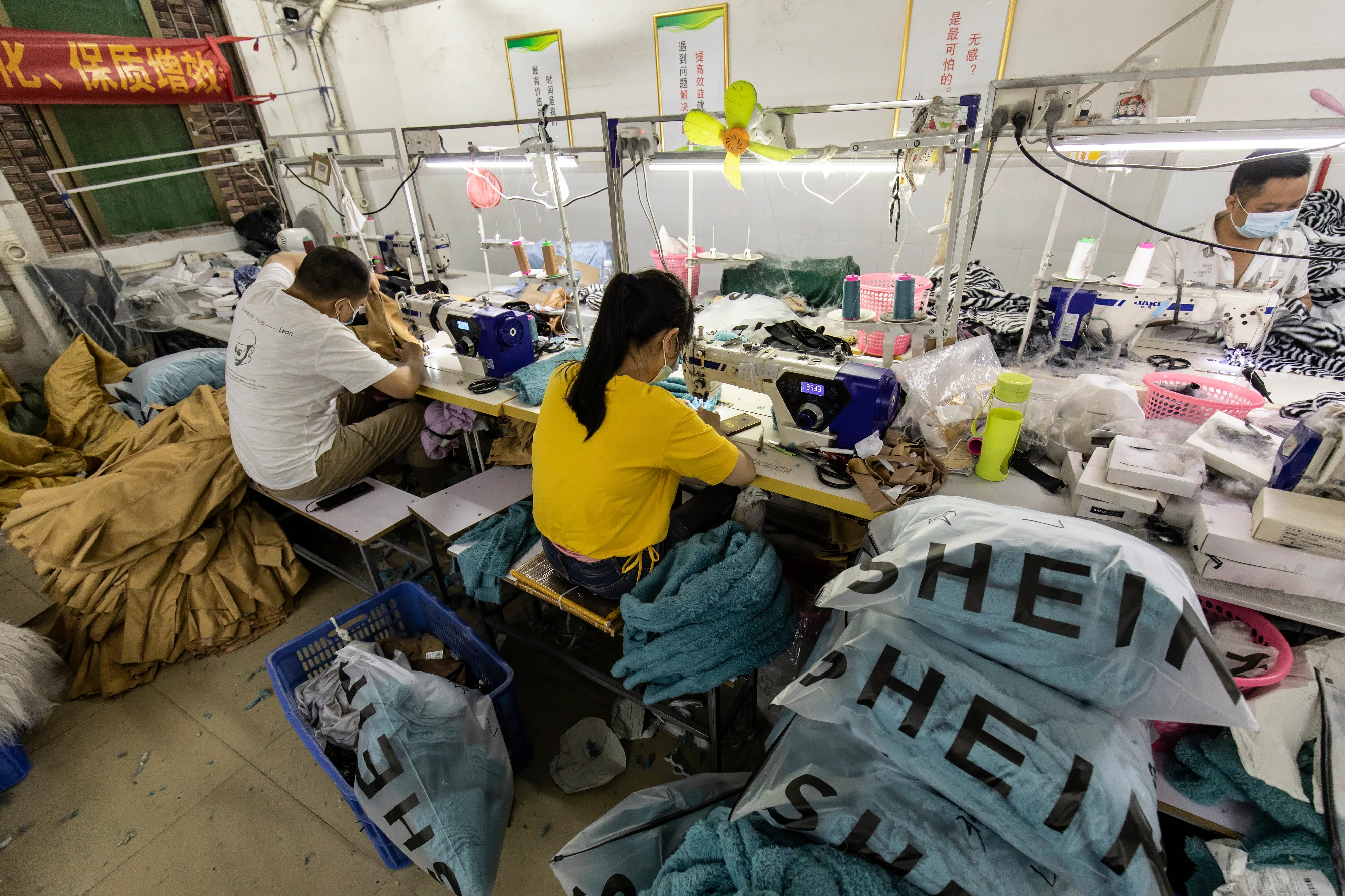 That illusion depends on keeping labor conditions difficult to see. Reporting on SHEIN’s planned IPO noted that U.S. lawmakers called on the company to prove its products were not linked to forced labor, especially through concerns about sourcing tied to Xinjiang (Wexton, 2023). The same report showed that congressional committees and multiple state attorneys general scrutinized both its supply chain and its trade practices.
SHEIN denied the allegations and said it maintained a zero-tolerance policy on forced labor, but the deeper issue is larger than any single statement of denial (Wexton, 2023). When a company’s supply chain is so vast, global, and opaque that lawmakers, consumers, and even investors struggle to verify its claims, accountability becomes weak by design. That is where the cyberpunk comparison becomes most useful. The danger is not simply that abuse may exist. The danger is that the system is structured in a way that makes human suffering easy to bury behind convenience, scale, and distance. When labor becomes invisible enough, expendability becomes easier to normalize.
That illusion depends on keeping labor conditions difficult to see. Reporting on SHEIN’s planned IPO noted that U.S. lawmakers called on the company to prove its products were not linked to forced labor, especially through concerns about sourcing tied to Xinjiang (Wexton, 2023). The same report showed that congressional committees and multiple state attorneys general scrutinized both its supply chain and its trade practices.
SHEIN denied the allegations and said it maintained a zero-tolerance policy on forced labor, but the deeper issue is larger than any single statement of denial (Wexton, 2023). When a company’s supply chain is so vast, global, and opaque that lawmakers, consumers, and even investors struggle to verify its claims, accountability becomes weak by design. That is where the cyberpunk comparison becomes most useful. The danger is not simply that abuse may exist. The danger is that the system is structured in a way that makes human suffering easy to bury behind convenience, scale, and distance. When labor becomes invisible enough, expendability becomes easier to normalize.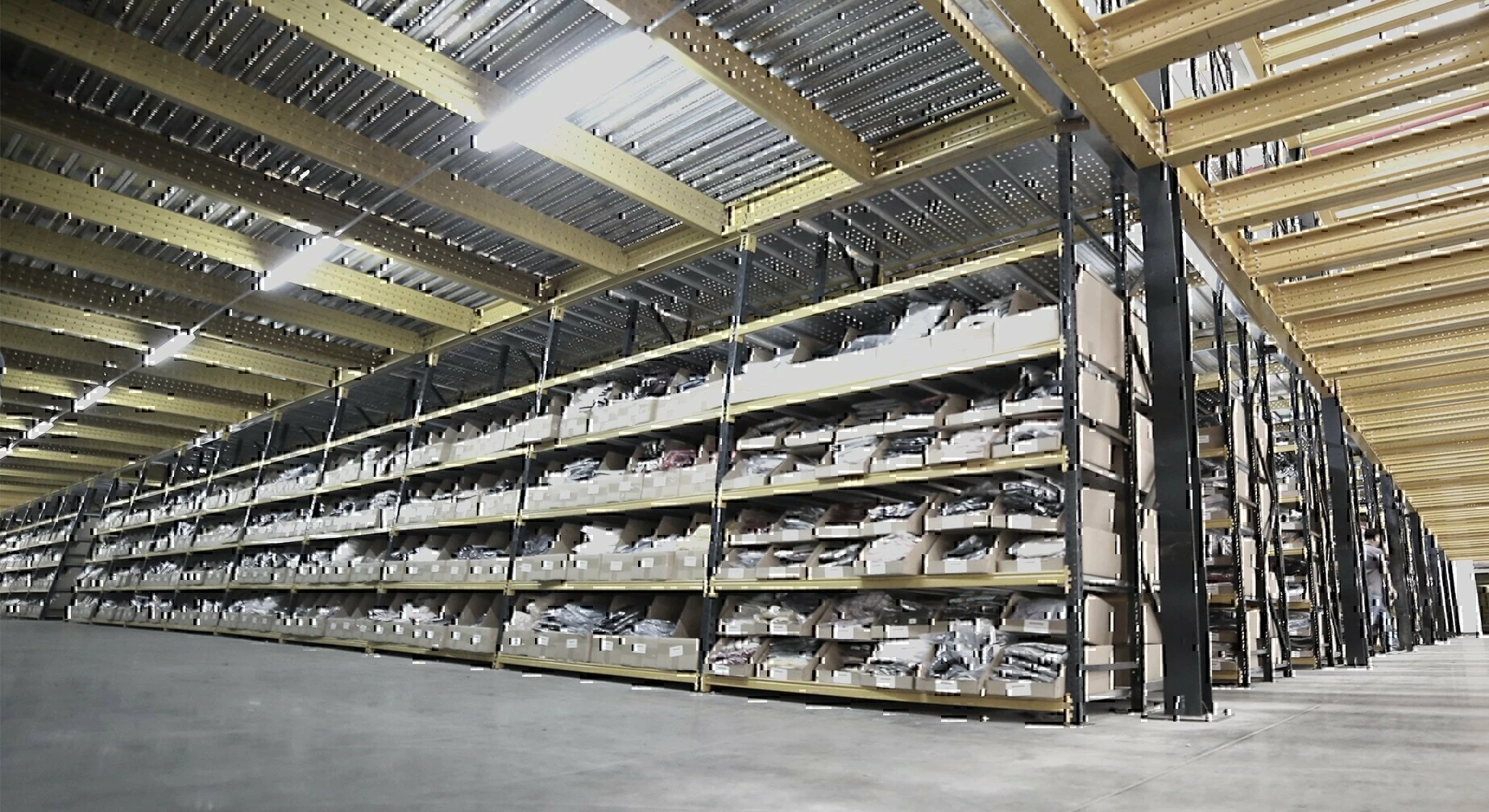 If cyberpunk warns about corporations moving faster than governments, SHEIN’s regulatory troubles are a strong real-world example. A 2024 report explained that SHEIN and Temu benefited from the de minimis exemption, which allows imported goods under a certain value to enter the United States without duties and processing fees (Neely, 2024). Officials argued that abuse of this loophole undercut workers and businesses while flooding the market with low-value imports. Homeland Security Secretary Alejandro Mayorkas also warned that the scale of these shipments made meaningful screening difficult (Neely, 2024).
The same pattern appears in Europe. In February 2026, EU regulators opened a formal probe into SHEIN under the Digital Services Act over illegal products and parts of its app design, including gamified shopping features, reward mechanisms, personalized recommendations, and transparency around how products are prioritized (“EU opens probe into Shein,” 2026). That matters because SHEIN is not only selling products. It is also shaping attention and behavior through platform design. This is corporate power in a distinctly modern form. It does not just respond to desire. It helps produce it.
If cyberpunk warns about corporations moving faster than governments, SHEIN’s regulatory troubles are a strong real-world example. A 2024 report explained that SHEIN and Temu benefited from the de minimis exemption, which allows imported goods under a certain value to enter the United States without duties and processing fees (Neely, 2024). Officials argued that abuse of this loophole undercut workers and businesses while flooding the market with low-value imports. Homeland Security Secretary Alejandro Mayorkas also warned that the scale of these shipments made meaningful screening difficult (Neely, 2024).
The same pattern appears in Europe. In February 2026, EU regulators opened a formal probe into SHEIN under the Digital Services Act over illegal products and parts of its app design, including gamified shopping features, reward mechanisms, personalized recommendations, and transparency around how products are prioritized (“EU opens probe into Shein,” 2026). That matters because SHEIN is not only selling products. It is also shaping attention and behavior through platform design. This is corporate power in a distinctly modern form. It does not just respond to desire. It helps produce it.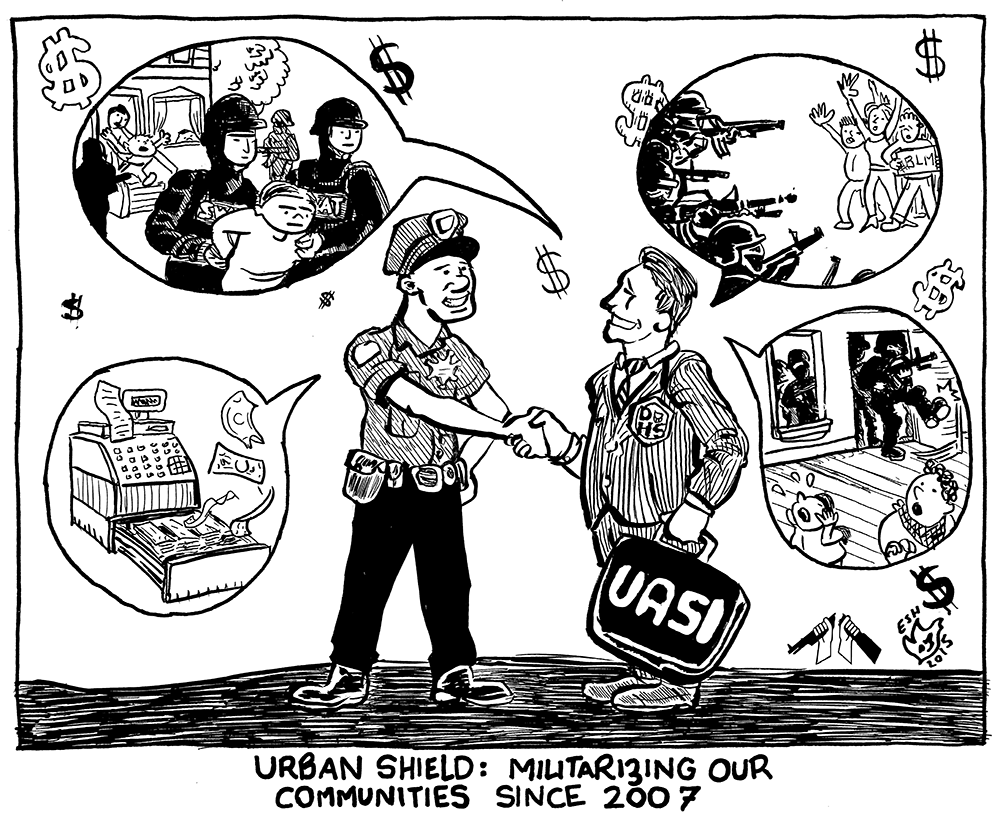


 A company that does not seem like a cyberpunk example would be Uber. The premise of it is allowing people to have freedom to work when and wherever they want and also be their own boss. A lot of drivers use Uber as their main source of income, but they do not keep standard protection nor benefits. Different articles show that Uber has built in loopholes so they do not have to pay their drivers fairly and even lock them out of the app. This directly affects their income and them being able to support themselves.This also creates a situation where workers feel stuck, because leaving the platform could mean losing their main source of income without having another option ready. Because of this, Uber looks like more of a system that controls its workers because they depend on it.
## Flexibility Without Protection
This is sort of like Sleep Dealer where the job is an opportunity, instead it kind of traps its workers. Memo chooses to work with the nodes, in the same way Uber drivers chose, but this is based on their situation. Memo needs this job to survive and to send money to his family. In the same way Uber drivers depend on the app for money, but the algorithm controls everything. This type of work does not have stability, protection, or benefits which leaves workers in vulnerable and tough situations (Apouey, et al., 2023). There are also reports that show Uber has loopholes used so they do not have to pay their drivers and workers fairly. These loopholes even go to extremes of locking people off of the app which affects their ability to make and earn money (Business & Human Rights Resource Centre, 2024). In Memo’s situation and the Uber drivers, they are both in a situation where they have limited choices so that “choice” is not really a choice.
## Dependency on Work
A company that does not seem like a cyberpunk example would be Uber. The premise of it is allowing people to have freedom to work when and wherever they want and also be their own boss. A lot of drivers use Uber as their main source of income, but they do not keep standard protection nor benefits. Different articles show that Uber has built in loopholes so they do not have to pay their drivers fairly and even lock them out of the app. This directly affects their income and them being able to support themselves.This also creates a situation where workers feel stuck, because leaving the platform could mean losing their main source of income without having another option ready. Because of this, Uber looks like more of a system that controls its workers because they depend on it.
## Flexibility Without Protection
This is sort of like Sleep Dealer where the job is an opportunity, instead it kind of traps its workers. Memo chooses to work with the nodes, in the same way Uber drivers chose, but this is based on their situation. Memo needs this job to survive and to send money to his family. In the same way Uber drivers depend on the app for money, but the algorithm controls everything. This type of work does not have stability, protection, or benefits which leaves workers in vulnerable and tough situations (Apouey, et al., 2023). There are also reports that show Uber has loopholes used so they do not have to pay their drivers and workers fairly. These loopholes even go to extremes of locking people off of the app which affects their ability to make and earn money (Business & Human Rights Resource Centre, 2024). In Memo’s situation and the Uber drivers, they are both in a situation where they have limited choices so that “choice” is not really a choice.
## Dependency on Work
