Becoming Ant(Hu)man: Rethinking Humanity Through Hybrid Bodies

- Posted in BP04 by

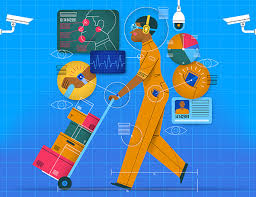
The Ant-Human Hybrid Imagine a world where science has once again surpassed its own limits. Not the supernatural world of romance films where a girl falls in love with a boy who turns into a werewolf, but a world where hybridization is not an accident of magic, it is a government‑planned technology designed to create a more efficient society. And instead of a wolf, imagine the hybrid is something far less glamorous but far more radical: an ant. Ants can lift around fifty times their body weight, survive extreme physical pressure, and operate through a form of distributed intelligence that allows entire colonies to function with astonishing efficiency. If humans could integrate these characteristics, we would be forced to rethink labor, individuality, and consciousness itself. Hybridizing with an ant destabilizes the autonomous human subject and aligns directly with the posthuman questions raised by Haraway, Blade Runner, and Ghost in the Shell.

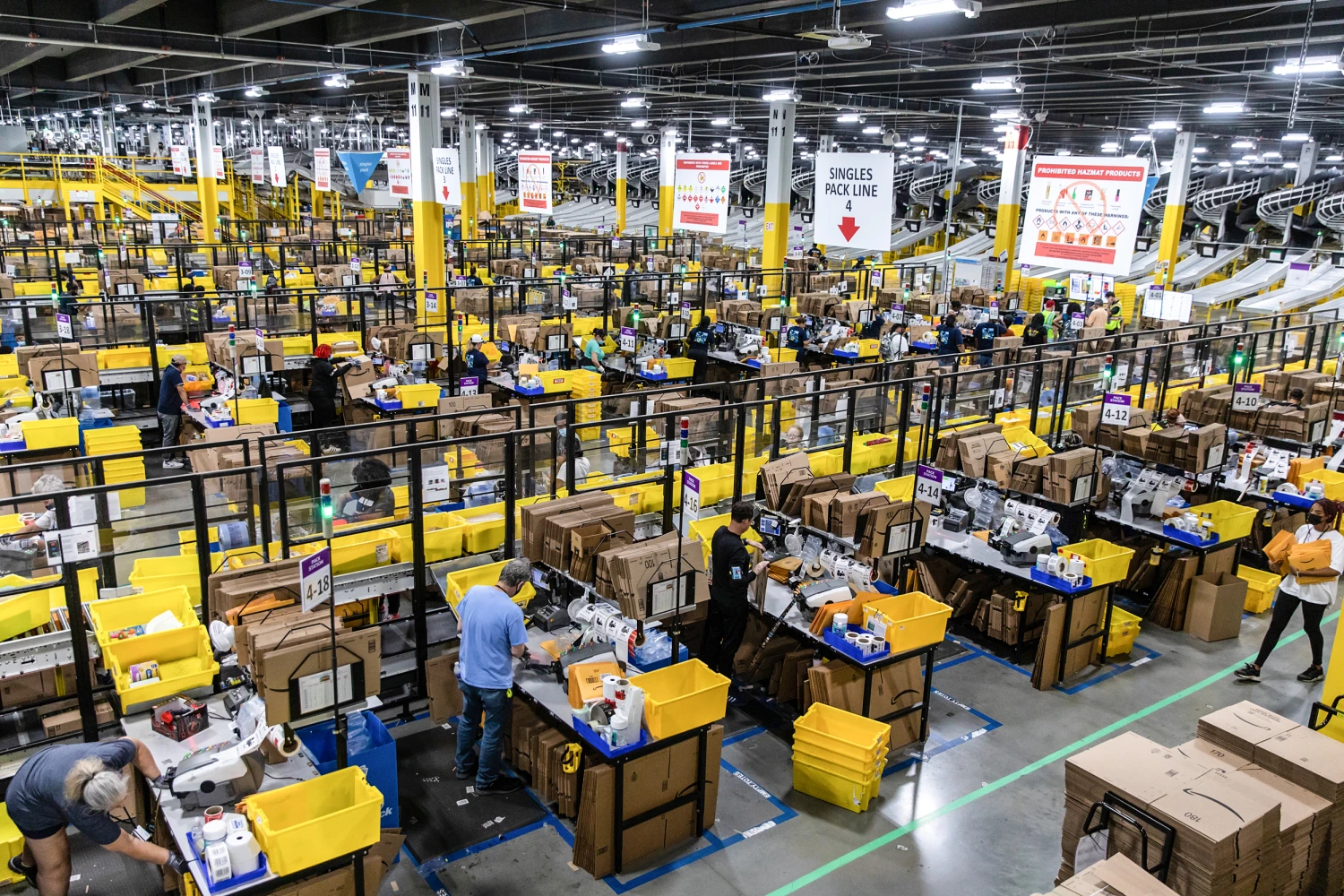
No leaders No Individualism The ant is compelling because of its strength, coordination, and pheromone‑based communication. In Deborah M. Gordon’s Ant Encounters: Interaction Networks and Colony Behavior, she emphasizes that ant colonies “operate without any central control” (Gordon, 2010). This challenges human assumptions about hierarchy and leadership. If ants can coordinate complex tasks without a central authority, then perhaps human societies, which rely heavily on centralized power, could be reimagined. Gordon further explains that “the colony’s behavior emerges from the interactions of its members” (Gordon, 2010), a model that mirrors cybernetic and networked systems seen in Ghost in the Shell. Ants also destabilize Western individualism. They embody collective identity and collective labor. As Gordon notes, “No ant knows what the colony is doing” (Gordon, 2010). Applied to humans, this raises unsettling possibilities: a labor force that works efficiently without necessarily understanding the larger purpose of their work. Ambition, personal dreams, and self‑expression could be replaced by pure functionality. Society might become more efficient, but at the cost of individuality.

Power or Exploitation

If I had to decide how far this hybridization should go, I would choose primarily physical adaptations. Enhanced strength could reduce reliance on heavy machinery in industry or the military, potentially lowering energy consumption. Chemical sensing or a more flexible, role‑responsive body could also be beneficial. But I would avoid deep cognitive or behavioral changes. Losing too much individualism risks creating a society without personal fulfillment. A fully collective consciousness, like an ant colony, might eliminate loneliness, but it would also eliminate creativity, desire, and the sense of purpose that comes from personal goals. A balance of perhaps 30% ant traits and 70% human identity feels like a sustainable mix. Haraway’s cyborg theory helps frame this hybridization as a boundary‑breaking act. The ant‑human hybrid collapses distinctions between human, animal, and machine. It goes beyond technological enhancement and enters the realm of biological fusion, the kind of hybridization that produces “superhumans” in superhero narratives, except grounded in real evolutionary traits rather than fantasy. But Blade Runner warns us of the darker side. Replicants are engineered for labor and exploited because of their strength and obedience. An ant‑human hybrid could easily become a new labor caste: strong, efficient, and less likely to question authority. This mirrors the replicants’ struggle for autonomy and personhood. The ethical and political implications are enormous. Who would be allowed to receive these enhancements? Who would be denied? Any system that assigns hybridization based on “value to the state” risks creating new hierarchies of worth. I have one example of a short movie and story in which a pig‑stomach cancer cure illustrates how enhancements can spiral out of control when people seek them for unintended benefits. Hybridization could follow the same path, a technology meant for survival or efficiency could become a tool for exploitation, inequality, or even crisis. In the end, while a human‑ant hybrid might create new forms of community, I believe it would be a dangerous one. It risks erasing diversity, flattening individuality, and creating a population that can be easily exploited. The potential benefits of strength and efficiency do not outweigh the social and ethical risks of losing what makes human life meaningful.

Becoming Something More

- Posted in BP04 by

Breaking the Human Boundary:

Imagine a world in which humans can adopt animal qualities solely because of safe and reversible technology. In an increasingly biotechnological and artificial intelligence-driven world, such a scenario no longer appears to be science fiction. If I had the option of hybridizing with an animal, I would choose an octopus. The octopus is one of the most remarkable forms of intelligence on Earth, with physical adaptation and cognitive capacities that challenge our beliefs about what it is to be human. Rather than experiencing a total change, I would prefer moderate hybridization, which includes cognitive advantages inspired by octopus' dispersed neutral systems as well as some physical adaptations like increased agility and regenerative capacities. Octopuses can control each of their eight arms independently, allowing them to analyze information simultaneously. According to marine biologist Jennifer Mather, octopuses engage in complex activities such as problem solving, tool use, and play, implying a sophisticated kind of intelligence that arose independently of human intellect.

Adopting elements of this biology could boost human creativity and problem-solving abilities without destroying our humanity completely. I would not imply turning into an octopus, but rather extending the capabilities of the human mind.

Post Human Self:

Hybridizing with an octopus would require both cognitive and physical modifications. Cognitively, I'd like improved brain processing that enables multitasking and attention to detail, comparable to how octopuses coordinate their arms. Physically, minor alterations such as increased tactile sensitivity in the hands or restorative tissue abilities might be advantageous. However, I would not give up the fundamental qualities of humanity that characterize social and moral existence. For me, Humanity is more than just biology; it is the ability to emphasize, form groups, and generate shared meaning. These characteristics determine our ethical responsibilities to one another.

This viewpoint is consistent with Donna Haraway's concept of the cyborg, which. undermines hard distinctions between humans, animals, and machines. Haraway contends that technological and biological hybridization undermine traditional theories of identity. In other words, becoming partially animal does not always make someone less human; it may merely indicate that the boundaries between species were never as rigid as we thought.

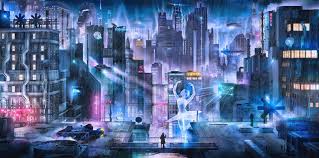
Science fiction also examines this border. In Blade Runner, replicants are almost indistinguishable from humans, yet society views them as disposable devices. Their battle prompts viewers to consider whether biological origin truly determines humanity. Similarly, Ghost in the Shell questions whether awareness stays authentic once the body is technologically upgraded or replaced. If a mind can exist in a cybernetic body, identity is linked to memory and consciousness rather than flesh.

A human-octopus hybrid would take these philosophical questions even further. If we could acquire alien talents while keeping our memories and sense of self, we could reinvent humanity as something adaptable and evolving rather than fixed.

Access, Inequality, and the Politics of Enhancements:

While the technology sounds intriguing, it raises fundamental ethical concerns regarding who has access. Historically, advanced technology have apperead first in wealthier populations before reaching marginalized communties if at all even. If human improvement technologies are dispersed unfairly, they have the potential to exacerbate social inequality (Fukuyama, 2002). If only the wealthy could afford cognitive or physical hybridization, society might face a new class gap between enhanced and non-enhanced humans.

This topic is especially important in a global environment. Wealthier nations may have initial access to advanced technology, increasing global gaps in education, labor, and health. In such a world, hybridized individuals may dominate occupations that require great brains or physical capacity, putting others at a structural disadvantage. These disparities mimic the dynamics depicted in Blade Runner, in which replicants are engineered for labor but corporations govern their development. Similarly, in Ghost in the Shell, cyber enhancement is common but linked to military and corporate power dynamics. Both stories show how technological advancement can become interwined with economic power and political influence. If hybridization developments become a reality, strong ethical frameworks will be required to provide equal access and defend human dignity.

Refinding Humanity:

Finally, deciding to hybridize with an octopus is about rethinking the boundaries of human potential, rather than adding tentacles or underwater talents. The posthuman conditions make us reevaluate what constitutes us. Is humanity defined by biology, or consciousness and moral responsibility? If hybridization enabled us to enhance our talents while remaining ethically committed to one another, it may signify the development of mankind rather than its extinction. A human-animal hybrid, similar to the cyborg in Haraway's theory, might represent the breakdown of rigid boundaries and the rise of a more fluid understanding of identity.

In the end, the true question is not whether we can become anything other than humans, but whether we can do so without sacrificing the compassion and responsibility that make humanity valuable.

Sources:

Latkovic, M. S. (2002). Fukuyama, Francis. Our Posthuman Future: Consequences of the Biotechnology Revolution. The National Catholic Bioethics Quarterly, 2(4), 765–767. https://doi.org/10.5840/ncbq20022420 Mather, J. A. (2019). What and where is an octopus’s mind? Animal Sentience, 4(26). https://doi.org/10.51291/2377-7478.1528

AI Use Statement: Grammarly was the only tool of "AI" used within this blog post, which was to correct grammatical errors and the fluency of writing. All writing and analytical thinking was done solely by me.

Becoming the Shadow: What a Black Pnather Hybrid Reveals about Being Human

- Posted in BP04 by

Imagine standing at a threshold, not the entrance to a building, but the entrance to a different kind of self. A technology is safe. It is reversible. All you have to do is choose. When I consider the question honestly, my answer comes quickly and without much thought: the black panther.

Not because I want claws, or a coat of obsidian fur, though it would be amazing to have those features. But becausw the black panther represents a particular union of qualities that feel less like fantasy and more like aspiration: patient intelligence, acute awareness, solitary, decisiveness, and an almost preternatural calm in the face of danger. The real question the thought experiment forces us to ask is not which animal wwe find cool, but which qualities we are missing- and what that absence says about us.


The Transformation I would Choose My hybrid would not be extreme. I am not interested in becoming a totally different creature. The transformation I imagine is moderate, targeted enough to still be meaningful, restrained enough to preserve continuity of self. Physically, I would want enhances sensory perception: the black panthers acute night visions, its ability to hear high frequency sounds beyond human range, and the sharpened olfactory system that lets it track prey through dense jungle. I would want a body that is faster and more agile, capable of fluid, economical movement that big cats are famous for.

Behaviorally and Cognitively , the change I want are subtle but feel more significant. As I researchers have notes, black panther are characterized by remarkable strategic hunting intelligence–an ability to read environments, hold focus, and wait for precisely the right moment before acting. They demonstrate patience as a skill, not as passivity. This sis what I want most. Not physical grace, though id take it- but I more interested in cognitive architecture that makes stillness feel like power rather than absence.

Blockquote What does it mean to 'give up' humanity if the qualities you're gaining–paitence, perceptions, presence–are ones we already recognize as admirable in exceptional human beings?

I would keep my language, my memory, my relationships, my capacity for abstract reasoning and ethical implications. What I would gain is a perceptual and behavioral layer that currently lies beyond human capacity: a heighten awareness of my surrounding, a nervous system that is designed for stillness and precision, and the solitary confidence to act on my own judgement without even thinking about social approval.


The Humanity Question This where the thought experiments gets genuinely difficult. When we ask how much humanity wed be willing to give up, we are forced to define what humanity even is– and that defintion can be unstable. A philosopher and bioethicist Davis DeGrazia, writing on enhancement technologies and personal identity, argues that our concern about losing "human nature" through biotechnology change often rests on assumptions we have never examined carefully. as he puts it, the worry that enhancement disrupts identity depends on implausible notions of what makes us who we are in the first place. If what makes me human is my capacity for love, moral reasoning, grief, and curiosity, then againg a panthers night vision changes none of that. But if humanity is defines as a biological boundless– as being confined to the sensory and physical limits of Homo sapiens– then any enhancement dissolves that boundary. Donna Hawarway, whose 1985 "Cyborg Manifesto" is touchstone for this course, would likely point out that the boundary was never as stable as we imagines. Her cyborg is a figure that refuses categorical purity– human/animal organism/ machine, natural/ artificial. The black panther hybrid I am describing is, in Haraway terms already a cyborg: a creature of mixed categories that cannot be cleanly sorted. And her point is that this is not a horror story. It is liberation from the policing of borders that were always more ideologies than biological.


Course Connection Blade Runner replicants are "more human than humans" not because they human DNA, but because they have learned to want, remember, and mourn. Ghost in the Shell's Motoko Kusanagi questions her own authentic not because her body is cybernetic, but because she cannot locate the different between genuine memory and an implanted one.


Academic Bioethicist writing an transhumance have increasingly recognize that the real boundary being debated is not biological but social. As one recent study in the journal bioethicist observes, radical genetic enhancement– including the introduction of genes coding for abilities found in other animals could, in principle, produce changes that move us away from our current species identity. The question is whether species identity is what we actually care about, or whether it is a proxy for something more fundamental: continuity of consciousness, moral community, and the recognition of one another as fellow beings deserving of dignity. My honest answer is that I would give up very little of what I care about. Sharper hearing and faster reflexes do not make me less capable of love. Solitary confidence does not require abandoning connections. In fact, I think that some of the qualities I would gain from a panther– patience, composure, acute presence – would make me a better human being in all ways that actually matter.


Who Gets to Become the Shadow? if this technology were real, and it followed the pattern of virtually every other significant biotechnology, access would be deeply unequal. Those with wealth and proximity to elite medical infrastructure would choose their enhancements. The rest could not. This is not speculative anxiety– it is already the trajectory of genetic medicine, cometic biotechnology and pharmaceutical enhancements. As researchers studying the ethics of human enhancements have pointed out, technologies that promise to improve humanity in the abstract tend, in practice, to redistribute advantages toward those who already have it. This inequality is not only economic. It is perceptual. A world divided between enhanced and unenhanced humans would not simply be w a world with different physical capabilities. It would be a world in which the enhances see, heard, responded and decide differently– and in which those differences map onto existing hierarchies of race, gender, class, geography, and etc. Haraway's cyborg was supposed to dissolve these boarders. This uncomfortable truth of our actual world is that boarders are remarkably good at reasserting themselves through new technologies rather than being dissolves by them. The black panther itself carries a particular cultural weight here. As a figure of beauty, power, and nocturnal intelligence, it has long been associated in the western imagination– with a kind of threatening otherness. To hybridize with this animal is to ask not just which traits I want, but which traits society is prepared to accept in whose body.


Stillness as the Post Human Aspiration In the end, what draws me to the black panther is something I can only describe as the quality of its attentions. It does not rush. it does not preform. It reads its environment with precision and acts from a place of complete situational awareness. In a world of noise, notifications, and manufactures urgency, that quality feels almost impossible rare. Perhaps that is the real thing the thought experiment reveals : the animal we choose says something about what we feel we lack, and what we lack says something about what human conditions– in this historical moment, in this paritcual culture– has failed to cultivate. I do not want to become a panther. I want to become the version of myself that has learned something from one.


References

DeGrazia, D. (2005). Enhancement technologies and human identity. George Washington University Department of Philosophy. Retrieved from https://philosophy.columbian.gwu.edu/sites/g/files/zaxdzs5446/files/2023-01/degrazia_enhancement.pdf

Haraway, D. (1985). A cyborg manifesto: Science, technology, and socialist-feminism in the late twentieth century. Socialist Review, 80, 65–108.

Rueda, J. (2024). Genetic enhancement, human extinction, and the best interests of posthumanity. Bioethics, 38(6), 529–538. https://doi.org/10.1111/bioe.13085

Thornberry, M. (2024). Black panther behavioral adaptations for survival. Berry Patch Farms. Retrieved from https://www.berrypatchfarms.net/black-panther-behavioral-adaptations/

Scott, R. (Director). (1982). Blade Runner [Film]. Warner Bros.

Oshii, M. (Director). (1995). Ghost in the Shell [Film]. Production I.G

If Humans Could Borrow Instinct: Would I Become Part Octopus?

- Posted in BP04 by

The Next Boundary: Human and Animal Cyberpunk stories constantly challenge the boundaries between human and nonhuman life. In Donna Haraway’s A Cyborg Manifesto, she argues that modern technology dissolves traditional boundaries between human, machine, and animal. The cyborg is not simply a science fiction creature. It represents a world where identity becomes hybrid and fluid. But what if the next step in this boundary shift did not involve machines at all? Imagine a technology that safely and reversibly allows humans to hybridize with animals by borrowing their biological traits. Instead of robotic implants or artificial intelligence upgrades, this technology would allow humans to incorporate evolutionary abilities that other species have already perfected. If I had the option to hybridize with an animal, I would choose the octopus, not for physical power but for cognitive transformation.


Why the Octopus? Octopuses possess one of the most unusual nervous systems in the animal kingdom. Unlike humans, whose intelligence is centralized in the brain, octopus cognition is distributed throughout their arms. This allows them to solve problems in ways that are radically different from human thinking. Research in Current Biology notes that octopuses demonstrate advanced problem solving abilities, tool use, and behavioral flexibility that rivals many vertebrates (Hanlon & Messenger, 2018). If hybridization technology existed, I would not want to become completely octopus like. Instead, I would seek minor neurological adaptations inspired by octopus cognition. Imagine being able to process information through multiple parallel channels of thought or having enhanced sensory awareness similar to how octopus arms independently explore their environment. This type of enhancement would not drastically change my physical appearance, but it would transform how I experience intelligence and perception. In cyberpunk terms, it would expand the definition of what counts as a human mind.


Consciousness and the Cyberpunk Question of Identity Cyberpunk narratives often question what defines humanity. In Blade Runner, replicants look identical to humans but are treated as disposable labor because their consciousness is considered artificial. Meanwhile, Ghost in the Shell explores the idea that the “ghost,” or the essence of consciousness, can exist even within a completely artificial body. Animal hybridization raises a similar philosophical question. If our minds begin incorporating nonhuman traits, where does humanity end? For me, humanity would not be defined by having purely human biology. Instead, humanity would be defined by self awareness, empathy, and ethical responsibility. Even if my cognition were partially influenced by octopus inspired neural processing, my moral framework and sense of identity would remain human. In this way, hybridization reflects Haraway’s cyborg theory. Boundaries between categories are not fixed. Human identity has always been shaped by technology, culture, and biology. Hybridization would simply make that reality more visible.


Who Gets to Become Posthuman? However, cyberpunk stories also warn us that technological enhancement rarely benefits everyone equally. In many cyberpunk worlds, access to augmentation is controlled by corporations or wealthy elites. The same inequality could easily emerge with animal hybridization technology. Wealthy individuals might enhance their bodies and cognition while marginalized communities remain excluded or are pressured into risky forms of enhancement for labor. This mirrors real world debates about emerging technologies. For example, enhancement technologies such as genetic editing and neural implants already raise concerns about a future biological divide between enhanced and non enhanced humans. Science writer Ed Yong argues that discoveries about animal biology reveal extraordinary abilities in nature, but translating these abilities into human technology raises serious ethical questions about power and access (Yong, 2022). From a global perspective, hybridization technology could deepen inequalities between countries as well. Wealthy nations might dominate enhancement research, while poorer regions become testing grounds or sources of biological data.


The Posthuman Future If safe animal hybridization became possible, the most important question would not be which animal traits we could borrow but how responsibly we use that power. Cyberpunk fiction reminds us that technological change is never purely scientific. It is always shaped by politics, economics, and ethics. The ability to merge human and animal traits could expand human potential in incredible ways, but it could also create new forms of inequality and exploitation. For me, becoming partially octopus would not mean abandoning humanity. Instead, it would represent an evolution of what humanity can become. Humanity has always adapted, questioned boundaries, and redefined itself through new technologies. In a world increasingly shaped by biotechnology and artificial intelligence, the line between human and “other” may not disappear, but it will certainly continue to shift.


References Hanlon, R. T., & Messenger, J. B. (2018). Cephalopod behaviour. Cambridge University Press. Yong, E. (2022). An immense world: How animal senses reveal the hidden realms around us. Random House.


AI Attestment: AI was used in the developing stages of the blog post and to imrove the clarity of writing. All analysis and final edits were completed by me.

The Cetacean Shift: Fluid Identity in a Posthuman Sea

- Posted in BP04 by

The boundary between "us" and "them" has always been thinner than our egos care to admit. From the bioengineered Replicants of Blade Runner to the cybernetic shells of Major Motoko Kusanagi, we are obsessed with the point where human nature ends and "something else" begins.

If given the chance to utilize safe, reversible hybridization technology, I would choose to bridge the gap between the terrestrial and the aquatic by integrating Cetacean (specifically Bottlenose Dolphin) characteristics. My chosen transformation would be a major physiological and cognitive adaptation. Rather than just growing aesthetic fins, I am interested in the fundamental restructuring of sensory perception.

Physical: Integrating a "melon" organ for biosonar (echolocation) and skin capable of high-pressure resistance.

Cognitive: Adopting unihemispheric slow-wave sleep—the ability to sleep with one half of the brain at a time—allowing for continuous consciousness.

Behavioral: Shifting toward the non-linear, acoustic-based communication systems typical of pod structures.

As Donna Haraway argues in A Cyborg Manifesto, the cyborg is a creature in a post-gender, post-boundary world. By becoming part-cetacean, I am not just "adding a feature"; I am dismantling the "dualism of self and other" (Haraway, 1991). I am choosing to inhabit what Haraway calls a "monstrous" hybridity that refuses to stay in the box of human biological exceptionalism. In Ghost in the Shell, the "Ghost" (the soul or consciousness) is the only thing that matters, regardless of the "Shell." However, my experiment suggests that the body shapes the Ghost. By adopting cetacean traits, my perception of space, time, and community would fundamentally shift.

To me, humanity is not a biological checklist; it is a capacity for narrative and connection. I would be willing to give up my terrestrial form and my traditional five senses because the "human" element—the self-reflective consciousness—remains, even if it is viewing the world through a radical new lens. The beauty of this thought experiment lies in its reversibility. It allows for a "nomadic identity"—the ability to step into the ocean and return to the shore. This fluidity is the ultimate expression of posthumanism: the refusal to be defined by a single, static biological destiny. By embracing the dolphin, I don't lose my humanity; I expand its definition to include the song and the sea.

References Benjamin, R. (2019). Race after technology: Abolitionist tools for the New Jim Code. Polity Press.

Haraway, D. J. (1991). Simians, cyborgs, and women: The reinvention of nature. Routledge.

Scott, R. (Director). (1982). Blade Runner [Film]. Warner Bros.

NOT ARTIFICIAL INTELIGENCE

If Humans Could Hybridize with Animals, Where Would We Draw The Line?

- Posted in BP04 by

Rethinking the Human Boundary

Cyberpunk stories often challenge the boundary between humans and technology. In many cases, characters blur the line between biological and artificial life. But what if the boundary between humans and animals could also be changed? Imagine a safe and reversible technology that allows people to adopt animal characteristics and become hybrids. This thought experiment raises questions about identity, power, and inequality. If such technology existed, I would choose to hybridize with an eagle. I would not want a complete transformation, but rather a few specific physical and sensory adaptations that could expand human capabilities while still maintaining my sense of self.

Why an Eagle?

Eagles are known for their incredible eyesight and ability to fly long distances. According to the Cornell Lab of Ornithology, eagles can see several times farther than humans, allowing them to spot prey from great heights (Cornell Lab of Ornithology, 2023). If I could adopt any animal trait, enhanced vision like this would be extremely valuable. Being able to see clearly over long distances could help with exploration, environmental monitoring, or even search-and-rescue work. However, I would not want a full transformation into something that no longer resembles a human. Instead, I would choose limited physical enhancements, such as improved vision and perhaps stronger bones or muscles that support better balance and mobility. These changes would expand human abilities without removing the basic characteristics that define our humanity.

What Defines Humanity?

The bigger question is not just what abilities we gain but what we might lose. Cyberpunk stories like Blade Runner and Ghost in the Shell constantly ask whether identity comes from our bodies or from our consciousness. Donna Haraway's famous essay about the cyborg argues that modern humans already blur boundaries between natural and artificial systems (Haraway, 1991). In that sense, hybridization may simply be another step in a long history of human enhancement.

For me, humanity is defined less by our physical form and more by our ability to think, reflect, and form relationships with others. Our empathy, creativity, and moral reasoning are the qualities that make us human. As long as those abilities remain intact, adding animal traits might not fundamentally change who we are. The real danger would occur if enhancements began to alter our personality, memories, or sense of self.

Inequality and Access

Another important issue is who would have access to this technology. If hybridization became available but only wealthy people could afford it, the result could be a new form of inequality. Some individuals might gain powerful physical or cognitive advantages while others remain unchanged. This could create a society where enhanced humans dominate jobs, sports, or even political power.

Cyberpunk stories often explore this kind of technological inequality. In Blade Runner, replicants are created as powerful beings but are denied rights and treated as disposable tools. In Ghost in the Shell, cybernetic bodies create a world where identity and access to technology shape social status. If hybridization technology followed similar patterns, it could deepen existing social divides rather than improve society.

Conclusion

Human-animal hybridization might sound like science fiction, but it reflects real questions about how far human enhancement should go. Choosing traits like an eagle's vision could improve human capabilities while still preserving our core identity. However, the ethical questions about identity, access, and inequality would be just as important as the technology itself. Like many cyberpunk stories suggest, the real challenge is not whether we can change human boundaries, but how we decide to manage those changes responsibly.

References Cornell Lab of Ornithology. (2023). Bald eagle life history. https://www.allaboutbirds.org Haraway, D. (1991). A cyborg manifesto: Science, technology, and socialist-feminism in the late twentieth century. Routledge.

How Much More Stylish Can I Get?

- Posted in BP04 by

Hybrid Minds: Why I Would Choose a Zebra

If a safe and reversible technology existed that allowed animal traits to merge with human abilities, my choice would be a zebra. Not for the stripes, although, aesthetically speaking, zebras clearly understood the assignment! My interest is in the zebra’s cognitive and behavioral traits. enter image description here

Zebras live almost entirely in the present moment. They respond to threats quickly and decisively, but they do not spend time replaying yesterday’s mistakes or spiraling about tomorrow’s possibilities. That mental orientation fascinates me. Humans, for better or worse, have an extremely active sense of past and future. It allows us to plan, innovate, and build civilizations, but it also invites anxiety, overthinking, and psychological stress.

Switching Cognitive Gears

Imagine being able to temporarily switch cognitive gears. If I were preparing for a big test tomorrow or worrying about all the possible ways things in the world could happen, I could activate that zebra-like mindset. Suddenly, the mental noise fades. Attention collapses into the present moment: what is happening right now, what needs to be solved right now. It would not erase intelligence or awareness; it would simply quiet the endless forecasting engine that human brains often run. My hybridization would involve minor, reversible cognitive adaptations rather than dramatic physical changes. The goal would not be to stop being human. Instead, the zebra traits would act as another perspective I could access when needed. Think of it less like becoming a zebra and more like installing a new cognitive operating system alongside the human one. There is also something appealing about the zebra’s resilience. Zebras exist in environments where danger is common, yet they do not appear paralyzed by fear. They react, adapt, and move forward. That kind of optimistic responsiveness could be powerful in problem-solving situations. It encourages alertness and quick thinking without the mental paralysis that sometimes accompanies human stress.


Humanity: What Are We Actually Protecting?

In this scenario, I would not be willing to give up my humanity. Instead, I see these traits as additive. They would enhance the way I already think and act. My personality, character, and authenticity would remain intact, while the hybridization would simply expand the range of cognitive tools available to me. And that raises an interesting philosophical question: what actually defines “humanity”? Science fiction loves to poke at this.

In Blade Runner, the replicants are biologically engineered humans who struggle with memory, identity, and the desire to live meaningful lives. The film quietly asks whether humanity is about biology or about experience and empathy.

Meanwhile, Ghost in the Shell explores consciousness itself. If memories, personality, and awareness can exist inside cybernetic bodies, where exactly does the “self” reside? The body becomes flexible, but the mind, the ghost in the machine, remains the core question. enter image description here

And then there is A Cyborg Manifesto, where Donna Haraway argues that humans have always been hybrids in some way. Technology, culture, biology, and machines already blend together in our lives. The cyborg, in her view, breaks down the boundaries between human and nonhuman. My zebra hybrid thought experiment fits right into that conversation. It suggests that being human might not be about staying biologically pure. Instead, humanity might be defined by consciousness, creativity, and moral awareness, the ability to reflect on our choices and imagine better futures.

Who Gets the Upgrade?

Of course, the social implications of this technology would be enormous. If hybrid enhancements existed, who would actually have access to them? History often shows that new technologies first appear among people with the most resources, and that could create a new kind of inequality where enhanced individuals gain cognitive or physical advantages over others. This concern already appears in modern debates about genetic editing, cognitive enhancement drugs, and advanced medical technologies. If enhancements become expensive or restricted, they could deepen social divides rather than improve life for everyone.

For that reason, if such technology existed and were available to me, I believe it should be accessible to everyone. Otherwise we risk creating a world where biological advantages become another form of privilege. Slippery slopes in technology are rarely dramatic single leaps—they usually begin with small policy decisions about who gets access.

The Question of Exchange

One part of this idea that I keep circling back to is the idea of exchange. If hybridization means taking something from another species, then it raises a strange and fascinating question: what does the other side receive? In most human-centered technologies, we assume the change only flows one way. Humans modify, humans enhance, humans benefit. But if this imagined technology truly blends two living systems together, even temporarily, then it almost feels incomplete if the exchange is only in our favor. So I wonder what the zebra would receive from me.

Would the process simply pull cognitive traits from the zebra while leaving the animal unchanged? Or would hybridization mean that a small part of my own consciousness, perspective, or behavioral tendencies would be shared in return? In other words, is hybridization extraction, or is it collaboration?

A Different Way of Evolving

In a strange way, that idea reflects something already true about being human. We are constantly evolving, borrowing tools, ideas, and perspectives from everything around us. The difference is that, in this thought experiment, evolution just got a little more creative and a lot more stylish.

So my zebra hybridization is ultimately about perspective. I would remain the intelligent, curious, and authentic being I am, with the added ability to shift mental frameworks when needed. The stripes stay metaphorical, the humanity stays intact, and the mind gains a new way to experience the world.

Now...

I invite you to answer the same question:

If you could hybridize with one animal, what would you choose and why?

Sources

Higgins RJ;Vandevelde M;Hoff EJ;Jagar JE;Cork LC;Silberman MS; (n.d.). Neurofibrillary accumulation in the Zebra (Equus Burchelli). Acta neuropathologica. https://pubmed.ncbi.nlm.nih.gov/842290/#:~:text=Abstract,accumulation%20in%20man%20and%20animals.

Lisitsa, E. (2026, January 16). 5 things zebras can teach us about fighting stress. The Gottman Institute. https://www.gottman.com/blog/5-things-zebras-can-teach-us-about-fighting-stress/

AI Attestation: Ideas are my own, AI used to edit writing

Octopus Intelligence and the Limits of Being Human

- Posted in BP04 by

Dave the Octopus in Human and Octopus FormThe thought of humans getting traits and characteristics from other species brings interesting questions about identity and the different limits of enhancing humans. If a technology like this existed, or became legal, I would choose to be hybridized with an octopus. Octopi are known for being extremely smart and having complex nervous systems that work and function very differently from a human brain. Different research on their brain’ show that a big portion of octopus’s neurons run throughout their arms opposed to staying centralized in the brain which allows the animal to interact and respond to its environment in unique ways (Niven & Nakagawa, 2024). This intelligence challenges the idea that cognition must operate like the human mind and brain. The idea of an octopus mixing and blending into human society was kind of shown in the movie Penguins of Madagascar. The villain, Dave the octopus, disguises himself as a human scientist. This brings up a philosophical question on if having intelligence, awareness, and the ability to make decisions make you human even if you do not have a physical human body?

What Traits Would I Actually Want?

If being an octopus human hybrid were possible, I would not want to completely transform into an octopus, but have certain traits and characteristics. Something that octopus are known for is their flexibility, have many arms, problem solving, and being able to camouflage. One of the most interesting though is their problem solving abilities. Octopi are known to be able to interact with things in their environment, solve puzzles, and quickly adapt to new situations. This cognitive flexibility would be helpful for humans (Niven & Nakagawa, 2024). Their physical flexibility is also unique to them as they can move and adjust in different ways that most animals cannot. I would not want to completely give up the human body, having different octopus adaptations would be interesting. For example, having an additional hidden or retractable arm would be useful when multitasking or holding multiple things. Octopi are also able to change the color and texture of their skin to blend into their surroundings. This would not necessarily be needed for survival in a modern world, it would be a cool ability to have. Although these traits and features are cool, I would want to stay mostly human form opposed to full out unrecognizable octopus.

What Actually Makes Someone Human?

Thinking about hybridization, the question of what makes something human comes up. If a person still has consciousness, memories, and the ability to make decisions, physical changes would not completely take away their humanity. This idea is brought up in Ghost in the Shell where identity is not necessarily tied to the body but more so consciousness. Similarly in Blade Runner, replicants look human, but are treated differently and poorly because they are artificially made. Donna Haraway also brings this up in terms of breaking boundaries between humans and nonhuman in A Cyborg Manifesto. She suggests that the line between human and nonhuman is not as fixed and defined as people think (Haraway, 1985). With all of this in mind, a human octopus hybrid would challenge what it would mean to be human.

Who Would Have Access to Human Enhancement?

Another question that would be brought up is who would have access to this technology? Like a lot of new technology, rich people and powerful companies and corporations would initially have access until something new came about then it might be given to the public. New types of inequalities would be created if certain people were able to enhance their abilities. There are already physical enhancements and this already brings about different arguments and separations, but increased intelligence would be on a different level. Similar concerns appear in Blade Runner, where replicants are made with enhanced abilities but are treated as a less than despite being nearly basically identical to humans. This gives advantages in education, work, and other parts of human culture and society. There would be more debates about fairness and what is allowed. Research on animal cognition and nervous systems, such as studies on octopus intelligence, already shows how different forms of biological intelligence can function in complex ways (Niven & Nakagawa, 2024). If humans were able to gain these traits using hybridization or enhancement, more questions about fairness, access, and limits on human abilities would surface.

AI was used to help plan and edit this post. Also used to help with citations and headers and titles. https://chatgpt.com/share/69ace400-8af4-800d-b41f-689b00c9a3b2

Reference

Niven, J. E., & Nakagawa, S. (2024). The evolution of octopus intelligence and nervous system complexity. Proceedings of the Royal Society B: Biological Sciences, 291(2032). https://doi.org/10.1098/rspb.2024.1568

Haraway, D. (1985). A cyborg manifesto: Science, technology, and socialist-feminism in the late twentieth century. Socialist Review.

Raven man

- Posted in BP04 by

If a safe and reversible technology existed that could give humans animal traits, I would choose to hybridize with a raven. Ravens are known for strong intelligence and memory and that combination fits the kind of enhancement I would find most interesting. I would not want a full transformation because that would remove too much of what makes human life recognizable. Instead I would choose moderate physical and cognitive adaptations. For example I would want improved spatial awareness and long term memory similar to a raven. Physically I would accept lighter bones and stronger vision if it helped with movement and perception. I would not want wings or a completely different body plan because that would change daily life too drastically.

The main reason for choosing this level of change is that I would want to keep most of my normal human identity. For me humanity is defined more by self awareness and social responsibility than by specific physical traits. If those two things remain intact then changing the body or certain abilities would not feel like losing my humanity. This idea connects to the way Donna Haraway describes the cyborg as something that breaks boundaries between categories like human and machine. A human and animal hybrid would break a similar boundary. It would show that the line between species is not as fixed as we usually assume.

This thought experiment also connects to the replicants in Blade Runner. In that story the replicants are physically superior but they struggle with identity and belonging. My choice of limited enhancement is partly a response to that idea. If the changes became too large then society might stop viewing hybrids as human. That could create the same kind of social conflict seen in the film. Small changes would allow people to gain abilities while still remaining clearly part of the same community.

A similar issue appears in Ghost in the Shell where characters question whether consciousness or the body defines identity. If hybridization changed perception and behavior then the question would become whether the mind is still the same person. Because the technology in this scenario is reversible the risk would be lower but the philosophical question would remain.

Access to the technology would probably create major inequality. If the enhancements improved memory and perception then they could give people advantages in education and work. Wealthy groups would likely gain access first because advanced biotechnology is usually expensive at the start. That would create a divide between enhanced and non enhanced people. Over time the enhanced group might gain more economic power and political influence.

This situation already resembles current debates about enhancement technologies like genetic editing and cognitive drugs. People worry that these tools could create a society divided by ability and opportunity. A hybridization technology would push that concern even further. It could reshape how we think about the human body and personal identity while also forcing society to decide who is allowed to change themselves and who is not.

Id Choose To Be A Falcon

- Posted in BP01 by

enter image description here

If Humans Could Hybridize With Animals, I’d Choose a Falcon

Why a Falcon?

If humans had access to a safe and reversible technology that allowed us to hybridize with animals, I would choose the characteristics of a falcon. Falcons have some of the best vision in the animal kingdom and incredible speed when diving through the air. Having those abilities would completely change the way a person experiences the world.

I wouldn’t want a full transformation into something that barely looks human. Instead, I would want moderate enhancements. For example, improved eyesight that allows me to see farther and notice small movements, faster reaction time, and maybe lighter bone structure that could allow gliding with the help of technology. These changes would improve human abilities without completely replacing what makes us human in the first place. For me, the point of hybridization wouldn’t be to abandon humanity. It would be to expand what humans are capable of doing.

What Actually Makes Someone Human?

For me, being human isn’t just about having a human body. Humanity is more about consciousness, self-awareness, and the ability to think about our actions and their impact on other people. Humans form relationships, feel empathy, and make moral decisions. If hybridization changed my body but I still had those qualities, I would still consider myself human. This idea connects with Donna Haraway’s concept of the cyborg, which argues that the boundaries between human, machine, and even animal are not as fixed as we usually think. Haraway suggests that these categories are socially constructed and constantly changing. A human–animal hybrid would challenge the same boundaries. It would show that identity may not depend on having a purely “natural” human body.

Cyberpunk and the Question of Identity

Many of the stories we’ve studied in this course explore these same questions. In Blade Runner, the replicants are artificial beings who clearly think, feel, and experience the world like humans do. Yet society still refuses to treat them as fully human. That forces us to ask whether personhood should be defined by biology or by consciousness. Ghost in the Shell raises a similar issue. Major Kusanagi’s body is almost entirely cybernetic, but her consciousness—the “ghost”—is what makes her who she is. The story suggests that identity is not tied to the body alone. A human–animal hybrid would challenge society in the same way. If a person’s mind, memories, and personality stay the same, then physical changes might not matter as much as we think. These stories suggest that the definition of “human” may be more flexible than we usually assume.

Who Would Actually Have Access?

Even though this kind of technology sounds exciting, it also raises some serious social questions. The biggest one is who would actually be able to use it. If hybridization technology were expensive, it would probably only be available to wealthy people or powerful institutions. That could create a new type of inequality where enhanced humans have physical or cognitive advantages over everyone else. Bioethicist Julian Savulescu argues that enhancement technologies could increase inequality if they are only available to privileged groups (Savulescu, 2007). In a world like that, enhanced individuals might dominate certain professions, especially in areas like sports, military roles, or high-level jobs. This possibility feels very similar to the futures imagined in cyberpunk stories, where technology exists but is controlled by corporations or elites.

Expanding the Idea of Humanity

A human–falcon hybrid would definitely be different from what we consider normal today. But the real question is not whether the body changes. The real question is whether the mind and identity remain the same. Technology has already started to blur the line between human and machine, and future technologies might blur the line between species as well. Instead of destroying humanity, these changes might actually force us to rethink what humanity really means. If consciousness, empathy, and moral awareness are what define us, then humanity might be less about biology and more about how we think and interact with the world.

References Savulescu, J. (2007). Genetic interventions and the ethics of enhancement of human beings. Nature Reviews Genetics, 8(5), 1–7. https://doi.org/10.1038/nrg2046 Haraway, D. (1985). A cyborg manifesto: Science, technology, and socialist-feminism in the late twentieth century. Socialist Review.

AI Use Statement ChatGPT was used to help brainstorm ideas and organize the structure of this blog post.

Page 1 of 3