If a safe and reversible technology existed that allowed humans to incorporate animal traits, I would choose to hybridize with the Great Horned Owl (Bubo virginianus). This owl is one of the most adaptable nocturnal predators in North America, known for extraordinary night vision, precise hearing, and silent movement. Unlike many animals that rely primarily on speed or strength, the great horned owl combines perception, patience, and environmental awareness. These traits make it an ideal model for enhancement because they expand human sensory capacity without completely replacing human identity.
What Happens When Humans Go Owl
My transformation would involve moderate enhancements rather than a complete physical transformation. For example, I would retain a human body but gain improved low light vision, sharper directional hearing, and greater agility. Owls possess forward facing eyes that allow strong depth perception, and their eyes are specialized for seeing in extremely low light. In a hybrid form, this could translate into slightly larger human eyes with enhanced light sensitivity, allowing someone to navigate almost effortlessly at night. Similarly, owls have asymmetrical ears that help them locate the exact direction of a sound. A hybrid could develop heightened auditory awareness, essentially the ability to detect subtle movements or changes in the environment.
Beyond physical adaptations, the owl also represents cognitive and behavioral intelligence. Owls are known for strong spatial memory and strategic patience when hunting. A hybrid version of these traits could translate into improved situational awareness, better environmental mapping, and calmer decision making under pressure. Rather than becoming a predator in the literal sense, these characteristics would strengthen human abilities related to perception, strategy, and survival.
This idea reflects the theory of the cyborg developed by Donna Haraway in A Cyborg Manifesto, where she argues that modern technology disrupts rigid boundaries between humans, animals, and machines. Haraway’s cyborg is not simply a robot human hybrid. It is a symbol of how technological societies dissolve traditional categories. A human owl hybrid would embody this concept by demonstrating that identity is not fixed but constantly evolving through science and culture.
The Human Question
Even with these enhancements, I would not want to lose what I consider the core elements of humanity. For me, humanity is defined by consciousness, emotional depth, and the ability to make moral decisions rather than acting purely on instinct. This question reflects the philosophical issues explored throughout our course. In Blade Runner, replicants possess memories and emotions, which forces society to question whether biological origin truly determines what is human. Similarly, Ghost in the Shell asks whether a person remains human when most of their body becomes technological, suggesting that identity may lie more in consciousness than in physical form.
Another philosophical issue related to this discussion is the Ship of Theseus paradox. The paradox asks whether something remains the same object if all of its parts are gradually replaced over time. Applied to human enhancement, this raises an important question. If we slowly replace biological capabilities with enhanced ones, does the person remain the same individual? My owl hybrid would preserve human consciousness and identity, but the paradox highlights how technological changes could blur the boundary between improvement and transformation. The goal would not be to abandon humanity but to expand its capabilities.
Who Gets the Upgrade?
However, the most important question surrounding enhancement technology is not simply what it can do but who gets access to it. Throughout history, new technologies, from advanced medical treatments to genetic engineering, have rarely been distributed equally. Scholars studying human enhancement warn that these technologies could deepen existing inequalities if access is restricted to wealthy or powerful groups. If access to enhancement technologies were controlled by governments, corporations, or wealthy individuals, enhanced people could gain advantages in education, employment, or physical performance. Over time, this could produce a new form of stratification where biological capability becomes tied to economic power.
One bioethics analysis explains that if enhancement technologies become limited by wealth, society could experience “a new form of social stratification, where individuals who are genetically or cognitively enhanced hold significant advantages in health, intelligence, and physical abilities.” (Gerardi & Christodoulos Xinaris, 2025). In other words, enhancements could create a biological class system between the enhanced and the unenhanced. As an African American individual, this concern is particularly important to me because technology has historically reproduced existing social inequalities. Structural racism has shaped access to healthcare, education, and advanced medical treatments. If enhancement technologies followed the same pattern, marginalized communities could once again be excluded from life changing innovations. In that scenario, enhancement would not simply improve human ability. It could reinforce racial and economic disparities.
Critics of transhumanism also warn that unequal access might produce an even wider gap between social groups. According to research on emerging biomedical technologies, enhancements could “create a two tiered society where the ‘enhanced’ enjoy greater advantages in education, employment, and other opportunities.” This concern is not purely theoretical. Even today, access to advanced medical procedures, gene therapies, and cognitive technologies often depends on financial resources.
At the same time, some scholars argue that enhancement technologies could also reduce inequality if they are distributed equitably. The Pew Research Center reports that proponents believe enhancements could help compensate for natural disadvantages or disabilities and potentially “bring people who have natural inequalities up to everyone else’s level.” Ultimately, whether these technologies worsen or reduce inequality depends largely on political decisions about regulation and access.
The Future of Being Human
The idea of a human owl hybrid may sound futuristic, but it reflects real debates about human enhancement, biotechnology, and identity. Technologies such as genetic editing, neural implants, and performance enhancing medicine already raise questions about how far humans should modify their bodies. These developments force society to reconsider what it means to be human in an era where biology can increasingly be redesigned.
The owl hybrid illustrates both the promise and the risk of these technologies. Enhanced perception, agility, and awareness could help humans adapt to new challenges and environments. At the same time, the social consequences of unequal access could reshape society in ways that mirror or even intensify existing inequalities.
Ultimately, the most important question is not whether humans can enhance themselves but how responsibly we choose to do it. If humanity moves toward a future of biological enhancement, the goal should not be to create a superior class of individuals. Instead, these technologies should expand human potential while preserving fairness, empathy, and the shared moral values that define our humanity.
AI Attestation
Artificial intelligence tools were used in the development of this blog post to assist with brainstorming ideas, organizing the structure of the argument, and reviewing the writing for grammar, clarity, and flow. Specifically, a generative AI language model, ChatGPT (GPT-5.3, OpenAI), was used to help refine wording, suggest title variations, and provide minor editing feedback. https://chatgpt.com/share/69acb809-e04c-8009-9aa5-0fce43cf2320
References
Gerardi, C., & Christodoulos Xinaris. (2025). Beyond human limits: the ethical, social, and regulatory implications of human enhancement. Frontiers in Medicine, 12. https://doi.org/10.3389/fmed.2025.1595213
Masci, D. (2016, July 26). Human Enhancement. Pew Research Center. https://www.pewresearch.org/?p=93874
Shao, S., Wu, J., & Zhou, Q. (2021). Developments and challenges in human performance enhancement technology. Medicine in Novel Technology and Devices, 12, 100095. https://doi.org/10.1016/j.medntd.2021.100095
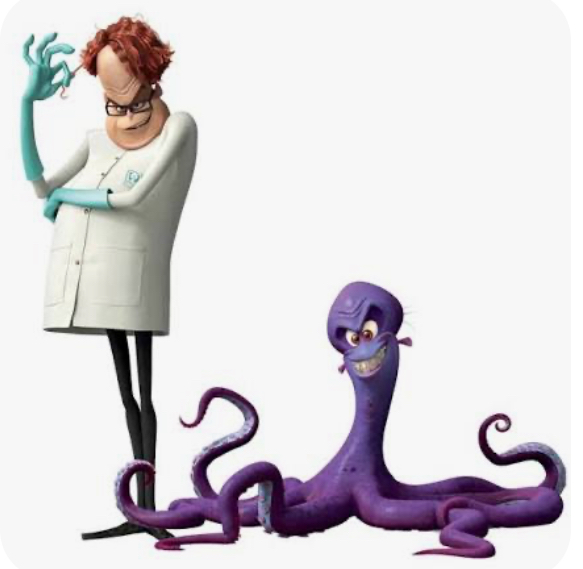 The thought of humans getting traits and characteristics from other species brings interesting questions about identity and the different limits of enhancing humans. If a technology like this existed, or became legal, I would choose to be hybridized with an octopus. Octopi are known for being extremely smart and having complex nervous systems that work and function very differently from a human brain. Different research on their brain’ show that a big portion of octopus’s neurons run throughout their arms opposed to staying centralized in the brain which allows the animal to interact and respond to its environment in unique ways (Niven & Nakagawa, 2024). This intelligence challenges the idea that cognition must operate like the human mind and brain. The idea of an octopus mixing and blending into human society was kind of shown in the movie Penguins of Madagascar. The villain, Dave the octopus, disguises himself as a human scientist. This brings up a philosophical question on if having intelligence, awareness, and the ability to make decisions make you human even if you do not have a physical human body?
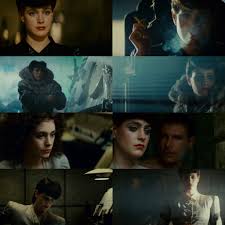 In Blade Runner, replicants are given artificial memories to stabilize them emotionally. Rachael’s belief that her memories are real allows her to function as “human,” even though those memories are borrowed. This raises an unsettling question: if memory shapes identity, does it matter where that memory comes from? The film refuses to offer a clear answer, instead forcing viewers to confront the idea that humanity might not be rooted in biology, but in lived (or perceived) experience. Roy Batty’s final monologue emphasizes this point. His memories, moments that will be “lost in time, only matter because they were embodied, felt, and lived, not stored in a machine.
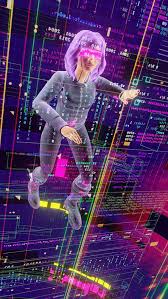
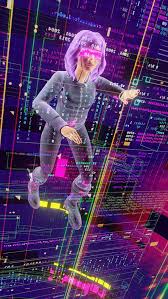 Neuromancer pushes this boundary even further. William Gibson imagines a world where consciousness can be separated from the body and uploaded into cyberspace. Memory becomes information, and identity becomes something that can be copied, traded, or weaponized. Artificial intelligences like Wintermute and Neuromancer treat memory not as something emotional, but as raw material to be optimized. This reflects Norbert Wiener’s definition of cybernetics as systems of control and communication, but cyberpunk reveals the danger in reducing humans to informational nodes within those systems.