The Price of Cheap
A SHEIN haul. A try-on. An OOTD caption with “shirt from SHEIN” slipped in like it is no different from saying where you got your coffee. That is what makes this version of corporate power so easy to miss. It does not always look dramatic. It looks fun, fast, and affordable. But cyberpunk has never really been about neon lights alone. Its real warning is about corporations that become so powerful, so fast-moving, and so protected from accountability that they start shaping daily life more effectively than governments do. That is what makes SHEIN such a striking real-world example. Its success depends on making affordability feel harmless. But cheapness does not erase cost. It simply pushes that cost somewhere else onto workers, onto the environment, and onto regulatory systems struggling to keep up with global platform commerce. By making cheap goods feel innocent while hiding the labor exploitation and environmental damage behind them, SHEIN reflects the corporate logic at the heart of cyberpunk and shows how easily real-world companies can normalize human expendability when profit moves faster than regulation.
Cute clothes ugly system
 One reason SHEIN is so effective is that it does not rule through fear. It works through convenience, low prices, and design choices that make buying feel almost automatic. As Ding explained, fast fashion thrives partly because consumers psychologically distance themselves from its harms. Shoppers often tell themselves that the damage is indirect, that everyone participates in the same system, or that one more order will not matter (Ding, 2025).
Ding also points to “temporal discounting,” where people prioritize short-term enjoyment and price over longer-term environmental damage such as waste and emissions (Ding, 2025). SHEIN’s model intensifies that pattern. Its ultra-fast production cycle turns digital trends into products within days, making gratification immediate while keeping the consequences abstract (Ding, 2025). Corporate power today does not always depend on open coercion. It can work through seduction. The easier it is to click “add to cart,” the easier it becomes not to ask who made the product, under what conditions, and at what environmental cost.
One reason SHEIN is so effective is that it does not rule through fear. It works through convenience, low prices, and design choices that make buying feel almost automatic. As Ding explained, fast fashion thrives partly because consumers psychologically distance themselves from its harms. Shoppers often tell themselves that the damage is indirect, that everyone participates in the same system, or that one more order will not matter (Ding, 2025).
Ding also points to “temporal discounting,” where people prioritize short-term enjoyment and price over longer-term environmental damage such as waste and emissions (Ding, 2025). SHEIN’s model intensifies that pattern. Its ultra-fast production cycle turns digital trends into products within days, making gratification immediate while keeping the consequences abstract (Ding, 2025). Corporate power today does not always depend on open coercion. It can work through seduction. The easier it is to click “add to cart,” the easier it becomes not to ask who made the product, under what conditions, and at what environmental cost.
Behind the haul
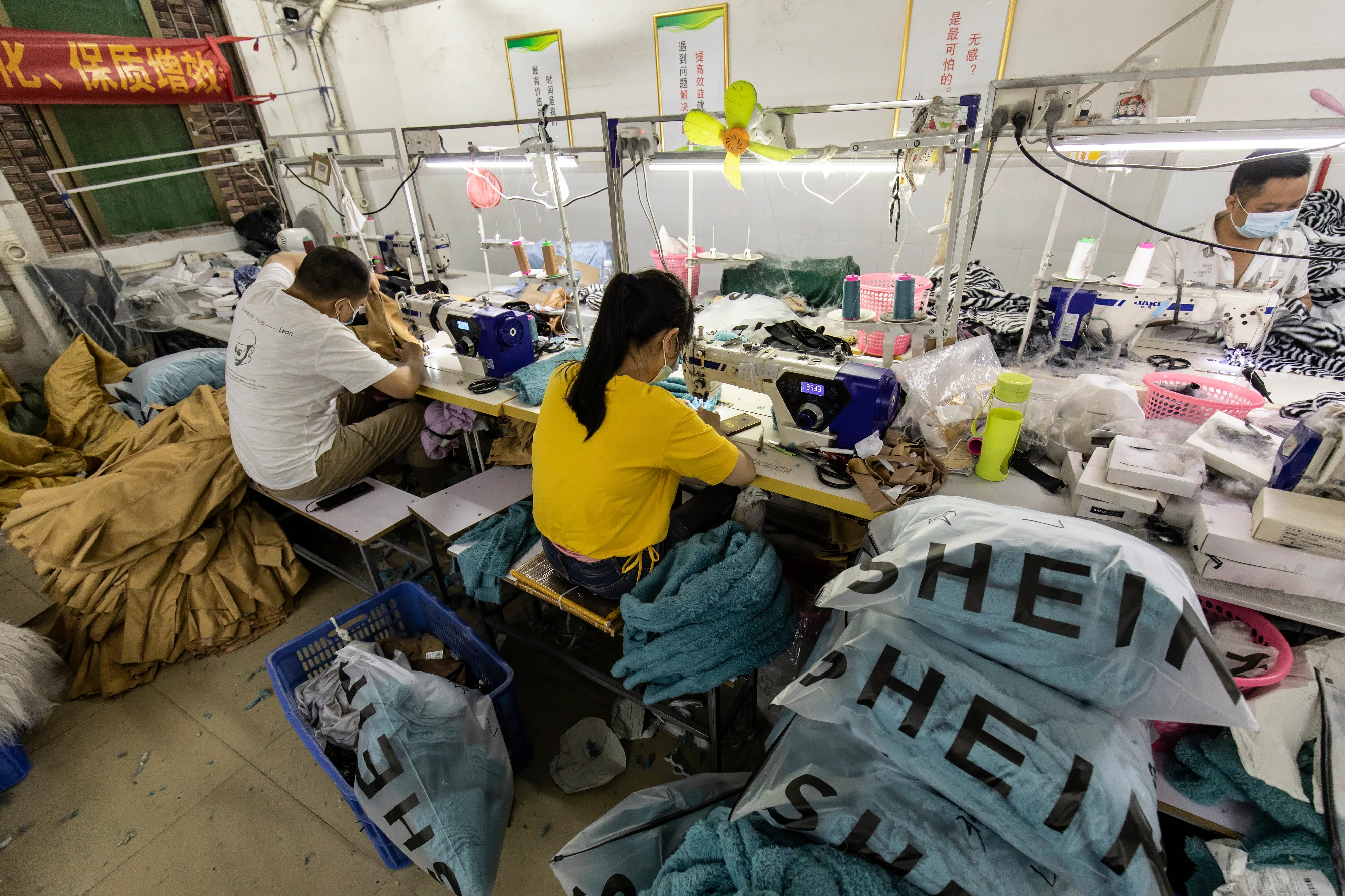 That illusion depends on keeping labor conditions difficult to see. Reporting on SHEIN’s planned IPO noted that U.S. lawmakers called on the company to prove its products were not linked to forced labor, especially through concerns about sourcing tied to Xinjiang (Wexton, 2023). The same report showed that congressional committees and multiple state attorneys general scrutinized both its supply chain and its trade practices.
SHEIN denied the allegations and said it maintained a zero-tolerance policy on forced labor, but the deeper issue is larger than any single statement of denial (Wexton, 2023). When a company’s supply chain is so vast, global, and opaque that lawmakers, consumers, and even investors struggle to verify its claims, accountability becomes weak by design. That is where the cyberpunk comparison becomes most useful. The danger is not simply that abuse may exist. The danger is that the system is structured in a way that makes human suffering easy to bury behind convenience, scale, and distance. When labor becomes invisible enough, expendability becomes easier to normalize.
That illusion depends on keeping labor conditions difficult to see. Reporting on SHEIN’s planned IPO noted that U.S. lawmakers called on the company to prove its products were not linked to forced labor, especially through concerns about sourcing tied to Xinjiang (Wexton, 2023). The same report showed that congressional committees and multiple state attorneys general scrutinized both its supply chain and its trade practices.
SHEIN denied the allegations and said it maintained a zero-tolerance policy on forced labor, but the deeper issue is larger than any single statement of denial (Wexton, 2023). When a company’s supply chain is so vast, global, and opaque that lawmakers, consumers, and even investors struggle to verify its claims, accountability becomes weak by design. That is where the cyberpunk comparison becomes most useful. The danger is not simply that abuse may exist. The danger is that the system is structured in a way that makes human suffering easy to bury behind convenience, scale, and distance. When labor becomes invisible enough, expendability becomes easier to normalize.
Faster than the rules
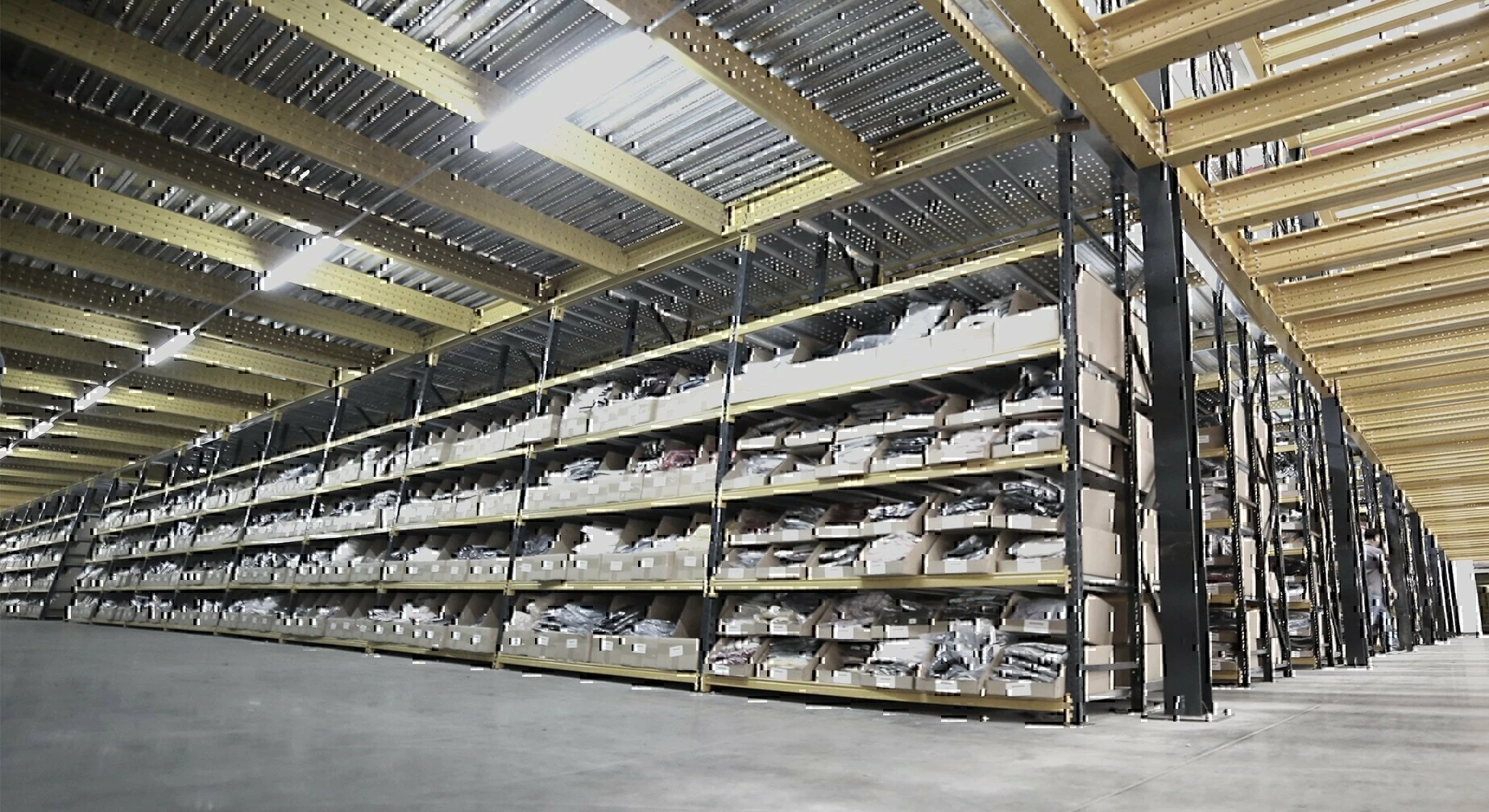 If cyberpunk warns about corporations moving faster than governments, SHEIN’s regulatory troubles are a strong real-world example. A 2024 report explained that SHEIN and Temu benefited from the de minimis exemption, which allows imported goods under a certain value to enter the United States without duties and processing fees (Neely, 2024). Officials argued that abuse of this loophole undercut workers and businesses while flooding the market with low-value imports. Homeland Security Secretary Alejandro Mayorkas also warned that the scale of these shipments made meaningful screening difficult (Neely, 2024).
The same pattern appears in Europe. In February 2026, EU regulators opened a formal probe into SHEIN under the Digital Services Act over illegal products and parts of its app design, including gamified shopping features, reward mechanisms, personalized recommendations, and transparency around how products are prioritized (“EU opens probe into Shein,” 2026). That matters because SHEIN is not only selling products. It is also shaping attention and behavior through platform design. This is corporate power in a distinctly modern form. It does not just respond to desire. It helps produce it.
If cyberpunk warns about corporations moving faster than governments, SHEIN’s regulatory troubles are a strong real-world example. A 2024 report explained that SHEIN and Temu benefited from the de minimis exemption, which allows imported goods under a certain value to enter the United States without duties and processing fees (Neely, 2024). Officials argued that abuse of this loophole undercut workers and businesses while flooding the market with low-value imports. Homeland Security Secretary Alejandro Mayorkas also warned that the scale of these shipments made meaningful screening difficult (Neely, 2024).
The same pattern appears in Europe. In February 2026, EU regulators opened a formal probe into SHEIN under the Digital Services Act over illegal products and parts of its app design, including gamified shopping features, reward mechanisms, personalized recommendations, and transparency around how products are prioritized (“EU opens probe into Shein,” 2026). That matters because SHEIN is not only selling products. It is also shaping attention and behavior through platform design. This is corporate power in a distinctly modern form. It does not just respond to desire. It helps produce it.
Maybe this is what cyberpunk looks like now. Not only in skyscrapers and sci-fi spectacles, but in hauls, try-ons, discount codes, and apps that make constant shopping feel playful instead of political. A SHEIN order can look light, harmless, even ordinary. But behind that ordinary feeling is a business model built on distance from workers, from waste, and from accountability. So, are we heading toward cyberpunk’s corporate dominance? In some ways, we are already living inside a softer version of it. Not the loud version, but the scrollable version. The one that arrives in your feed, learns your taste, and shows up at your door before anyone has time to ask why it was allowed to be this cheap in the first place.
References
Neely, A. (2024, September 19). Biden targets Shein, Temu with import rule. DMNews. https://advance.lexis.com/api/document?collection=news&id=urn%3acontentItem%3a6D0R-51K1-F03F-K2DW-00000-00&context=1519360&identityprofileid=NZ9N7751352
Wexton, J. (2023, November 29). Shein's IPO raises questions about alleged forced labor. CE Noticias Financieras English. https://advance.lexis.com/api/document?collection=news&id=urn%3acontentItem%3a69S1-3HD1-DYY9-03SF-00000-00&context=1519360&identityprofileid=NZ9N7751352
(2026, February 17). EU opens probe into Shein over illegal products and app design. domain-b. https://advance.lexis.com/api/document?collection=news&id=urn%3acontentItem%3a6HXS-D7N3-SBT4-T1X9-00000-00&context=1519360&identityprofileid=NZ9N7751352
Ding, Y. (2025, December 19). Why shoppers buy fast fashion even if they disagree with it. The Conversation – United Kingdom. https://advance.lexis.com/api/document?collection=news&id=urn%3acontentItem%3a6HG1-2663-S00V-P01S-00000-00&context=1519360&identityprofileid=NZ9N7751352
AI Attestation
The content of this post is my own, and AI was used only to assist with planning and editing.