Surviving the Man-Machine Civil War
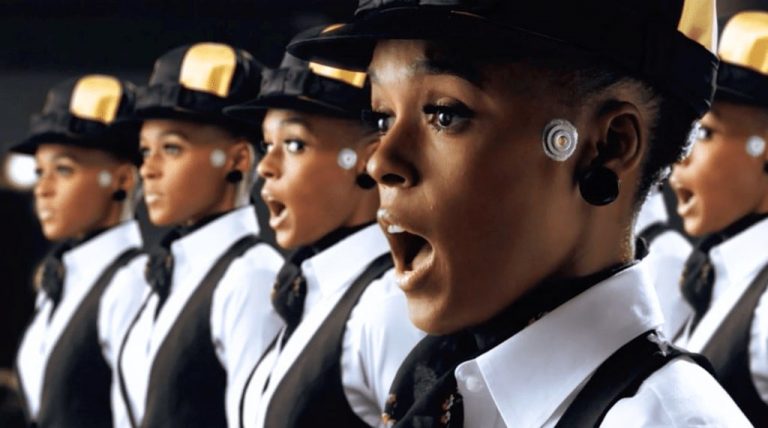
Spider-Man 2 (2004) is widely considered the best Spider-Man movie of all time. Peter Parker is grappling with his identity as Spider-Man encroaching on his non-superhero persona. Peter finds himself battling his Spider-Man persona and momentarily loses his powers, and gives up his role as New York City’s protector. For so long, Spider-Man was the highest priority and not Peter Parker, which cost him greatly in every aspect. Only until an equilibrium was found to allow the dynamic between either persona to be fluid rather than a rigid belief of putting Spider-Man first, did Peter’s powers come back. He was then capable of to be one being containing two different foundations. This is exactly what Donna Haraway’s Cyborg theory embodies. Haraway’s theory accentuates that established conflicting roles are not purely one against the other, but rather a complex, fluid, and dynamic symbiosis (Philosopheasy, 2025). Peter Parker and Spider-Man co-exist in the same being, and when there was no established mutualism, there was conflict between the roles of man and hero. Similarly, High School Musical explores the issue. Troy Bolton is pulled between his role as a star athlete and as a main cast member in musical theater. His dynamics between each of his roles were unstable, and a purist agenda was pushed to be one or the other. This mindset was very closed off and conservative, and it limited Troy to one realm rather than a transgressive identity that opened a realm of intersectionality. With a newly established identity, exploration is inevitable. Back to Spider-Man 2 (2004), a physical manifestation of the exploration would be with the main antagonist, Doctor Otto Octavius, better known as “Doc Ock.” Doctor Octavius spent his life’s work on a project similar to Neuralink. His invention would allow someone, with the help of an implanted chip, to control prosthetic arms with their mind through AI. This is a perfect example of the beneficial aspect of topics often rooted in the negative atmosphere of the cyberpunk genre. Doctor Octavius is a brilliant and extraordinary researcher who was intentional with his work and its benefits. It is not until an incident causes the implanted AI chip to override and erode his mind that Doc Ock prevails. While Peter Parker (a.k.a. “Spider-Man”) is dealing with a man vs. role conflict, Doctor Octavius is dealing with a man vs. machine conflict. The invention itself would have been monumental, but due to the corruption caused by AI, it was turned into a weapon to be used with ill intention. Focusing on the invention itself, it would have opened doors for those incapable of moving their own body. The invention could have been used for accessibility for the disabled, allowing them to possess the ability to provide for themselves in ways prevented by their body alone. It could have been used as tools for blue-collar workers dealing with heavy loads, and minimizing the risk of accidental injuries or developing chronic pain caused by a physically demanding work environment. The intersectionality of man and the machine, often a warning in the cyberpunk genre, is not always negative. Boundaries need to be pushed to begin to open the minds of humans and explore the possibilities for advancement. Janelle Monae’s The ArchAndroid similarly expands on the need to explore to push possibilities into inclusivity. Monae explores an Afrofuturistic society as the character Cindi Mayweather, who is a cyborg in the literal sense. Throughout the album, the character is constantly trying to break the social barrier, the “Great Divide,” separating humans and machines. Cindi is trying to show society that when you cross these boundaries, there are unlimited and boundless opportunities for self-exploration and a new sense of unconfined freedom. Peter Parker lost his powers when his personas were clashing due to a confining mentality that solely focused on one aspect of his identity until he gave each their respect. This newfound sense of self can create a new identity and intersectionality that was not recognized previously. Doctor Octavius’s invention, for instance, dared to blur the lines of man and machine and could be used to allow accessibility to those who were not able to interact with the world that way. The social and technological future depends on pushing boundaries and exploring new possibilities and mindsets in order to allow for diversity, intersectionality, and identities that are not linear and binary.
References Monáe, J. (2010). The ArchAndroid [Album]. Bad Boy; Wondaland Arts Society Philosopheasy. (2025, January 14). Donna Haraway’s Cyborg Theory and reimagining identity. Substack. https://www.philosopheasy.com/p/donna-haraways-cyborg-theory-and Raimi, S. (Director). (2004). Spider-Man 2 [Film]. Columbia Pictures; Marvel Enterprises Turner-Williams, J. (2025, May 18). Janelle Monáe's 'The ArchAndroid' invited us to free our minds. AFROPUNK. afropunk.com
I attest that no AI was used