From Binary to Interface: The Cyborg Future of Gender

- Posted in BP03 by

Beyond the Binary: How Digital Spaces Are Rewriting Gender

In A Cyborg Manifesto, published in Simians, Cyborgs, and Women, Donna Haraway imagines the cyborg as a boundary-breaking figure, one that dissolves the rigid lines between human and machine, physical and digital, male and female. Haraway’s cyborg is not about robots taking over the world. It is about liberation. When boundaries collapse, categories that once controlled us begin to lose their power. Today, one of the clearest examples of this liberation through hybridity can be found in nonbinary and trans digital communities. Across platforms like TikTok, Discord, and Reddit, individuals are reshaping what gender looks like in real time.

The Boundary That’s Breaking

For centuries, gender was treated as biological, fixed, and binary. But online spaces have made identity more flexible and more customizable. Users can change their names and pronouns instantly. Avatars allow experimentation with presentation. Digital communities offer language and validation that may not exist locally.

According to a 2022 report from the Pew Research Center, about six in ten U.S. adults say they know someone who uses gender-neutral pronouns. That statistic shows how quickly social awareness is shifting—and digital spaces play a major role in that visibility. This evolution mirrors the android alter ego in The ArchAndroid by Janelle Monáe. In The ArchAndroid, Monáe’s character Cindi Mayweather exists between categories: human and machine, oppressed and revolutionary. Her identity disrupts systems that depend on rigid classification. Similarly, nonbinary digital users disrupt binary gender systems simply by existing publicly and unapologetically. The digital self becomes a cyborg: part biological body, part technological extension.

Liberation Through Hybridity

Haraway argues that hybridity can be a source of political power. That argument feels especially relevant when looking at LGBTQ+ digital communities today.

A smartphone becomes more than a device—it becomes a tool for self-definition. A social media profile becomes a living, evolving identity space. Hashtags function as rallying points. Online networks create solidarity across borders.

The advocacy organization GLAAD documents how digital representation significantly impacts public understanding and safety for LGBTQ+ individuals. Increased visibility does not eliminate discrimination, but it shifts cultural conversations and challenges harmful norms. Unlike dystopian cyberpunk stories where technology dehumanizes people, this moment reveals something more hopeful: technology can help people reclaim agency over their identities.

Where Haraway’s Vision Gets Complicated

Still, this liberation is not simple.

Haraway imagined the cyborg as resistant to domination, yet today’s digital spaces are owned by corporations. Algorithms can amplify marginalized voices, but they can also suppress them. Online harassment, content moderation policies, and data surveillance complicate the idea of technological freedom.

Monáe’s android faces systemic oppression despite her brilliance. Likewise, trans and nonbinary creators often face backlash online. The boundary collapse creates freedom, but it also exposes people to new vulnerabilities. Liberation and risk coexist.

20–30 Years From Now

If we look ahead a few decades, identity may become even more technologically integrated.

With advances in immersive virtual reality, AI-generated avatars, biometric wearables, and brain-computer interfaces, we may see identities that shift across platforms and environments seamlessly. Digital avatars could evolve independently of physical appearance. AI tools may help individuals experiment with self-expression before embodying it offline. Gender could shift from being a classification assigned at birth to something more like a customizable interface.

Instead of asking, “What are you?” society might ask, “How do you identify—and how can systems support that?”

That future reflects Haraway’s core argument in Simians, Cyborgs, and Women: breaking boundaries does not destroy humanity. It expands it.

Why This Matters

The transformation happening in digital gender communities demonstrates how local experiences connect to global change. Someone in a restrictive environment can find solidarity online. Language evolves. Categories loosen.

If we want to contribute to a more just and humane society, we must ensure that technological expansion increases autonomy rather than reinforcing control.

The cyborg is not a distant science fiction fantasy. It is already here—in usernames, avatars, pronouns, and hybrid digital selves that refuse to stay confined.

And that refusal might be one of the most powerful forms of liberation in our generation.

References:

GLAAD. (2023). Social media safety index (SMSI). https://www.glaad.org/smis

Haraway, D. (1991). A cyborg manifesto: Science, technology, and socialist-feminism in the late twentieth century. In Simians, cyborgs, and women: The reinvention of nature (pp. 149–181). Routledge.

Monáe, J. (2010). The ArchAndroid [Album]. Wondaland Arts Society/Bad Boy Records/Atlantic Records. https://www.jmonae.com/music/the-archandroid

Pew Research Center. (2022, June 7). About six-in-ten U.S. adults say they know someone who uses gender-neutral pronouns. https://www.pewresearch.org/social-trends/2022/06/07/about-six-in-ten-u-s-adults-say-they-know-someone-who-uses-gender-neutral-pronouns/

Beyond Male and Female: How Transgender and Nonbinary Identities Show Liberation Through Hybridity

- Posted in BP03 by

Beyond Male and Female: How Transgender and Nonbinary Identities Show Liberation Through Hybridity

One powerful example of fluid identity and liberation through hybridity today is the growing visibility of transgender and nonbinary identities. Around the world, more people are openly rejecting the strict boundary between "male" and "female." Instead of seeing gender as fixed and biological, many now understand it as fluid, personal, and shaped by both culture and self-expression.

This real-world shift connects closely to Donna Haraway's cyborg theory. In "A Cyborg Manifesto," Haraway 1985/2016) argues that traditional boundaries such as human/machine, male/female, and natural/artificial-are breaking down. She writes that the cyborg is a figure that "skips the step of original unity" and rejects rigid categories (Haraway, 2016). In simple terms, she believes we do not have to fit into old boxes. We can build new identities by mixing and crossing boundaries.

We also see this idea in Janelle Mone's album The ArchAndroid. In her music and storytelling, Mone creates the character Cindi Mayweather, an android who does not fully belong to one group. The android is both human and machine. Through this hybrid identity, Mone explores freedom, resistance, and self-definition. She uses science fiction to imagine a world where difference is not punished but celebrated. Today, transgender and nonbinary communities reflect this same kind of boundary-crossing. The line between male and female is no longer treated as natural and permanent by everyone. According to the Pew Research Center (2022), about 1.6% of U.S. adults identify as transgender or nonbinary, and younger generations are more likely to identify this way (Brown, 2022). This shows a generational shift toward fluid identity.

Technology also plays a role in this liberation. Social media platforms like Instagram and TikTok allow people to share their pronouns, document transitions, and build supportive communities. Online spaces help people experiment with identity in ways that may feel safer than offline spaces. This reflects Haraway's idea that humans and technology are deeply connected. Our identities are shaped not only by biology but also by digital tools and networks.

At the same time, this movement challenges major boundaries: • The boundary between biological sex and gender identity • The boundary between private identity and public recognition • The boundary between "natural" and "constructed" categories

However, this real-world example also differs from Haraway and Mone in some ways. Haraway's cyborg is symbolic and theoretical. Mone's android is fictional. But transgender and nonbinary people face real social and political struggles. For example, debates about healthcare access and legal recognition show that boundary collapse is not always welcomed (ACLU, 2023). Liberation through hybridity can create backlash because it threatens traditional power structures.

Looking 20-30 years into the future, fluid identities may become even more common. Younger generations already show greater acceptance of gender diversity (Brown, 2022). Technology may also expand possibilities. For example, virtual reality and digital avatars could allow people to express gender in new ways beyond the physical body. Advances in medical technology may make gender-affirming care safer and mole accessible.

We may also see new forms of resistance and freedom. Instead of fighting only for inclusion within old systems, future movements might redesign institutions entirely-such as removing gender markers from IDs or creating more gender-neutral spaces. The idea of identity itself may shift from something fixed to something flexible and evolving. Still, challenges will remain. Liberation through hybridity does not automatically create equality. As Haraway reminds us, cyborg identities exist within systems of power. The question is not only whether boundaries collapse, but who benefits from that collapse.

In conclusion, the rise of transgender and nonbinary identities shows how fluid identity can be a source of liberation. Like Haraway's cyborg and Mone's android, these identities challenge old categories and imagine new futures. They show that boundaries are not natural laws-they are social constructions that can change. If current trends continue, the next generation may live in a world where identity is less about fitting into boxes and more about creating yourself.

References

ACLU. (2023). Mapping attacks on LGBQ rights in U.S. state legislatures. https://www.aclu.org

Brown, A. (2022). About 5% of young adults in the US. say their gender is different from their sex assigned at birth. Pew Research Center.

Haraway, D. (2016). A cyborg manifesto. In D. Haraway, Manifestly Haraway (pp. 3-90). University of Minnesota Press. (Original work published 1985).

Monáe, J. (2010). The ArchAndroid [Album]. Bad Boy Records.

I Hear My People, But I Don’t See My People

- Posted in BP03 by

A contemporary example of fluid identity and liberation through hybridity can be seen in the global circulation of Korean pop music, or K-pop. Many Korean idols who pursue hip-hop and rap-aligned sounds adopt stylistic elements rooted in African American culture, including African American Vernacular English, fashion, and choreography. This blending challenges boundaries of race, nation, and authenticity. Identity in this context becomes something performed and assembled from cultural fragments rather than fixed to biology or ethnicity. As a result, K-pop demonstrates how identities can be constructed through crossing boundaries, while also exposing tensions between representation and lived experience.

Hybridity on the Global Stage

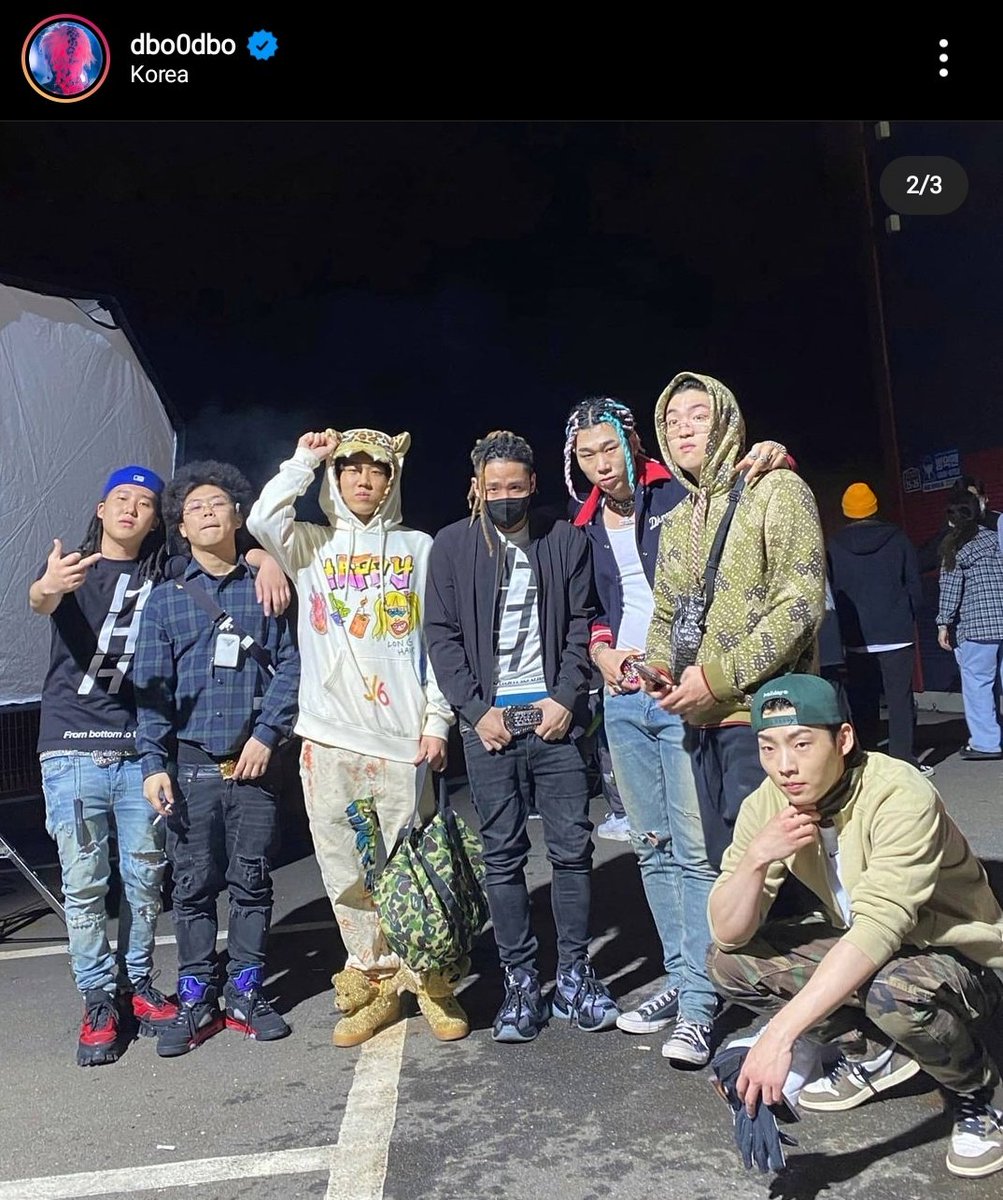
The history of Black cultural borrowing in K-pop is well documented. As O. Gaines argues in The Tufts Daily, “Black culture has heavily influenced K-pop’s music, fashion and overall aesthetic since its inception,” yet that influence often goes uncredited or is misunderstood as neutral globalization rather than racialized borrowing. This pattern is not new. In the 1990s, J. Y. Park, founder of JYP Entertainment, performed in blackface alongside background dancers, a moment that revealed how Blackness could be treated as costume within the industry’s early formation. Decades later, Park again received criticism for posting a remix of DNA by Kendrick Lamar, featuring non-Black performers styled with afros and dreadlocks. In these instances, Black cultural aesthetics function as wearable signifiers layered onto Korean bodies. enter image description here

Image: Screenshot from J. Y. Park’s Kendrick Lamar remix performance, originally shared by @CallMeGizzzy on X (formerly Twitter), [June 14, 2021]. Used for commentary and educational purposes.

K-pop artists construct hybrid identities by performing Black musical and aesthetic traditions alongside Korean language and culture, creating fluid identities that cross racial and national boundaries. Groups like BTS incorporate hip-hop choreography, rap flows, and streetwear aesthetics rooted in Black American culture into their global pop identities. This challenges racial boundaries by staging Black cultural forms through non-Black artists, national boundaries by translating African American genres into Korean contexts, and linguistic boundaries by blending Korean and English in rap and pop lyrics. It also destabilizes authenticity boundaries, presenting identity as performance rather than essence.

At the same time, hybridity in K-pop does not only function as appropriation. It also creates new transnational spaces of belonging. In her thesis on fandom and identity, Varma explains that K-pop communities allow fans to “negotiate identity and belonging across national and racial lines,” producing forms of attachment that are not confined to geography or ethnicity. This reflects the liberatory potential of hybridity: identities are no longer anchored solely in nation or race but are assembled through shared media, aesthetics, and affective communities.

This phenomenon closely echoes the theory advanced in A Cyborg Manifesto by Donna Haraway, who argues that identities are hybrid assemblages rather than pure categories. K-pop artists function like cultural cyborgs, assembling identities from multiple systems such as Korean tradition, Black American music, global capitalism, and digital media networks. However, while Haraway celebrates hybridity as boundary-breaking and potentially liberating, K-pop demonstrates that hybridity can also reproduce unequal cultural exchange when certain identities carry historical oppression.

The work of Janelle Monáe offers a revealing contrast. Through Afrofuturist performance, Monáe uses hybridity to center Black identity and reclaim agency. In contrast, K-pop often circulates Blackness globally as a performable identity layer signaling coolness and authenticity. Monáe mobilizes hybridity as resistance from within Black experience, while K-pop illustrates how Blackness can become a globally consumable aesthetic detached from lived history.

The Future of Wearable Identity

Looking ahead 20–30 years, identity may become even more modular and technologically mediated. The rise of AI-generated performers and virtual idols suggests that artists may soon construct personas that are partially human and partially algorithmic. If hybridity already allows cultural identities to be assembled and worn, future technologies may allow identities to be coded, customized, and projected across virtual environments. This could expand freedom of self-expression and create new forms of solidarity across borders. Yet it will likely intensify debates about ownership, authenticity, and historical accountability.

AI Attestation: The AI ChatGPT was utilized to plan and edit this posting. https://chatgpt.com/share/699b4620-def4-8009-9ff7-6e16afa28e35

Citations

Gaines, O. (2022, March 16). K-Weekly: Black appropriation in K-pop (Part 1). The Tufts Daily. https://www.tuftsdaily.com/article/2022/03/k-weekly-black-appropriation-in-k-pop-part-1

Varma, T. (2024). IDENTITY AND BELONGING Identity and Belonging: South Asian Americans Navigating K-pop Industry and Fandom. https://sites.lsa.umich.edu/commmediathesisprogram/wp-content/uploads/sites/1393/2025/01/VARMA-2023.pdf

Cyborg Realities: The Metaverse

- Posted in BP03 by

Haraway's Cyborg Theory and the Breakdown of Binaries

Donna Haraway’s theory and idea of the cyborg stem from her feminist and socialist theoretical work. She asserts that cyborgs, in themselves, break the binary boundaries that Western thought has placed on us. Boundaries such as human vs. machine and nature vs. culture assert that there is one category that triumphs over the other and serves as the standard. The cyborg’s existence breaks down these boundaries by design. It does not adhere to the standards and does not have allegiance to a specific side of the binary, which Haraway asserts provides liberation and freedom due to its hybridizing of the binary.

In Janelle Monáe’s The ArchAndroid, we follow her character, who lives in a world where androids are solely for their utility to humans. They are used for entertainment and are treated as inferior to humans. She falls in love with a human, which is a crime in this universe. This would normally result in punishment, but she escapes and becomes a figure of revolution and liberation for other androids. Monáe’s storyline incorporates cyberpunk themes with Afrofuturistic visuals, sounds, and themes to build a world where her main character is an example of the very cyborg Haraway discusses.

The Metaverse as a Modern Cyborg Space

Today, there are many examples of the cyborg and the principles that Haraway discusses, given that digital identity comes in many forms. Most prominently, the Metaverse and the way the virtual world it creates shows the cyborg identity in action. Since it is pushed forth by a corporation, it also reflects common cyberpunk themes while interacting with the ideas that Haraway and Monáe push forth.

The Metaverse is “a simulated environment that is developed to converge an enhanced version of physical and virtual realities” (Dwivedi, 2023). Through the metaverse, users are immersed in the virtual platform and are represented by characters or avatars that they can create however they would like. While you may be one person, you are able to be different from your physical form and separate yourself from it. This creates multiple identities for the user: the identity associated with their physical form and their identity in the metaverse. This also is used to blur many binaries that Haraway discusses, such as the human and machine, the physical and virtual, and the gender binary. Through dissolving these dualisms, this form of the cyborg reflects Haraway’s ideas. When considering the metaverse and its avatars, there can be a liberatory factor in being able to exist as a new version of yourself that is separate from the experience associated with your physical form. While this is not the same situation discussed in the album, there is a relation to the freedom experienced by breaking free from what the real world wants for you.

Future Possibilities and Risks of the Metaverse

Looking forward, the Metaverse could go many ways. Considering current trends and technologies being developed, such as Neuralink, I could see wearable technology and brain-computer connections that allow instant access to the metaverse becoming normal. This could be positive because of the freedom it would give users to escape into their virtual reality. While there could be positives, in the article “Exploring the Darkverse: A Multi-Perspective Analysis of the Negative Societal Impacts of the Metaverse,” the possible negative effects seem more likely. The vulnerability of the consumer, privacy concerns, and identity theft are all raised as significant concerns in the future of the metaverse. This goes against the freedom of breaking the binary because it challenges the safety and life of the physical body that users inhabit.

The cyborg is not a speculative science fiction concept or character. It is present in the present and exists in the digital identities we have access to create. Given the boundaries that are blurred by the concept of the cyborg, we now must question who controls how blurred those boundaries are. Especially when considering the metaverse, the corporations behind it take away some of the freedom we receive from their products. Hopefully, the technologies we continue to develop are able to give us access to a hybrid future that affirms our current identities and encourages us to find freedom in new ones.

AI attestation: AI was used to edit grammar and create heading titles. https://chatgpt.com/share/699a856d-b6ec-800d-b3fe-756b565ea4f2

References Dwivedi, Y. K., Kshetri, N., Hughes, L., Rana, N. P., Baabdullah, A. M., Kar, A. K., ... & Yan, M. (2023). Exploring the darkverse: A multi-perspective analysis of the negative societal impacts of the metaverse. Information systems frontiers, 25(5), 2071-2114.

Fluid Fabric, Digital Flesh: Who Are We Becoming?

- Posted in BP03 by

One Boundary That Has Shifted

One boundary that has shifted dramatically in the last decade is the boundary between masculinity and femininity.

That’s a broad claim. Let me explain.

In A Cyborg Manifesto, Donna Haraway argues that the cyborg breaks down rigid dualisms: human/machine, male/female, natural/artificial. Identity, in her vision, is not pure. It is a hybrid. It is stitched together from culture, technology, and lived experience.

Then you move to The ArchAndroid by Janelle Monáe, where the android Cindi Mayweather exists between categories (human and machine, outsider and revolutionary.) Monáe uses hybridity as liberation. The android becomes powerful precisely, because she does not fit.

Now look at your closet.


The Closet as Cyborg Space

“More bling in the men’s section than the little girls’ section nowadays.” enter image description here That sentence says more than it seems to.
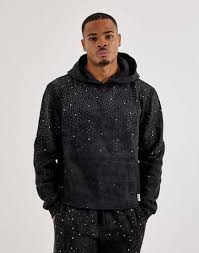
Jewelry on men. Oversized blazers on women. Painted nails. Pearls. Hoodies with rhinestones. Skirts styled with combat boots. Streetwear, cottagecore, Y2K aesthetics colliding in the same Instagram feed. Platforms like TikTok and Instagram don’t just display trends, they accelerate identity experiments. The algorithm becomes a stylist, a mirror, sometimes even a co-author of the self. enter image description here

Gender is often defined as the classification of male or female that includes social, psychological, emotional, and intellectual characteristics. Fluidity suggests that individuals may move in and out of those categories. The key word there is move. Movement implies change. Change implies instability. And instability, culturally speaking, can be either terrifying or freeing.

The words “masculinity” and “femininity” only mean something within particular cultures and languages. They are not laws of physics. They are agreements. And agreements can be renegotiated.

Clothing has become one of the most visible sites of that renegotiation.


More Bling in the Men’s Section

Fashion today is not just fabric.

When men wear pearls or women adopt traditionally “masculine” silhouettes, they are not simply following a trend. They are participating in a cultural redefinition. Queer theory has long argued that the way we think and talk about gender changes how we live it. When the visual codes shift, the social rules shift with them.

But here’s where it gets interesting.

This shift mirrors Haraway’s cyborg. Our identities are no longer anchored solely in biology. They are mediated by screens, online communities, and digital marketplaces. We scroll, we curate, we remix. In turn, the self becomes a hybrid mix of part body, part algorithm, part aesthetic collage.

At the same time, there’s tension. Haraway imagined hybridity as political resistance. Monáe’s android confronts oppression. Today’s gender-fluid fashion sometimes risks being absorbed into consumer culture. Liberation becomes a marketing category. The system adapts.

Hybridity can be radical. It can also be sold.

Both things can be true at once.


Algorithms and Identity

We are living in a moment where global media, constant connectivity, and hyper-consumerism blur the edges of who we are. Your “For You” page may know your aesthetic before you do. Your search history feeds your wardrobe. The digital and the embodied are no longer separate spaces instead, they are layered.

In this sense, we are all minor cyborgs now.

But unlike the posthuman argument that reduces us to information processors, lived experience still matters. An algorithm can predict your next purchase. It cannot feel the social risk of stepping outside a dress code. It cannot know the quiet courage of wearing what feels true to you.

That interiority is what keeps the human from dissolving entirely into the digital.


Twenty Years From Now

Project forward 20 to 30 years.

Wearable technology is already advancing. Smart fabrics exist. Digital fashion is growing. Younger generations increasingly identify outside rigid gender binaries, according to surveys from organizations like the Pew Research Center.

Imagine clothing that shifts color or silhouette with mood. Imagine augmented reality layers that allow you to project different aesthetics depending on context. Imagine identities that are not fixed at birth but continuously assembled across physical and digital spaces.

The boundary between body and interface may thin even further.

But here’s the question: will that hybridity serve human flourishing, or simply deepen surveillance and commodification?

Haraway would likely argue that the outcome depends on how we build these systems, whether they reinforce old hierarchies or genuinely expand freedom. Monáe’s vision reminds us that those who exist between categories often reveal where power hides.

Hybridity alone is not liberation. Intent matters.


Who Are You?

So here we are.

Men in pearls. Women in oversized suits. Screens shaping closets. Closets reshaping culture. Culture reshaping identity.

The boundary between masculinity and femininity is not gone, rather it is loosening. It is becoming permeable. And in that permeability, something new is emerging: a sense of self that is less confined by inherited scripts and more open to self-authorship.

The cyborg is not just metal and code.

It might be standing in front of a mirror, choosing what to wear.

If identity is no longer a fixed category… If hybridity is becoming ordinary… If clothing can be both expression and resistance…

Who are you becoming?


Source:

Harraway, Donna. (2016). Gender Fluidity. In A Cyborg Manifesto (pp. 118–130). Lutterworth Press. https://www.lutterworth.com/wp-content/uploads/extracts/thinking-woman-ch4-extract.pdf

*AI Attestation: Used to enhance and edit original ideas and content
Hybridity and Fluidity

- Posted in BP03 by

One clear example of fluid identity and liberation through hybridity today is the rise of AI art tools. Platforms like ChatGPT let people generate text or images by working with algorithms instead of relying only on traditional skills. The boundary between human creativity and machine assistance starts to blur. The creator is no longer working alone but in partnership with a system. That hybridity can be freeing because it lowers barriers. Someone without years of formal training can still produce meaningful work by learning how to guide the tool. Another example is the growing use of advanced prosthetic limbs supported by major universities and hospitals. These devices can respond to muscle signals, which makes movement feel more natural. The line between organic body and machine extension becomes less strict. This challenges the idea that the human body has a single fixed standard. Instead, ability becomes flexible and shaped through technology. That reflects what Donna Haraway describes with the cyborg, a figure that exists between categories rather than inside just one. These examples also connect to Janelle Monáe’s android narrative in The ArchAndroid. In that album, the android represents people who are treated as different or outside the norm. The character shows that being part human and part machine does not mean being less than human. It can mean redefining what human even is. In the real world, AI tools and medical technology suggest something similar. They show that identity and ability are not locked in place. At the same time, these changes are happening inside systems shaped by money and power. AI platforms are owned by large companies. Advanced medical devices are expensive. Access is uneven. The tools can expand what is possible, but who gets access to them still matters. Technology does not automatically fix social inequality. It just changes the way power shows up. In 20 to 30 years, I think people will interact with technology even more directly. AI may become a normal part of daily life instead of something you only use when you need it. Medical technology might allow people to improve memory, movement, or communication through small implants or wearable systems. Identity might include both physical and digital existence. New forms of freedom may focus on controlling personal data and how technology shapes the body and mind. If hybridity keeps growing, liberation will depend on making sure people can choose how they merge with technology rather than being forced into it.

Toto We’re Not In Kansas Anymore

- Posted in BP03 by

The natural way of the world is for organisms to evolve, with human beings being a prime example. We’ve managed to morph from individuals with limited speech and lithics to individuals with advanced thought processes and understanding of extreme technology. It’s no wonder that as time continues so does technological advancement and its integration into everyday life. However, I wonder if such is the reason that we as a society are beginning to become desensitized to the overconsumption and integration of AI. It’s no longer being used as an intellectual tool, but as a creator of art. And no, I’m not just talking about the production of little avatars for a profile picture.

As of late, there have been more instances in which people are using AI to generate music and personas for fictional musicians and advertising the music as their own creation to audiences. A popular example of this issue is Xania Monet. The creator of the artificial musician, recently explained that the AI persona is her means of expressing her creativity and sharing her story. I don’t mean to be close minded, but I think one of the most beautiful things about humanity is the way the mind and spirit works to produce emotion through fine arts, dancing, and music. These creations are then shared between cultures, ultimately strengthening the bond between peoples. I can’t help but feel as though the use of AI takes away from that beauty as the act lacks the need for creativity. Not to mention, AI is not producing the voice of these AI artists from thin air. The programs are utilizing the voices of human singers and merging them together to produce one voice.

In my opinion, the existence and use of AI singers connects directly to Haraway’s concept of the cyborg. We’re witnessing a direct blur between humanity and technology in the form of art, and more and more it’s becoming harder to separate humanness from the inanimate nature of technology. For instance, if one puts lyrics into a program and simply asks the program to produce a voice, is it still that artist? Or what if one simply asks an algorithm to create both lyrics and a voice based on a prompt, is it fair to say that the art produced belongs to the human or does it belong to the AI? Even more so, would it even be art if it substantially lacks the influence of a human being.? I think about this often.

Once again I don’t want to be closed minded but I can’t say that it isn’t concerning and overwhelming to see just how much AI is becoming integrated into our norms. In this specific case, it makes me wonder what music will look like in the future. There are people, who work their whole lives to be noticed for their music, taking the time to train their voice and hone their craft and yet they never have the privilege of seeing their dream come to light. And now, you have artificial musicians being produced and receiving record deals as if they aren’t inanimate objects. Will that be the future? A future where those who live and breathe music are no longer fortunate enough to produce it, to be recognized for it. I feel as though AI is the easy way out for so many people. They use artificial intelligence as a crutch, refusing to do the work for themselves and to pour their essence into the things they love, instead relying on an algorithm. There just seems to be a lack of genuineness.

So far, there has been some legislation being drafted in order to monitor and decrease the abuse of AI in music. The law mostly focuses on the AI regeneration of music that resembles the music of artists. So in retrospect, there will definitely be those who oppose the usage of AI in music, but I fear that wouldn’t be enough. There are a plethora of consequences of AI that threaten more than just the authenticity and creativity of music, but the actual livelihoods of marginalized individuals. Even with such consequences being shared, there is still continued development of AI programs and data centers. So I guess only time will tell. But for now, we’re in a place far from what we’re used to. Far from home.

*AI was not used in any way to generate this post. This includes formatting, the organization of ideas, as well as the gathering of sources.

Citations:

Hight, J. (2024). AI music isn’t going away. Here are 4 big questions about what’s next. NPR. https://www.npr.org/2024/04/25/1246928162/generative-ai-music-law-technology

Voynovskaya, N. (2025). AI Is Coming for the Music Industry. How Will Artists Adapt? Kqed.org. https://www.kqed.org/arts/13982572/ai-is-coming-for-the-music-industry-how-will-artists-adapt

Boundaries Breaking

- Posted in BP03 by

Intro

In Donna Haraway’s “A Cyborg Manifesto,” she introduces the concept of the cyborg as a boundary breaking figure that is half organism and half machine, and whose very existence disrupts the story that identity is fixed, black or white, one thing or another. The cyborg is many different things simultaneously which breaks those rigid boundaries. The cyborg is powerful because it possesses a lot of conflicts, such as human versus machine, physical body versus information, nature versus culture, ect.. Rather than grounding identity in biology or origin , Haraway argues that identities are constructed, fluid, and constantly changing and evolving. Haraway’s vision closely aligns with the contemporary experiences of gender fluidity/ nonbinary identity in digital spaces, where individuals are pushing the notion that gender is flexible and is situational rather than being fixed. This real world example while reflecting Haraway’s vision can also be tied to Janelle Monáe’s fundamentals of liberation being mediated through corporate platforms and lived as an everyday negotiation rather than a singular revolution, as shown in the ArchAndroid.

Gender Fluidity Online

Digital spaces have become cornerstones for gender discovery, experimentation, and expression. They also offer community because they allow people to encounter information as well as share and receive experiences that would not be possible without the use of technology. In the article Gender Fluidity: The ever shifting shape of identity Carlo Hernandp’s self understanding developed through access to media they consumed during Covid-19, which led them feeling “completely different” without discovering terms like “nonbinary” and “gender fluid” that finally resonated (Admin, 2022, pg. 1). The article emphasizes that the phenomenon is not necessarily new, but rather the availability of language and reflection is. Lisa Diamond points out that what has changed is “a new vocabulary available,” and she highlights the internet’s unprecedented capacity to reflect people’s experiences back to them “instantly and with no financial cost,” even across global distance (Admin,2022 pg.1). In other words, digital space doesn’t merely host gender fluidity, it helps make it thinkable and shareable. These dynamics map cleanly onto how gender is lived online today. Some prime platforms being utilized in order to build this community are Tiktok, Discord, Instagram, and even video game avatars. Similarly to the previous article, in OPINION: Nonbinary people don’t owe anyone androgyny, the author insists that gender expression can shift on a day to day basis which should be allowed to be explored without harsh parameters being set. The author uses language to describe gender as “playful” and the jurisdiction surrounding it as bedding to be “softer”( OPINION: Nonbinary People Don’t Owe Anyone Androgony, 2025, pg.1) Boundaries Being Challenged Digital communities make visible what a lot of gender fluid or nonbinary struggle to express. The concept that gender does not always fit into the two categories of male and female. (Admin,2022 pg.1) frames gender fluidity as a concept for those who don’t feel as if they fall into the stereotypical categories and helps them “move away from” feeling like they need a singular label. The article, OPINION: Nonbinary People Don’t Owe Anyone Androgony reinforces the construct of nonbinary identity existing for those who are outside of the typical binary and do not wish to conform. When the traditional structure of male and female begins to change, the power that it holds in society weakens. Liberation can begin when people are no longer confined to an individual box and can expand and become an undiscovered version of themselves. The boundary of fixed gender collapsing relocates authority over gender from institutions and assumptions to the person of their chosen communities. In both articles, liberation is not an abstract ideal but rather it is experienced as safer relationships, stronger boundaries, and the ability to be recognized on one’s own terms.

Haraway’s Cyborg Haraway’s cyborg is a political myth for the late twentieth century that remains deeply relevant: the cyborg reveals that the self is assembled through systems (biological, technological, cultural) and that this hybridity can be a site of resistance. Digital nonbinary identity is “cyborg” not because nonbinary people are machines, but because online gender is literally mediated through techno-social systems: interfaces, pronoun fields, profile options, avatars, algorithmic visibility, and networked communities. Haraway’s rejection of essentialism is mirrored in both articles’ insistence that gender is flexible and context-sensitive. Gender fluidity is described as a one-day-at-a-time navigation rather than commitment to a single “overarching” label (Admin,2022 pg.1). In OPINION: Nonbinary People Don’t Owe Anyone Androgony , the nonbinary subject refuses the obligation to be legible to others through stereotyped androgyny; identity expands beyond what the dominant gaze expects. Haraway imagines boundary collapse as politically promising, but contemporary digital life shows boundary collapse can be profitable and policed at the same time.

Monáe’s The Arch Android Monáe’s The ArchAndroid uses the android as a metaphor for marginalization and revolt. Cindi Mayweather is criminalized not merely for actions but for what her existence symbolizes: the collapse of boundaries that uphold social order. Similarly, nonbinary and genderfluid people often become targets of policing because they disrupt the binary system many institutions depend on. Article 1 includes a striking example of institutional friction: medical intake forms requiring “male or female” produce anxiety and signal that systems may not understand what a genderfluid person needs (Admin,2022 pg.1). This echoes Monáe’s world, where bureaucratic systems classify and control bodies and identities. Meanwhile, Article 2’s emphasis on stereotypes and the demand to “look” nonbinary enough speaks to a different kind of policing: cultural surveillance, where people enforce norms through assumptions and misrecognition ( OPINION: Nonbinary People Don’t Owe Anyone Androgony, 2025, pg.1). In Monáe’s narrative, android identity is misread as threat; in contemporary life, nonbinary identity is often misread as inauthentic unless it matches a narrow image. Monáe’s vision spotlights collective uprising while the real world often delivers liberation through micro-resistances and boundary setting. Which is powerful, but less cinematic.

Prediction In the future I heavily believe that the construct of gender will be all but eradicated. Everyone will be free with no label unless that person specifically wants it. From 2020 to 2026 we have seen a dramatic increase in the use/ asking for other pronouns. That is just the beginning of this phenomenon which I believe could even potentially morph into the medical realm into the future. My inference is that in 30 years birth certificates and legal documents will leave a blank open that the individual can go back and self identify themselves later in life. In 20–30 years, identity may become more “cyborg” in literal interface terms: mixed-reality avatars, voice modulation tools, adaptive pronoun systems, and customizable social profiles across physical and digital spaces. Gender expression could become increasingly modular chosen not once but continuously, depending on community, setting, and personal feeling. Conclusion Gender fluidity and nonbinary identity in digital spaces show how Haraway’s cyborg theory is playing out in everyday life. Online communities challenge boundaries that once seemed natural, such as male versus female, biology versus social identity, and fixed identity versus change. The two articles highlight that gender fluidity is experienced as something that shifts over time and across situations, made possible by online access to language, representation, and community. They also show that true liberation for nonbinary people requires rejecting stereotypes that limit them to one specific appearance or way of expressing gender. This collapse of boundaries is liberating because it gives individuals and their communities more control over how gender is defined and understood. It allows people to set clearer personal boundaries, form safer relationships, and develop identities that can grow rather than conform to rigid norms. At the same time, this reality differs from Haraway’s and Monáe’s visions because online liberation is shaped by digital platforms that can profit from identity and create new forms of monitoring and judgment. Instead of a dramatic revolution, liberation often appears as everyd ay acts of resistance and self-assertion. Still, if future generations continue to normalize flexible and self-defined gender, new forms of freedom may emerge, along with new struggles over visibility, control, and the right to change.

Sources admin. (2022, September 15). 'Gender fluidity': The ever-shifting shape of identity. Yerepouni Daily News. https://advance.lexis.com/api/document?collection=news&id=urn%3acontentItem%3a66CY-2XG1-F11P-X477-00000-00&context=1519360&identityprofileid=NZ9N7751352

(2025, September 30). OPINION: Nonbinary people don't owe anyone androgyny. The Technician: North Carolina State University. https://advance.lexis.com/api/document?collection=news&id=urn%3acontentItem%3a6GW2-B5D3-SHDN-22NF-00000-00&context=1519360&identityprofileid=NZ9N7751352

When Assistive Tech Becomes Self: Disability and Liberation Through Hybridity

- Posted in BP03 by

Generally and especially in the past, people have always been judged by how closely their bodies match certain ideas of what is “normal,” and anyone who did not fit the standard was often seen as not normal. We all know that technology has become connected to daily life and is not just a separate tool. It is also seen as something that shapes how people move, communicate, and express themselves. Because of this, the line between “just a body” and “a machine” is not as clear as it used to be, which connects to the ideas of hybridity and boundary-breaking we discussed in class. Disabled people who use assistive technology show this shift very clearly. Devices like wheelchairs, prosthetic limbs, implants, screen readers, etc. are usually described as medical aids that fix a problem. But for many users, they are part of how they live to gain independence. When assistive tech is seen and claimed as part of the self instead of something to hide, it challenges ideas about what a “whole” or “real” body should look like.

This example also connects to Haraway’s idea of the cyborg. She refers to the hybrid as an organism and machine that breaks boundaries like human/machine or natural/artificial. Disabled people's bodies are not purely biological, but also not “less human.” They show that identity can be fluid and shaped through technology. With that, hybridity can become a form of liberation.

The article Assistive Technologies and Autonomy in a Cyborg World supports this idea. The authors explain that assistive technologies are connected to a person’s identity and everyday life. For people with visual impairment, devices like mobile phones or screen readers are described as extensions of the body. One participant even says that their whole life is built around their phone (Chandra & Jones, 2015). This shows that technology becomes part of how someone experiences the world. But the article also notes that this close connection can become a way to regulate and control users if access is limited or systems are designed without them in mind (Chandra & Jones, 2015).

We see this same idea in Monáe’s The ArchAndroid. The android body is something to be claimed rather than escaped. Monáe suggests that for people whose bodies have been targets of oppression, trying to escape into a non-physical or "pure" state would just be another form of erasure. By claiming the mechanical body, the other person takes control of their own story. Looking into the future, it is possible that even more people will live as hybrids of body and technology. Advances in prosthetics, implants, and digital communication tools may make technological integration more common in health care and everyday life. Some researchers who study posthumanism for example, believe that the boundary between human and machine will continue to blur as enhancement technologies become more normalized (Miah, 2008). If society becomes a little more accepting of these hybrid identities, the idea of a normal body may continue to change. Liberation through hybridity will only be real if these technologies are available and not controlled in ways that create new inequalities.

(https://cyberpunk.jasonstodd.com/content/images/20260221201828-Image.Blogpost.jpeg)

AI was not used for any part of this assignment.

References Chandra, P., & Jones, J. (2015). Assistive technologies and autonomy in a cyborg world. 15, 1–4. https://doi.org/10.1145/2737856.2737905

Miah, A. (2008). A critical history of posthumanism. In B. Gordijn & R. Chadwick (Eds.), Medical enhancement and posthumanity (pp. 71–94). Springer.

INWARD IMPACT ON YOUTH

- Posted in BP03 by

One of the clearest contemporary examples of fluid identity and liberation through hybridity is the way that gender expressive youth, as well as queer youth are forming and expressing their identities through digital platforms, such as TikTok and Instagram. Overtime social media has become laboratories of people building character in their self. So with that being said, this would include gender, sexuality race, nor divergence and disabilities. These things tend to be treated as fixed categories, but as evolving experiences. Current generation use language, such as non-binary, gender, fluid, demisexual and many other terms as labels and tools to continue to grow to be accepted.

Research from the University of California Santa Cruz showed that social media has brought in how the current generations understand gender and sexuality. The gender binary is being challenged as in the line between online and off-line identity. The thing is that digital self expression now shapes real world, belonging, and activism.

This goes back to Donna Hardway's cyborg vision of breaking down boundaries like males and female, as well as human and machine. This also goes back to Janelle Monáe celebration in dirty computer. The main difference is that today's food identity develops within corporate platforms were empowerment and surveillance can both exist at the same time.

It's believed that within 230 years I didn't we may become even more technologically embedded by being shaped by AI. Instead of fix categories, people may even move between configurations of self wow creating new forms of resistance that focus on a thought autonomy over data.

Page 1 of 6