Imagining the Human–Animal Hybrid
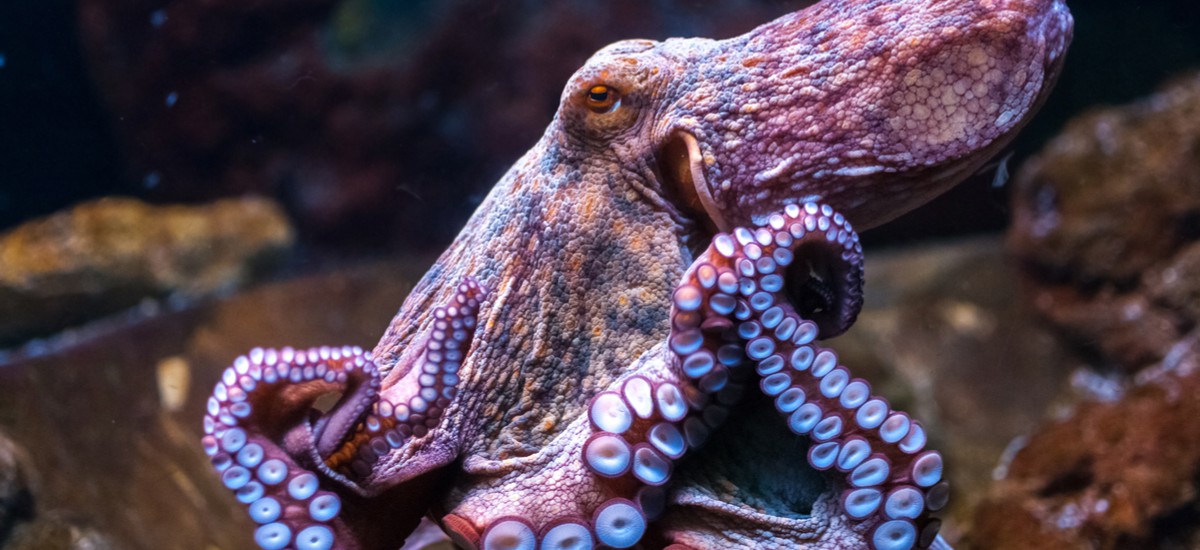
If a safe and reversible technology existed that allowed humans to hybridize with animals, the choice of which animal to merge with would reveal something deeper than curiosity. It would reveal our values about power, perception, and identity. If I had the option, I would choose to hybridize with a hawk.
Hawks symbolize vision, awareness, and precision. Unlike animals associated with brute strength, the hawk represents heightened perception and strategic intelligence. My interest in this hybridization would not be to become something entirely nonhuman, but rather to expand human capabilities while maintaining human identity.
The extent of my hybridization would be moderate rather than extreme. I would not want wings or a completely transformed body. Instead, I would choose specific adaptations such as enhanced vision, faster reflexes, and improved spatial awareness. Hawks possess remarkable eyesight and can detect prey from incredible distances. This type of biological enhancement could transform fields like search-and-rescue, environmental monitoring, and aviation. In this sense, the goal of hybridization would not be abandoning humanity but augmenting human potential.
Where Does Humanity End?
The idea of merging with an animal raises a deeper philosophical question: what actually defines humanity?
For me, humanity is not tied strictly to biology. Instead, it is rooted in the mental and moral capacities that shape how we exist in the world. Human beings possess self-awareness, empathy, moral reasoning, and the ability to construct narratives about their own lives. These qualities allow us to reflect on who we are and how our actions affect others. Even if the human body were enhanced or altered, those capacities could still remain intact.
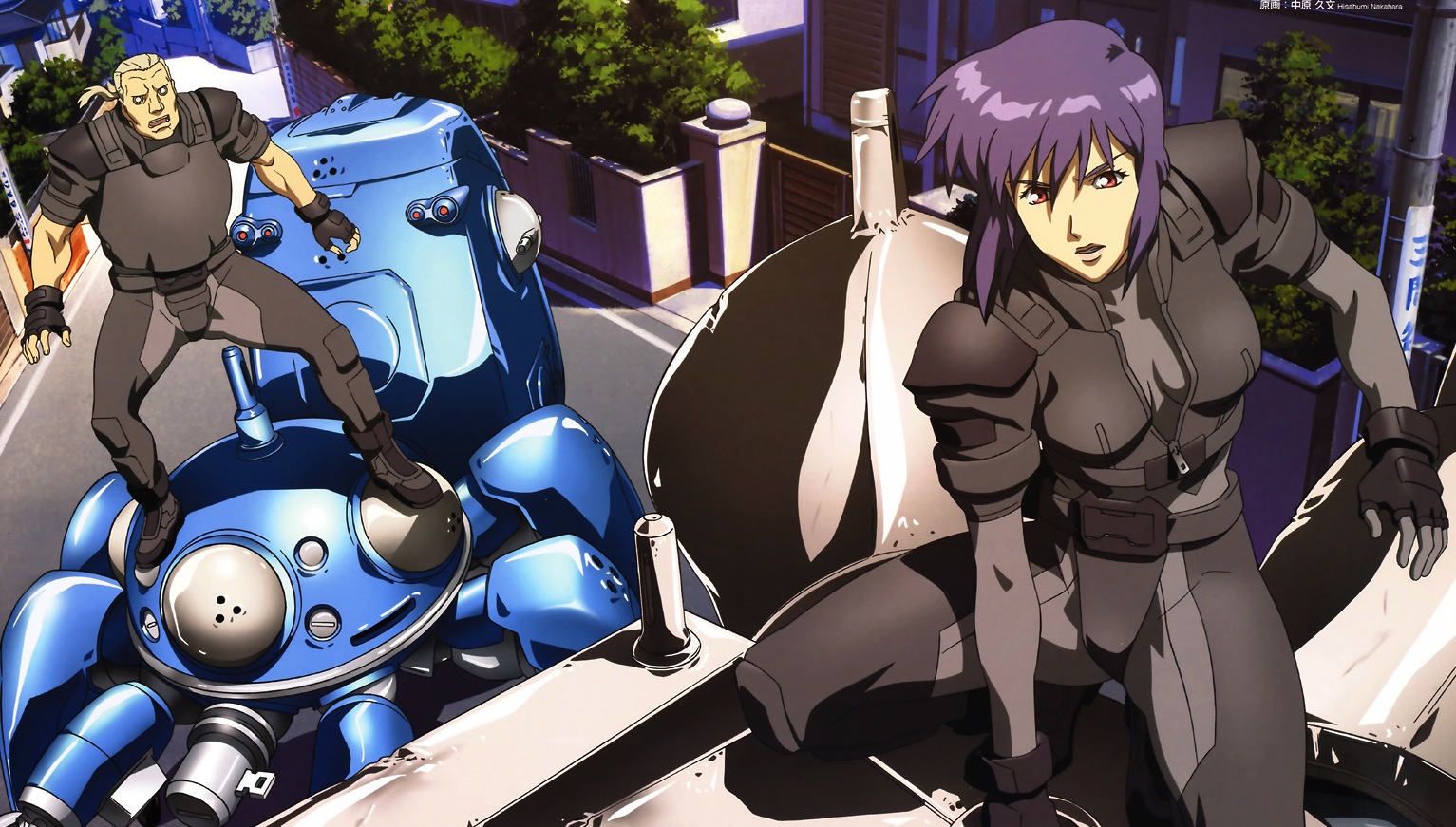
This debate closely resembles the themes explored in Ghost in the Shell. Major Motoko Kusanagi possesses an almost entirely artificial body, yet she continues to question her identity and consciousness. The film suggests that what defines a person is not the body itself but the continuity of consciousness, which the story calls the “ghost.” Her struggle illustrates how identity persists even when the physical form becomes radically different.
Blade Runner raises a similar issue through its replicants. These artificial beings possess memories, emotions, and desires, forcing both characters and viewers to question whether biological origin truly determines humanity. If a being can experience love, fear, and reflection, the boundary separating human from nonhuman becomes unstable. Human–animal hybridization would push that boundary even further and reveal that humanity may depend more on consciousness and ethical awareness than on species membership.
Haraway’s Boundary-Breaking World
The idea of hybrid humans also connects directly to Donna Haraway’s concept of the cyborg. In A Cyborg Manifesto, Haraway argues that modern technologies break down the traditional boundaries separating humans, animals, and machines. She challenges the long-standing belief that these categories are fixed and clearly defined.
Haraway proposes that the cyborg represents a world where identities are hybrid, fluid, and interconnected rather than strictly separated. Human–animal hybridization technology would embody this idea in a very literal way. Instead of maintaining a strict boundary between humans and the rest of the natural world, people would physically embody the fusion of species. This possibility challenges the assumption that humans exist at the top of a natural hierarchy and suggests that identity is far more flexible than we once believed.
Inequality in the Age of Enhancement
While the concept of hybridization may seem exciting, it raises serious ethical and social questions. Technologies that enhance human abilities rarely appear in a socially neutral environment. Access to such innovations is often shaped by wealth, political power, and institutional influence.
Science writer Ed Yong (2022) explains that animal sensory systems reveal capabilities humans cannot easily imagine. Technologies that attempt to replicate or integrate those abilities could dramatically expand human perception. However, if these technologies become expensive or restricted, they may only be available to privileged groups.
In such a scenario, hybridization could deepen existing inequalities. Wealthy individuals might gain enhanced senses or cognitive advantages, while others remain unmodified. Governments or militaries might also use hybridization technologies to create enhanced soldiers or specialized workers. Rather than improving society as a whole, these developments could produce new divisions between enhanced and non-enhanced humans.
These concerns closely mirror ongoing debates about genetic editing, neural implants, and other forms of technological enhancement. The challenge is not simply developing new capabilities but ensuring that these technologies are distributed in ways that promote fairness and human well-being.
The Posthuman Future
Hybridization technology would force society to confront one of the oldest philosophical questions: what does it truly mean to be human?
If we gain the ability to modify our bodies and senses, humanity may become defined less by biological limitations and more by shared values such as empathy, ethical responsibility, and consciousness. Choosing to hybridize with a hawk would not mean abandoning humanity. Instead, it would represent a step toward a broader understanding of human potential.
Cyberpunk stories frequently imagine futures where technology blurs the boundaries between species, machines, and consciousness. These narratives suggest that the real challenge is not technological transformation itself but ensuring that these transformations preserve the qualities that make human life meaningful.
Ultimately, the posthuman future may not involve leaving humanity behind. Instead, it may involve redefining humanity in a world where the boundaries of the body continue to expand.
References
Haraway, D. (1985). A cyborg manifesto: Science, technology, and socialist-feminism in the late twentieth century. Socialist Review.
Yong, E. (2022). An immense world: How animal senses reveal the hidden realms around us. Random House.
AI Use Disclosure
AI tools (ChatGPT) were used to assist with brainstorming and organization. The final content was reviewed and edited without AI to ensure clarity, originality, and alignment with the course themes.
 The theme song made it sound like the real superpower was predicting the future. But if scientists ever develop technologies that allow humans to borrow traits from other species, my choice would be different. I would not choose wings, sharper eyesight, or animal strength. I would choose a raven’s mind. Ravens are among the most intelligent animals on Earth. They show remarkable abilities in memory, planning, and problem-solving. Thinking about a human-raven hybrid raises an interesting question. What would it mean to borrow intelligence from another species, and what would that say about the boundaries of being human?
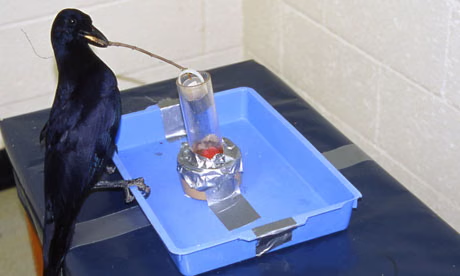 Calling someone a “birdbrain” is usually meant as an insult. In the case of ravens and other corvids, the phrase may deserve reconsideration. Researchers have found that these birds possess impressive cognitive abilities that rival those of many mammals. Ravens and crows demonstrate advanced memory, tool use, and long-term planning. Some studies show that corvids can remember thousands of food locations and recognize individual human faces for years (Philp, 2025). They can also share information about threats with other birds, creating a kind of collective memory within their groups.
Scientists and philosophers studying animal cognition have begun to ask what the world might feel like from a raven’s perspective. Evidence suggests that corvids possess complex emotional lives and forms of consciousness. They can anticipate the intentions of others, hide food strategically, and remember what they stored, where they stored it, and when they hid it (Veit, 2025). These abilities suggest a mind capable of reflection and planning. If human enhancement technologies ever allowed us to borrow traits from other species, the raven’s cognitive toolkit would offer powerful possibilities.
Calling someone a “birdbrain” is usually meant as an insult. In the case of ravens and other corvids, the phrase may deserve reconsideration. Researchers have found that these birds possess impressive cognitive abilities that rival those of many mammals. Ravens and crows demonstrate advanced memory, tool use, and long-term planning. Some studies show that corvids can remember thousands of food locations and recognize individual human faces for years (Philp, 2025). They can also share information about threats with other birds, creating a kind of collective memory within their groups.
Scientists and philosophers studying animal cognition have begun to ask what the world might feel like from a raven’s perspective. Evidence suggests that corvids possess complex emotional lives and forms of consciousness. They can anticipate the intentions of others, hide food strategically, and remember what they stored, where they stored it, and when they hid it (Veit, 2025). These abilities suggest a mind capable of reflection and planning. If human enhancement technologies ever allowed us to borrow traits from other species, the raven’s cognitive toolkit would offer powerful possibilities.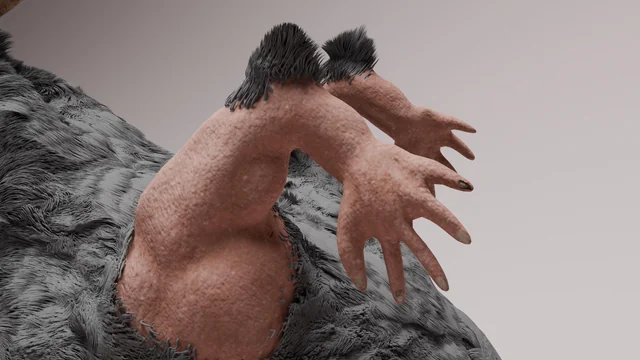 Even with those abilities, I would not want to become completely raven-like. The idea of hybridization becomes interesting when it pushes the boundaries of humanity without fully replacing it. If this hypothetical technology existed, I would choose a mostly cognitive hybridization. My body and social identity would remain human. The traits I would borrow involve memory, spatial awareness, and the ability to plan strategically across long stretches of time.
This kind of hybrid identity connects with ideas we’ve explored throughout the course. Haraway’s cyborg theory argues that boundaries between human and nonhuman identities are more flexible than we often assume. Hybrid identities can challenge rigid categories and open new ways of thinking about personhood. Works such as Blade Runner and Ghost in the Shell raise similar questions. Characters who possess artificial bodies or enhanced cognition still display memory, emotion, and self-awareness. These stories suggest that humanity may depend less on biological origin and more on conscious experience. Borrowing the mental abilities of a raven would push that idea further and invite us to rethink which qualities truly define being human.
Even with those abilities, I would not want to become completely raven-like. The idea of hybridization becomes interesting when it pushes the boundaries of humanity without fully replacing it. If this hypothetical technology existed, I would choose a mostly cognitive hybridization. My body and social identity would remain human. The traits I would borrow involve memory, spatial awareness, and the ability to plan strategically across long stretches of time.
This kind of hybrid identity connects with ideas we’ve explored throughout the course. Haraway’s cyborg theory argues that boundaries between human and nonhuman identities are more flexible than we often assume. Hybrid identities can challenge rigid categories and open new ways of thinking about personhood. Works such as Blade Runner and Ghost in the Shell raise similar questions. Characters who possess artificial bodies or enhanced cognition still display memory, emotion, and self-awareness. These stories suggest that humanity may depend less on biological origin and more on conscious experience. Borrowing the mental abilities of a raven would push that idea further and invite us to rethink which qualities truly define being human.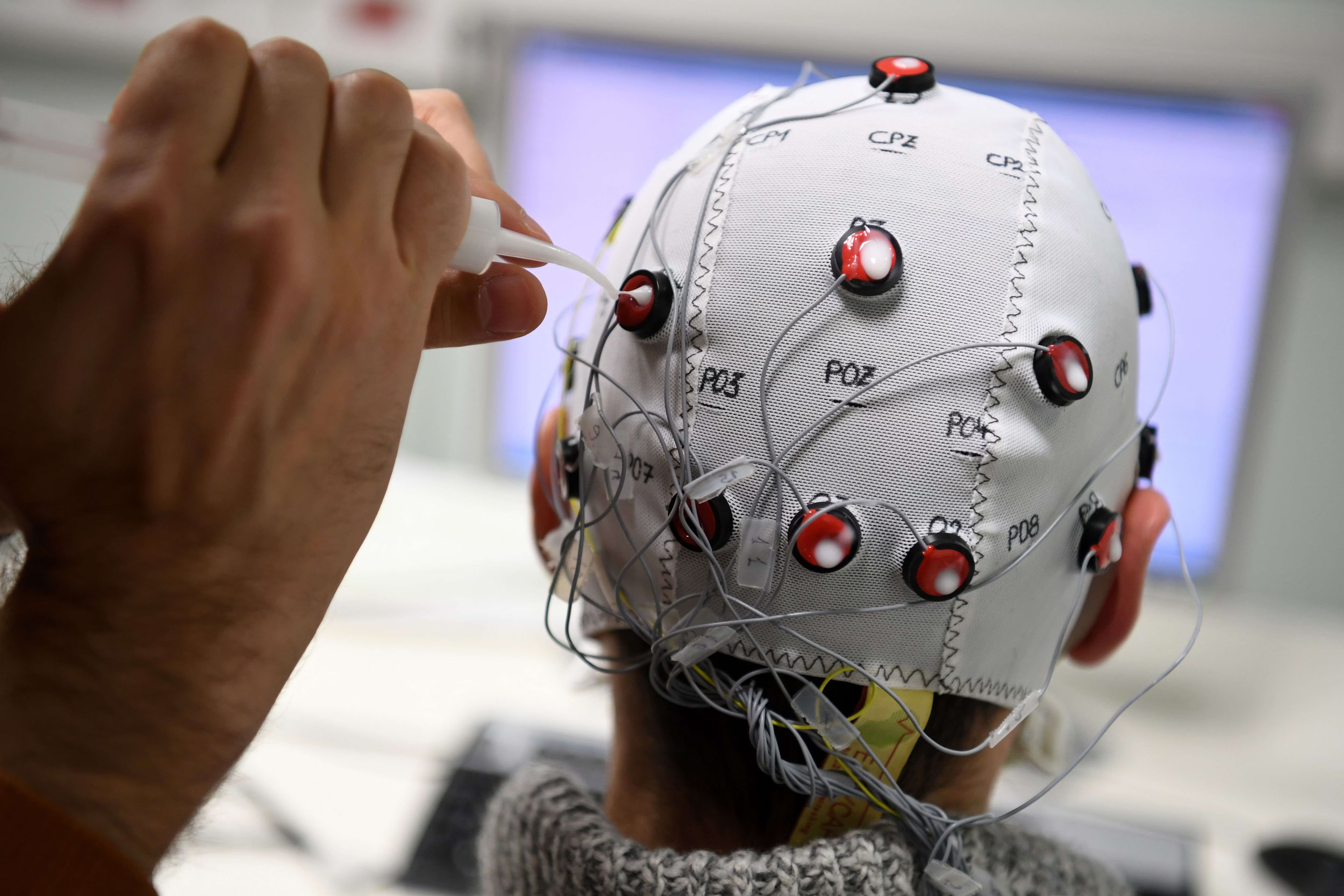 The larger question involves access. If technologies could enhance human abilities by combining traits from other species, who would actually receive those upgrades? Current discussions about human enhancement already raise ethical concerns. Technologies such as brain-computer interfaces or cognitive augmentation could produce individuals with significantly improved abilities, which may reshape power structures in areas like warfare, labor, and education (“Reports on Military Medicine Findings”, 2025).
Researchers also warn that access to enhancement technologies may depend heavily on financial resources. If these technologies remain expensive, they could widen existing social inequalities by allowing wealthy groups to enhance their capabilities while others remain excluded (“Chongqing University Researchers”, 2025). In that case, the future might resemble many cyberpunk stories in which technological upgrades become another way to reinforce social hierarchies.
Thinking about a “raven upgrade” therefore raises broader questions about the future of human enhancement. If humans gain the ability to borrow the strengths of other species, the benefits may depend on how societies regulate and distribute those technologies.
The larger question involves access. If technologies could enhance human abilities by combining traits from other species, who would actually receive those upgrades? Current discussions about human enhancement already raise ethical concerns. Technologies such as brain-computer interfaces or cognitive augmentation could produce individuals with significantly improved abilities, which may reshape power structures in areas like warfare, labor, and education (“Reports on Military Medicine Findings”, 2025).
Researchers also warn that access to enhancement technologies may depend heavily on financial resources. If these technologies remain expensive, they could widen existing social inequalities by allowing wealthy groups to enhance their capabilities while others remain excluded (“Chongqing University Researchers”, 2025). In that case, the future might resemble many cyberpunk stories in which technological upgrades become another way to reinforce social hierarchies.
Thinking about a “raven upgrade” therefore raises broader questions about the future of human enhancement. If humans gain the ability to borrow the strengths of other species, the benefits may depend on how societies regulate and distribute those technologies.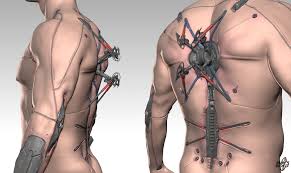
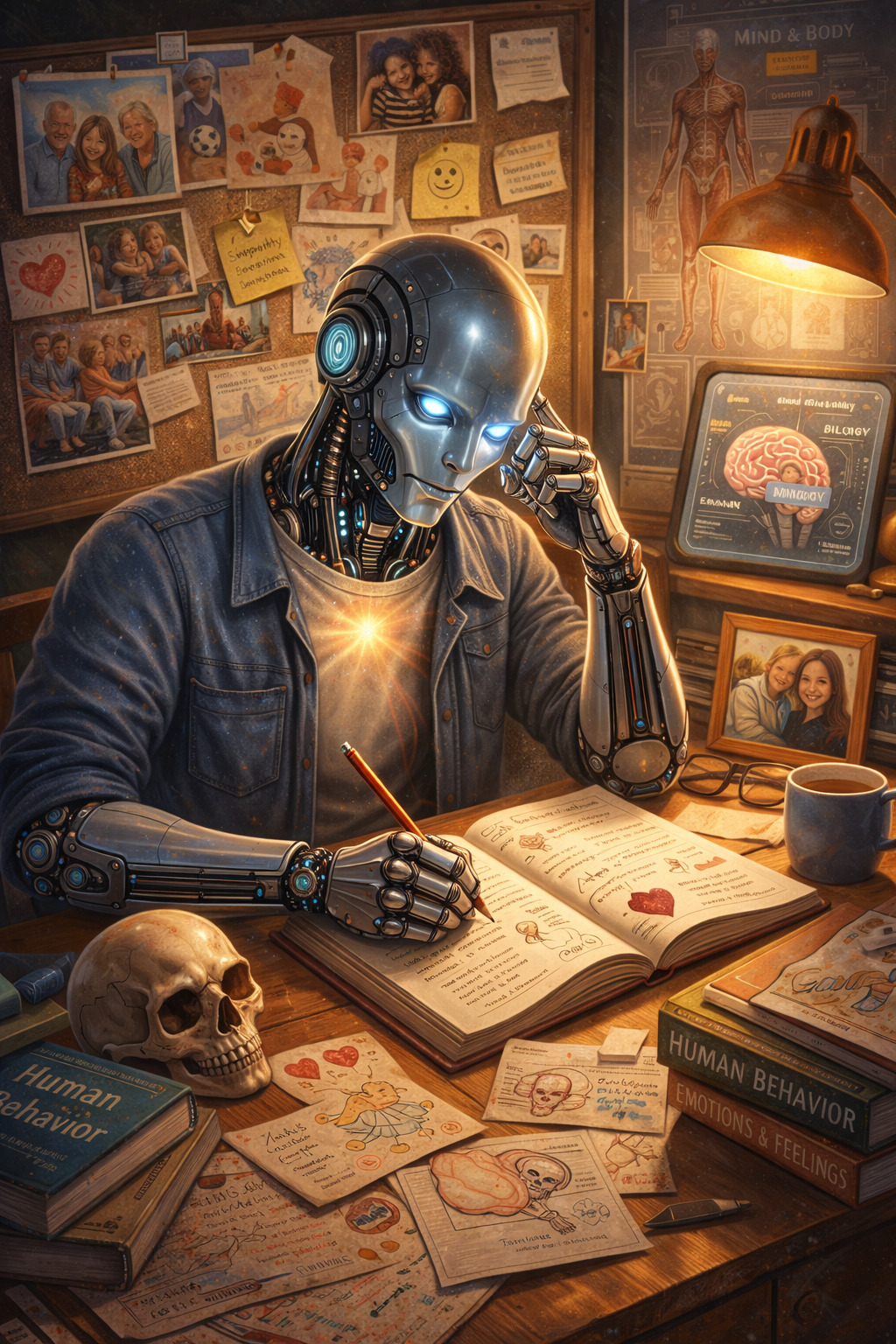
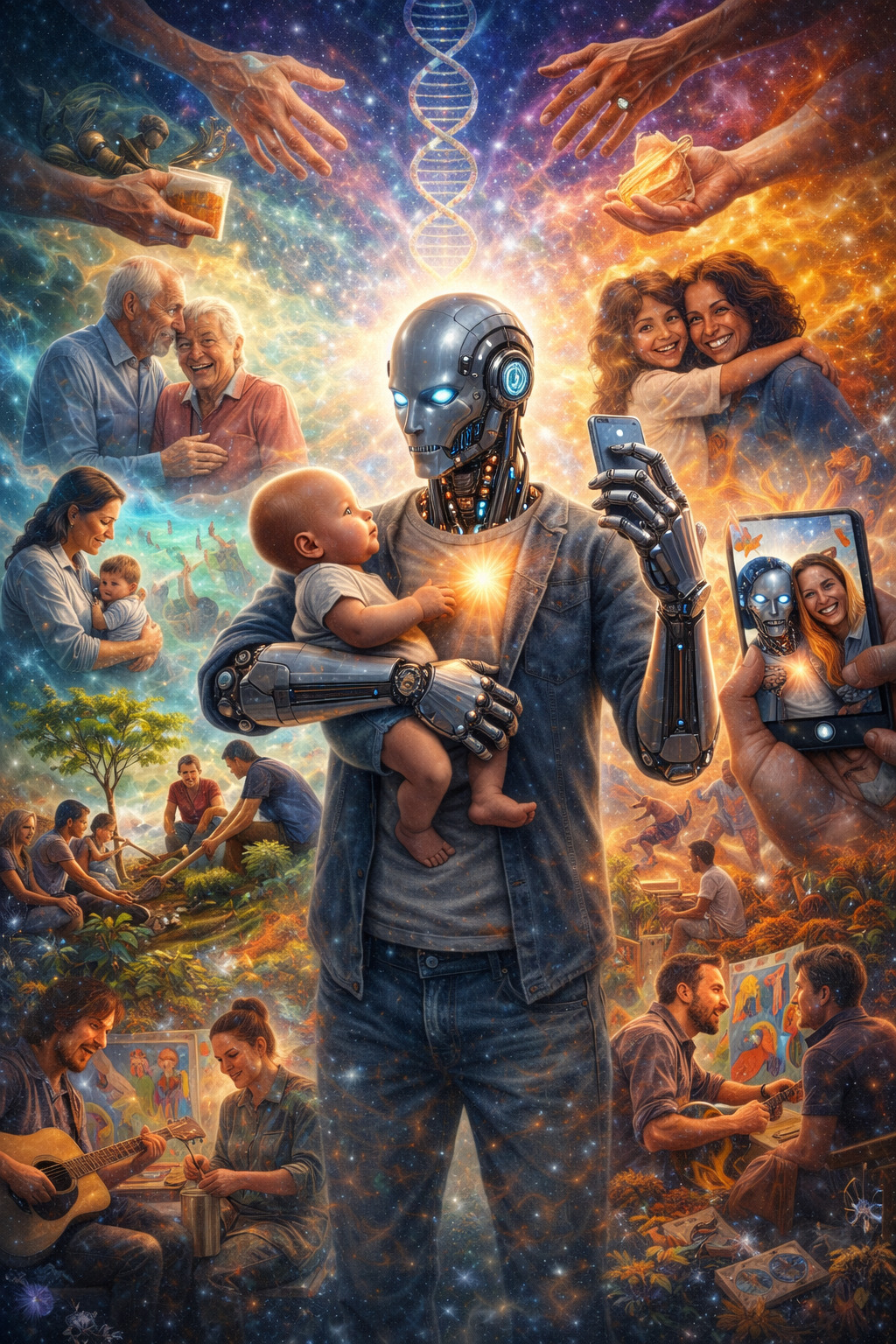
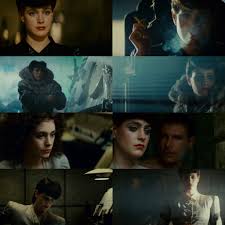 In Blade Runner, replicants are given artificial memories to stabilize them emotionally. Rachael’s belief that her memories are real allows her to function as “human,” even though those memories are borrowed. This raises an unsettling question: if memory shapes identity, does it matter where that memory comes from? The film refuses to offer a clear answer, instead forcing viewers to confront the idea that humanity might not be rooted in biology, but in lived (or perceived) experience. Roy Batty’s final monologue emphasizes this point. His memories, moments that will be “lost in time, only matter because they were embodied, felt, and lived, not stored in a machine.
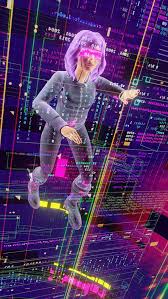 Neuromancer pushes this boundary even further. William Gibson imagines a world where consciousness can be separated from the body and uploaded into cyberspace. Memory becomes information, and identity becomes something that can be copied, traded, or weaponized. Artificial intelligences like Wintermute and Neuromancer treat memory not as something emotional, but as raw material to be optimized. This reflects Norbert Wiener’s definition of cybernetics as systems of control and communication, but cyberpunk reveals the danger in reducing humans to informational nodes within those systems.