How Blade Runner and Neuromancer Redefined Humanity
Cyberpunk, a genre created on the very intersection between technological advancements and social inequality, asks the fundamental question of what it truly means to be human. Two such works, Blade Runner and Neuromancer, solidify this basis by actively challenging assumptions of memory, agency, and consciousness.
Manufacturing Life in Blade Runner
As the film begins, the audience learns of the Tyrell Corporation's success in the perfect creation of replicants, biologically engineered "humans," who maintain superior intellectual and physical ability but are still denied legal rights.
Early in the movie, the Voight-Kampff test acts as a scientific method that separates humans from replicants on the basis of empathetic responses. The boundary is flimsy at best; even humans could fail the test, should it go on for too long.
The main conflict centers on the replicants' desperate attempt to extend their lifespan. Despite the humans of the story routinely describing the replicants as emotionally-lacking and unaware, Roy's final scene is entirely emotional as he struggles with accepting that his memories and his life would dissipate into nothing at all, begging the question: if something man-made could feel emotion, would it become human?
Manufacturing Consciousness in Neuromancer
Neuromancer, similarly, approaches humanity as a philosophy to be questioned. The book introducers readers to the idea of cyberspace, where human consciousness can essentially become entirely digitalized.
Wintermute and Neuromancer, two AIs that entirely lack physical bodies, complicate matters. Both beings still reflect intelligence, curiosity, and desires: Wintermute, for example, routinely tries to push against his own limitations, expressing a deep want to be free from them.
Without physical bodies, Wintermute and Neuromancer demand the question: if human consciousness within cyberspace, in which physical bodies are left behind, can still be considered humane, then is there really a divide between an AI consciousness and a human one?
Seeing the Pattern
Blade Runner questions where the line is between human and non-human when emotions, memories, and physical bodies are all created identical to humans. Are they inherently secondary to a natural human, or is there something special that humans cannot replicate in their creations?
Neuromancer questions where the line is between human and non-human consciousness, especially when both reflect wants, agency, and thought. Does one pattern of thought act uniquely to the other? Is there any way to separate them?
So Who Defines Humanity?
If the separation of human and non-human is truly as nuanced and subtle as Blade Runner and Neuromancer argue, then who makes the final call? According to both forms of media, that's the easiest question to answer: the problem lies, as it so often does, with capitalists.
In Blade Runner, the Tyrell Corporation's replicants are legally excluded from humanity to protect the economy. Replicants exist as a means for easy labor; by classiying them as property, Tyrell can avoid the responsibility of his work while reveling in the economic profit.
In accordance to modern-day capitalism, redefining certain groups as less than human allows for systems to claim those groups as disposable, allowing for their mistreatment at the benefit of those rich and powerful. Hargreaves, for example, argues against the exploitation of migrants within labor systems, as such areas are often severely neglected by the law to allow for corporations to benefit without limit (Hargreaves et al. 2025).
Similarly, sociologist Yang critiqued the long history of exploitation within the prison system, focusing on how prisoners are deeply dehumanized as a means of desensitizing them from the blatant violations that happen daily (Yang 2023). The class discussion on the exploitation of the Global South, additionally, furthers this consistent pattern of communities being exploited, colonized, and manipulated for nothing more than capitalistic gain.
Neuromancer shares a similar logic. Case is only as valuable as his work permits; after his nervous system is corrupted, he becomes entirely socially irrelevant. Consciousness itself, much like people's physical bodies, becomes a resource to be replicated, exploited, and extracted.
The struggle for survival is central in the book, overtaking the struggle for humanity's relevance. Fascinatingly, capitalistic greed overshadows every word, serving the audience a warning against the continual profit-based systems that grip the world we live in today.
No AI was used in the creation of this post!
References
Gibson, W. (2019). Neuromancer. Ace Books.
Hargreaves, S., et al. (2025). 40 Migrant labour exploitation and health: how can research foster protection of migrant workers?. The European Journal of Public Health, 35(Suppl 6), ckaf180.037. https://doi.org/10.1093/eurpub/ckaf180.037
Scott, R. (1982). Blade Runner. Warner Bros.
Tiffany Yang, Public Profiteering of Prison Labor, 101 N.C. L. REV. 313 (2023).
 One reason SHEIN is so effective is that it does not rule through fear. It works through convenience, low prices, and design choices that make buying feel almost automatic. As Ding explained, fast fashion thrives partly because consumers psychologically distance themselves from its harms. Shoppers often tell themselves that the damage is indirect, that everyone participates in the same system, or that one more order will not matter (Ding, 2025).
Ding also points to “temporal discounting,” where people prioritize short-term enjoyment and price over longer-term environmental damage such as waste and emissions (Ding, 2025). SHEIN’s model intensifies that pattern. Its ultra-fast production cycle turns digital trends into products within days, making gratification immediate while keeping the consequences abstract (Ding, 2025). Corporate power today does not always depend on open coercion. It can work through seduction. The easier it is to click “add to cart,” the easier it becomes not to ask who made the product, under what conditions, and at what environmental cost.
One reason SHEIN is so effective is that it does not rule through fear. It works through convenience, low prices, and design choices that make buying feel almost automatic. As Ding explained, fast fashion thrives partly because consumers psychologically distance themselves from its harms. Shoppers often tell themselves that the damage is indirect, that everyone participates in the same system, or that one more order will not matter (Ding, 2025).
Ding also points to “temporal discounting,” where people prioritize short-term enjoyment and price over longer-term environmental damage such as waste and emissions (Ding, 2025). SHEIN’s model intensifies that pattern. Its ultra-fast production cycle turns digital trends into products within days, making gratification immediate while keeping the consequences abstract (Ding, 2025). Corporate power today does not always depend on open coercion. It can work through seduction. The easier it is to click “add to cart,” the easier it becomes not to ask who made the product, under what conditions, and at what environmental cost.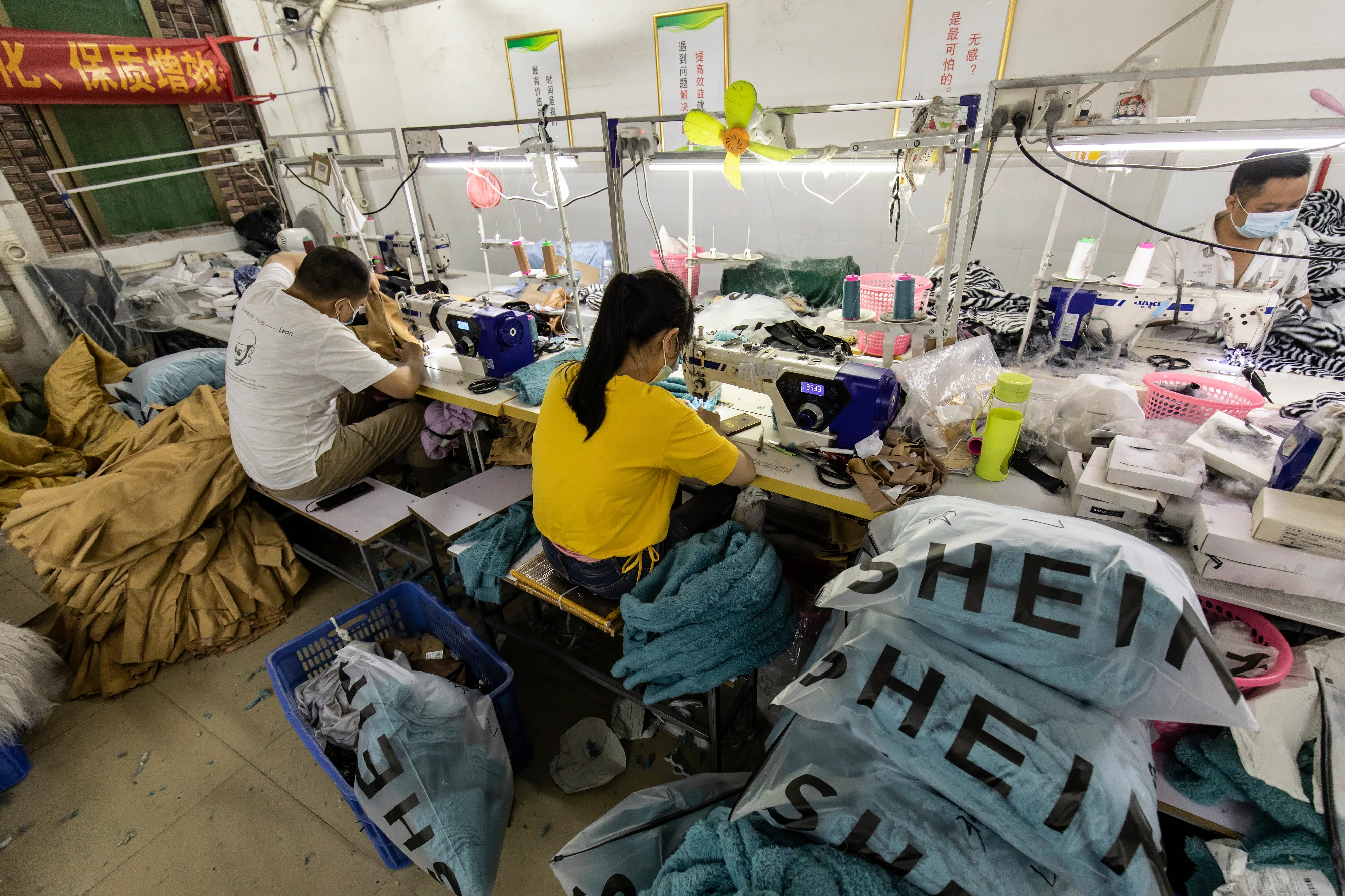 That illusion depends on keeping labor conditions difficult to see. Reporting on SHEIN’s planned IPO noted that U.S. lawmakers called on the company to prove its products were not linked to forced labor, especially through concerns about sourcing tied to Xinjiang (Wexton, 2023). The same report showed that congressional committees and multiple state attorneys general scrutinized both its supply chain and its trade practices.
SHEIN denied the allegations and said it maintained a zero-tolerance policy on forced labor, but the deeper issue is larger than any single statement of denial (Wexton, 2023). When a company’s supply chain is so vast, global, and opaque that lawmakers, consumers, and even investors struggle to verify its claims, accountability becomes weak by design. That is where the cyberpunk comparison becomes most useful. The danger is not simply that abuse may exist. The danger is that the system is structured in a way that makes human suffering easy to bury behind convenience, scale, and distance. When labor becomes invisible enough, expendability becomes easier to normalize.
That illusion depends on keeping labor conditions difficult to see. Reporting on SHEIN’s planned IPO noted that U.S. lawmakers called on the company to prove its products were not linked to forced labor, especially through concerns about sourcing tied to Xinjiang (Wexton, 2023). The same report showed that congressional committees and multiple state attorneys general scrutinized both its supply chain and its trade practices.
SHEIN denied the allegations and said it maintained a zero-tolerance policy on forced labor, but the deeper issue is larger than any single statement of denial (Wexton, 2023). When a company’s supply chain is so vast, global, and opaque that lawmakers, consumers, and even investors struggle to verify its claims, accountability becomes weak by design. That is where the cyberpunk comparison becomes most useful. The danger is not simply that abuse may exist. The danger is that the system is structured in a way that makes human suffering easy to bury behind convenience, scale, and distance. When labor becomes invisible enough, expendability becomes easier to normalize.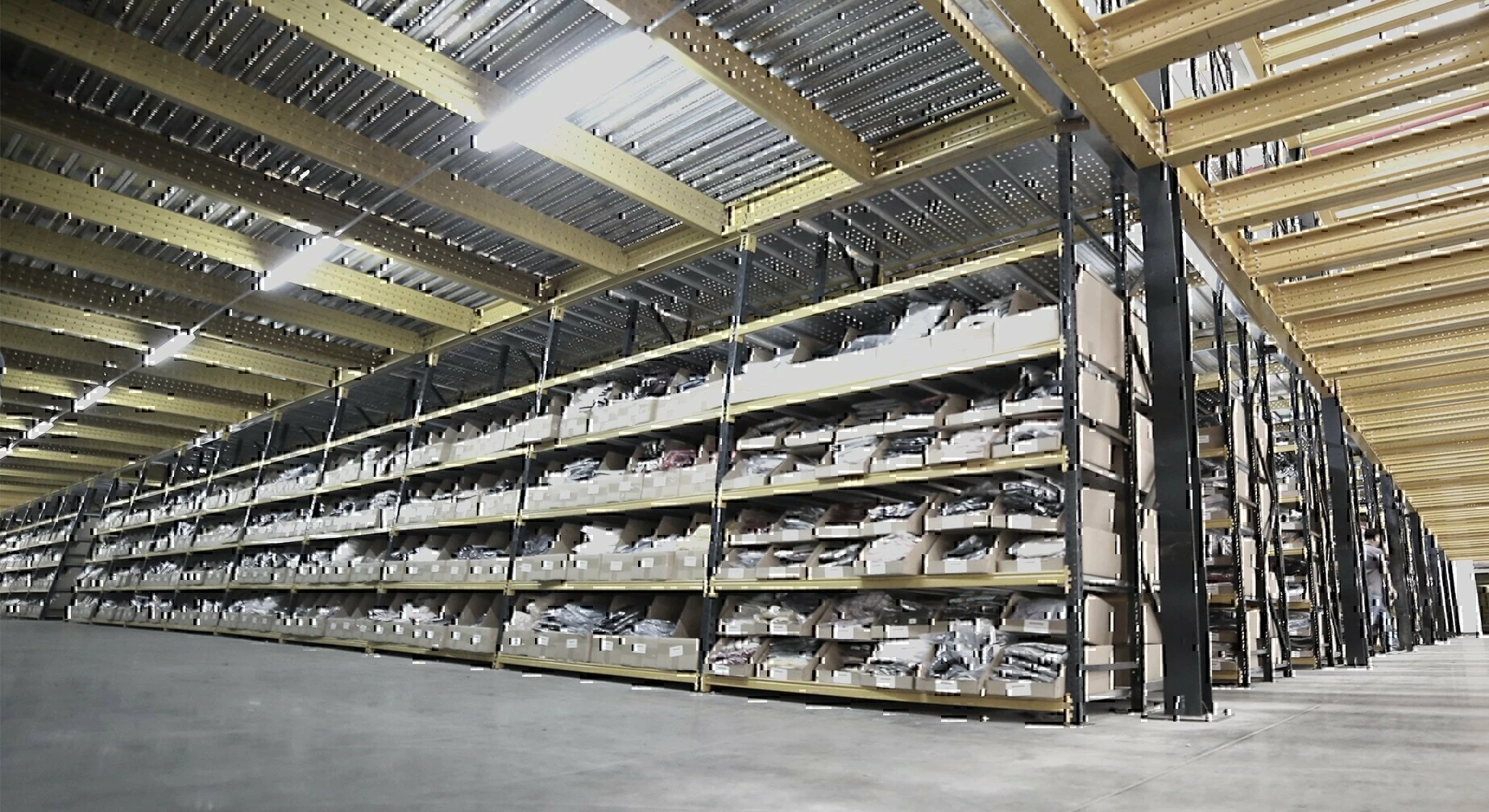 If cyberpunk warns about corporations moving faster than governments, SHEIN’s regulatory troubles are a strong real-world example. A 2024 report explained that SHEIN and Temu benefited from the de minimis exemption, which allows imported goods under a certain value to enter the United States without duties and processing fees (Neely, 2024). Officials argued that abuse of this loophole undercut workers and businesses while flooding the market with low-value imports. Homeland Security Secretary Alejandro Mayorkas also warned that the scale of these shipments made meaningful screening difficult (Neely, 2024).
The same pattern appears in Europe. In February 2026, EU regulators opened a formal probe into SHEIN under the Digital Services Act over illegal products and parts of its app design, including gamified shopping features, reward mechanisms, personalized recommendations, and transparency around how products are prioritized (“EU opens probe into Shein,” 2026). That matters because SHEIN is not only selling products. It is also shaping attention and behavior through platform design. This is corporate power in a distinctly modern form. It does not just respond to desire. It helps produce it.
If cyberpunk warns about corporations moving faster than governments, SHEIN’s regulatory troubles are a strong real-world example. A 2024 report explained that SHEIN and Temu benefited from the de minimis exemption, which allows imported goods under a certain value to enter the United States without duties and processing fees (Neely, 2024). Officials argued that abuse of this loophole undercut workers and businesses while flooding the market with low-value imports. Homeland Security Secretary Alejandro Mayorkas also warned that the scale of these shipments made meaningful screening difficult (Neely, 2024).
The same pattern appears in Europe. In February 2026, EU regulators opened a formal probe into SHEIN under the Digital Services Act over illegal products and parts of its app design, including gamified shopping features, reward mechanisms, personalized recommendations, and transparency around how products are prioritized (“EU opens probe into Shein,” 2026). That matters because SHEIN is not only selling products. It is also shaping attention and behavior through platform design. This is corporate power in a distinctly modern form. It does not just respond to desire. It helps produce it.