BP05

Blog Post #5: It's Part of the Business

Cyberpunk often centers on corporations more powerful than governments, treating human lives as expendable. We've seen this in the Tyrell Corporation (Blade Runner), Tessier-Ashpool (Neuromancer), and the pill funders (Machinehood).

Choose at least one fictional corporation and analyze its specific powers and practices. Then connect to contemporary reality with concrete examples: tech companies' influence on democracy, pharmaceutical pricing, gig economy labor practices, surveillance capitalism, corporate environmental practices, or AI development control. Use credible sources.

Make your argument: Are we heading toward cyberpunk's corporate dominance? Is this realistic prediction or hyperbolic critique? Consider what enables corporate power, what checks exist, and what role critique plays in preventing dystopia.

23 is Watching Me

- Posted in BP05 by

DNA for Delivery

So what would you do if a corporation knew your future health risks, family history, physical traits, and even susceptibility to certain behaviors? And what if they could take that information and sell it to the highest bidder? Well, let me introduce you to 23andMe. It’s a corporation that takes the idea that you can send in a DNA swab and they will use that information to trace your family history. This type of testing is called direct-to-consumer DNA testing. Users send in their saliva and receive ancestry data and health predispositions. But the issue is that data is stored, analyzed, and shared technically with consent, but often hidden in fine print that most people do not fully understand. The California Consumer Privacy Act classifies genetic data as “sensitive personal information alongside data such as race, ethnicity, Social Security numbers, phone numbers, or address.” That puts the 23andMe in a unique position to share or sell that information to pharmaceutical companies and other corporations that are interested in the DNA and family lineage of the population.

Did You Read the Fine Print?

There have been multiple reports of individuals submitting their DNA to different companies and receiving conflicting results. A study from ASCLS “identified that 40% of all DTC genetic test abnormal results were false positives.” That alone raises questions about how reliable this information really is. On top of that, this data is not heavily regulated. The FDA and HIPAA do not fully apply to the direct-to-consumer testing industry. Instead, the government relies on the Federal Trade Commission to oversee data protection, but there has been limited regulation, allowing companies to largely self-regulate their privacy practices. Which sounds fine in theory, but not so much in practice. A 2018 survey revealed that” over 40% of companies did not even have documentation explaining how they protect genetic data.”At the same time, when people click “agree,” they are not fully understanding future data use or third-party partnerships. So while it looks like informed consent, it’s not always truly informed. This matters because genetic data doesn’t just reveal information about you but it also reveals information about your family members and even entire populations.

Tyrell-esc

In Blade Runner, the Tyrell Corporation manufactures humans and controls their identity and lifespan. While 23andMe doesn’t create humans, it helps to map and therefore monetize them on a biological level. In both cases, corporations gain power over what defines a human being. This parallel becomes even more concerning when considering how that data can be used. In Blade Runner, replicants are tracked and controlled because their creators hold complete knowledge over their biological makeup. Similarly, when a company holds detailed genetic data, it gains a form of informational control that can influence healthcare decisions, research, and future technologies. Looking at this globally, the United States allows for more corporate freedom and weaker data protections. In contrast, the European Union has stricter privacy laws and stronger consent requirements. This shows that the issue isn’t just American, but it’s globally unevenly regulated. There should be a more standardized system for handling genetic information that doesn’t vary so drastically from country to country. I would argue that we are already entering an early cyberpunk future. Corporations don’t need to dominate physically anymore, they gain power through data ownership. Recently, 23andMe filed for bankruptcy and was bought by a pharmaceutical company. This means that a pharmaceutical company could potentially gain access to large amounts of genetic, health, and family data from users. Even though there are claims that protections will be put in place, history shows that these safeguards are often not enough.

Wake Up People!

This matters for several reasons. First, there are serious medical implications. The unreliability of DTC testing, especially the high rate of false positives, raises concerns about how this data could be used to inform decisions made by pharmaceutical companies. Second, it impacts trust in healthcare and laboratory science. If people rely on private companies for genetic testing and pharmaceutical companies act on that data, it raises a bigger question of where healthcare professionals fit into patient care? At the end of the day, we have to think about who controls biological data. Right now, it is largely controlled by private corporations and pharmaceutical companies. This type of data should be more heavily regulated and ethically managed. Because the future of humanity might not be controlled by those who create life, but by those who own the code of it.

AI Attestation

The AI CHATGPT was utilized to help brainstorm ideas, organize the outline, and revise writing for clarity, grammar, and flow. https://chatgpt.com/share/69efe626-9200-83ea-a765-1e8c72ff87b9

References

Allyse, M. (2013). 23 and Me, We, and You: direct-to-consumer genetics, intellectual property, and informed consent. Trends in Biotechnology, 31(2), 68–69. https://doi.org/10.1016/j.tibtech.2012.11.007 Gunsolus, B. (2019, May 29). IMPLICATIONS OF DIRECT-TO-CONSUMER GENETIC TESTING - ASCLS. ASCLS. https://ascls.org/implications-of-direct-to-consumer-genetic-testing/ Jamali, L. (2025, May 19). Struggling DNA testing firm 23andMe to be bought for $256m. BBC. https://www.bbc.com/news/articles/c0ln0e5g6kgoPustell , E. (2021, July 19). The Onero Institute. The Onero Institute.https://www.oneroinstitute.org/content/genetic-data-protections-in-the-us-and-eu

Are Those Glasses Real or Fake?

- Posted in BP05 by

enter image description hereDo you feel as though you can be anonymous? If you wanted to scrub yourself from the internet forever, could you? The simplest answer is no. (Maybe if you’re in witness protection, but that is the government changing your life, and not you). There is always a chance that your data can be hacked, stolen, or your face put on the internet. For a specific example, I will address the Rayban Meta Glasses. Meta itself has been no shy stranger for its encroachment on user data. Mark Zuckerberg, the founder of Meta, testified in a trial questioning Meta’s data concerns in 2024 (Milman, 2024). There is simply no denying that if you own any Meta device or service, that there is a significant chance that there is excessive data collected on you. That includes: Facebook, Instagram, Rayban Meta Glasses, WhatsApp, and Threads, for short. Meta was accused of sending the data of over a million Facebook users to servers in the United States (Milman, 2024). Data and privacy is something that is an essential human right. There should be an option for such to be compromised. Your data should never be compromised without your knowledge and used in something unknown. Although this should be a standard, it is not, and remains a prominent issue. This issue has also been set physically. Specifically looking at Meta glasses, the company that has already breached users’ privacy countless times, has created a product that can further breach people's privacy. Upon initial release, many people were unaware of the use of Meta glasses, considering they look like regular glasses or shades. A person can record someone’s face and actions without anyone but them being aware. So not only is there a big company that is able to breach your data, they made a product allowing anybody that owns it to encroach on your privacy without your knowledge. This is not solely a western issue. The lawsuit against Meta in 2024 was called by the European Consumer Organization (ECO). Meta owns two social media platforms, that is not going to solely be a western issue. This is going to be a problem essentially anywhere the servers work. Products such as Meta Glasses are typically going to be a western issue, however. Situations such as the trial concerning Meta allows for checks to be made, however, the data was still breached. It is more so a warning of the public than a complete halting of the process. This is an issue many platforms face, and not each one will be brought to trial. Since it is more of a global issue, it does seem to have more checks. Again in this instance, Meta is being questioned by a European company. This is very similar to Ghost in a Shell which has everyone connected to a neurointerface controlled and surveilled by the government. There is no such thing as private in Ghost in a Shell, and with the actions of many current companies, there is little privacy left.

References Milman, O. (2024, February 29). Meta faces complaints in Europe over 'massive' and 'illegal' data processing. CNN. cnn.com

I attest that no AI was used

The Price of Cheap

- Posted in BP05 by

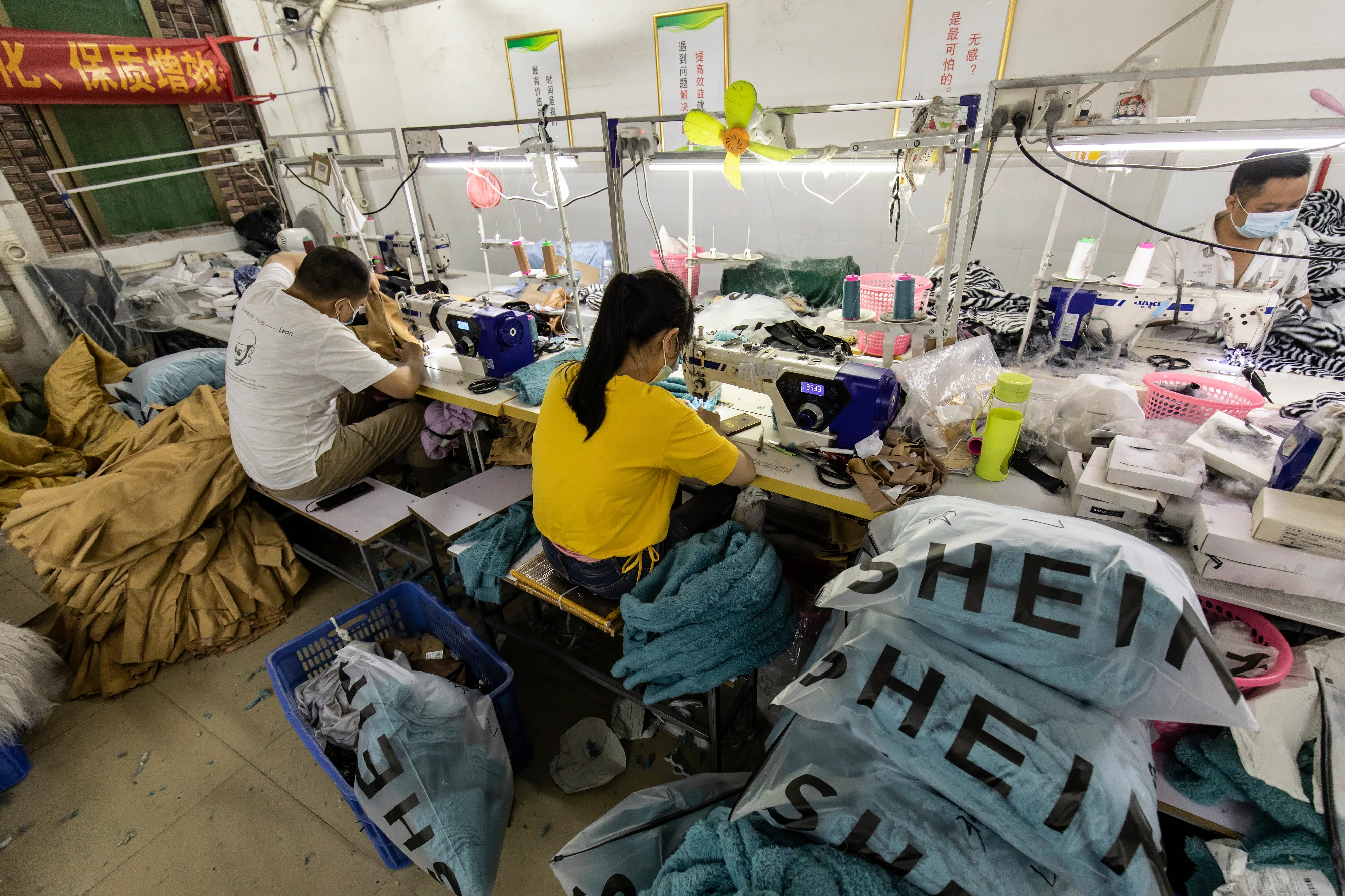
A SHEIN haul. A try-on. An OOTD caption with “shirt from SHEIN” slipped in like it is no different from saying where you got your coffee. That is what makes this version of corporate power so easy to miss. It does not always look dramatic. It looks fun, fast, and affordable. But cyberpunk has never really been about neon lights alone. Its real warning is about corporations that become so powerful, so fast-moving, and so protected from accountability that they start shaping daily life more effectively than governments do. That is what makes SHEIN such a striking real-world example. Its success depends on making affordability feel harmless. But cheapness does not erase cost. It simply pushes that cost somewhere else onto workers, onto the environment, and onto regulatory systems struggling to keep up with global platform commerce. By making cheap goods feel innocent while hiding the labor exploitation and environmental damage behind them, SHEIN reflects the corporate logic at the heart of cyberpunk and shows how easily real-world companies can normalize human expendability when profit moves faster than regulation.

Cute clothes ugly system

enter image description here One reason SHEIN is so effective is that it does not rule through fear. It works through convenience, low prices, and design choices that make buying feel almost automatic. As Ding explained, fast fashion thrives partly because consumers psychologically distance themselves from its harms. Shoppers often tell themselves that the damage is indirect, that everyone participates in the same system, or that one more order will not matter (Ding, 2025). Ding also points to “temporal discounting,” where people prioritize short-term enjoyment and price over longer-term environmental damage such as waste and emissions (Ding, 2025). SHEIN’s model intensifies that pattern. Its ultra-fast production cycle turns digital trends into products within days, making gratification immediate while keeping the consequences abstract (Ding, 2025). Corporate power today does not always depend on open coercion. It can work through seduction. The easier it is to click “add to cart,” the easier it becomes not to ask who made the product, under what conditions, and at what environmental cost.

Behind the haul

enter image description here That illusion depends on keeping labor conditions difficult to see. Reporting on SHEIN’s planned IPO noted that U.S. lawmakers called on the company to prove its products were not linked to forced labor, especially through concerns about sourcing tied to Xinjiang (Wexton, 2023). The same report showed that congressional committees and multiple state attorneys general scrutinized both its supply chain and its trade practices. SHEIN denied the allegations and said it maintained a zero-tolerance policy on forced labor, but the deeper issue is larger than any single statement of denial (Wexton, 2023). When a company’s supply chain is so vast, global, and opaque that lawmakers, consumers, and even investors struggle to verify its claims, accountability becomes weak by design. That is where the cyberpunk comparison becomes most useful. The danger is not simply that abuse may exist. The danger is that the system is structured in a way that makes human suffering easy to bury behind convenience, scale, and distance. When labor becomes invisible enough, expendability becomes easier to normalize.

Faster than the rules

enter image description here If cyberpunk warns about corporations moving faster than governments, SHEIN’s regulatory troubles are a strong real-world example. A 2024 report explained that SHEIN and Temu benefited from the de minimis exemption, which allows imported goods under a certain value to enter the United States without duties and processing fees (Neely, 2024). Officials argued that abuse of this loophole undercut workers and businesses while flooding the market with low-value imports. Homeland Security Secretary Alejandro Mayorkas also warned that the scale of these shipments made meaningful screening difficult (Neely, 2024). The same pattern appears in Europe. In February 2026, EU regulators opened a formal probe into SHEIN under the Digital Services Act over illegal products and parts of its app design, including gamified shopping features, reward mechanisms, personalized recommendations, and transparency around how products are prioritized (“EU opens probe into Shein,” 2026). That matters because SHEIN is not only selling products. It is also shaping attention and behavior through platform design. This is corporate power in a distinctly modern form. It does not just respond to desire. It helps produce it.

Maybe this is what cyberpunk looks like now. Not only in skyscrapers and sci-fi spectacles, but in hauls, try-ons, discount codes, and apps that make constant shopping feel playful instead of political. A SHEIN order can look light, harmless, even ordinary. But behind that ordinary feeling is a business model built on distance from workers, from waste, and from accountability. So, are we heading toward cyberpunk’s corporate dominance? In some ways, we are already living inside a softer version of it. Not the loud version, but the scrollable version. The one that arrives in your feed, learns your taste, and shows up at your door before anyone has time to ask why it was allowed to be this cheap in the first place.


References

Neely, A. (2024, September 19). Biden targets Shein, Temu with import rule. DMNews. https://advance.lexis.com/api/document?collection=news&id=urn%3acontentItem%3a6D0R-51K1-F03F-K2DW-00000-00&context=1519360&identityprofileid=NZ9N7751352

Wexton, J. (2023, November 29). Shein's IPO raises questions about alleged forced labor. CE Noticias Financieras English. https://advance.lexis.com/api/document?collection=news&id=urn%3acontentItem%3a69S1-3HD1-DYY9-03SF-00000-00&context=1519360&identityprofileid=NZ9N7751352

(2026, February 17). EU opens probe into Shein over illegal products and app design. domain-b. https://advance.lexis.com/api/document?collection=news&id=urn%3acontentItem%3a6HXS-D7N3-SBT4-T1X9-00000-00&context=1519360&identityprofileid=NZ9N7751352

Ding, Y. (2025, December 19). Why shoppers buy fast fashion even if they disagree with it. The Conversation – United Kingdom. https://advance.lexis.com/api/document?collection=news&id=urn%3acontentItem%3a6HG1-2663-S00V-P01S-00000-00&context=1519360&identityprofileid=NZ9N7751352


AI Attestation

The content of this post is my own, and AI was used only to assist with planning and editing.

Pay-to-Survive: How Big Pharma Is Turning Cyberpunk Into Reality

- Posted in BP05 by

Cyberpunk fiction has always imagined a world where corporations replace governments as the dominant power in society. In these stories, companies don’t just sell products, they control survival itself. Among all industries, pharmaceutical corporations stand out as the most unsettling example of this idea, because they operate at the intersection of profit, life, and bodily autonomy. When the thing keeping you alive is owned by someone trying to maximize profit, the line between science fiction and reality begins to blur. What once felt like an exaggerated warning now feels increasingly plausible. In fact, many of the core themes of cyberpunk are already visible in today’s pharmaceutical industry.

One of the clearest parallels is access as a weapon. In cyberpunk worlds, life-saving drugs and enhancements are reserved for those who can afford them. This is no longer purely fictional. In the United States and beyond, insulin prices have skyrocketed, cancer treatments can cost hundreds of thousands of dollars, and some essential medications are removed from the market simply because they are not profitable enough. Research on drug pricing and access shows how pharmaceutical systems can restrict availability of essential medicines and reinforce inequality. Survival, in these cases, becomes conditional, not on medical need, but on economic status.

Closely tied to this is the idea of the body as a commodity. Cyberpunk frequently explores the unsettling concept that people no longer fully own their own bodies. Instead, biology becomes something controlled through corporate systems: enhancements that require payment or treatments that can be withheld. In reality, this is reflected in pharmaceutical patents, genetic ownership, and the commercialization of biomedical innovation. Scholars examining biotechnology and ethics highlight how ownership of genetic material and treatments raises serious concerns about autonomy. These developments suggest that the cyberpunk idea of “renting your own body” may not be far-fetched.

Another disturbing connection is regulatory capture. In cyberpunk fiction, corporations effectively become the regulators, shaping the rules that are supposed to limit them. While we are not fully at that point, there are clear warning signs. Agencies like the FDA are often criticized for being influenced by the industries they regulate through lobbying and institutional ties. Research into pharmaceutical governance shows how these relationships can shape policy and regulatory decisions. These barriers make it difficult for smaller competitors to enter the market, reinforcing the dominance of large corporations.

Cyberpunk also frequently depicts experimentation on vulnerable populations, and this too has real-world parallels. History provides clear examples, such as the Tuskegee syphilis study, as well as ongoing concerns about clinical trials conducted in developing countries where regulations may be weaker. In these cases, the people who bear the greatest risks are often those with the least power, a pattern that mirrors the exploitative systems seen in cyberpunk narratives. Perhaps the most direct example of cyberpunk becoming reality is addiction as a business model. The opioid crisis, driven in large part by Purdue Pharma, demonstrates how a corporation can knowingly create dependency while continuing to profit. This scenario feels almost identical to a cyberpunk plot, where the line between healer and dealer disappears entirely. The company responsible for treating pain becomes the same entity that profits from prolonged suffering. All of these trends lead to the most unsettling parallel of all: pay-to-survive healthcare. In cyberpunk worlds, basic health is not a right—it is a service you must continuously pay for. Today, we see echoes of this in people rationing insulin, relying on crowdfunding for medical treatments, or being denied care by insurance systems. Survival is no longer guaranteed; it is negotiated. Because of these patterns, it is difficult to argue that cyberpunk is merely exaggeration. Instead, it functions as a warning, one that we are increasingly failing to heed. The pharmaceutical industry demonstrates how corporate power can extend into the most fundamental aspects of human life. When profit incentives are tied directly to survival, the risk of exploitation becomes unavoidable.

That said, we are not fully living in a cyberpunk dystopia—yet. Regulatory systems still exist, public awareness continues to grow, and global differences in healthcare models show that alternative approaches are possible. However, these safeguards are constantly under pressure, and their effectiveness depends on continued public scrutiny and political action. Ultimately, cyberpunk is not just predicting the future, it is reflecting patterns already present in our world. The question is no longer whether we are moving toward a cyberpunk reality, but how far we are willing to let that transformation go. If access to life itself continues to be shaped by corporate profit, then the dystopian worlds imagined in fiction may not be fiction for much longer.

And Yet, The Bombs Keep Dropping

- Posted in BP05 by

Cyberpunk Says...

Cyberpunk fiction often depicts large corporations as more powerful than governments themselves, with a wide scope of capabilities and very little consequence to their gross misconduct. Human lives are reduced to a question of profit and loss, as was the case with the Tyrell Corporation in Blade Runner.

This dystopian perspective is truly not that removed from the real world. Capitalism itself relies heavily on the question of prioritization: to prioritize anything outside of generating revenue immediately risks the very foundation of a multitude of organizations. It's why Disney treats animators terribly, and why the niche marketplaces of webcomics or galleries severely underpay and mistreat their content creators.

The American military-industrial complex, which includes defense contractors, government agencies, politians, and soldiers quite literally infiltrate every single level of international society (Weber 2019). Ghost in the Shell serves as wonderful propaganda, arguably, in favor of the militarization of technology; the line between military and civilian life dissolves completely, as facial recognition and drone tech are as heavily utilized in the media as they are in the modern world.

Everyone's Favorite Military

Glancing Over Numbers

Lockheed Martin, one of the largest defense contractors in the United States, perfectly depicts the blend of corporate profit and national defense.

enter image description here

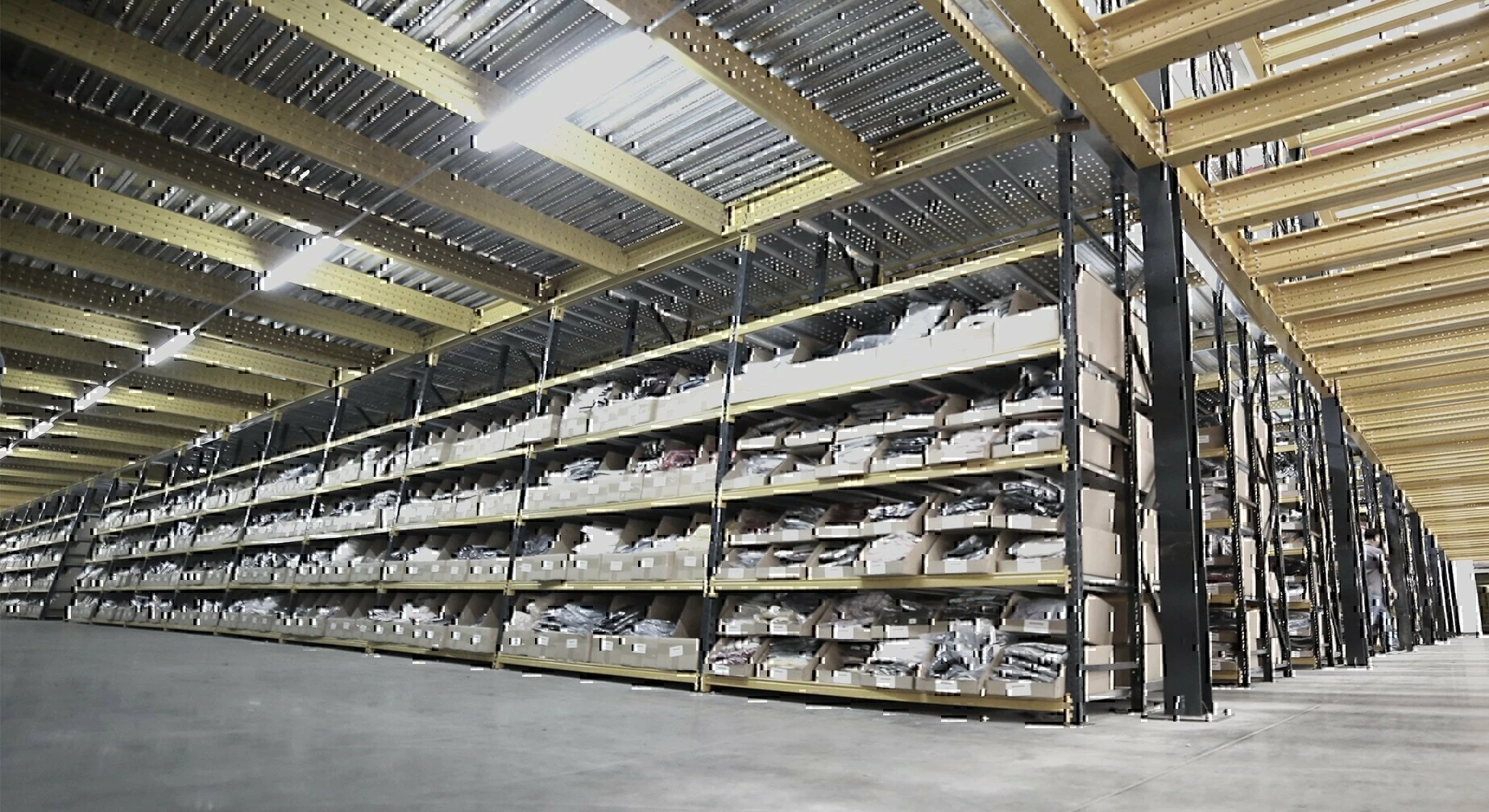
In the year 2020, Lockheed recieved over $75 billion in Pentagon contracts, a figure that was somehow more than the entire budget of the State Department and USAID combined (Hartung & Semler 2025). In spite of critiques for the F-35 fighter jet being overpriced and underperforming, Lockheed continues recieving massive funding with little to no governmental oversight, mirroring the Tyrell Corporation's prioritization of technological dominance over all ethical obligations.

enter image description here

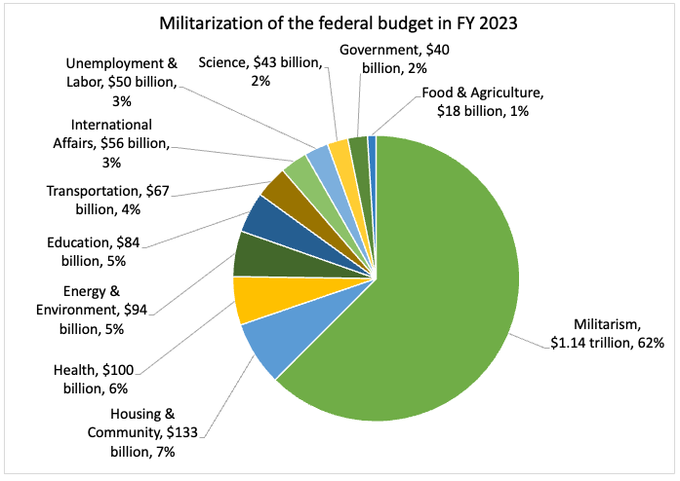
The military-industrial complex thrives on constant conflict, which directly impacts the quality of life worldwide and the national budget. In 2023, the budget for the military reached $1.14 trillion dollars; for contrast, the budget for public health that same year was $100 billion. The budget for education, just to further the point, was $84 billion.

The Department of Homeland Security recieved more than seven times the funding for the Centers for Disease control over the past seven years. The Congressional Budget Office found that the U.S. military could save $100 billion without changing the country's national security strategy, and a Department of Defense study found $125 billion in unnecessary back-office expenses could easily be trimmed. Instead, recent years have found an increase in military budget, cutting even more funding from healthcare, education, public transportation, energy, and housing (National Priorities Project 2023).

Glancing Over Policies

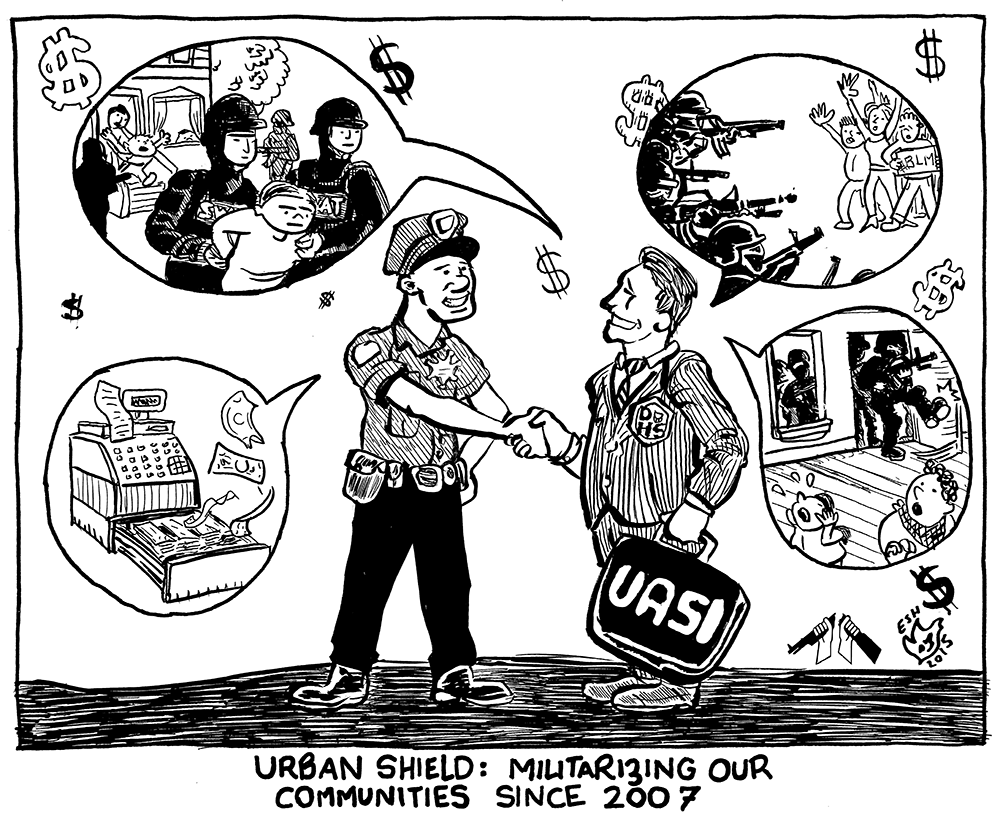
The military industrial complex does not merely include manufacturing weapons. It shapes foreign policy, surveillance practices, and domestic policing. Defense contractors lobby Congress, fund think tanks, and advocate for contracts that continue their powerful hold on global politics, much like cyberpunk's themes of surveillance capitalism.

enter image description here

Globally, the military destabilizes various countries by promoting military solutions over diplomatic ones. There are a plethora of examples: currently, America's seige on Iran stems from America's military support of an ongoing genocide, and the American support for Middle Eastern suffering stems from American interests in natural resources and political alliances.

America's bombing of a girl's school in Iran served no political interests, offered no economic benefit, and established no military strategy outside of maximizing harm and grief to leverage against American enemies, the vast majority of whom are merely civilians.

enter image description here

Glimpsing Our Future

The unchecked growth, lack of transparency, and prioritization of profit absolutely indicates that cyberpunk was right. Corporations influence foreign policy more than diplomats. Surveillance is privatized. War is automated; people have been expecting a so-called "World War III" for nearly a decade. Profit literally dictates what matters more, fear tactics or a school's worth of elementary lives.

Works Cited

Hartung W.D. & Semler S. (2025). Profits of War: Top Beneficiaries of Pentagon Spending, 2020 – 2024 (2020) Costs of War | Brown University. Available at: https://costsofwar.watson.brown.edu/paper/profits-war-top-beneficiaries-pentagon-spending-2020-2024.

‌National Priorities Project. (2023). The Warfare State: How Funding for Militarism Compromises Our Welfare. National Priorities Project. https://www.nationalpriorities.org/analysis/2023/warfare-state-how-funding-militarism-compromises-our-welfare/

‌ Weber, R. N. (2019). Military-industrial complex. In Encyclopædia Britannica. https://www.britannica.com/topic/military-industrial-complex

AI attestation: No AI was used in the creation of this post. Genuinely none; I'm far too passionate about how horrifying America's military industrial complex is to rely on some computer telling me what I know. I know this was very late in being written, and I'm truly so sorry.

When Corporations Write the Rules: Are We Already Living In Cyberpunk?

- Posted in BP05 by

In classic cyberpunk stories like Blade Runner and Neuromancer, corporations don't just influence society-they run it. Governments fade into the background while companies decide who lives comfortably and who is left behind. What once felt like dystopian exaggeration is starting to look increasingly familiar. Today, real-world tech corporations are shaping democracy, labor, and even human identity in ways that echo these fictional worlds.

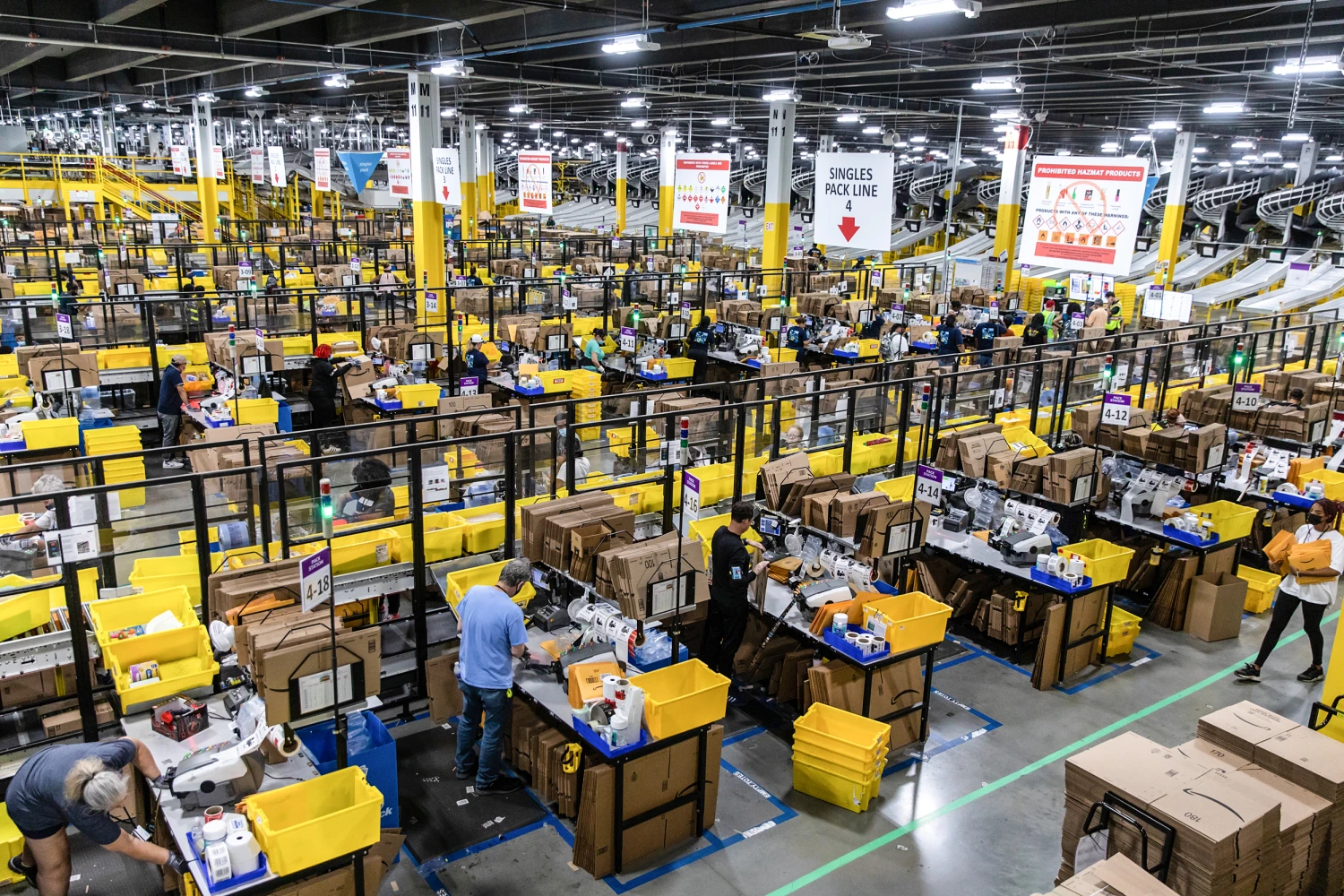
One of the clearest examples comes from Amazon and its treatment of gig and warehouse labor. Reports from sources like The New York Times and BBC have documented intense productivity tracking, algorithmic management, and harsh working conditions. Workers are monitored in real time, their movements optimized for efficiency, and their performance judged by systems they cannot question. This resembles the dehumanized labor structures seen in cyberpunk fiction, where individuals are reduced to data points in a corporate machine.

Similarly, Meta Platforms (formerly Facebook) demonstrates how corporations can influence democratic processes. Investigations into misinformation and targeted political advertising covered by outlets like Reuters and The Washington Post-show how platform algorithms can amplify certain voices while silencing others. In Neuromancer, the Tessier-Ashpool corporation manipulates global systems from behind the scenes; today, algorithmic control over information flows raises similar concerns about who really holds power in society.

Another powerful example is OpenAl and the broader Al industry. Al development is concentrated in a small number of private companies, giving them outsized influence over the future of work, creativity, and knowledge. As Al tools automate tasks once performed by humans, the relationship between labor and value becomes increasingly unclear. This directly connects to cyberpunk themes, where technology often displaces human agency while enriching corporate elites.

These developments raise an important question: are we actually heading toward a cyberpunk future, or is this just a hyperbolic critique? The answer is somewhere in between. While corporations today wield immense power, they are not entirely unchecked. Governments still regulate industries, public backlash can force change, and investigative journalism continues to expose harmful practices. For example, antitrust cases in the United States and the European Union show that legal systems can still challenge corporate dominance.

However, the conditions that enable cyberpunk-like worlds are undeniably present. Globalization allows corporations to operate across borders, often avoiding regulation. Digital platforms scale rapidly, creating monopolies or near-monopolies. Most importantly, users willingly participate in these systems-trading data, labor, and attention for convenience. This dynamic reflects what scholars call "surveillance capitalism, where human experience itself becomes a resource to be extracted and monetized.

It's also worth noting that this is not just an American issue. In Europe, stricter data privacy laws like the GDPR show a different cultural approach to corporate power. Meanwhile, countries like China have their own complex relationships between corporations and the state, where government control and corporate influence are deeply intertwined. These variations suggest that while cyberpunk themes are global, their expression depends on cultural and political contexts.

Ultimately, cyberpunk is less a prediction and more a warning. The genre exaggerates trends already present in society to make them visible and urgent. Corporate power becomes dangerous not simply because it exists, but because it goes unquestioned. This is where critique-through journalism, activism, and even classroom discussions-plays a crucial role. By analyzing these systems, we create the possibility of resisting them.

We may not yet live in a world dominated entirely by corporations, but the parallels are too strong to ignore. The question is no longer whether cyberpunk is realistic-it's how much of it we are willing to accept.

References (APA 7th Edition)

Bucher, T. (2018). If..then: Algorithmic power and politics. Oxford University Press.

European Union. (2016). General Data Protection Regulation (GDPR). https://gdpr.eu/&

Kang, C., & Frenkel, S. (2021, October 25). Facebook papers show struggle to curb misinformation. The New York Times. https://www.nytimes.com/

Satariano, A. (2020, February 17). Europe's new rules for big tech. The New York Times. https://www.nytimes.com/

Stone, B. (2021). Amazon unbound: Jeff Bezos and the invention of a global empire. Simon & Schuster.

Tufekci, Z. (2015). Algorithmic harms beyond Facebook and Google. Colorado Technology Law Journal, 13(2), 203-218.

Zuboff, S. (2019). The age of surveillance capitalism. PublicAffairs.

Corporate Power, Human Cost

- Posted in BP05 by

It Doesn’t Feel Like Fiction Anymore

I used to think cyberpunk was doing a bit too much. Corporations running everything and treating people like they’re disposable felt exaggerated. But the more I started paying attention to how certain companies actually operate, the more that line between fiction and reality started to blur. Not completely dystopian, but close enough to make you pause for a second.

Take Amazon. It’s known for convenience, but behind that is a system where workers are managed heavily by algorithms. Reports from The New York Times and MIT Technology Review explain how warehouse employees are constantly monitored, with productivity tracked in real time. In some cases, those systems can even determine discipline or termination with little human involvement. This article explains it clearly: . That kind of setup feels very similar to Neuromancer, where human labor is reduced to output and efficiency rather than treated with care.

When Convenience Comes at a Cost

The same idea shows up in how information is controlled. Meta and Google collect huge amounts of user data and use it to decide what people see online. According to Reuters, these data-driven systems have influenced political messaging and voter behavior, which raises real concerns about how much control these companies have over public perception. This piece explains more: . It reflects the same quiet but powerful influence we see in Blade Runner, where corporations shape not just technology but how reality is experienced.

Who Really Controls the Narrative?

Healthcare makes this even more real. Eli Lilly has faced major criticism over insulin pricing in the United States. A New York Times report highlights how some patients have had to ration insulin because of the cost. shows how serious that situation is. This mirrors Machinehood, where access to essential resources depends on corporate decisions rather than basic need. It stops feeling like a distant issue and starts feeling personal, especially when something so essential becomes tied to profit. enter image description here

So… Are We Heading There?

I don’t think we are fully living in a cyberpunk world, but I do think we are moving in that direction in certain ways. Corporations today have a lot of influence because of technology, global reach, and sometimes limited regulation. In the United States, that influence can grow quickly, while places like the European Union show that stricter policies can actually push back on corporate power.

I also don’t think this is just an American issue, but it does show up differently depending on the country. Some governments are more willing to step in, while others rely more on the market to regulate itself. That difference really matters. It shows that this kind of future is not inevitable, it depends on choices, policies, and how much accountability people demand.

What makes cyberpunk so interesting is that it is not just predicting the future, it is critiquing what is already happening. It exaggerates corporate power just enough to make the patterns impossible to ignore. It invites people to question systems that might otherwise feel normal.

We are not fully there yet, but we are close enough to recognize parts of it in real life. And I think that recognition is important. Because once you see it, you cannot really unsee it, and that is usually where change begins.

References

Hao, K. (2019). How artificial intelligence is shaping Amazon warehouse work. MIT Technology Review.

Herman, B. (2019). The cost of insulin in America. The New York Times.

Paul, K., & Jourdan, A. (2018). The role of data in modern political campaigns. Reuters.

Soper, S. (2021). Inside Amazon’s warehouse productivity system. The New York Times.

Zuboff, S. (2019). The age of surveillance capitalism. PublicAffairs.

AI Attestation

I used AI tools to assist with brainstorming and refining this post, but all ideas, analysis, and final writing reflect my own work.

Corporate Power in Cyberpunk

- Posted in BP05 by

The subgenre of Cyberpunk fiction has reimagined a possible future for our society. We see human life redefined by rapid technological advancements that join many other systemic issues, even amplifying them. Specifically, the exploitation of workers by corporations has become a central topic of discussion, as profit is often prioritized over human well-being. In these cyberpunk works, we see corporations controlling the labor of their workers and the conditions of everyday life in the name of technology. Real-world corporations such as Amazon resemble cyberpunk corporations through surveillance, labor control, and data-based exploitation, suggesting that while we are not fully in a cyberpunk dystopia, we are moving toward a system where corporate power increasingly resembles it, especially within digital capitalism.

Drawing on the works of Karl Marx, we identify the concept of alienated labor, in which workers become separated from the product of labor and from the act of labor itself. In Amazon’s case, workers have limited autonomy over their tasks, while being monitored by cameras and supervisors who will score them on their productivity (Ghaffary & Chandra, Vox, 2020). Digital capitalism has led to the ability to quantify productivity and allow workers to be penalized or fired for not obtaining quotas outlined by data analytics. As a result, the quantification of human labor by digital metrics now includes a psychological demand, as constant monitoring reduces autonomy and increases pressures to meet needs that are not human.

Using examples from cyberpunk narratives, Blade Runner’s Tyrell Corporation forces control over replicant life forms while prioritizing profit over ethical obligations, and in Neuromancer, Tessier-Ashpool S.A. represents corporations that operate beyond traditional economic and governmental powers. All of these examples mirror Amazon, where workers have raised concerns about physically demanding conditions, including standing for long hours without breaks and experiencing repetitive motion injuries. Paired with the ongoing debate for fairer wages, these factors contribute to an environment in which workers are being exploited, while their compensation is arguably not sufficient (New York Times, 2021). Reflecting on the boundaries between humans and technology, the integration of surveillance systems, data analytics, and performance metrics illustrates how technological advancement can intensify existing power structures rather than eliminate them. The similarities between the fictional businesses of cyberpunk literature and the modern workplace fortify that corporate dominance is not unusual in Western powers, especially the United States of America.

To continue, large corporations shape the democratic process through lobbying and participating in political matters. Amazon has invested heavily in lobbying efforts in the United States, spending millions of dollars annually to influence legislation related to taxation, labor laws, and antitrust regulation (OpenSecrets, 2023). These corporations can not only actively shape the economic outcomes in the market by funneling their financial resources to influence policy and align with their agenda. Moreover, research on political economy shows that economic elites often have disproportionate influence on policymaking through networks, access, and lobbying, rather than formal governmental roles (Gilens & Page, 2014). By concentrating democratic influence on a select few, policymaking can be influenced towards the benefit of the advantaged, which means someone is being more disadvantaged. The conversation gets more interesting as we evaluate figures such as Elon Musk, who has been recognized in public policy forums and as the former Senior Advisor to the President of the United States under the Trump Administration. Research on wealth and political influence has shown that economic elites and organized interest groups often have a substantial impact on public policy in the United States (Gilens & Page, 2014). Though not an official, Musk’s ability to surpass qualified individuals to assume the government title, thus influence, strengthens the argument that democratic power has a preference for high-income individuals and corporations.

These developments raise the question of whether such patterns are uniquely American. While corporate political influence exists globally, the United States is a supergiant in the corporate world and is known for its campaign finance system, deep lobbying industry, and the magnitude of its free-enterprise economic involvement in policymaking. Studies of comparative political systems suggest that regulatory frameworks in other countries can place stronger limits on corporate participation in politics, though globalization and digital markets increasingly allow corporations to operate across national boundaries and influence multiple regions simultaneously (Gilens & Page, 2014). So, as a country, we are not fully a dystopian cyberpunk-like system but rather are gradually shifting towards that as our reality. Ultimately, cyberpunk offers a lens on the struggle between the power of corporations and democratic oversight, and human exploitation. Though it has not reached the level of Neuromancer or Blade Runner, we can see workers are experiencing similar exploitative levels as seen by the Amazon company, and corporate elitism has an influence in political policy.

References Gilens, M., & Page, B. I. (2014). Testing theories of American politics: Elites, interest groups, and average citizens. Perspectives on Politics, 12(3), 564–581. https://doi.org/10.1017/S1537592714001595

Ghaffary, S., & Chandra, S. (2020). Amazon workers describe difficult conditions and strict productivity monitoring. Vox. https://www.vox.com

NBC News. (2021, August 1). Amazon now employs almost 1 million people in the U.S. https://www.nbcnews.com/business/business-news/amazon-now-employs-almost-1-million-people-u-s-or-n1275539

OpenSecrets. (2023). Amazon lobbying spending. https://www.opensecrets.org

The New York Times. (2021). [Article on Amazon workers and working conditions] https://www.nytimes.com

AI was used only to format references.

How Are We Living?

- Posted in BP05 by

First, please verify you are human.

Read these letters:

CYdte

How many cars are present?

enter image description here

Guessed the right answer?

You are human.

You may continue.

We are heading towards a cyberpunk corporate dominance…

it serves off the current integrations happening all around us. Not in the dramatic, neon, fully dystopian way we see in Blade Runner or Neuromancer. Not yet, anyway. But in something quieter. Something that blends into daily life so easily we barely question it.

Cyberpunk is defined as high-tech, low-life. And honestly, that definition feels less like fiction and more like a direction. Technology fills silence. It replaces interaction. It predicts behavior. It shapes what we believe is real. From helping with small daily tasks to becoming the “silent filler” in rooms full of people, it’s everywhere. And that everywhere-ness is where the shift begins.

And even that opening, being asked to verify that you are human, says something. We are constantly interacting with systems that need to distinguish between human and machine. That line is no longer obvious. It’s being tested, checked, and blurred in real time.

The Corporate Hand Behind the Screen

If we look at tech companies’ influence on democracy, especially through AI, things start to feel a little too familiar. Generative AI has introduced a new layer of complexity into the information environment. It allows faster creation of high-quality content—by anyone. That sounds empowering, but it also means misinformation can spread faster, look more convincing, and become harder to detect.

According to the Carnegie Endowment for International Peace, AI has the potential to challenge the integrity of elections and further enable digital authoritarianism (Carnegie Endowment). That’s not some far-off prediction; that’s something already unfolding.

The more polluted the digital ecosystem becomes with synthetic content, the harder it is to trust what we see. And when trust fades, democratic systems start to weaken. Not all at once, but slowly, through doubt.

This connects directly to companies like XAI and others leading AI development. They aren’t just creating tools; they’re shaping communication, perception, and even truth. That level of influence starts to mirror corporations in cyberpunk narratives, like the Tyrell Corporation, where innovation moves faster than accountability.

Surveillance, Control, and the Right to Exist Publicly

It goes deeper than information. Surveillance technology, especially facial recognition, adds another layer.

Facial recognition has already been shown to undermine the right to peaceful assembly. Public spaces, which should allow expression and protest, are becoming monitored environments. Watched. Recorded. Stored.

There’s growing concern about how tech companies assist governments in expanding surveillance capabilities, sometimes enabling suppression of dissent. When corporations build the tools and governments use them for control, the line between corporate power and state power starts to blur.

In Australia, the High Court has emphasized how essential protest is to democracy, highlighting that beyond voting, it’s one of the only ways people can express political views. If surveillance discourages that, then democracy itself begins to shift.

This is where cyberpunk stops feeling fictional.

Is This Hyperbole… or Just Early Stages?

So, are we actually heading toward cyberpunk-level corporate dominance?

This isn’t just exaggeration. But it’s also not fully realized. What we’re in right now feels like a transition phase. The systems are being built. Tested. Normalized. AI, surveillance, and digital platforms are becoming so embedded in everyday life that questioning them almost feels unnecessary.

That’s the difference. In cyberpunk, the world is already broken. Here, we’re watching it bend in real time.

Is This an American Problem?

What do you think?

From my perspective, not entirely.

While there are many tech companies based in the United States, the effects are global. Different countries respond differently:

• Some embrace surveillance technologies as part of governance

• Others push back with stricter privacy laws and regulations

• Some lack the infrastructure or protections, allowing these systems to expand unchecked

So while the influence may originate in specific places, the impact spreads, and adapts, to different political and cultural systems.

What Enables Corporate Power?

Corporate dominance doesn’t just happen, it’s built through:

• Rapid technological advancement that outpaces regulation

• Control over massive amounts of data

• Global reach beyond national boundaries

• Everyday reliance on users

We depend on these systems, which makes them harder to question and even harder to limit.

What Keeps It in Check?

There are still safeguards:

• Government regulation (even if it lags behind)

• Legal systems and court rulings

• Public awareness and critique

• Activism and advocacy

But when corporations and governments begin to intertwine, those safeguards weaken. Regulation becomes slower.

Oversight becomes complicated. Power becomes shared in ways that aren’t always transparent.

The Role of Critique

This is why conversations like this matter.

Cyberpunk wasn’t just created for entertainment; it was created as critique. A warning. A projection of what happens when power concentrates and accountability fades.

Preventing dystopia isn’t about stopping technology; it’s about questioning how it’s used, who controls it, and who it affects. Strong voices in these spaces matter. Awareness matters. Dystopia doesn’t arrive loudly. It builds quietly, through normalization.

Final Thought

When corporations influence democracy, shape truth, and enable surveillance, it becomes a planned structure.

Cyberpunk didn’t invent these ideas; it amplified them. And today, those patterns are becoming harder to ignore.

So the real question isn’t whether we’re heading toward that future.

It’s whether we recognize it while it’s still forming.

Sources

Carnegie Endowment for International Peace. Can Democracy Survive the Disruptive Power of AI? 2024, https://carnegieendowment.org/research/2024/12/can-democracy-survive-the-disruptive-power-of-ai.

Artsy. EPMD Image. https://d7hftxdivxxvm.cloudfront.net/?quality=80&resize_to=width&src=https%3A%2F%2Fartsy-mediauploads.s3.amazonaws.com%2FbkXzKHJkSvI6mftJ6mzMVg%252Fepmd--1127x1000.jpg&width=450.

Alamy. Crowded Street in a Commercial District of a Small Town in India in the 90s. https://c8.alamy.com/comp/2MN2116/crowded-street-in-a-commercial-district-of-a-small-town-in-india-in-the-90s-2MN2116.jpg.

AI Attestation: Ideas are my own, AI sued to edit and enhance

Freedom to Choose or Controled by Situation ?

- Posted in BP05 by

Uber logo A company that does not seem like a cyberpunk example would be Uber. The premise of it is allowing people to have freedom to work when and wherever they want and also be their own boss. A lot of drivers use Uber as their main source of income, but they do not keep standard protection nor benefits. Different articles show that Uber has built in loopholes so they do not have to pay their drivers fairly and even lock them out of the app. This directly affects their income and them being able to support themselves.This also creates a situation where workers feel stuck, because leaving the platform could mean losing their main source of income without having another option ready. Because of this, Uber looks like more of a system that controls its workers because they depend on it. ## Flexibility Without Protection This is sort of like Sleep Dealer where the job is an opportunity, instead it kind of traps its workers. Memo chooses to work with the nodes, in the same way Uber drivers chose, but this is based on their situation. Memo needs this job to survive and to send money to his family. In the same way Uber drivers depend on the app for money, but the algorithm controls everything. This type of work does not have stability, protection, or benefits which leaves workers in vulnerable and tough situations (Apouey, et al., 2023). There are also reports that show Uber has loopholes used so they do not have to pay their drivers and workers fairly. These loopholes even go to extremes of locking people off of the app which affects their ability to make and earn money (Business & Human Rights Resource Centre, 2024). In Memo’s situation and the Uber drivers, they are both in a situation where they have limited choices so that “choice” is not really a choice. ## Dependency on Work
This brings up the question of whether or not we are moving toward the kind of corporate power seen in cyberpunk. In some ways, yes, especially with companies like Uber. Uber has a large number of workers who depend on the platform for income, which gives the company a significant amount of control over them. Technology makes it easier for corporations to manage workers in ways that are not always obvious, which can feel almost like manipulation. However, this is not exactly the same as a full cyberpunk world. There are still laws and regulations in place that are meant to protect workers and limit corporate power. At the same time, these laws are not always strong enough or consistently enforced, which allows companies to continue certain practices. Additionally, workers do not always have the power or resources to fight for themselves against these big companies. This raises concerns about how effective these protections really are in the long term. It also shows that cyberpunk is not a perfect prediction of the future, but it is not completely exaggerated either. Instead, it highlights real problems that already exist and pushes them further to show what could happen if these issues continue without stronger regulation or accountability.

References

Costa, T. G., et al. (2023). The burden of prolonged sedentary behavior imposed on mobility application drivers. Journal of Exercise Science & Fitness. https://pmc.ncbi.nlm.nih.gov/articles/PMC10323908/

Business & Human Rights Resource Centre. (n.d.). USA: Uber & Lyft allegedly exploit loopholes to deny drivers fair wages, impacting mental health. https://www.business-humanrights.org/en/latest-news/usa-uber-lyft-allegedly-exploit-loopholes-to-deny-drivers-fair-wages-impacting-mental-health/

AI Attestation AI was used to simplify the prompt and help come up with headings and titles. I also used AI to help me with citing my sources and coming up with my references. https://chatgpt.com/share/69c88804-175c-8327-ada4-24f4450e5970

Page 1 of 3