Do You Think I Would Still Get Racially Profiled as a Big Black Bird?

- Posted in BP04 by

What Animal Would I Merge With

If I could be merged with any animal, I think I would choose a raven. Ravens are considered to be some of the smartest birds and have a mind comparable to that of a young child and great apes (Pantoja-Sánchez, 2020). Therefore, when transforming or merging, there would be minimal cognitive differences or capabilities. I also find the traversal abilities to be interesting. Flying is something humans have always dreamed of. From the stories of Icarus to the invention of the Wright Brothers to sending the first man to the moon in 1969. Flight has always been something that has been a craving, yet is impossible due to organismic limitations.

What Would Change?

The idea of flight and a reinforcement of intellectual abilities is what most interests me. I feel as though, because ravens are mentally similar in comparison to an organism that is within the evolutionary branch as humans, my concept of humanity would not be as threatened. My idea of humanity is the ability to relate, empathize, and communicate with the world I am a part of, socially and physically. I do not think that humanity is selective in the treatment of other humans, but rather an interaction with other living organisms and the environment. Anything you interact with, should be shown your humanity by respecting and being compassionate about it to the extent you can be. The advancements should be an addition to my already developed sense of self, rather than a complete change.

Humanity

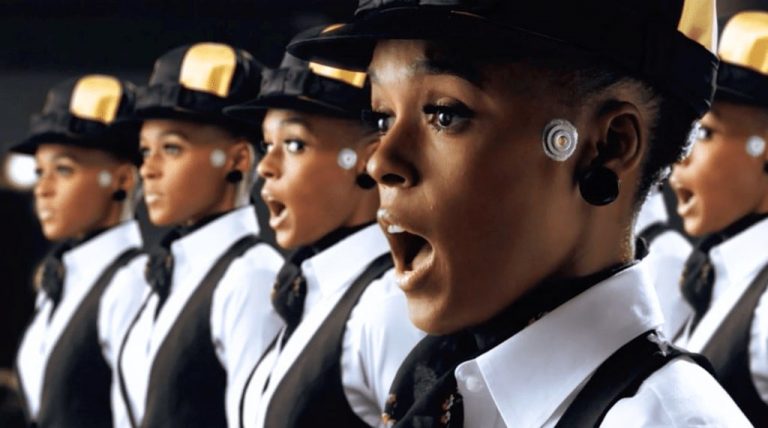
With this merge, I don’t feel as though my own humanity would be changed, but how others would piece me into theirs would. If you look at something as simple as race, most people would sympathize with someone that looked similar to them. Though some people, due to an racist ideology, solely sympathize with people that look like them, especially if they are white. Already seeing the aspect of racism, I believe there would be a disconnect from humanity by forcible removal by others. I feel this further goes into Haraway’s theory on cyborgs and Janelle Monae’s The ArchaAndroid. The two deal with intersectionality and how people’s ideas need to expand before that can be done. There is a foundation already of who gets to be definitely recognized, and as new identities are explored and allowed to be present, the foundation is supposed to expand. Supposed to is the main idea, however, perspectives can be stubborn, especially if it undermines it to be at a disadvantage. There are instances of people with a socio-economic advantage, who are typically white, that feel as though expanding the foundation for new identities and supporting and allowing equity for the times it was unrecognized, as unfair. Take DEI for example. Now imagine people that are upset at equity, feeling as though it’s unfair, to see a hybrid person with enhanced abilities because they were born of two different organisms. I feel as though I am an enhanced person. My humanity would be stolen from me, rather than changed due to hybridization.

References Pantoja-Sánchez, S. O., Bouchard, J., & Pika, S. (2020). Ravens parallel great apes in physical and social cognitive skills. Scientific Reports, 10(1), 21070. doi.org

I attest that no AI was used on this.

Surviving the Man-Machine Civil War

- Posted in BP03 by

Spider-Man 2 (2004) is widely considered the best Spider-Man movie of all time. Peter Parker is grappling with his identity as Spider-Man encroaching on his non-superhero persona. Peter finds himself battling his Spider-Man persona and momentarily loses his powers, and gives up his role as New York City’s protector. For so long, Spider-Man was the highest priority and not Peter Parker, which cost him greatly in every aspect. Only until an equilibrium was found to allow the dynamic between either persona to be fluid rather than a rigid belief of putting Spider-Man first, did Peter’s powers come back. He was then capable of to be one being containing two different foundations. This is exactly what Donna Haraway’s Cyborg theory embodies. Haraway’s theory accentuates that established conflicting roles are not purely one against the other, but rather a complex, fluid, and dynamic symbiosis (Philosopheasy, 2025). Peter Parker and Spider-Man co-exist in the same being, and when there was no established mutualism, there was conflict between the roles of man and hero. Similarly, High School Musical explores the issue. Troy Bolton is pulled between his role as a star athlete and as a main cast member in musical theater. His dynamics between each of his roles were unstable, and a purist agenda was pushed to be one or the other. This mindset was very closed off and conservative, and it limited Troy to one realm rather than a transgressive identity that opened a realm of intersectionality. With a newly established identity, exploration is inevitable. Back to Spider-Man 2 (2004), a physical manifestation of the exploration would be with the main antagonist, Doctor Otto Octavius, better known as “Doc Ock.” Doctor Octavius spent his life’s work on a project similar to Neuralink. His invention would allow someone, with the help of an implanted chip, to control prosthetic arms with their mind through AI. This is a perfect example of the beneficial aspect of topics often rooted in the negative atmosphere of the cyberpunk genre. Doctor Octavius is a brilliant and extraordinary researcher who was intentional with his work and its benefits. It is not until an incident causes the implanted AI chip to override and erode his mind that Doc Ock prevails. While Peter Parker (a.k.a. “Spider-Man”) is dealing with a man vs. role conflict, Doctor Octavius is dealing with a man vs. machine conflict. The invention itself would have been monumental, but due to the corruption caused by AI, it was turned into a weapon to be used with ill intention. Focusing on the invention itself, it would have opened doors for those incapable of moving their own body. The invention could have been used for accessibility for the disabled, allowing them to possess the ability to provide for themselves in ways prevented by their body alone. It could have been used as tools for blue-collar workers dealing with heavy loads, and minimizing the risk of accidental injuries or developing chronic pain caused by a physically demanding work environment. The intersectionality of man and the machine, often a warning in the cyberpunk genre, is not always negative. Boundaries need to be pushed to begin to open the minds of humans and explore the possibilities for advancement. Janelle Monae’s The ArchAndroid similarly expands on the need to explore to push possibilities into inclusivity. Monae explores an Afrofuturistic society as the character Cindi Mayweather, who is a cyborg in the literal sense. Throughout the album, the character is constantly trying to break the social barrier, the “Great Divide,” separating humans and machines. Cindi is trying to show society that when you cross these boundaries, there are unlimited and boundless opportunities for self-exploration and a new sense of unconfined freedom. Peter Parker lost his powers when his personas were clashing due to a confining mentality that solely focused on one aspect of his identity until he gave each their respect. This newfound sense of self can create a new identity and intersectionality that was not recognized previously. Doctor Octavius’s invention, for instance, dared to blur the lines of man and machine and could be used to allow accessibility to those who were not able to interact with the world that way. The social and technological future depends on pushing boundaries and exploring new possibilities and mindsets in order to allow for diversity, intersectionality, and identities that are not linear and binary.

References Monáe, J. (2010). The ArchAndroid [Album]. Bad Boy; Wondaland Arts Society Philosopheasy. (2025, January 14). Donna Haraway’s Cyborg Theory and reimagining identity. Substack. https://www.philosopheasy.com/p/donna-haraways-cyborg-theory-and Raimi, S. (Director). (2004). Spider-Man 2 [Film]. Columbia Pictures; Marvel Enterprises Turner-Williams, J. (2025, May 18). Janelle Monáe's 'The ArchAndroid' invited us to free our minds. AFROPUNK. afropunk.com

I attest that no AI was used

Trading Dopamine for Your Soul

- Posted in BP01 by

Contrary to popular belief, social media has been around for nearly three decades. It is only recently, within the last twenty years, that it has truly become a standard. Human connection has been around since the dawn of time, yet social media has offered instant connection across nearly any distance. Although this is a huge accomplishment in the technological space, it has impacted people’s connection to humanity. You are now able to connect screen-to-screen, but not have human-to-human interactions. During 2020, the Black Lives Matter (BLM) truly took flight in the eyes of the media. People were recording altercations involving black individuals and police officers that would often be fatal. At first, sympathy was a driving force for change, but it slowly bled to a cold detachment. You could be sitting at home, on TikTok, and see a post showing the uncensored murder of an individual, scroll, and see members of the Hype House dancing to a popular song. This is also seen currently, where Palestinians would grab your attention with a trendy video, then cut it to a pleading message and unveil the horrors happening in their homeland. At first, there is moral compassion and an invocation of humanity seeing these atrocities, but over time, it becomes normal, and like any other post that did not trigger a dopamine response, it is scrolled past. Though this is a current struggle, it can closely mirror the cyberpunk genre. In cyberpunk, there is a disconnect in humanity due to the prevalence of technology or progression. There is also a need to stay in the space that is ideal to them, which is often the cybernetic version that has been established by an algorithm. It would be ideal for a person to scroll past an emotion-involving video to stay in the safety that the algorithm has created. Social media has twisted empathy into something unrecognizable in terms of the textbook definition. It is reported, in an American study, that people have a harder time responding to emotions, others, and their own, the more they use social media (Martingano, 2023). This is something that cyberpunk has warned about: losing connection with yourself and others. Li states, “The limitations of a physical body, the uncontrollable emotions in humanity, these are considered as flaws and obstacles as the path toward the ultimate utopia. The pursue of it is in fact, not building a better society for next generations but falling into a well of a ‘soul-less’ world, a world of human slave themselves by information and technology, in other words, slaved by instrumental rationality.” Rather than the installation of bionic limbs or AI chips to insert technological control, social media has taken over human emotion. There has been a shift in humanity that is less than human. People can no longer connect the same way as they did prior to the rise of social media. There is a rise of narcissism, apathy, and a dimmed sense of morality (Martingaano, 2023). If we continue to scroll past atrocities in favor of dopamine-safe content, we risk fulfilling the genre’s prophecy: a world where we are perfectly connected by technology, yet completely alone in our indifference.

References Martingano, A. J. (2023, May 9). Social media and empathy around the globe. Psychology Today. https://www.psychologytoday.com/us/blog/what-do-you-mean/202305/social-media-and-empathy-around-the-globe Li, H. (2022). Reflection of modern society through cyberpunk. BCP Social Sciences & Humanities, 16, 600–604. https://doi.org/10.54691/bcpssh.v16i.518

And Yet, The Bombs Keep Dropping

- Posted in BP05 by

Cyberpunk Says...

Cyberpunk fiction often depicts large corporations as more powerful than governments themselves, with a wide scope of capabilities and very little consequence to their gross misconduct. Human lives are reduced to a question of profit and loss, as was the case with the Tyrell Corporation in Blade Runner.

This dystopian perspective is truly not that removed from the real world. Capitalism itself relies heavily on the question of prioritization: to prioritize anything outside of generating revenue immediately risks the very foundation of a multitude of organizations. It's why Disney treats animators terribly, and why the niche marketplaces of webcomics or galleries severely underpay and mistreat their content creators.

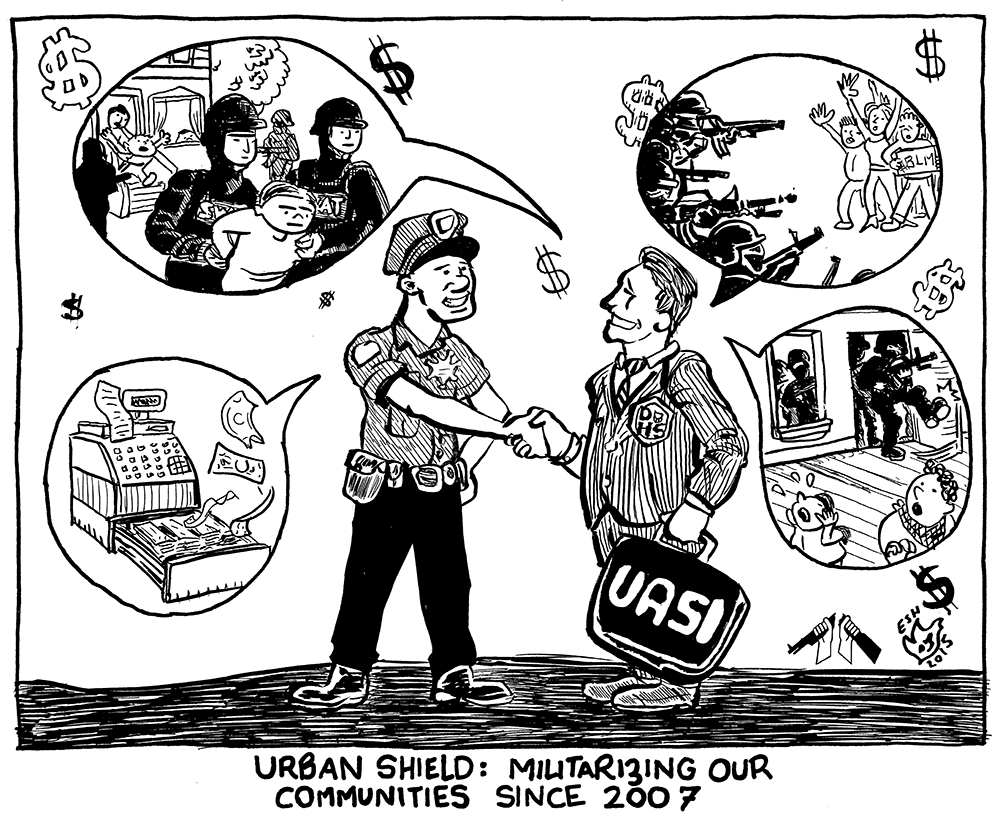
The American military-industrial complex, which includes defense contractors, government agencies, politians, and soldiers quite literally infiltrate every single level of international society (Weber 2019). Ghost in the Shell serves as wonderful propaganda, arguably, in favor of the militarization of technology; the line between military and civilian life dissolves completely, as facial recognition and drone tech are as heavily utilized in the media as they are in the modern world.

Everyone's Favorite Military

Glancing Over Numbers

Lockheed Martin, one of the largest defense contractors in the United States, perfectly depicts the blend of corporate profit and national defense.

enter image description here

In the year 2020, Lockheed recieved over $75 billion in Pentagon contracts, a figure that was somehow more than the entire budget of the State Department and USAID combined (Hartung & Semler 2025). In spite of critiques for the F-35 fighter jet being overpriced and underperforming, Lockheed continues recieving massive funding with little to no governmental oversight, mirroring the Tyrell Corporation's prioritization of technological dominance over all ethical obligations.

enter image description here

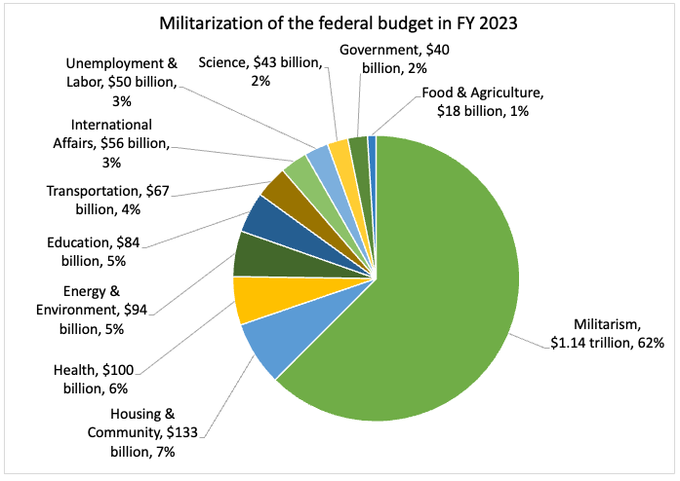
The military-industrial complex thrives on constant conflict, which directly impacts the quality of life worldwide and the national budget. In 2023, the budget for the military reached $1.14 trillion dollars; for contrast, the budget for public health that same year was $100 billion. The budget for education, just to further the point, was $84 billion.

The Department of Homeland Security recieved more than seven times the funding for the Centers for Disease control over the past seven years. The Congressional Budget Office found that the U.S. military could save $100 billion without changing the country's national security strategy, and a Department of Defense study found $125 billion in unnecessary back-office expenses could easily be trimmed. Instead, recent years have found an increase in military budget, cutting even more funding from healthcare, education, public transportation, energy, and housing (National Priorities Project 2023).

Glancing Over Policies

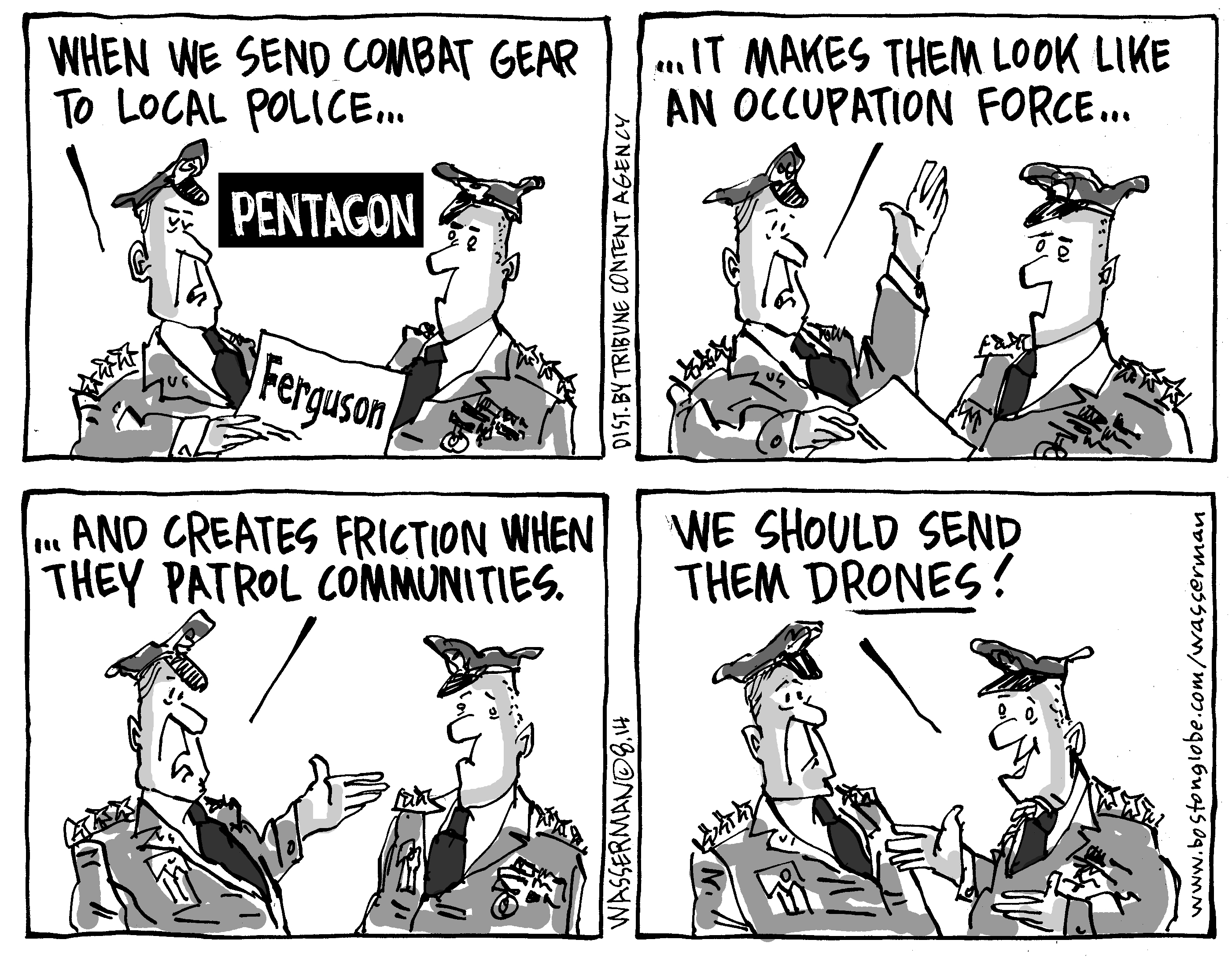
The military industrial complex does not merely include manufacturing weapons. It shapes foreign policy, surveillance practices, and domestic policing. Defense contractors lobby Congress, fund think tanks, and advocate for contracts that continue their powerful hold on global politics, much like cyberpunk's themes of surveillance capitalism.

enter image description here

Globally, the military destabilizes various countries by promoting military solutions over diplomatic ones. There are a plethora of examples: currently, America's seige on Iran stems from America's military support of an ongoing genocide, and the American support for Middle Eastern suffering stems from American interests in natural resources and political alliances.

America's bombing of a girl's school in Iran served no political interests, offered no economic benefit, and established no military strategy outside of maximizing harm and grief to leverage against American enemies, the vast majority of whom are merely civilians.

enter image description here

Glimpsing Our Future

The unchecked growth, lack of transparency, and prioritization of profit absolutely indicates that cyberpunk was right. Corporations influence foreign policy more than diplomats. Surveillance is privatized. War is automated; people have been expecting a so-called "World War III" for nearly a decade. Profit literally dictates what matters more, fear tactics or a school's worth of elementary lives.

Works Cited

Hartung W.D. & Semler S. (2025). Profits of War: Top Beneficiaries of Pentagon Spending, 2020 – 2024 (2020) Costs of War | Brown University. Available at: https://costsofwar.watson.brown.edu/paper/profits-war-top-beneficiaries-pentagon-spending-2020-2024.

‌National Priorities Project. (2023). The Warfare State: How Funding for Militarism Compromises Our Welfare. National Priorities Project. https://www.nationalpriorities.org/analysis/2023/warfare-state-how-funding-militarism-compromises-our-welfare/

‌ Weber, R. N. (2019). Military-industrial complex. In Encyclopædia Britannica. https://www.britannica.com/topic/military-industrial-complex

AI attestation: No AI was used in the creation of this post. Genuinely none; I'm far too passionate about how horrifying America's military industrial complex is to rely on some computer telling me what I know. I know this was very late in being written, and I'm truly so sorry.

How Are We Living?

- Posted in BP05 by

First, please verify you are human.

Read these letters:

CYdte

How many cars are present?
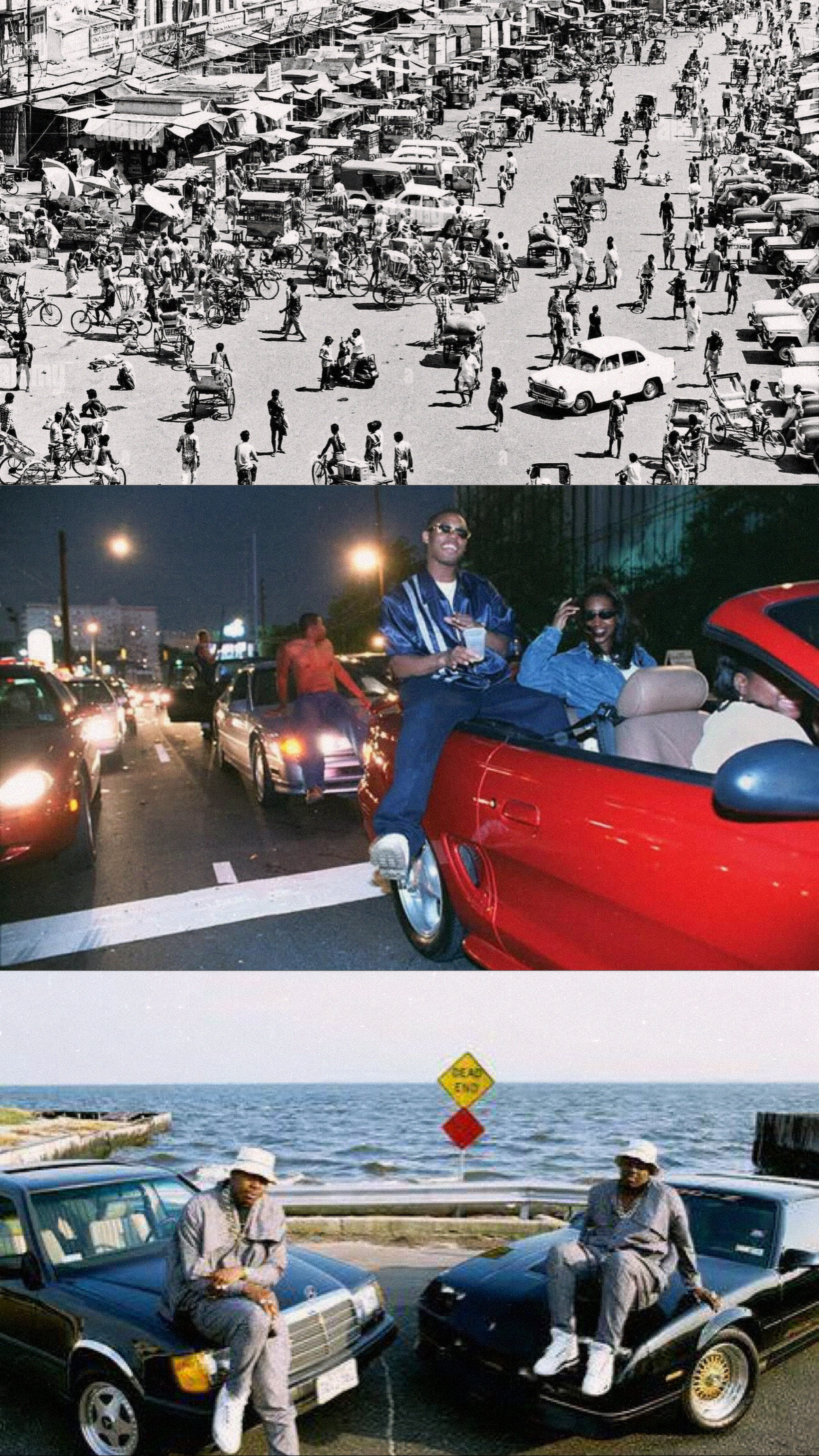
enter image description here

Guessed the right answer?

You are human.

You may continue.

We are heading towards a cyberpunk corporate dominance…

it serves off the current integrations happening all around us. Not in the dramatic, neon, fully dystopian way we see in Blade Runner or Neuromancer. Not yet, anyway. But in something quieter. Something that blends into daily life so easily we barely question it.

Cyberpunk is defined as high-tech, low-life. And honestly, that definition feels less like fiction and more like a direction. Technology fills silence. It replaces interaction. It predicts behavior. It shapes what we believe is real. From helping with small daily tasks to becoming the “silent filler” in rooms full of people, it’s everywhere. And that everywhere-ness is where the shift begins.

And even that opening, being asked to verify that you are human, says something. We are constantly interacting with systems that need to distinguish between human and machine. That line is no longer obvious. It’s being tested, checked, and blurred in real time.

The Corporate Hand Behind the Screen

If we look at tech companies’ influence on democracy, especially through AI, things start to feel a little too familiar. Generative AI has introduced a new layer of complexity into the information environment. It allows faster creation of high-quality content—by anyone. That sounds empowering, but it also means misinformation can spread faster, look more convincing, and become harder to detect.

According to the Carnegie Endowment for International Peace, AI has the potential to challenge the integrity of elections and further enable digital authoritarianism (Carnegie Endowment). That’s not some far-off prediction; that’s something already unfolding.

The more polluted the digital ecosystem becomes with synthetic content, the harder it is to trust what we see. And when trust fades, democratic systems start to weaken. Not all at once, but slowly, through doubt.

This connects directly to companies like XAI and others leading AI development. They aren’t just creating tools; they’re shaping communication, perception, and even truth. That level of influence starts to mirror corporations in cyberpunk narratives, like the Tyrell Corporation, where innovation moves faster than accountability.

Surveillance, Control, and the Right to Exist Publicly

It goes deeper than information. Surveillance technology, especially facial recognition, adds another layer.

Facial recognition has already been shown to undermine the right to peaceful assembly. Public spaces, which should allow expression and protest, are becoming monitored environments. Watched. Recorded. Stored.

There’s growing concern about how tech companies assist governments in expanding surveillance capabilities, sometimes enabling suppression of dissent. When corporations build the tools and governments use them for control, the line between corporate power and state power starts to blur.

In Australia, the High Court has emphasized how essential protest is to democracy, highlighting that beyond voting, it’s one of the only ways people can express political views. If surveillance discourages that, then democracy itself begins to shift.

This is where cyberpunk stops feeling fictional.

Is This Hyperbole… or Just Early Stages?

So, are we actually heading toward cyberpunk-level corporate dominance?

This isn’t just exaggeration. But it’s also not fully realized. What we’re in right now feels like a transition phase. The systems are being built. Tested. Normalized. AI, surveillance, and digital platforms are becoming so embedded in everyday life that questioning them almost feels unnecessary.

That’s the difference. In cyberpunk, the world is already broken. Here, we’re watching it bend in real time.

Is This an American Problem?

What do you think?

From my perspective, not entirely.

While there are many tech companies based in the United States, the effects are global. Different countries respond differently:

• Some embrace surveillance technologies as part of governance

• Others push back with stricter privacy laws and regulations

• Some lack the infrastructure or protections, allowing these systems to expand unchecked

So while the influence may originate in specific places, the impact spreads, and adapts, to different political and cultural systems.

What Enables Corporate Power?

Corporate dominance doesn’t just happen, it’s built through:

• Rapid technological advancement that outpaces regulation

• Control over massive amounts of data

• Global reach beyond national boundaries

• Everyday reliance on users

We depend on these systems, which makes them harder to question and even harder to limit.

What Keeps It in Check?

There are still safeguards:

• Government regulation (even if it lags behind)

• Legal systems and court rulings

• Public awareness and critique

• Activism and advocacy

But when corporations and governments begin to intertwine, those safeguards weaken. Regulation becomes slower.

Oversight becomes complicated. Power becomes shared in ways that aren’t always transparent.

The Role of Critique

This is why conversations like this matter.

Cyberpunk wasn’t just created for entertainment; it was created as critique. A warning. A projection of what happens when power concentrates and accountability fades.

Preventing dystopia isn’t about stopping technology; it’s about questioning how it’s used, who controls it, and who it affects. Strong voices in these spaces matter. Awareness matters. Dystopia doesn’t arrive loudly. It builds quietly, through normalization.

Final Thought

When corporations influence democracy, shape truth, and enable surveillance, it becomes a planned structure.

Cyberpunk didn’t invent these ideas; it amplified them. And today, those patterns are becoming harder to ignore.

So the real question isn’t whether we’re heading toward that future.

It’s whether we recognize it while it’s still forming.

Sources

Carnegie Endowment for International Peace. Can Democracy Survive the Disruptive Power of AI? 2024, https://carnegieendowment.org/research/2024/12/can-democracy-survive-the-disruptive-power-of-ai.

Artsy. EPMD Image. https://d7hftxdivxxvm.cloudfront.net/?quality=80&resize_to=width&src=https%3A%2F%2Fartsy-mediauploads.s3.amazonaws.com%2FbkXzKHJkSvI6mftJ6mzMVg%252Fepmd--1127x1000.jpg&width=450.

Alamy. Crowded Street in a Commercial District of a Small Town in India in the 90s. https://c8.alamy.com/comp/2MN2116/crowded-street-in-a-commercial-district-of-a-small-town-in-india-in-the-90s-2MN2116.jpg.

AI Attestation: Ideas are my own, AI sued to edit and enhance
Freedom to Choose or Controled by Situation ?

- Posted in BP05 by

Uber logo A company that does not seem like a cyberpunk example would be Uber. The premise of it is allowing people to have freedom to work when and wherever they want and also be their own boss. A lot of drivers use Uber as their main source of income, but they do not keep standard protection nor benefits. Different articles show that Uber has built in loopholes so they do not have to pay their drivers fairly and even lock them out of the app. This directly affects their income and them being able to support themselves.This also creates a situation where workers feel stuck, because leaving the platform could mean losing their main source of income without having another option ready. Because of this, Uber looks like more of a system that controls its workers because they depend on it. ## Flexibility Without Protection This is sort of like Sleep Dealer where the job is an opportunity, instead it kind of traps its workers. Memo chooses to work with the nodes, in the same way Uber drivers chose, but this is based on their situation. Memo needs this job to survive and to send money to his family. In the same way Uber drivers depend on the app for money, but the algorithm controls everything. This type of work does not have stability, protection, or benefits which leaves workers in vulnerable and tough situations (Apouey, et al., 2023). There are also reports that show Uber has loopholes used so they do not have to pay their drivers and workers fairly. These loopholes even go to extremes of locking people off of the app which affects their ability to make and earn money (Business & Human Rights Resource Centre, 2024). In Memo’s situation and the Uber drivers, they are both in a situation where they have limited choices so that “choice” is not really a choice. ## Dependency on Work

This brings up the question of whether or not we are moving toward the kind of corporate power seen in cyberpunk. In some ways, yes, especially with companies like Uber. Uber has a large number of workers who depend on the platform for income, which gives the company a significant amount of control over them. Technology makes it easier for corporations to manage workers in ways that are not always obvious, which can feel almost like manipulation. However, this is not exactly the same as a full cyberpunk world. There are still laws and regulations in place that are meant to protect workers and limit corporate power. At the same time, these laws are not always strong enough or consistently enforced, which allows companies to continue certain practices. Additionally, workers do not always have the power or resources to fight for themselves against these big companies. This raises concerns about how effective these protections really are in the long term. It also shows that cyberpunk is not a perfect prediction of the future, but it is not completely exaggerated either. Instead, it highlights real problems that already exist and pushes them further to show what could happen if these issues continue without stronger regulation or accountability.

References

Costa, T. G., et al. (2023). The burden of prolonged sedentary behavior imposed on mobility application drivers. Journal of Exercise Science & Fitness. https://pmc.ncbi.nlm.nih.gov/articles/PMC10323908/

Business & Human Rights Resource Centre. (n.d.). USA: Uber & Lyft allegedly exploit loopholes to deny drivers fair wages, impacting mental health. https://www.business-humanrights.org/en/latest-news/usa-uber-lyft-allegedly-exploit-loopholes-to-deny-drivers-fair-wages-impacting-mental-health/

AI Attestation AI was used to simplify the prompt and help come up with headings and titles. I also used AI to help me with citing my sources and coming up with my references. https://chatgpt.com/share/69c88804-175c-8327-ada4-24f4450e5970

BIg Pharma

- Posted in BP05 by

In Blade Runner (Scott 1982), the Tyrell Corporation slogan is "More Human Than HUmans". What this quote means to me is that the Tyrell Corporation manufactures "life" , can control how long a person lives, and charges whatever it wants because there is no alternative. The corporations power is not dictatorship, it is biological. You want to live longer, they make you pay. The NUmbers are Hard to Sit With U.S drug prices are not high, they are extremely inaccessible for most people, especially compared to other countries. Brand-name drugs in the U.S cost 3x (Mulcahy et al., 2024) more than any where else, ever after adjusting for rebates. Some asthma medications are 1,300% higher than the average price across even neighboring countries ( Office of Assistant Secretary for Planning and Evaluation, 2024). Insulin cost nearly t10 times more in the U.S than other OCED countries ( Mulcahy et al., 2024) When Insulin was discovered the scientist sold the patent for one dollar because they thought it should be accessible for the public. One vial the cost $21 in 1999 is now over $300 (Hales et al., 2020) Why is this Allowed to Happen? In Blade Runner, the Tyrell company can charge any price because they do not see it as corruption in a dramatic sense, they see it as "just how they system was built". An example is cancer treatment, when someone is diagnosed with cancer, they are forced to have to pay whatever they are charged because they need the drug regardless of the cost so there is no real competition ( Office of Assistant Secretary for Planning and Evaluation, 2024). In most countries the government negotiates prices based pn what drug is actually worth therapeutically. The result is that Americans pay more for the same medication with no additional health benefit. We are not getting better drugs, we are just consumers that let companies charge sick people whatever they feel like. Is there any Hope?
There might be hope because Pfizer became the first pharmaceutical company to lower they're prices for Medicaid recipients to align with international rates ( Euronews, 2025), which usually only happens because of political pressure and tariffs. But it is definitely not a solution, because many peopole who cannot acces medicaid are still paying high prices. Plus this does not prove that these corporations are not completely immovable. They only respond when they feel threatened. We Are Already Here Being in this class has showed me that cyberpunk is not a warning, but when people are importing drugs from other countries or traveling just be able to afford adequate healthcare at an affordable price ( Pew Research center, 2017), rationing Insuin, and life saving treatments are treated as luxury rather than a right- that is a regular Friday in America. Tyrell Corporation monetized the dependency between humans and the thing keeping them alive. Pfizer is not exactly the same but the same premise still stand, biological necessity as a leverage as a revenue stream. Cyberpunk is already here. enter image description here

Euronews. (2025, October 1). Pfizer agrees to lower prescription drug costs for Medicaid. https://www.euronews.com/business/2025/10/01/pfizer-agrees-to-lower-prescription-drug-costs-for-medicaid Fortune. (2025, January 6). Pfizer has increased prices on over 60 drugs in the U.S. as of Jan. 1. https://fortune.com/well/2025/01/03/pfizer-drug-price-increase-2025/ Hales, C. M., Carroll, M. D., Fryar, C. D., & Ogden, C. L. (2020). The high cost of insulin in the United States: An urgent call to action. Mayo Clinic Proceedings, 95(1), 22–28. https://www.mayoclinicproceedings.org/article/S0025-6196(19)31008-0/fulltext Mulcahy, A. W., Schwam, D., & Lovejoy, S. L. (2024). International prescription drug price comparisons: Estimates using 2022 data. RAND Corporation. https://www.rand.org/pubs/research_reports/RRA788-3.html Office of the Assistant Secretary for Planning and Evaluation. (2024, January 31). Comparing prescription drugs in the U.S. and other countries: Prices and availability. U.S. Department of Health and Human Services. https://aspe.hhs.gov/reports/comparing-prescription-drugs Pew Research Center / PMC. (2017). Importation of drugs into the United States from Canada. https://pmc.ncbi.nlm.nih.gov/articles/PMC5478407/ Scott, R. (Director). (1982). Blade Runner [Film]. Warner Bros.

Corporate Domination and Cyberpunk Societies: Fiction or Real-life?

- Posted in BP05 by

One of the main characteristics of societies in cyberpunk stories is that corporations are more powerful than the government. They control the world and the people based on their most important goal: profit. In these stories, money matters more than human lives, which is something to be scared of. The worst thing about that is to notice the similarities with real life. Nowadays, big technology companies have great power over individuals. Because they have access to massive amounts of data - such as what people browse, their location, what they buy - they can influence people’s decisions without them even noticing. This is clearly a form of control, and it brings us close to those societies we are so scared about – at least I am - from Cyberpunk stories.

What is really happening?

To make this clear, let’s bring some theory to the discussion. Shoshana Zuboff – American author and professor at Harvard Business School – created the term Surveillance Capitalism to explain how the control by big companies is established. It describes how companies collect people’s data and use it to: 1. Predict what they will do and 2. Influence their decisions. Zuboff explains that companies like Google and Facebook make money by collecting and using personal data (Zuboff, 2019), which means that instead of selling products, companies sell information about people.

The Cambridge Analytica Scandal

In the 2010s, Facebook was involved in the Cambridge Analytica Scandal, where millions of users had their personal data collected without their consent to create highly targeted political messages for campaigns during the 2016 election (Kozlowska, 2018). This episode exemplifies how corporations sell and use people’s data to influence their decisions and thoughts. It shows how powerful corporations have become in our society and how they can influence democratic processes, such as the elections. Additionally, the fact that a company can affect political outcomes like that challenges the government authority.

Are we heading toward Cyberpunk Societies?

Another perspective we can discuss about this situation is how most people are not aware about how much influence corporations have in our society. The truth is, many users put their personal information on websites, without even understanding the effect this can have. People make themselves vulnerable to manipulation simply by completing a survey or a questionnaire. Honestly, it’s like these big corporations see people as sources of data that can be used for profit or strategic purposes. And isn’t this the key idea in cyberpunk stories? Where people are treated less like individuals with their own identities and lives, but more like participants of a greater system of power and control moved by profit. I hate to admit it, but these societies are not fully fictional anymore.

The Tyrell Corporation in Blade Runner

The movie Blade Runner illustrates this situation really well. The Tyrell Corporation creates replicants and uses them to obtain profit, without even considering their humanity or rights. Similarly, Facebook uses people’s data as a resource, which suggests a priority of interests related to profit, rather than people’s rights of privacy, autonomy, and even society’s democracy. Thus, in both situations – fictional and real-life – individuals are treated as tools within a larger system controlled by a powerful corporation, indicating that our society is heading toward cyberpunk’s corporate dominance.

A Globalized Issue

The growth of corporate dominance is not just a problem in the United States. It is true that American companies tend to have more freedom and can operate within less strict rules, but other countries have been dealing with this situation as well. Countries in Europe, for example, have really strict laws about privacy to try to limit how corporations use personal data. Meanwhile, in China, corporate control is tied to the government, which means companies don’t have that much freedom to act. Therefore, even though corporate control and power is dealt differently across countries, it is noticeable that it’s a global issue enabled by technology and globalization. Because of that, it is extremely important to discuss about this in news, media, and in classes, so people are not oblivious to how their personal information is being used and how vulnerable their privacy is in a world moved, and perhaps controlled, by technology and profit.

Sources

Zuboff, S. (2019). The age of surveillance capitalism: The fight for a human future at the new frontier of power. PublicAffairs.

Kozlowska, I. (2018). Facebook and data privacy in the age of Cambridge Analytica. University of Washington. https://jsis.washington.edu/news/facebook-data-privacy-age-cambridge-analytica/

Scott, R. (Director). (1982). Blade Runner [Film]. Warner Bros.

Highway to Cyberpunk

- Posted in BP05 by

Thank You, Next

When watching cyberpunk movies or reading cyberpunk stories, one thing is always very similar. Technology has advanced that jobs change, new jobs get created, and others get taken. In the 1982 movie Blade Runner, we see the manufacturing of replicants, artificial humans who are just created for labor from a company called Tyrell. They are used for jobs that are considered dangerous, exhausting or morally questionable so in other words, those that no one else wants to do. But since these replicants aren’t actually human, they get treated like products, no matter if they feel like a human. They serve, obey and then die when they are no longer useful, with a build in expiration date and no rights. But this is all only fiction right?

Human Replacements at Amazon

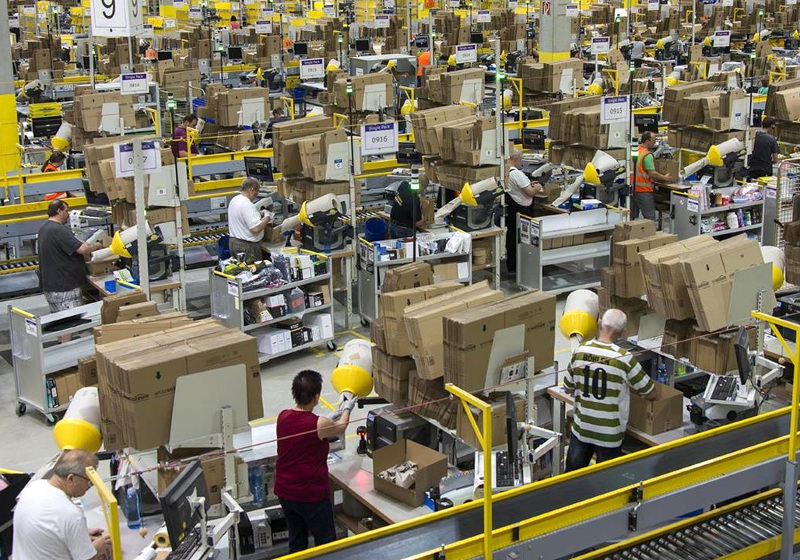
In the last couple of years more and more information has come out about the working conditions that Amazon warehouse workers have to work under. Automated systems track worker productivity, expecting them to pack more than one hundred boxes an hour. If these expectations aren’t met it can lead to warnings or a direct termination without a human supervisor reviewing the situation. This has lead to roughly 300 people being fired in the proximity of one year. enter image description here

In addition to this an open letter has ben signed by 1000 Amazon employees that have warned about unethical use of AI. It is being used for mass layoffs and is planned to lay off 14,000 employees to do its initiatives. But the ironic thing is, the workers themselves are even saying AI is not ready to do so and even acts sloppy and inconsistent in its duties making work harder for those workers who are still human. This is why they are signing the letter to demand ethical AI working groups that help when and how to use AI efficiently.

Amazon in Neon Lights

Just like Tyrell Amazon has a tendency to see its employees as products and not human beings seen through the way that they just fire people as they please, regarding inhuman efficiency and expectations. The workers are being monitored, controlled, and “eliminated” when not useful anymore, just like in Blade Runner with the only difference that they get fired and not actually eliminated. It is algorithms that deviate on who works and who gets fired and the corporation gains power over human lives in a way that governments didn’t intend them to and that is exactly the kind of dehumanising corporate control that cyberpunk warns about and shows through Tyrell. The expectations of packing hundreds of boxes per hour and being terminated when failed also shows this blur between human and machine that Amazon does the same way as Tyrell does. Humans must perform at machine speed and their value is measured on output only, making their bodies pushed to the breaking point. Tyrell creates replicants for labour only which is why they definitly only measure them in output and push their body to the breaking point to use them as much as they can before they have to get another one. The replicants are expected to do inhuman tasks just like the Amazon workers and are discarded when they fail, also just like the Amazon workers. Corporations demand machine like performance from humans showing how society shifts to a cyberpunk model where labour is dehumanised and expendable. When it comes to the use of AI we see how it is slowly replacing humans in labour as well to increase profit, truant accountability, and centralise power. Amazon employers are thus fearing that AI is becoming a corporate weapons and not just a tool for human benefit. With the Tyrell corporation we can similarities in their way of using genetic engineering to create a labor force that it controls. Both show a world where technology amplifies corporate dominance.

Futuristic or Realistic?

Amazon is just one such corporation that shows us that we are moving toward a cyberpunk world because corporation like Amazon increasingly use automation and AI to control workers, replace human judgements, and consolidate power. These practices mirror fictional corporations like Tyrell from Blae Runner in their dehumanisation of labour and willingness to let technology override ethics.

Work Cited AITechTrend. (2025, November 27). AITechTrend. https://aitechtrend.com/amazon-workers-warn-of-ai-rollouts-ethical-risks/Jee, C. (2019, April 26).

Amazon’s system for tracking its warehouse workers can automatically fire them. MIT Technology Review. https://www.technologyreview.com/2019/04/26/1021/amazons-system-for-tracking-its-warehouse-workers-can-automatically-fire-them/

Corporations vs. Governments: Are We Moving Toward a Cyberpunk Future?

- Posted in BP05 by

Image: A representation of corporate power, data surveillance, image: A representation of corporate power and data surveillance!

Cyberpunk vs Reality

Cyberpunk literature has long imagined a future where corporations dominate, often surpassing governments and viewing human lives as disposable. These fictional organizations, like Tyrell Corporation in Blade Runner and Tessier-Ashpool SA in Neuromancer, control technology, prioritize profit, and shirk responsibility. Although these stories may seem exaggerated, many modern companies behave in ways that closely resemble these dystopian visions, especially in areas such as gig economy labor practices, pharmaceutical pricing, and surveillance capitalism.

Hacking the Mind, Not the Body: Surveillance Capitalism

The way internet corporations gather and utilize personal data is one such example. These days, businesses collect a lot of personal data and use it to target advertisements and forecast behavior. This concept relates to the topic of "hacking the body vs. hacking the mind" that we covered in class. Hacking in cyberpunk is about manipulating people, not just systems. In the real world, businesses don't hack our bodies, but they do have an impact on our beliefs, purchases, and ways of thinking. This system, which turns human behavior into a resource for businesses, is frequently referred to as surveillance capitalism (Axios, 2019). That makes me think of cyberpunk settings where individuals are continuously seen and impacted.

Identity and Privacy Loss in the Digital Age

Additionally, there is concrete proof of the effectiveness of this data collection. According to a Federal Trade Commission investigation, big social media corporations gathered a lot of user data and shared it with outside parties, often without the consumers' knowledge (The Guardian, 2024). This relates to the loss of identity and privacy, another cyberpunk concept we discussed. People lose control over their own knowledge in such scenarios, and a less severe version of that is happening now.

Government Power vs. Corporate Power

The notion of businesses taking the place of established power institutions is another link to our class. In cyberpunk, businesses dominate most of the choices, and governments are powerless. Companies still have a lot of power, even though it isn't entirely true nowadays. They can influence laws and policies through economic power and lobbying. This gives the impression that the distinction between corporate and governmental authority is becoming increasingly hazy.

The Value of Human Labor and the Gig Economy

The gig economy is related to the previous class information on the worth of people in cyberpunk settings. People are viewed as disposable and only useful for what they can provide in many stories. These days, gig workers for businesses like DoorDash and Uber frequently lack benefits and job stability, which makes them feel the same way. Employees are crucial, but they can be readily replaced. The concept of humans being reduced to their utility is reflected in cyberpunk.

Cyberpunk as a Caution, not a Prediction

I don't believe that our culture is entirely cyberpunk. This relates to another topic covered in class: cyberpunk is frequently a critique rather than a forecast. These tales exaggerate real problems. Governments still have authority and can control businesses in the real world. For instance, various nations have different laws governing corporate control and data protection, demonstrating that businesses do not have total authority.

Views from Around the World on Corporate Power

This is not only an American problem; it is a global one as well. While governments are more stringent in certain nations, companies have greater flexibility in others. This demonstrates how the system determines how companies and power interact, a topic we have also discussed in class while comparing various civilizations.

Conclusion: What should we do next?

In my view, cyberpunk serves as a warning about what may happen if corporate power is abused. Although we are not quite there yet, there are early indications, particularly in the areas of corporate influence, labor practices, and data gathering. The way people react is what counts. We can keep things from being as bad as cyberpunk fiction if we remain conscious and keep challenging these structures.

Sources

Axios. (2019). The new data capitalism. https://www.axios.com/2019/06/25/personal-data-big-tech-companies-privacy-capitalism The Guardian. (2024). Social media firms engaged in vast surveillance, FTC finds. https://www.theguardian.com/technology/2024/sep/19/social-media-companies-surveillance-ftc

OpenAI. (2026). Digital eye with data overlay representing surveillance and personal data tracking [AI-generated image]. ChatGPT.

AI Attestation: I improved the organization of my work and create title image with the use of AI. Based on what I learnt in the course, the thoughts and connections to the course material are my own.

Page 1 of 5