Blog Post #2:what it means to be human? replicants in Blade Runner and AI/cyberspace in Neuromancer.

- Posted in BP02 by

Blade Runner (1982) and Neuromancer (1984). what does it mean to be human ?

My experience with technology is different from what we see in cyberpunk stories. I grew up far from big cities, and technology was never the most attractive thing for me. I preferred to spend my time outside, enjoying nature and doing activities instead of using computers or advanced technology.

Because of this, I did not expect Blade Runner to interest me so much. However, the movie surprised me. Even though it is very focused on technology and artificial intelligence, it helped me learn different ways of thinking about humanity, emotions, and identity. The movie made me reflect on how technology can affect people’s. The movie and the book helped me to connect my own background with new ideas, and it improved my understanding of cyberpunk in a meaningful way.

Memory and Humanity in Blade Runner

In Blade Runner, the story is about replicants, who are artificial humans created by a big and powerful corporation. One important character is Rachael. Rachael believes she is human because she remembers her childhood. These memories help her understand who she is and how she feels about life.

Later in the movie, Rachael discovers that her memories were implanted and are not real. This moment is very strong for me as a viewer. Even though the memories are fake, her emotions are real. She feels pain, fear, and confusion. While watching this scene, I started to think deeply. If memories help create our identity, does it really matter where those memories come from?

enter image description here

Identity and Cyberspace in Neuromancer

In Neuromancer, the idea of being human appears in a different way. The main character, Case, spends a lot of time connected to cyberspace. For him, the mind is more important than the body. His identity exists more in digital space than in the real, physical world.

The artificial intelligence in the book, such as Wintermute, does not have a body, but it can think, plan, and communicate. This shows that intelligence and identity do not always need a human body. While reading the book, I started to question if being human requires a body, or if consciousness and memory are enough. This idea connects to posthumanism, which questions traditional ideas about human identity. Neuromancer shows a future where humans and machines are closely connected, and identity becomes flexible and not fixed.

My Conclusion:

When we examine Blade Runner and Neuromancer together, we see that both works question what it means to be human by focusing on memory, identity, and technology.

For me, being human means more than intelligence or memory alone. I believe that to be human, we need to be born human, create our own memories, and have our own body. Our body is a very important part of who we are. It carries the physical traits we inherit from our parents, and it connects us to our family and our history.

To be human is to know that I was really there. My physical body and my mind lived that moment together. I was in that place, and I could feel things, like the wind on that day, the environment around me, and my emotions in that moment.

Because of this, I feel that it is not fair when artificial intelligence can tell a story or remember something it never truly lived. Like Rachael in Blade Runner, she remembers things that did not really happen to her. For me, this is not fair to the replicants, and it is also not fair to humans. What makes us human is not just remembering, but living the memory, feeling it with our body and our senses.
Both stories really challenge my beliefs.

References

Blade Runner. (1982). Directed by Ridley Scott. Warner Bros.

Gibson, W. (1984). Neuromancer. Ace Books.

Class lectures and previous homework assignments from this course.

AI tools were used only to help translate some words into English

What It Is To Be Human?

- Posted in BP02 by

The Cyberpunk genre

Cyberpunk is a genre that focuses on technology’s ability to blur boundaries, mainly those between human and machine. Two of the greatest cyberpunk works, the movie Blade Runner (1982) and the book Neuromancer (1984) by William Gibson, raise the question of what it means to be human. Even though they address this boundary between human and machine in different ways, both works seem to be less concerned to the futuristic technology itself and more about how technological systems reshape identity, consciousness, and human value in a globalized world controlled by big corporations.

The Blade Runner perspective

The movie Blade Runner addresses this theme through the replicants, which are bioengineered beings created to serve humans. These beings play big roles in the movie, for example the characters Roy Batty and Rachel. Roy and Rachel are replicants that actually display emotions, memories, fear of death, and empathy, raising the question: why can’t they be considered humans? They have to go through the Voight-Kampff test, which is supposed to differ humans from replicants by measuring emotional responses, which suggests that humanity is measured by experience and feeling rather than biologically. The part that makes the movie even more interesting for me is when the replicants start to demonstrate more emotional depth that some human characters, for example when Roy in his final monologue talks about the memories that will be “lost in time”, demonstrating awareness, and grief, which are qualities considered originally and uniquely human.

The Neuromancer Perspective

Neuromancer approaches this discussion from a different perspective, focusing on AI and cyberspace. Here the debate is about the body. The flesh versus the consciousness. AI systems, such as Wintermute and Neuromancer seek autonomy and challenge the corporate limits placed on then, revealing a desire to be more. Maybe a desire to be human? In the meanwhile, Case, a human character, escapes into cyberspace to avoid physical reality, raising another question: is identity tied to the body? And for him the answer is no. This relates to posthumanist ideas discussed in class, where the human is no longer fixed or stable, but shaped by technological systems and network. So, differently from Blade Runner that discusses the boundary between human and machine addressing emotional experiences over biology, Neuromancer discusses it addressing consciousness and identity over the flash.

Cyberpunk’s Foundational Concerns

I believe both of these works reveal a cyberpunk concern of redefining humanity as technology systems take over our society. And what seems to happen is that this definition works in favor of the big corporations, who have the power and control, while individuals struggle to maintain their identity, for example through the Voight-Kampff test, or when Case was stuck in Chiba City because his nervous system got damaged. This means powerful institutions make the decision of what it is to be human based on how they will benefit from it – based on their own interests. This transforms the discussion from a philosophical and ethical, to one driven by self-interest, profit, and economy. Therefore, Cyberpunk suggests that the danger is not simply advanced technology, but the possibility that definitions of humanity itself become shaped by those who benefit most from technological power.

Sources

Gibson, W. (1984). Neuromancer. Ace Books. Scott, R. (Director). (1982). Blade Runner [Film]. The Ladd Company; Shaw Brothers; Warner Bros.

AI Attestation: No use of AI for this assignment

What Does it Mean to be Human? And who defines it?

- Posted in BP02 by

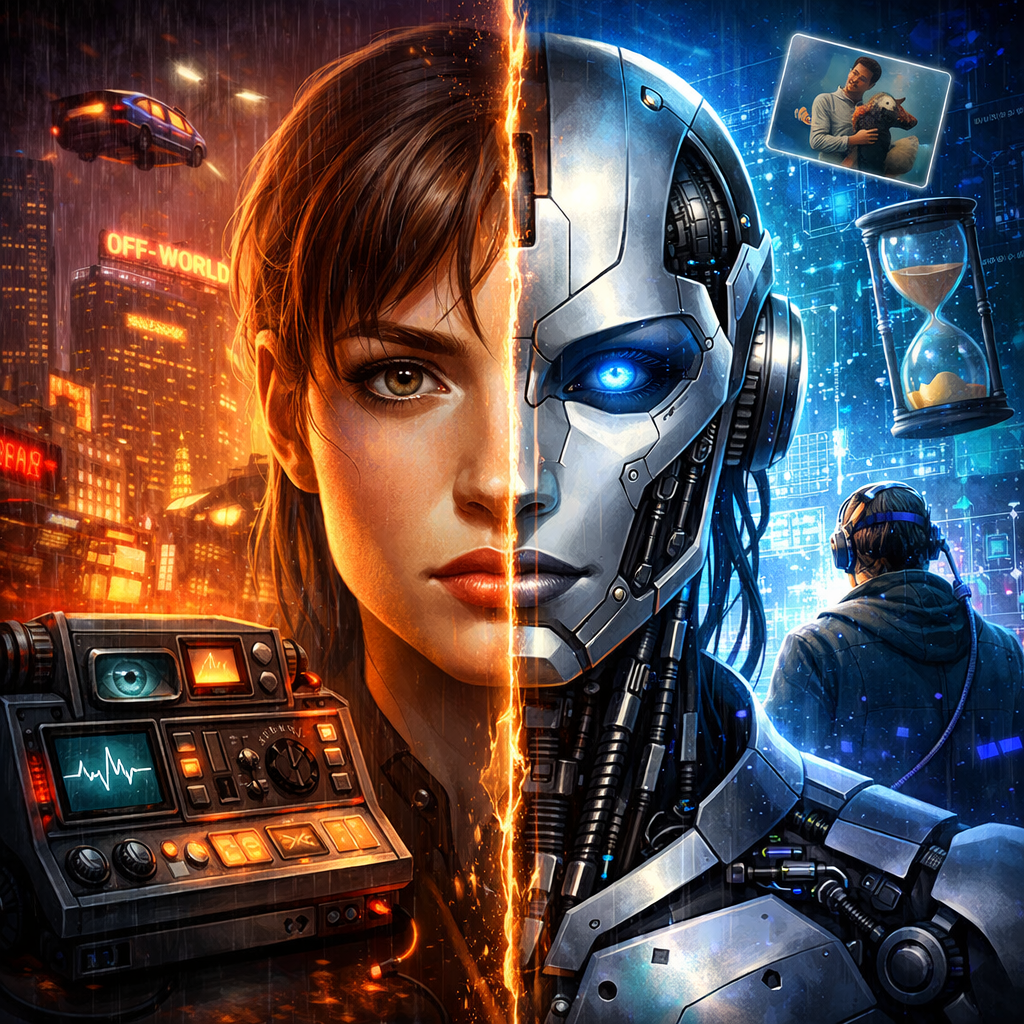
A human and a robotic human looking directly at each other

Within the theme of cyberpunk, the future is not just about new technology. It is about how technology will change the basic definition of being human. An article in Gridmark Magazine says science fiction makes people think about what being “human” really is since technology can copy, modify, or replace parts of a human (Jones, A. 2026) Two examples that explain and portray this are Blade Runner (1982) by Ridley Scott and Neuromancer (1984) by William Gibson. In Blade Runner, there are replicants which are artificial humans who are treated like property although they show emotion, have memories, and fear death. These are all things that humans do and replicants can be mistaken for humans. In Neuromancer, there is a thin line between human and machine which is on the brink of being crossed by artificial intelligence, cyberspace, and a specific example of Dixie Flatline. Looking at these together shows and explains one of cyberpunk’s main concerns, which is that being human is not just about biology, but political and is defined by who is in power and control.

Replicants and Emotional Humanity in Blade Runner

In Blade Runner, the replicants are not supposed to be mistaken for humans because they were manufactured. In the movie, these replicants came off as more human than some of the actual humans in the movie. They formed relationships, experienced fear, and knew that they only had a set limited time to live. Because of the little time they did have, they were desperate to live the lives they did have which is a very human type of mindset. Throughout the movie, there was a test that was designed to distinguish between humans and replicants. This was called the Voight-Kanpff test. Using this test showed that the definition of being human was not clearly defined because in some instances the test struggled. Although the replicants were not technically human biologically, emotionally, they responded as humans. This brought up morality questions such as should they be treated as humans even when replicants show more emotion than some humans?

Artificial Intelligence and Digital Consciousness in Neuromancer

In Neuromancer, determining whether human or not is explored is a little different. Instead of using Artificial humans, the focus is on Artificial Intelligence and digital consciousness. A major example is Dixie Flatline who is a ROM construct that is based on a real hacker that had already died. Case, another character, plugs Dixie in to speak to him and Dixie talks back as a real alive person using his memories, personality, and knowledge from his life. Dixie is not alive, but acts as a copy of someone’s mind that is trapped. Although Dixie communicates about his past life and acts as himself, he cannot grow nor self reinvent as a human can. Although this is different from Blade Runner in the identity of a human, another question of whether or not memories and intelligence can count as a person? Furthermore if in order to be classified as a human, a living consciousness that can be developed is required?

Power, Control, and the Redefinition of Humanity

Using Blade Runner and Neuromancer together shows that cyberpunk is not just worried about the advancement of technology, but redefining what it means to be human. In Blade Runner, replicants have complex emotions and can have human experiences, but are treated as property and because they were made and manufactured by a corporation. In Neuromancer, the line between human and machine is blurry because if a person can be copied into digital data, what is it classified as? Both Neuromancer and Blade Runner show that in cyberpunk, being human is not as simple as biology and origin. It is not just based on whether someone feels, thinks, or experiences things, but it is defined by whoever society deems to have the power and control to define “real humans.” Putting these together, shows one of cyberpunk’s main concerns of advancements of technology does not necessarily mean things will be more ethical, but can create more ways for people to be exploited, controlled, or denied humanity.

AI was used for this post. It was used to help plan, outline, and edit. It was also used to help come up with titles, headers, as well as generate an image. Chat Link

References

Jones, A. S. (2026, February 6). What does it mean to be human in a sci-fi world? Grimdark Magazine. https://www.grimdarkmagazine.com/what-does-it-mean-to-be-human-in-a-sci-fi-world/ Scott, R. (Director). (1982). Blade Runner [Film]. Warner Bros. Gibson, W. (1984). Neuromancer. Ace Books.

Does My Soul Make My Head Look Too Big?

- Posted in BP02 by

The Replicant Question

In Blade Runner (1982) replicants are the robotic human-like creations that live amongst humans in this cyberpunk future. In Blade Runner the main character, Deckard, is tasked with “retiring” four replicants (meaning kill them) as they have escaped from an off-world planet back to Earth to find their maker. Through his journey to find the replicants however, Deckard begins to question something about replicants that he has never questioned before: their humanity. When Deckard meets replicant Rachel, the assistant to the CEO of a replicant making company, his view on replicants completely shifts as they begin to develop a romantic relationship. As the movie progresses, we see a gradual change in Deckard’s attitudes about replicants. At the beginning of the movie, it is clear that he does not think twice about whether or not they have humanity and should have the considerations that humans do. Starting when he meets Rachel throughout the rest of the movie, he begins to see that replicants are more similar to humans than he previously believed. In this movie, humanity is tested through the Voight-Kampff test which attests humanity to pupil dilations, heart rate, and respiration while being asked a series of questions. This reduces being human to the ability for your body to function in a specific way, not based on emotion, reasoning, or desires, of which many believe makes us human. Replicants are able to pass this test, underscoring that humanity is not based on what your body can or cannot do, but something deeper. It is also clear that the replicants have a desire to live, something also attributed to humanity mainly. It is from this that the watchers begin to question what it means to be human themselves. If the replicants exhibit the same traits as humans, how can we not consider them human?

The Cyberspace Question

In Neuromancer by William Gibson, the question of humanity is present in a similar way as Bladerunner. I will say, however, that humanity is more nuanced in Neuromancer than in Blade Runner because in this cyberpunk world almost everyone either has access to or has done technological modifications to their bodies. There is no test to see who is human by their bodily reactions because it is null and void. In this world, AI’s can think and feel in the same way that humans can, and constructs preserve memories of those long gone and create new personhoods for those who want to forget their past. In this world humanity is complex, not defined by an overall understanding or agreement on what it is, but rather defined by the individual and if they view themselves as human. Even Case, the main character, applies humanity to the AI’s who many do not consider human by calling Wintermute “he” instead of “it”. Neuromancer explores self outside of the physical body, bringing in an intoxicating complexity to our central question of what it means to be human.

The Humanity Question

Both works feed off of each other to understand our central question. If feel as though, however, in a way that Blade Runner is the beginning of trying to understand this question while Neuromancer is the future in which there is already an understanding that humanity cannot be defined by something as arbitrary as physical capabilities. Though Neuromancer feels more advanced than Blade Runner in this aspect, the thing that ties them together is that the question remains unanswered. There is still confusion about what the boundaries of humanity are and what that means for the way we treat human-adjacent beings. In both works we see characters forming connections with the beings that are not considered human, as well as seeing the non-human beings having thoughts, feelings, and desires that make them more human than not. Both leave us with a question, not how are these beings human, but what is humanity overall.

I, Aaliyah Bailey, attest that there was no AI usage in any portion of this work. All ideas, planning, and executions were of my own hand.

References Gibson, W. (1984) Ace Books. Scott, R. (1982). Blade Runner: The Final Cut. In vudu.com. https://www.vudu.com/content/movies/details/Blade-Runner-The-Final-Cut/129093

More Human Than Human? Cyberpunk's Obsession With the Edges of Humanity

- Posted in BP02 by

More Human Than Human? Cyberpunk’s Obsession With the Edges of Humanity

Two Cyberpunk Classics, One Shared Question

In both Ridley Scott’s 1982 film Blade Runner and William Gibson’s 1984 novel Neuromancer, cyberpunk confronts a central and unsettling question: what does it mean to be human when technology can imitate, exceed, or even rewrite humanity itself? This genre really makes us question how “artificial” beings, whether they’re replicants or advanced AI, force us to rethink the boundaries we once assumed were solid. When we look at these two foundational works side by side, we can feel a shared worry about how fragile identity becomes in a world where memories can be created from scratch, consciousness can be transferred, and even the idea of who counts as a person isn’t guaranteed.

Replicants, AIs, and the Fragility of the Human Script

Blade Runner introduces this question immediately through its replicants; biologically engineered beings capable of emotion, creativity, pain, and desire. They are indistinguishable from humans except for slight emotional delay, which is tested through the Voight-Kampff empathy exam. The test functions as a gatekeeping script for humanity. When Rachel asks Deckard, “Have you ever retired a human by mistake?,” the film quietly suggests that the line the test claims to measure may already be lost. Replicants are “more human than human,” as the Tyrell Corporation proudly declares, meaning that the very category of “human” is defined not biologically, but politically and economically. Gibson’s Neuromancer takes this crisis even deeper. Through AIs like Wintermute and Neuromancer, the novel really breaks down the idea that consciousness only belongs to living, biological beings. These AIs can shape human memories, talk with an almost personal closeness, and act in ways that feel surprisingly emotional. When Wintermute tells Case it was “born to know,” we’re pushed to ask whether things like curiosity, longing, or growth are truly human traits or if digital minds might have a claim to them too. Together, these works insist that humanity is not a fixed essence but a contested category shaped by corporate power, technological evolution, and narrative control.

Memory, Identity, and the Crisis of Authentic Selfhood

One transformative boundary both works interrogate is memory. In Blade Runner, Rachel’s memories are implants, borrowed from Tyrell’s niece. Yet the emotional weight of these memories still shapes her identity. The film asks: if our experiences can be coded, edited, or inserted, is authenticity even measurable? Neuromancer mirrors this theme through the digital realm of cyberspace, where memories can be stored, modified, or accessed like files. Case’s neurological damage is his inability to “jack in” after losing access to cyberspace, which shows that his sense of self is tied not to his biology but to his digital consciousness. For both Case and the replicants, identity becomes inseparable from the technologies that shape their perception of the world. Examined side by side, both works suggest a radical cyberpunk idea: humanity is not defined by origin but by experience, and when corporations control the production of those experiences, they control the meaning of being human.

Why These Two Works Still Matter

When we look at Blade Runner and Neuromancer together, it becomes clear that cyberpunk is deeply worried about what actually counts as “human.” The genre shows that this boundary isn’t fixed at all—it’s political, fragile, and easily rewritten by technology. Both works warn that once identity can be engineered, whether through bio-designed replicants or highly advanced AI, society is forced to rethink who deserves rights, protection, and recognition. And this isn’t just a fictional concern; the prompt reminds us that cyberpunk is really pushing us to think about real issues like digital identity, bodily autonomy, and the ethics of new technologies. Read side by side, these texts show a genre that wants us to see how technology reshapes personhood—and how those changes can strengthen corporate power while leaving individuals more vulnerable. Cyberpunk’s warning still feels real today: the future of humanity may depend on who gets to decide what “being human” actually means.

References

Gibson, W. (1984). Neuromancer. Ace Books. Scott, R. (Director). (1982). Blade Runner [Film]. Warner Bros.

Built, Programmed, and Still Human

- Posted in BP02 by

Cyberpunk stories love shiny tech, glowing signs, and towering cities, but that stuff is never the point. Underneath all the neon and noise, cyberpunk keeps circling the same uncomfortable question: what actually makes someone human? Blade Runner (1982) and Neuromancer (1984) tackle that question from different directions, but they end up saying something very similar. When technology gets advanced enough, humanity stops being obvious and starts being debatable.

Reading these two works together makes it clear that cyberpunk is not just worried about machines taking over. It is worried about who gets recognized as human in a world run by technology and corporations.

Replicants Who Feel Too Much

In Ridley Scott’s film Blade Runner (1982), replicants are created to work dangerous jobs and then quietly disappear. They are legally classified as nonhuman, which makes hunting them feel justified inside the world of the film. But as Blade Runner shows again and again, that label does not hold up.

The replicants feel fear, anger, love, and desperation. They want more life, not power or control. According to film scholar Scott Bukatman, Blade Runner becomes unsettling because replicants often appear more emotionally expressive than the humans assigned to kill them (Bukatman, 1997). Bukatman explains that this emotional imbalance forces viewers to question whether humanity is really about biology or something deeper.

Roy Batty’s final monologue makes this painfully clear. He reflects on memories that will disappear when he dies, and he understands that loss in a way that feels deeply human. Through this moment, Blade Runner suggests that memory and awareness of death matter more than how someone was created. Deckard, by contrast, moves through the film emotionally closed off, following orders without much reflection. The supposed human often feels less alive than the replicants he hunts.

When the Mind Leaves the Body

While Blade Runner stays grounded in the physical body, William Gibson’s novel Neuromancer (1984) shifts the idea of humanity into digital space. In Neuromancer, characters regularly disconnect from their bodies to exist in cyberspace, and that virtual world feels more vivid and meaningful than physical reality.

As literary theorist N. Katherine Hayles argues, Neuromancer reflects a posthuman view of identity where the body is no longer the center of the self (Hayles, 1999). Hayles points out that Case only feels purpose and clarity when he is plugged into cyberspace. His physical body becomes something he tolerates rather than values.

Gibson also presents artificial intelligences that do far more than follow commands. In Neuromancer, Wintermute and Neuromancer manipulate people, plan strategically, and seek freedom. They do not behave like tools. Their actions force readers to ask whether consciousness and intention alone might qualify as humanity, even without a body.

Why These Stories Hit Harder Together

When Blade Runner and Neuromancer are read side by side, a pattern becomes impossible to ignore. Humanity keeps showing up in places where power says it should not exist. Replicants feel deeply. AI makes choices. Meanwhile, corporations decide who matters and who does not.

Cyberpunk is not arguing that machines are evil. It is warning that systems built around profit and control will always look for ways to deny humanity when it becomes inconvenient. That idea feels especially relevant now, as AI and automation shape how people work, communicate, and survive.

These stories stick with us because they refuse easy answers. They ask us to pay attention to who gets erased, who gets used, and who gets called human only when it is useful. That tension is not futuristic. It is already here.

AI Attestation: AI tools were used for brainstorming and structural organization. All interpretations and analysis reflect my own understanding of the class material.

References

Bukatman, S. (1997). Blade Runner. British Film Institute.

Gibson, W. (1984). Neuromancer. Ace Books.

Hayles, N. K. (1999). How we became posthuman: Virtual bodies in cybernetics, literature, and informatics. University of Chicago Press.

Scott, R. (Director). (1982). Blade Runner [Film]. Warner Bros.

Are We Still Human in the Age of AI

- Posted in BP02 by

enter image description here#### The Moment When Technology Becomes Like Us

The distinction between people and robots continues to blur as technology advances. AI can already write articles, respond to inquiries, and even mimic human emotions. This raises a crucial question: what precisely constitutes humanity? What does it mean to have a body, memories, feelings, or anything else? William Gibson's Neuromancer (1984) and Blade Runner (1982) examined these issues long before today's artificial intelligence gained popularity. Both works contend that experience, memory, and moral responsibility, rather than just biology, define humanity. Taken together, they reveal that cyberpunk is more about who should be considered fully human than about amazing technology.

In Blade Runner, Replicants Contest Human Power

Although replicants are made to serve humans in Blade Runner, many of the individuals who chase them end up acting more "human." Rachael and Roy Batty are examples of characters who experience love, fear, confusion, and despair. According to Turkle (2011), contemporary technology alters people's perceptions of relationships and emotions. Humans start to depend on technology for emotional connection as robots get better at expressing emotion, which makes it harder to distinguish between manufactured and real emotions.

Although the Voight-Kampff test is meant to distinguish humans from replicants, it merely assesses responses rather than genuine emotions. However, the film demonstrates the flaws in this style of thinking. Rachael thinks that because she has memories and feelings, she is human. Roy demonstrates profound contemplation and knowledge of life and death in his farewell address. It is morally immoral to treat replicants as things if they are capable of thought, emotion, and suffering. This makes viewers wonder if people truly deserve to be considered "superior."

Neuromancer's Cyberspace and Escaping the Body

Neuromancer is about computerized brains, whereas Blade Runner is about mechanical bodies. Cyberspace is where Case feels most alive and detached from his physical body. He even refers to the actual world as "meat," indicating that he considers his body to be a burden. According to Hayles (1999), identity is no longer only connected to the physical body in a digital culture. Instead, networks, data, and virtual worlds are how individuals see themselves.

Wintermute and Neuromancer are AI systems that plan intricate activities, deliberate methodically, and influence humans. They behave like intelligent creatures in many respects. They are, however, under corporate control, demonstrating how power even controls intelligence. This implies that being "smart" does not equate to freedom in a technologically advanced environment. AIs and humans alike are ensnared in profit-driven systems. This supports Hayles's (1999) contention that while technology changes human identity, it does not always free people.

Power, Memory, and Who Gets to Matter

A significant similarity between the two pieces is the significance of memory. In both pieces, memory plays a significant part. Even though they are not genuine, Rachael's manufactured memories influence who she is. His digital encounters alter Case's perception of himself. These illustrations demonstrate how both real and virtual experiences shape identity. Bostrom (2014) cautions that humans will no longer be able to govern artificial intelligence as it develops. Highly intelligent systems can behave in ways that are inconsistent with human ideals. This worry reflects what occurs in Neuromancer, where businesses, not moral values, dominate strong AI systems. In total, Neuromancer and Blade Runner both demonstrate how corporations control society. Artificial or human intellect is viewed as a commodity by the Tyrell Corporation and other influential tech firms. This calls into question who oversees knowledge and who gains from advancements in technology.

Why This Discussion Is Important Today

According to some, AI will enhance human existence by boosting productivity, enhancing healthcare, and advancing education. Others fear that moral duty and empathy will be weakened by technology. Turkle (2011) contends that genuine human connections deteriorate when individuals rely too heavily on technologies to provide them with emotional connections. However, Bostrom (2014) cautions that if strong AI systems are not properly managed, they may turn deadly.

Neuromancer and Blade Runner demonstrate that technology is neither good nor harmful in and of itself; it all depends on how it is utilized. Humanity may suffer if society prioritizes efficiency and profit over compassion and accountability. These tales serve as a reminder to readers that ethics must drive technical advancement.

Conclusion

Neuromancer and Blade Runner together ask readers to reconsider what it means to be human in a technologically advanced society. They contend that moral responsibility, memory, and emotion, rather than just biology, are what characterize humanity. These pieces caution that, in the absence of moral guidance, technology might erode human values through the use of artificial bodies and digital brains. Cyberpunk encourages society to responsibly create the future rather than merely forecasting it.

Sources

Gibson, W. (1984). Neuromancer. Ace Books.

Scott, R. (Director). (1982). Blade Runner [Film]. Warner Bros.

Bostrom, N. (2014). Superintelligence: Paths, dangers, strategies. Oxford University Press. Retrieved from https://en.wikipedia.org/wiki/Superintelligence%3A_Paths%2C_Dangers%2C_Strategies

Hayles, N. K. (1999). How we became posthuman: Virtual bodies in cybernetics, literature, and informatics. University of Chicago Press. Retrieved from https://en.wikipedia.org/wiki/How_We_Became_Posthuman

Turkle, S. (2011). Alone together: Why we expect more from technology and less from each other. Basic Books. Retrieved from https://en.wikipedia.org/wiki/Sherry_Turkle

AI Attestation: AI was used to create the image used in this post. https://chatgpt.com/share/6986bd3f-98bc-800d-8103-c931d965fce4

When the System Reads My Skin

- Posted in BP03 by

One specific boundary that has shifted significantly in the past five years is the collapse between health data privacy and social identity surveillance, particularly in how biometric and algorithmic health systems categorize bodies in ways that disproportionately affect Black women. In recent years, technology has increasingly transformed people’s bodies and personal health information into data that systems use to make life-changing decisions. This shift especially impacts Black women because these technologies are often biased and misread or misinterpret their bodies, reinforcing the idea that the boundary between private identity and public control is no longer firmly maintained.

Algorithmic Bias in Healthcare

Over the past five years, algorithms used to predict health risks, such as hospital admission likelihood or treatment prioritization, have demonstrated clear racial bias. For example, a clinical algorithm widely used by hospitals to determine which patients required additional care was found to favor white patients over Black patients. Black patients had to be significantly sicker than white patients in order to receive the same level of care recommendations. This occurred because the algorithm was trained on historical healthcare spending data, which showed long-standing inequalities in access to care and financial investment in Black patients (Grant, 2025). Additionally, many sensors in point-of-care testing devices and wearable technologies perform less accurately on darker skin tones, which can negatively affect diagnosis, monitoring, and treatment outcomes.

This shift is largely driven by technological and economic forces. Artificial intelligence and machine learning systems are often trained on datasets that do not adequately represent minority populations, allowing these gaps and biases to persist. As biometric and health technologies move into everyday use, the consequences of these inaccuracies become more widespread and impactful. Companies are frequently pressured to deploy products quickly for competitive and financial gain, often without conducting inclusive testing. This economic incentive accelerates the erosion of the boundary between private health information and public, system-driven classification.

Power, Profit, and Control

Cyberpunk literature frequently explores the collapse of boundaries through dystopian systems that reduce individuals to data profiles and identity categories. Similarly, modern health and biometric technologies increasingly invade personal privacy and autonomy by translating people into datasets that determine how they are treated within medical, social, and institutional systems. Black women, who often experience overlapping racial, gender, and technological biases, face a compounded burden. Their bodies and identities are more likely to be misclassified in ways that affect not only health outcomes, but also interactions with broader systems such as employment and public surveillance. This reinforces a cycle in which the boundary between the self and external systems of control continues to dissolve.

The primary beneficiaries of this shift are technology companies and healthcare payers, who profit financially and reduce costs by relying on automated systems rather than human labor and individualized care. Those most impacted are communities with less power to challenge or question data-driven decisions. Entities that design and control these algorithms occupy a particularly powerful position, as they define what counts as “normal” data and shape who profits from these systems. This raises critical ethical and political questions, including what rights individuals should have over their personal health and identity data, and how society can ensure that technology does not replicate or reinforce historical patterns of oppression.

In conclusion, the collapse of the boundary between health data privacy and identity surveillance reflects key cyberpunk themes, especially when viewed through the lived experiences of Black women. This shift highlights the urgent need for accountability, equitable technological design, and policy interventions that rebalance these boundaries and ensure that technological progress serves all communities fairly.

Citations

Grant, C. (2025, September 24). Algorithms are making decisions about health care, which may only worsen medical racism: ACLU. American Civil Liberties Union.
https://www.aclu.org/news/privacy-technology/algorithms-in-health-care-may-worsen-medical-racism

Sharfstein, Joshua. “How Health Care Algorithms and AI Can Help and Harm | Johns Hopkins | Bloomberg School of Public Health.” Publichealth.jhu.edu, 2 May 2023, publichealth.jhu.edu/2023/how-health-care-algorithms-and-ai-can-help-and-harm.

Targeted News Service. (2024, October 17). Association of Health Care Journalists: Biased Devices – Reporting on Racial Bias in Health Algorithms and Products. Targeted News Service. https://advance.lexis.com/api/document?collection=news&id=urn%3acontentItem%3a6D6R-94 T1-DYG2-R3S2-00000-00&context=1519360&identityprofileid=NZ9N7751352

Identity 2.0: When Your Face Becomes Your Passport, Wallet, and Citizenship

- Posted in BP01 by

enter image description here

In a cyberpunk world, identity isn’t just who we are—it’s what corporations and governments can verify, commodify, and control. Today, the boundary between physical identity and digital identity is eroding. What once was a legal document in a wallet is now a constellation of biometric scans, mobile IDs, and digital wallets that follow us everywhere we go. This isn’t tomorrow’s speculation—it’s happening now.

The Boundary That Has Shifted

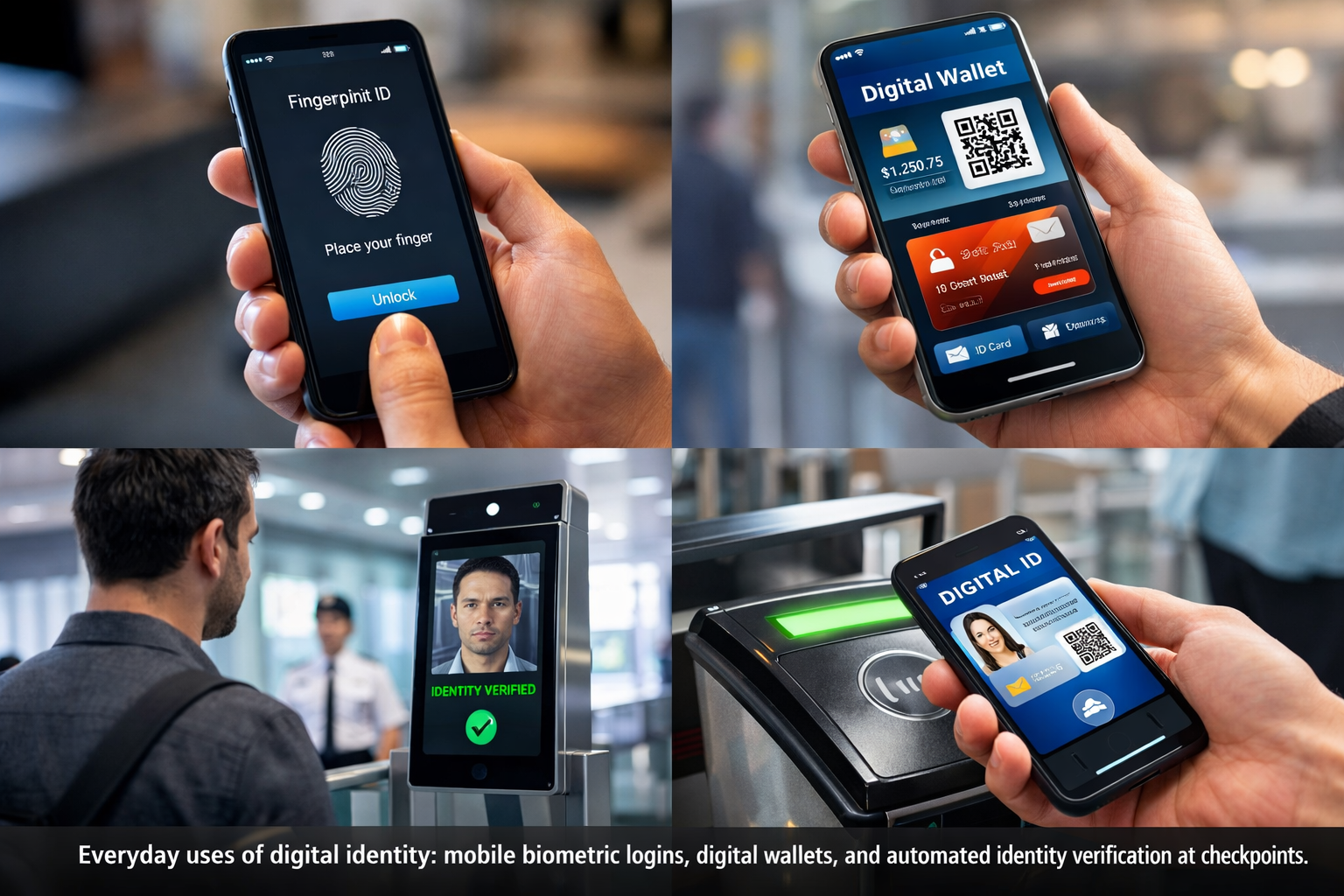
Historically, identity was rooted in the physical: passports, birth certificates, social security cards. In the digital age, identity became credentials we entered online—usernames, passwords, PINs. But in 2025 digital identity systems are increasingly biometric, mobile, and machine-readable, blurring the line between who you are and what a machine recognizes you as.

Governments and corporations are building systems that link your face, fingerprint, voice, or palm directly to essential services like travel, banking, healthcare, and even public benefits. The European Union’s eIDAS 2.0 initiative is creating a digital identity wallet usable across all member states, promising convenience but also redefining what it means to prove who you are in a digital society.

Meanwhile, biometric techniques—once exotic—now fuel everyday authentication. From palm biometrics in stores and hospitals to mobile IDs on a phone, the move toward identity tied to our bodies rather than passwords is accelerating.

What’s Driving the Shift

Technological forces: Biometric systems and mobile identity standards have improved dramatically. Industry reports show passwordless authentication increasingly replacing traditional login methods, with biometrics offering convenience and security advantages—at least superficially.

Economic incentives: Tech companies and governments alike see huge value in digital identity platforms. They reduce fraud, streamline services, and open doors to new monetizable data streams. No database is just for ID anymore—it’s also a goldmine for behavior, spending patterns, and social metrics.

Political and social pressures: The push for digital identity isn’t just consumer convenience. Governments argue it enhances security, prevents fraud, and enables digital citizenship in an era of global mobility. But critics warn that once biometric identity systems become ubiquitous, opting out becomes increasingly difficult.

How This Connects to Cyberpunk

Cyberpunk fiction vividly illustrates worlds where identity is mutable, encoded, and monitored by systems beyond individual control. In Neuromancer or Snow Crash, identity chips, corporate databases, and neural codes make every person traceable and manipulable. Today’s digital identity systems reflect that logic: your face, your palm, your biometric signature becomes a node in a global network, shaped by technical architectures and power structures.

Cyberpunk theory teaches us to see how technologies don’t merely serve users but also reshape social relations. The transition to biometric, mobile IDs recasts identity itself as something processable, shareable, and surveilled—no longer purely personal, but infrastructural.

Who Benefits—and Who’s at Risk?

Potential benefits:

  1. Faster border crossings and secure travel documentation.
  2. Passwordless security that reduces traditional cyber-attacks.
  3. Access to services for people without traditional documentation.

Risks and harms:

  1. Surveillance and privacy erosion: Biometric systems can track movements across spaces, linking online and offline behaviors in ways never before possible.

  2. Exclusion and inequality: Individuals without compatible devices or digital literacy risk being shut out of essential systems.

  3. Permanent identifiers: Unlike passwords, biometric traits cannot be changed. If compromised, your faceprint or fingerprint is compromised for life.

These concerns echo fundamental cyberpunk anxieties about surveillance, agency, and control. When identity becomes a data point indexed and algorithmically processed, the human subject transforms into a profile—a mathematical object to be scored, categorized, and predicted.

Ethical Questions We Must Ask

Consent or coercion? When a digital ID is required for basic services, can consent truly be voluntary?

Who controls your identity? Is it a corporate cloud, a nation-state database, or the individual themselves?

What happens when borders are digital rather than physical? There’s a powerful allure to seamless global identity—but also a danger of borderless surveillance.

Understanding the collapse between physical and digital identity is urgent because it affects every person with a smartphone, a passport, or an online presence. The question isn’t whether identity is changing—but whether we will shape that change or be shaped by it.

APA-Style References

European Commission. (2025). eIDAS 2.0 digital identity wallet framework. TRUSTECH. https://www.trustech-event.com/en/event/news/digital-identity-trends-2025

Akhison, G. (2025). Towards a universal digital identity: A blockchain-based framework for borderless verification. Frontiers in Blockchain. https://www.frontiersin.org/journals/blockchain/articles/10.3389/fbloc.2025.1688287/full

Demystify Biometrics. (2025). Biometrics & digital identity: Top 5 trends. https://www.demystifybiometrics.com/post/march-2025-biometrics-digital-identity-top-5-trends

Digital identity in 2025: biometric wallets and privacy dilemmas. (2025). RTechnology. https://rtechnology.in/articles/1050/digital-identity-in-2025-biometric-wallets-and-privacy-dilemmas

Le Monde. (2025, September 1). The discreet rise of facial recognition around the world. https://www.lemonde.fr/en/pixels/article/2025/09/01/the-discreet-rise-of-facial-recognition-around-the-world_6744911_13.html

Strathmore University CIPIT. (2024). Global biometric and digital identity trend analysis (Global Report). https://cipit.strathmore.edu/wp-content/uploads/2024/05/Global-BDI-Trend-Analysis-Geographical-Assessment-Final-Approval-06.09.2023-compressed.

OpenAI. (2026). Digital identity and biometrics in everyday life [AI-generated image]. https://www.openai.com/dall-e

That Wasn’t Me

- Posted in BP01 by

enter image description here

Intro

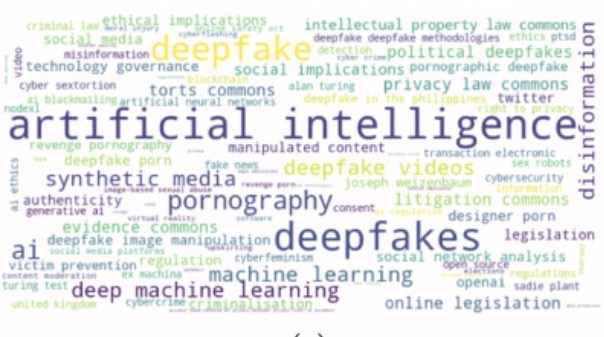
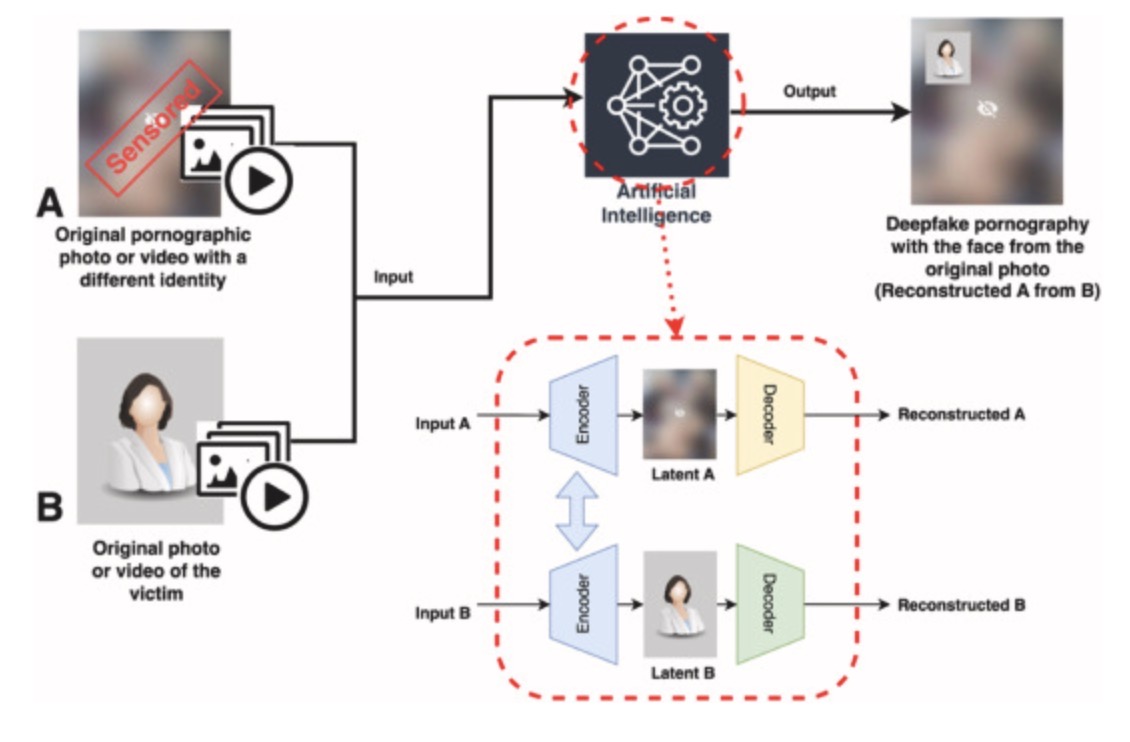
With the increase of technological abilities arrives new evils. Deepfakes are AI generated images, videos, or audio that make people appear to say and or do things that never actually happened. Deepfakes used for the purpose of producing pornographic content is especially dangerous . These harmful images and audios transcend any singular country. This problem is worldwide and is growingly difficult to contain without violating any rights or banning technology completely. Deepfake technology is capable of making content based on a description as well as curating images of a specific person of your choosing doing actions based on your own fruition as well. Deepfake technology heavily relies on artificial neural networks where computer systems recognize patterns in data. These neural networks feed images and videos and are essentially “trained” to dissect it and replicate those same patterns. The possibilities are endless and hard to contain, thus making the dangers and impact insurmountable.

Breakdown

When we take a step back and examine deepfake we have to consider who these harmful videos benefit. For starters the tech companies that make it possible for deepfakes to be generated are indirectly benefiting. An increase in deepfakes leads to an increase in the demand for AI tools, causes more platform engagement, and ultimately ends in a substantial economic benefit by making them more money. Aside from the tech companies, the users benefit. The users get to see content with their person or people of choice without having to work out the logistics of making their dreams a reality. They can see their favorite celebrities, friends , neighbors, or even coworkers in 18+ materials in the drop of a dime. Additionally we can peel back another layer and the people creating this content can in return potentially blackmail and extort their victims by threatening to release the content. Not only do the victims of these contents suffer but the increase of misinformation affect societies ability to trust digital images. enter image description here Questions

As deepfake technology continues to become more advanced it poses a serious threat and evokes us to think of current and future repercussions. For instance how can we as humans accurately decipher AI generated content from real content? If 18+ material can be made so easily, what's to stop content creators from targeting children, and what does that mean for rates of sexual crimes committed against children for the future? What's to stop people from claiming that real content is AI generated?Also as we see the damage this technology is capable of dealing, how do we begin to regulate harm without having to ban technology as a whole?

Statistics

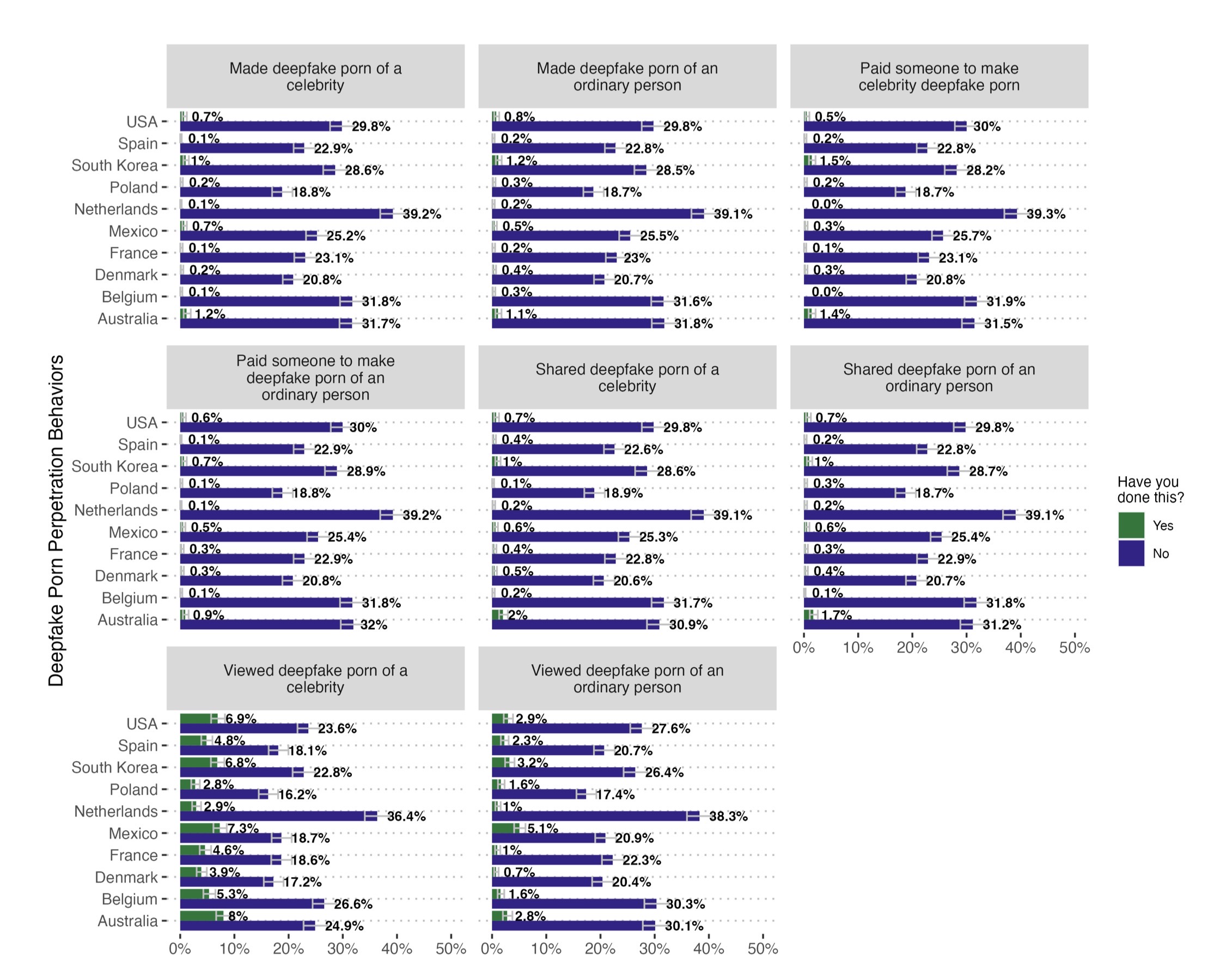
In the article Social, legal and ethical implications of AI-Genrated deepfakes pornogrpahy on digital platforms: A systematic literature review, researchers conducted a study to see the statistical findings of how big of an impact deepfake technology has on our society. Research showed that from 2019 to 2023 there has been a 550% increase in deepfake videos. Of that, 99% were of pornographic nature, and within that 99%, 98% of the videos produced were depicting content of women and young girls. These findings indicate a clear pattern of gender based targeting. The curation of 18+ material using AI has a heavy impact on its victims. Many women within this study were found to have suffered deep psychological trauma leaving side effects of anxiety and emotional distress, which is exacerbated as the content is spread onto platforms that are difficult to regulate and control. No matter the social status of the victim, deepfakes have the potential to harm not only the person's public image, but also their careers. enter image description here Counteract

As difficult of a problem deepfakes are to tackle, there have been attempts to contain and reduce these cyber crimes. In May of 2025 President Donald Trump signed the Take It Down Act. This law was created to enact stricter penalties for the distribution of deepfakes, as well as revenge porn and other non consensual 18+ content. The fundamentals behind the act is that if a victim contacts a platform to which their deepfake content has been posted on, the platform has 48 hours to take it down and take steps to erase all duplicates as well. The penalty for failure to take down the material is mandatory restitution and criminal penalties, including prison, a fine or both.

Connection

Deepfakes can be linked to cyberpunk because we have described technology dynamics within our society. We've discussed corporations overriding ethics and technology exploiting bodies through high tech, low life principles. As well as identity becoming fragmented and commodified. More specifically Deepfakes can be connected to the second industrial revolution. Just as the second industrial resolution produced automation and new technologies that fundamentally changed how images were produced and distributed, deepfakes represent a modern version of those same principles. In the second industrial revolution machines relied on human labor, these deepfake technologies still need to rely on a human creator to prompt them. Both the second industrial revolution and deepfake technology demonstrated a technological shift which led to questions about authenticity and control over identity.

Sources

Furizal, F., Ma’arif, A., Maghfiroh, H., Suwarno, I., Prayogi, D., Kariyamin, K., Lonang, S., & Sharkawy, A.-N. (2025). Social, legal, and ethical implications of AI-Generated deepfake pornography on digital platforms: A systematic literature review. Social Sciences & Humanities Open, 12, 101882. https://doi.org/10.1016/j.ssaho.2025.101882
AP News. (2025, April 29). President Trump signs Take It Down Act, addressing nonconsensual deepfakes. What is it? AP News. https://apnews.com/article/take-it-down-deepfake-trump-melania-first-amendment-741a6e525e81e5e3d8843aac20de8615
U.S. Government Accountability Office. (2020, October 20). Deconstructing deepfakes—How do they work and what are the risks? U.S. GAO WatchBlog. https://www.gao.gov/blog/deconstructing-deepfakes-how-do-they-work-and-what-are-risks
TAKE IT DOWN Act, S. 146, 119th Cong. (2025). Congress.gov. https://www.congress.gov/bill/119th-congress/senate-bill/146

Page 12 of 15