From an Eagle's Eyes
What Animal Hybridization Might Reveal About Being Human
The Thought Experiment: Becoming Part Animal
Imagine a future where technology allows humans to safely and reversibly incorporate traits from animals. Not cosmetic changes, but functional ones—enhanced senses, physical abilities, or cognitive shifts borrowed from other species. In this thought experiment, I would choose to hybridize with an eagle. Eagles possess one of the most remarkable biological capabilities in the animal kingdom: extraordinary vision. According to the U.S. National Library of Medicine, eagles can see about four to five times farther than humans and detect small movements from miles away (National Library of Medicine, 2022). Incorporating eagle-like visual perception into a human body would dramatically expand how we interact with the world. Imagine recognizing subtle environmental patterns, seeing distant landscapes with clarity, or detecting danger long before it reaches you. However, my hybridization would be limited to minor physical and neurological adaptations, not a complete transformation. I would not want wings, feathers, or a radically altered body. Instead, I would choose enhancements such as improved retinal structure, expanded visual processing in the brain, and perhaps faster visual reflexes. These modifications would maintain my human identity while expanding my sensory abilities. This raises an important question: how much change can occur before someone stops being human?
Humanity and the Question of Identity
Cyberpunk works often challenge the idea that humanity is tied strictly to biology. In Ghost in the Shell, Major Motoko Kusanagi’s body is almost entirely artificial, yet her consciousness, her “ghost,” raises the question of whether identity resides in the body or the mind. Similarly, Blade Runner forces audiences to confront whether replicants, who possess memories and emotions, should be considered human despite their artificial origins.
Donna Haraway’s “cyborg” concept pushes this even further. In A Cyborg Manifesto, Haraway argues that modern humans already exist as hybrids of organism and machine. Technologies like smartphones, medical implants, and AI systems blur the boundaries between natural and artificial life.
If that is the case, then animal hybridization would simply be another extension of boundary-breaking technologies. The human body has never been static. Vaccines, prosthetics, and gene editing already modify biological limitations. Adding eagle-like vision may not erase humanity but instead expand what it means to be human.
For me, humanity is defined less by physical form and more by consciousness, empathy, and moral responsibility. As long as those elements remain intact, biological enhancements should not erase human identity.
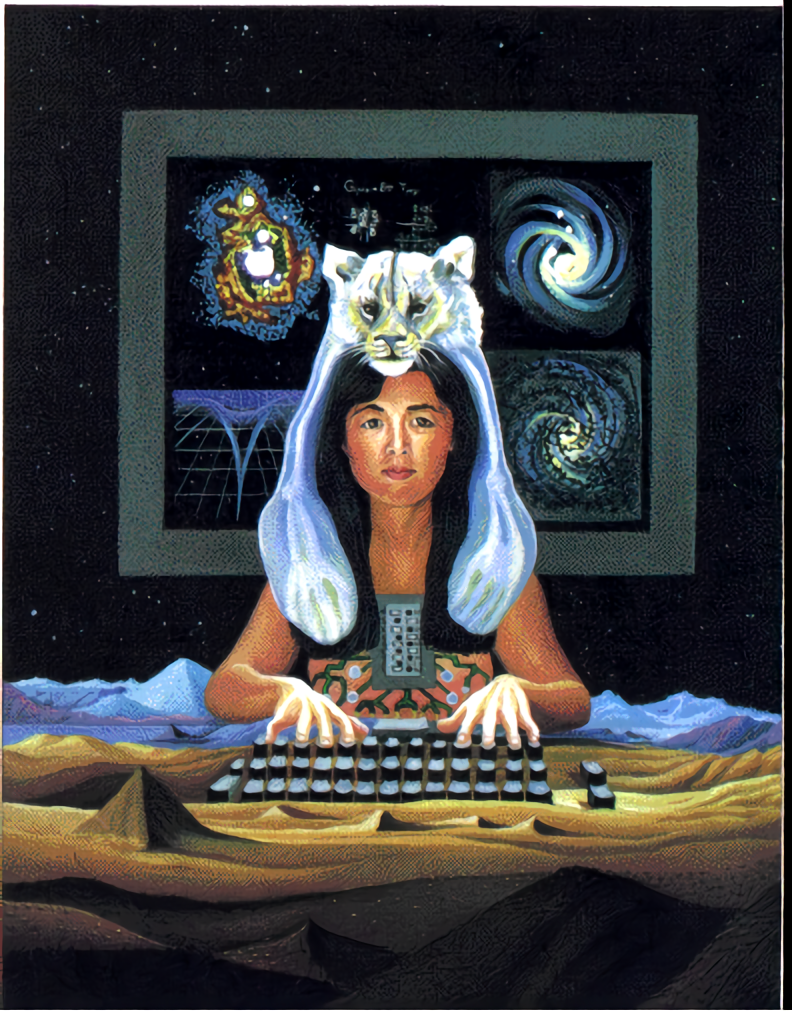
The Inequality Problem
While the idea of hybridization might seem exciting, access to such technology would almost certainly be unequal. Throughout history, advanced technologies, from healthcare to genetic therapies, have often been accessible first to wealthy populations. The National Academies of Sciences, Engineering, and Medicine have warned that human enhancement technologies such as gene editing could widen social inequality if only certain groups can afford them (National Academies, 2017). If animal hybridization followed a similar path, society could divide into two classes: enhanced and non-enhanced humans. Those with enhancements might gain advantages in education, athletics, military service, or surveillance roles. For example, individuals with eagle-like vision could excel in fields requiring long-distance observation or rapid environmental analysis. Meanwhile, people without enhancements might face new forms of discrimination or reduced opportunities. Cyberpunk stories often imagine exactly this scenario. In many cyberpunk worlds, corporate elites control enhancement technologies while ordinary people struggle to keep up. Hybridization could reproduce those same inequalities in reality if ethical safeguards were not implemented.
The Future of Hybrid Humanity
Animal hybridization challenges our assumptions about identity, capability, and fairness. While borrowing traits from species like eagles could expand human perception and potential, it also raises deeper questions about who gets to evolve. Ultimately, the question is not simply whether we can enhance ourselves, but how we choose to do it and who benefits. As Haraway suggests, the boundaries between human, machine, and animal are already dissolving. The real challenge is ensuring that these transformations do not deepen social divides or erode the values that make humanity meaningful. If hybridization ever becomes possible, the most important decision may not be which animal traits we adopt—but how we ensure those changes remain aligned with empathy, equity, and shared responsibility.
AI Attestation: AI tools were used in the early drafting process of this blog post to assist with organizing ideas and improving clarity of writing. All analysis, argument development, and final editing were completed by the author.
References
National Academies of Sciences, Engineering, and Medicine. (2017). Human genome editing: Science, ethics, and governance. National Academies Press. National Library of Medicine. (2022). Vision in birds of prey. https://www.nlm.nih.gov