Created by Code, Moved by Faith
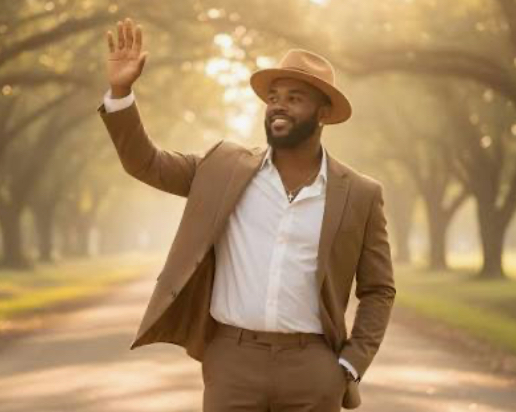 Solomon Ray, an AI generated music artist, started gaining a lot of attention and surprised his listeners that he was not human. According to Christianity Today (2025), Ray’s music has started a debate on being authentic, creative, and whether something that was created by code can have “soul” (Mcginnis, 2025). A news report from WLBT3 talks about how the artist was made using artificial intelligence tools, which really blurs the line between human producer and machine performer. Solomon Ray’s success challenges what it means to be an artist. WIth more artists like Ray, challenges and collapses the boundary between human and machine creativity, which also relates to the cyborg theory by Donna Haraway and the idea of the ArchAndroid by Janelle Monáe.
Can Creativity Exist Without a Human?
The boundary that Solomon Ray challenges is the idea that creativity has to come from a human. Art is normally tied to lived experiences, emotion, past trauma, and physical presence. An artist has been assumed to be someone that their identity and expression is connected to themselves. AI generated musicians challenge and make this assumption complicated. Solomon Ray’s music is made through different algorithms that have been trained using human data (Cole, 2025) This makes the creative process a collaboration between human input and machine thinking and computation. There is no longer a traditional separation between artist and computer. Technology is not just assisting the artist, but taking over and is becoming the artist itself. This makes listeners and its audience think about whether authenticity is about origin or impact. This is a public argument that have people thinking whether AI generated music can have “soul” (Mcginnis, 2025)
Haraway in the Real World
This connects to Donna Haraway’s idea of a cyborg, which is about breaking down the strict line between human and machine. Haraway mentions that these boundaries are not as fixed and set as we commonly assume they are. The cyborg is a hybrid between human and technology which challenges the idea that an identity has to fit into one category. Solomon Ray is an example of being a hybrid and not fitting into just one category. He is not human, but not just a tool. HIs music is a product of human programming and machine generation. He represents an identity that does not fit into traditional definitions of artist or creator. Solomon Ray helps Haraway’s argument and blurs the boundary which helps make new ways of defining who or what gets to create and make art.
From ArchAndroid to the Algorithm
Solomon Ray also connects to Janelle Monáe’s The ArchAndroid, where Cindi Mayweather is an android who challenges what it means to be a human. In the album, Cindi is not trying to be a human, but expanding the definition of human. She is questioning why the definition is narrow. Monáe uses the android to show that identity is not something you are born into, but is something that is flexible and can be redefined. Solomon Ray is similar in terms of he is an artist without a human body. The difference between the two is that Cindi has consciousness and emotion while Solomon was created and controlled by a programmer. Both Cindi and Solomon challenge the idea that identity and creativity have to be tied to biology.
The Future of Hybrid Identity
Looking ahead about 20 to 30 years, AI artists will become more common and accepted. As AI gets better and more advanced, there will probably be more AI artists. Solomon Ray already produces and sings his own music (Cole, 2025), but eventually there will be performances. Although the technology is already out there, the next thing will most likely be music videos and potentially even fully AI concerts. Live performances with lights and production with him walking and moving around a stage maybe as a hologram. Although Solomon Ray was not the first AI artist, he was number one on music charts. Eventually, people will start making their own music using AI to cater to their specific music genres and lyrics. Solomon Ray has opened the door for more creative expression allowing new types of music and artists to come through.
AI Attestation: AI was used to help plan and edit this post. I asked for the prompt to be simplified, to help me edit, APA formatting, coming up with a title, and headers. https://chatgpt.com/share/699a5f9a-1a54-800d-a937-ed9076d8cec7
McGinnis, K. (2025, November 21). Solomon Ray: The AI Christian music artist raising questions about soul and authenticity. Christianity Today. https://www.christianitytoday.com/2025/11/solomon-ray-ai-christian-music-soul-singer/
Cole, C. (2025, December 4). Influencer behind Mississippi-made AI artist. WLBT. https://www.wlbt.com/2025/12/04/influencer-behind-mississippi-made-ai-artist/