BP05

Blog Post #5: It's Part of the Business

Cyberpunk often centers on corporations more powerful than governments, treating human lives as expendable. We've seen this in the Tyrell Corporation (Blade Runner), Tessier-Ashpool (Neuromancer), and the pill funders (Machinehood).

Choose at least one fictional corporation and analyze its specific powers and practices. Then connect to contemporary reality with concrete examples: tech companies' influence on democracy, pharmaceutical pricing, gig economy labor practices, surveillance capitalism, corporate environmental practices, or AI development control. Use credible sources.

Make your argument: Are we heading toward cyberpunk's corporate dominance? Is this realistic prediction or hyperbolic critique? Consider what enables corporate power, what checks exist, and what role critique plays in preventing dystopia.

Prime, Profit, and the Cyberpunk Present: Why Amazon Feels Uncomfortably Close to Machinehood

- Posted in BP05 by

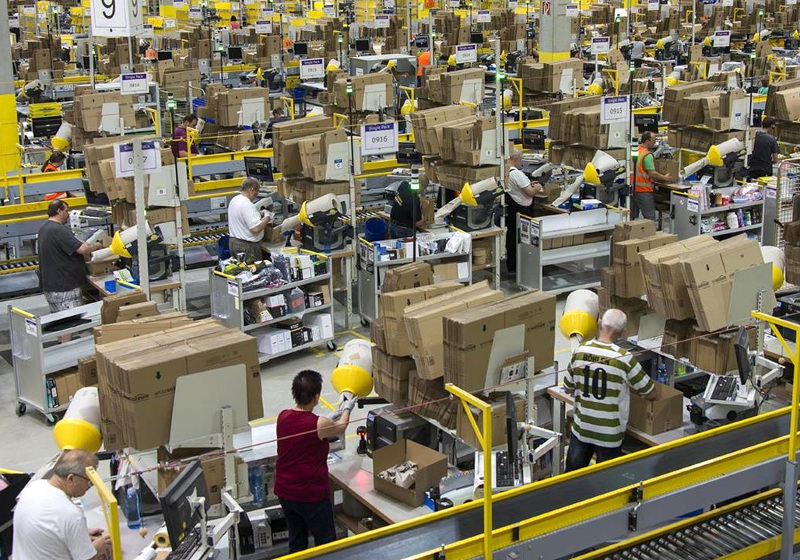
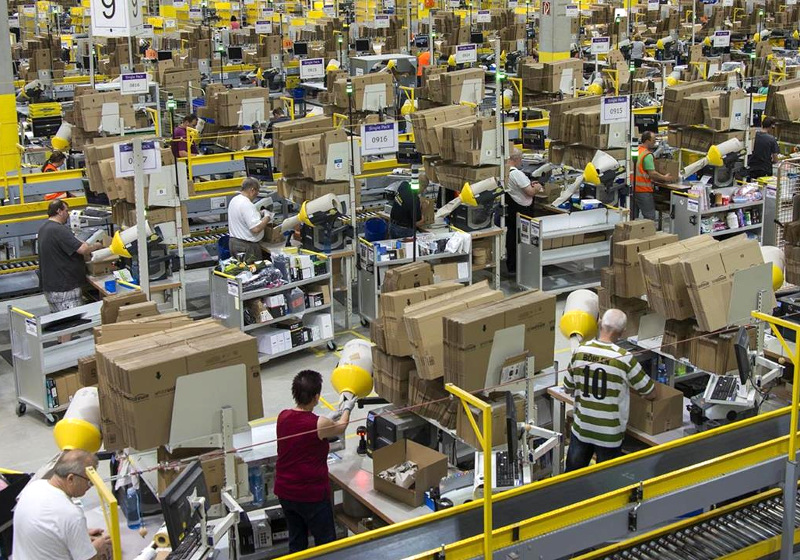
Amazon fulfillment center workers

Cyberpunk has always asked a disturbing question: what happens when corporations become so powerful that they begin functioning like governments, but without the accountability of governments? In fiction, corporations like Tyrell in Blade Runner and Tessier-Ashpool SA in Neuromancer control technology, labor, and even human life. Similarly, in S. B. Divya’s Machinehood, corporations profit from systems that push workers to their physical and mental limits while treating them as expendable. While these worlds may seem exaggerated, real-world corporations especially Amazon, show that these concerns are not purely fictional.

Amazon’s scale alone reflects a level of influence that resembles cyberpunk megacorporations. According to its 2024 annual report, Amazon generated $638 billion in net sales, with Amazon Web Services (AWS) contributing over $107 billion, positioning the company not just as a retailer but as a major piece of global digital infrastructure (Amazon, 2025). This matters because AWS supports governments, businesses, and online systems worldwide. When a corporation controls both commerce and infrastructure, its power begins to extend beyond traditional business influence into something more systemic. Similar to the corporations in cyberpunk that shape everyday life itself.

However, the strongest cyberpunk parallel lies in labor practices. A 2024 investigation by the U.S. Senate Health, Education, Labor, and Pensions (HELP) Committee found that Amazon warehouse workers experienced injury rates over 30% higher than the industry average, largely due to intense productivity quotas and algorithmic management systems (U.S. Senate HELP Committee, 2024). These findings suggest that workers are often treated as units of efficiency rather than individuals with physical limits. This mirrors Machinehood, where corporations design systems that extract maximum output from workers regardless of long-term consequences. While Amazon does not literally require performance-enhancing drugs, the pressure to maintain productivity at all costs reflects a similar mindset: the body becomes secondary to output.

Environmental practices also reinforce the cyberpunk comparison. Amazon’s 2024 Sustainability Report states that while the company reduced its carbon intensity by 4%, its total carbon emissions still increased by 6% due to continued growth (Amazon, 2024). This contradiction highlights a common corporate pattern, as efficiency improves expanding environmental impact is paired with it. Cyberpunk fiction frequently portrays corporations presenting themselves as innovative and forward-thinking while contributing to environmental degradation in the background. Amazon’s own data reflects this tension between sustainability messaging and the realities of scale.

So, are we actually heading toward cyberpunk-style corporate dominance? In some ways, yes but not entirely. Cyberpunk should be understood less as a literal prediction and more as an exaggerated critique that helps us recognize real-world trends. Governments still regulate corporations, and democratic systems still exist. However, corporations like Amazon have gained enough influence to shape labor conditions, technological infrastructure, and environmental outcomes in ways that feel comparable to the early stages of cyberpunk worlds.

This issue is not entirely global in the same way. The United States tends to allow larger concentrations of corporate power compared to other regions. For example, the European Union has taken a more aggressive regulatory approach by labeling companies like Amazon as “gatekeepers” under the Digital Markets Act, recognizing their control over digital markets (European Commission, 2023). This suggests that corporate dominance is not inevitable but is influenced by political and cultural choices about regulation.

There are also real-world checks on corporate power. California’s warehouse quota law (AB 701) limits the use of productivity quotas that interfere with worker safety and basic rights, and in 2024, regulators fined Amazon nearly $6 million under this law (California Department of Industrial Relations, 2024). These actions show that intervention is possible. However, they also highlight an important point: regulation often comes after harm has already occurred, rather than preventing it from happening in the first place.

This is where cyberpunk plays an important role. It is not just entertainment, it is a warning. Cyberpunk encourages us to question systems that prioritize efficiency over humanity, growth over sustainability, and profit over well-being. It pushes us to recognize when corporations begin to act less like businesses and more like governing forces in society.

Amazon is not a cyberpunk megacorporation in the literal sense. But it reflects many of the same patterns: massive influence, reliance on human labor as a resource, and the ability to shape everyday life on a global scale. Cyberpunk remains relevant because it reveals what can happen when these patterns go unchecked. Whether that future becomes reality depends not just on corporations, but on how society chooses to respond.

AI Statement

I used AI as a support tool to help organize my ideas, refine the structure of my blog post, and ensure clarity in my writing.

References

Amazon. (2024). Amazon Sustainability Report 2024. https://sustainability.aboutamazon.com/2024-report

Amazon. (2025). Amazon 2024 Annual Report. https://s2.q4cdn.com/299287126/files/doc_financials/2025/ar/Amazon-2024-Annual-Report.pdf

California Department of Industrial Relations. (2024). Warehouse quotas (AB 701). https://www.dir.ca.gov/dlse/FAQ_warehousequotas.htm

European Commission. (2023). Digital Markets Act: Gatekeepers. https://digital-markets-act.ec.europa.eu/gatekeepers-portal_en

U.S. Senate HELP Committee. (2024). The Amazon investigation report. https://www.help.senate.gov/imo/media/doc/amazon_investigation.pdf

When Corporations Outgrow Governments: Are We Living in a Cyberpunk Prelude?

- Posted in BP05 by

When Corporations Outgrow Governments: Are We Living in a Cyberpunk Prelude?

enter image description here

Cyberpunk has always imagined a world where corporations eclipse governments, turning human lives into resources to be optimized and exploited. From the Tyrell Corporation in Blade Runner to the profit-driven pill funders in Machinehood, these narratives feel less like distant fiction and more like distorted reflections of our present reality. The question is no longer whether cyberpunk is going to be a reality; it’s whether we are already living in its early stages. One of the clearest real-world parallels to cyberpunk corporate dominance can be found in the rise of the gig economy, led by companies like Uber. Uber has transformed labor by redefining workers as “independent contractors,” allowing the company to avoid providing benefits such as healthcare, job security, and minimum wage guarantees. According to a 2021 report by the Economic Policy Institute, gig workers often earn less than traditional employees after accounting for expenses like gas and vehicle maintenance. This mirrors the labor dynamics in Sleep Dealer, where workers are reduced to remote-controlled bodies, valued only for their productivity and easily replaceable. Similarly, pharmaceutical companies such as Pfizer demonstrate how corporate power can shape life-and-death outcomes. During the COVID-19 pandemic, debates over vaccine patents highlighted how intellectual property laws can restrict access to life-saving medicine, particularly in lower-income countries. While Pfizer argued that patents were necessary to fund innovation, critics like Doctors Without Borders argued that these protections prioritized profit over global health equity. This echoes Machinehood, where access to performance enhancing drugs determines survival in a hyper competitive economy. In both cases, corporations exert control over the conditions of life itself. Another striking example is surveillance capitalism, practiced by tech giants like Google. Google collects vast amounts of user data to refine advertising algorithms, effectively turning personal behavior into a commodity. Scholar Shoshana Zuboff describes this as a system where human experience is “raw material” for profit. This concept aligns closely with cyberpunk’s recurring theme of commodified identity, where even thoughts and behaviors are no longer private but monetized assets. So, are we heading toward full cyberpunk-style corporate dominance? The answer is complicated. On one hand, corporations today wield unprecedented influence over economies, labor systems, and even political processes. Tech companies lobby governments, shape public discourse, and influence elections through control of information platforms. However, it would be an oversimplification to claim that dystopia is inevitable. Unlike in many cyberpunk worlds, modern societies still maintain democratic institutions that can check corporate power. For example, the European Union has implemented strict data protection laws such as the General Data Protection Regulation (GDPR), which limits how companies can collect and use personal data. In the United States, antitrust discussions surrounding companies like Google and Amazon indicate growing awareness of corporate overreach. Cultural perspectives also play a crucial role in shaping responses to corporate power. In the United States, corporate influence is often normalized under free-market ideals, whereas in other regions, such as parts of Europe, there is stronger resistance to corporate control. This suggests that cyberpunk’s dystopia is not a universal destiny but a possibility shaped by cultural values and political choices. Ultimately, cyberpunk serves less as a prediction and more as a warning. It exaggerates current trends to reveal the consequences of unchecked corporate power. If cyberpunk teaches us anything, it is that the future is not predetermined. Corporations may be growing stronger, but so too is our awareness of their influence. Whether we move toward a cyberpunk reality or away from it depends on how we respond today.

AI was used to gather research sources for this Blog Post

Works Cited

Economic Policy Institute. Uber and the Labor Market: How the Gig Economy Affects Workers. Economic Policy Institute, 2021, https://www.epi.org .

Khan, Lina M. “Amazon’s Antitrust Paradox.” Yale Law Journal, vol. 126, no. 3, 2017, pp. 710–805.

Kim, Jerome H. “Pfizer’s COVID-19 Vaccine: Global Access and Equity Issues.” The Lancet, 2021.

Médecins Sans Frontières. A Waiver for COVID-19 Patents to Increase Global Access. Doctors Without Borders, 2021, https://www.msf.org .

Rosenblat, Alex. Uberland: How Algorithms Are Rewriting the Rules of Work. University of California Press, 2018.

Zuboff, Shoshana. The Age of Surveillance Capitalism. PublicAffairs, 2019.

European Union. General Data Protection Regulation (GDPR). 2018, https://gdpr.eu

When Corporations Start Acting Like Governments

- Posted in BP05 by

Cyberpunk stories have always imagined a world where corporations hold more power than governments, treating people as expendable and prioritizing profit above all else. For a long time, that idea felt exaggerated, more style than reality. But looking at what’s happening today, it’s harder to ignore the similarities. From tech companies shaping political conversations to rising drug prices and unstable gig work, parts of our world are starting to look a lot like the systems cyberpunk warned us about.

One of the most obvious examples is the influence of major tech companies on public opinion and democracy. Platforms like Instagram, TikTok, and X don’t just host content, they control what people see through algorithms. These systems decide which posts get attention and which ones disappear, often based on what will keep users engaged the longest. That means controversial or emotionally charged content tends to spread faster, even if it isn’t accurate. In a way, this reflects what we see in Blade Runner, where powerful corporations shape people’s understanding of reality itself. The control isn’t always obvious, but it’s there, quietly influencing how people think and what they believe.

Another area where corporate power shows up is in the pharmaceutical industry. The cost of essential medications in the United States, especially insulin, has been widely criticized. Many people depend on these drugs to survive, yet prices can be extremely high compared to other countries. This raises serious ethical questions. When a company controls access to something people need to live, profit becomes more than just a business goal, it becomes a matter of life and death. That kind of dynamic feels very similar to what we see in Machinehood, where human needs are often secondary to maintaining systems that benefit those in control.

The gig economy is another example that lines up with cyberpunk themes. Companies like Uber and DoorDash have created flexible work opportunities, but they have also introduced a new kind of instability. Workers are classified as independent contractors, which means they usually don’t receive benefits like healthcare, paid time off, or job security. Instead of a traditional boss, they answer to an app, an algorithm that tracks performance, assigns jobs, and can deactivate them at any time. This setup mirrors the kind of disposable labor we see in Neuromancer, where individuals exist on the edges of powerful systems and have little protection.

At the same time, it would be an exaggeration to say we are fully living in a cyberpunk world. Governments still have power, and in some cases, they do step in to regulate corporations. For example, stricter data privacy laws in parts of Europe show that it is possible to limit how much control companies have over personal information. Public pressure also matters. When people speak out through protests, social media, or voting, it can push companies to change their practices.

It is also important to recognize that this is not just an American issue, even if it is especially visible here. Different countries handle corporate power in different ways. Some governments keep tighter control over businesses, while others allow more freedom. That means the future is not set in stone, it depends on the choices societies make and the systems they put in place.

So why do corporations have so much influence right now? A big part of it comes down to globalization and technology. Companies can operate across borders, making it harder for any single government to regulate them. At the same time, people rely heavily on the services these companies provide, whether it is social media, transportation, or online shopping. That dependence gives corporations even more leverage. What cyberpunk stories get right is not just the presence of powerful corporations, but the warning behind it. These stories push us to question who holds power and how it is used. They remind us that systems can change and that people have a role in that change. We are not stuck in a dystopia, but we are close enough to see how it could happen.

In the end, the real question is not whether cyberpunk was right. It is whether we are paying attention.

World Leaders

- Posted in BP05 by

“First, do no harm.” This principle, rooted in the Hippocratic Oath, is meant to guide healthcare toward prioritizing patient well being above all else. Yet, the reality of modern healthcare raises an unsettling question: is access to life-saving treatment truly placed above profit? While world leaders and policymakers play a role in shaping healthcare systems, cyberpunk literature reminds us that corporations can grow powerful enough to rival or even surpass government influence. When medications are no longer simply products but lifelines, the question becomes unavoidable: who truly controls access to survival?

Our past studies

This concern connects closely to themes explored in Blade Runner, Neuromancer, and Machinehood. In Blade Runner, we encounter a dystopian world shaped by advanced technology and corporate dominance over human life. Similarly, Neuromancer follows Case, a character who escapes into cyberspace, reflecting a society where corporate systems blur the line between reality and control. Machinehood further develops this idea by presenting a future where corporations dominate technological systems and labor structures.

A real world corporation that mirrors these cyberpunk themes is Walmart. Once a family-owned business, Walmart has grown into a global powerhouse, symbolizing the shift from small scale enterprise to massive corporate influence much like the towering, neon-lit corporations seen in cyberpunk worlds.

Save Money. Live Better

Walmart's business is built on offering consistently low prices, but often depends on minimizing labor costs. Reports from SHRM Walmart, which has roughly 1.6 million U.S employees, has lowered starting pay for new hires who prepare online orders. While Walmart is known to offer lower prices, this now seems as though is competing with other chain markets. Due to the increase low paid retail workers are now turning to governmental assistances just to make ends meet.

At the same time, Walmart’s expansion into services like pharmacies illustrates another layer of corporate control. These systems require strict hiring processes, including background checks and drug testing, reinforcing a highly regulated and controlled workforce. In this sense, Walmart parallels Machinehood, where corporate systems dictate not only economic conditions but also access to opportunities and services.

In Neuromancer, the idea of Walmart's mission reflects corporations control. For instance, cost of foods, deliveries, service, shipping etc. For this reason also requires an immense number of staff to extend in varies parts of the departments.

Walmart at every poverty neighborhood

Cyberpunk often imagines a future dominated by corporations and advanced technology, yet Walmart demonstrates that elements of this future already exist. Its presence in many low-income and underserved communities makes it both a vital resource and a symbol of economic dependence. While it provides affordability and accessibility, it also reinforces a system where large corporations hold significant power over local economies. Ultimately, Walmart represents a blend of two worlds: the dystopian future envisioned in cyberpunk and the reality we are living in today. Its global reach, influence over labor, and control of essential goods suggest that corporate dominance is not just a fictional warning but an evolving reality not only for workers, but as consumers as well.

AI was used to fix original thoughts https://chatgpt.com/share/69c882eb-d2d8-8329-ac35-3d87705275b1.

https://www.shrm.org/topics-tools/news/benefits-compensation/walmart-lowering-starting-pay-will-employers-follow

https://finance.yahoo.com/news/walmart-rolls-surprising-change-every-013700065.html

https://www.usatoday.com/story/money/2025/01/14/walmart-new-logo-redesign/77689947007/

Who Owns Our Food?

- Posted in BP05 by

Who Owns Our Food?

When we talk about corporate power, most people think about tech companies or social media, not agriculture. But one of the most important forms of control today is also food, through seeds. Some corporations have a big influence over what farmers can grow and how food is produced, mainly through patents on genetically modified seeds. This kind of control over the foundation of the food system can raise questions that feel very close to cyberpunk worlds, where corporations sell and plant products and also decide who gets to profit from it.

Real-World Example

Monsanto, which is currently owned by Bayer, is one of the most well-known examples of this. The company became controversial for developing genetically modified seeds that are patented, which means that farmers cannot legally save and reuse seeds from their own crops (Howard, 2009). Because of that, they often have to buy new seeds every season, which makes them less independent. This control over food production starts to feel similar to the corporations we see in cyberpunk worlds. Powerful companies sell products but above all also control entire systems. Looking at corporations in Blade Runner and Neuromancer, companies such as the Tyrell Corporation or Tessier-Ashpool also control and determine life, whether through artificial humans or genetic engineering. Patented seeds can be seen as a real-world version of this, since biological life is turned into something that can be owned and controlled. Just like replicants in Blade Runner, it makes me wonder to what extent we can morally accept these changes, because the issue is not only about humans, but also about something as essential as food.

Are we becoming cyberpunk?

However, I do not think we are fully living in a cyberpunk world yet, but we are definitely moving in that direction. According to Clapp (2014), large multinational corporations have a serious influence over markets, regulatory policies, and essential systems like food production. We cannot forget though, that governments and public criticism still provide some limits. These limits might not always be strong enough.

This issue is also not experienced the same way everywhere. In the United States, genetically modified crops and seed patents are more widely accepted and used. In contrast, countries in the European Union, for example, tend to have stricter rules on genetically modified organisms. It is often seen as more skeptical toward corporate control over food systems, which leads to stronger restrictions. This shows that the system can depend on political decisions, cultural attitudes, and regulation. At the same time, global companies like Bayer still operate widely, which makes it difficult for any single country to fully control their influence.

Conclusion

What makes this issue dangerous is how it becomes normal while we are not noticing it. The control over seeds does not look as dramatic as the worlds of cyberpunk, but it raises similar questions about power, ownership, and dependence. If food can become part of a system determined by profit and control, then the line between fiction and reality is not really as clear as it seems. So the main problem is how much control we are willing to accept before we start to notice it.

References

Clapp, J. (2021). The problem with growing concentration and power in the global food system. Nature Food, 2–2, 404–408. https://uwaterloo.ca/scholar/sites/ca.scholar/files/jclapp/files/corporate_power_in_the_food_system_for_archive.pdf

Howard, P. (2009). Visualizing Consolidation in the Global Seed Industry: 1996–2008. Sustainability, 1(4), 1266–1287. https://doi.org/10.3390/su1041266

AI was used at the beginning to help gather ideas of what examples to use.

Highway to Cyberpunk

- Posted in BP05 by

Thank You, Next

When watching cyberpunk movies or reading cyberpunk stories, one thing is always very similar. Technology has advanced that jobs change, new jobs get created, and others get taken. In the 1982 movie Blade Runner, we see the manufacturing of replicants, artificial humans who are just created for labor from a company called Tyrell. They are used for jobs that are considered dangerous, exhausting or morally questionable so in other words, those that no one else wants to do. But since these replicants aren’t actually human, they get treated like products, no matter if they feel like a human. They serve, obey and then die when they are no longer useful, with a build in expiration date and no rights. But this is all only fiction right?

Human Replacements at Amazon

In the last couple of years more and more information has come out about the working conditions that Amazon warehouse workers have to work under. Automated systems track worker productivity, expecting them to pack more than one hundred boxes an hour. If these expectations aren’t met it can lead to warnings or a direct termination without a human supervisor reviewing the situation. This has lead to roughly 300 people being fired in the proximity of one year. enter image description here

In addition to this an open letter has ben signed by 1000 Amazon employees that have warned about unethical use of AI. It is being used for mass layoffs and is planned to lay off 14,000 employees to do its initiatives. But the ironic thing is, the workers themselves are even saying AI is not ready to do so and even acts sloppy and inconsistent in its duties making work harder for those workers who are still human. This is why they are signing the letter to demand ethical AI working groups that help when and how to use AI efficiently.

Amazon in Neon Lights

Just like Tyrell Amazon has a tendency to see its employees as products and not human beings seen through the way that they just fire people as they please, regarding inhuman efficiency and expectations. The workers are being monitored, controlled, and “eliminated” when not useful anymore, just like in Blade Runner with the only difference that they get fired and not actually eliminated. It is algorithms that deviate on who works and who gets fired and the corporation gains power over human lives in a way that governments didn’t intend them to and that is exactly the kind of dehumanising corporate control that cyberpunk warns about and shows through Tyrell. The expectations of packing hundreds of boxes per hour and being terminated when failed also shows this blur between human and machine that Amazon does the same way as Tyrell does. Humans must perform at machine speed and their value is measured on output only, making their bodies pushed to the breaking point. Tyrell creates replicants for labour only which is why they definitly only measure them in output and push their body to the breaking point to use them as much as they can before they have to get another one. The replicants are expected to do inhuman tasks just like the Amazon workers and are discarded when they fail, also just like the Amazon workers. Corporations demand machine like performance from humans showing how society shifts to a cyberpunk model where labour is dehumanised and expendable. When it comes to the use of AI we see how it is slowly replacing humans in labour as well to increase profit, truant accountability, and centralise power. Amazon employers are thus fearing that AI is becoming a corporate weapons and not just a tool for human benefit. With the Tyrell corporation we can similarities in their way of using genetic engineering to create a labor force that it controls. Both show a world where technology amplifies corporate dominance.

Futuristic or Realistic?

Amazon is just one such corporation that shows us that we are moving toward a cyberpunk world because corporation like Amazon increasingly use automation and AI to control workers, replace human judgements, and consolidate power. These practices mirror fictional corporations like Tyrell from Blae Runner in their dehumanisation of labour and willingness to let technology override ethics.

Work Cited AITechTrend. (2025, November 27). AITechTrend. https://aitechtrend.com/amazon-workers-warn-of-ai-rollouts-ethical-risks/Jee, C. (2019, April 26).

Amazon’s system for tracking its warehouse workers can automatically fire them. MIT Technology Review. https://www.technologyreview.com/2019/04/26/1021/amazons-system-for-tracking-its-warehouse-workers-can-automatically-fire-them/

Corporations vs. Governments: Are We Moving Toward a Cyberpunk Future?

- Posted in BP05 by

Image: A representation of corporate power, data surveillance, image: A representation of corporate power and data surveillance!

Cyberpunk vs Reality

Cyberpunk literature has long imagined a future where corporations dominate, often surpassing governments and viewing human lives as disposable. These fictional organizations, like Tyrell Corporation in Blade Runner and Tessier-Ashpool SA in Neuromancer, control technology, prioritize profit, and shirk responsibility. Although these stories may seem exaggerated, many modern companies behave in ways that closely resemble these dystopian visions, especially in areas such as gig economy labor practices, pharmaceutical pricing, and surveillance capitalism.

Hacking the Mind, Not the Body: Surveillance Capitalism

The way internet corporations gather and utilize personal data is one such example. These days, businesses collect a lot of personal data and use it to target advertisements and forecast behavior. This concept relates to the topic of "hacking the body vs. hacking the mind" that we covered in class. Hacking in cyberpunk is about manipulating people, not just systems. In the real world, businesses don't hack our bodies, but they do have an impact on our beliefs, purchases, and ways of thinking. This system, which turns human behavior into a resource for businesses, is frequently referred to as surveillance capitalism (Axios, 2019). That makes me think of cyberpunk settings where individuals are continuously seen and impacted.

Identity and Privacy Loss in the Digital Age

Additionally, there is concrete proof of the effectiveness of this data collection. According to a Federal Trade Commission investigation, big social media corporations gathered a lot of user data and shared it with outside parties, often without the consumers' knowledge (The Guardian, 2024). This relates to the loss of identity and privacy, another cyberpunk concept we discussed. People lose control over their own knowledge in such scenarios, and a less severe version of that is happening now.

Government Power vs. Corporate Power

The notion of businesses taking the place of established power institutions is another link to our class. In cyberpunk, businesses dominate most of the choices, and governments are powerless. Companies still have a lot of power, even though it isn't entirely true nowadays. They can influence laws and policies through economic power and lobbying. This gives the impression that the distinction between corporate and governmental authority is becoming increasingly hazy.

The Value of Human Labor and the Gig Economy

The gig economy is related to the previous class information on the worth of people in cyberpunk settings. People are viewed as disposable and only useful for what they can provide in many stories. These days, gig workers for businesses like DoorDash and Uber frequently lack benefits and job stability, which makes them feel the same way. Employees are crucial, but they can be readily replaced. The concept of humans being reduced to their utility is reflected in cyberpunk.

Cyberpunk as a Caution, not a Prediction

I don't believe that our culture is entirely cyberpunk. This relates to another topic covered in class: cyberpunk is frequently a critique rather than a forecast. These tales exaggerate real problems. Governments still have authority and can control businesses in the real world. For instance, various nations have different laws governing corporate control and data protection, demonstrating that businesses do not have total authority.

Views from Around the World on Corporate Power

This is not only an American problem; it is a global one as well. While governments are more stringent in certain nations, companies have greater flexibility in others. This demonstrates how the system determines how companies and power interact, a topic we have also discussed in class while comparing various civilizations.

Conclusion: What should we do next?

In my view, cyberpunk serves as a warning about what may happen if corporate power is abused. Although we are not quite there yet, there are early indications, particularly in the areas of corporate influence, labor practices, and data gathering. The way people react is what counts. We can keep things from being as bad as cyberpunk fiction if we remain conscious and keep challenging these structures.

Sources

Axios. (2019). The new data capitalism. https://www.axios.com/2019/06/25/personal-data-big-tech-companies-privacy-capitalism The Guardian. (2024). Social media firms engaged in vast surveillance, FTC finds. https://www.theguardian.com/technology/2024/sep/19/social-media-companies-surveillance-ftc

OpenAI. (2026). Digital eye with data overlay representing surveillance and personal data tracking [AI-generated image]. ChatGPT.

AI Attestation: I improved the organization of my work and create title image with the use of AI. Based on what I learnt in the course, the thoughts and connections to the course material are my own.

Are We Already Living in a Cyberpunk World? Corporate Power and Modern Society

- Posted in BP05 by

Cyberpunk fiction often imagines a future where corporations hold more power than governments and treat human life as expendable. While this idea may seem exaggerated, elements of it are visible in today’s world—especially in the practices of major technology companies. Through systems like surveillance capitalism, corporations increasingly influence behavior, politics, and everyday life in ways that resemble fictional companies like the Tyrell Corporation in Blade Runner or Tessier-Ashpool SA in Neuromancer.

One of the clearest real-world examples of this dynamic is surveillance capitalism. This system, as defined by Encyclopaedia Britannica, involves turning personal experiences—such as online activity, location data, and social interactions—into behavioral data that companies use for profit (“Surveillance Capitalism”). Companies like Google and Meta collect this data and use it to predict and influence user behavior, often through targeted advertising. However, the impact goes beyond advertising. According to the Pew Research Center, experts are concerned that digital systems may shape public opinion and weaken democratic processes by controlling what information people see (Anderson and Rainie).

This practice mirrors the logic of cyberpunk corporations. In Blade Runner, the Tyrell Corporation manufactures replicants—artificial humans designed for labor and discarded when they are no longer useful. While modern corporations do not create humans, they do treat human behavior as a resource. Users’ data is constantly extracted and monetized, reducing individuals to sources of profit rather than autonomous participants in society. Similarly, in Neuromancer, Tessier-Ashpool operates as a powerful, transnational corporation that controls advanced technology and information systems. Today’s tech companies function in comparable ways, operating globally and influencing communication, commerce, and even political discourse.

The growing power of corporations raises an important question: are we moving toward a cyberpunk future? In some ways, the answer is yes. A small number of companies dominate digital infrastructure, and their platforms are deeply embedded in everyday life. It is increasingly difficult to function without engaging with these systems, whether for work, communication, or access to information. This dependence reflects the world of Machinehood, where individuals rely on corporate-produced enhancements to keep up with economic demands.

However, it would be inaccurate to say that we are fully living in a cyberpunk dystopia. Unlike in these fictional worlds, modern societies still have mechanisms to limit corporate power. Governments can regulate companies, as seen in the European Union’s General Data Protection Regulation (GDPR), which imposes strict rules on data collection and privacy. Public awareness is also growing, with increasing scrutiny of Big Tech’s influence on privacy, labor, and democracy.

At the same time, corporate power is not distributed equally around the world. In the United States, relatively limited regulation has allowed tech companies to expand rapidly. In contrast, the European Union has taken a more aggressive approach to privacy and consumer protection. Meanwhile, countries like China combine strong government authority with extensive technological surveillance. These differences suggest that while the trend toward increased corporate influence is global, its effects vary depending on political and cultural contexts.

Ultimately, cyberpunk should be understood not as a prediction, but as a form of critique. These stories highlight the dangers of unchecked corporate power and encourage audiences to question the systems shaping their lives. As surveillance capitalism continues to expand, this critique becomes increasingly relevant. While we are not yet living in a fully realized cyberpunk world, the similarities are significant enough to warrant attention.

The future will depend on how societies respond. If governments, institutions, and individuals actively challenge corporate overreach, the more extreme outcomes imagined in cyberpunk fiction may be avoided. If not, those fictional worlds may begin to look less like fantasy and more like reality.

Works Cited

Anderson, Janna, and Lee Rainie. The Future of Digital Life and Democracy. Pew Research Center, 2020, https://www.pewresearch.org/internet/2020/02/21/themes-about-the-digital-disruption-of-democracy-in-the-next-decade/

“Surveillance Capitalism.” Encyclopaedia Britannica, https://www.britannica.com/topic/surveillance-capitalism
Are We Living In a Cyberpunk Economy? →

- Posted in BP05 by

In classic cyberpunk fiction, corporations not only influence but even run society. Governments recede into the background as megacorporations choose who flourishes, who struggles, and who is disposable. Originally a theoretical warning, this vision now feels dangerously close to reality. From tech behemoths dictating democratic discourse to pharmaceutical corporations controlling access to life-saving pharmaceuticals, today's corporate landscape increasingly resembles the scenarios depicted in Black Runner, Neuromancer, and Machinehood.

Corporate Power: Real World Consider the impact of large technology businesses on democratic institutions. Platforms such as Meta and Google influence what billions of people see, read, and believe. According to Pew Research (2021), the majority of Americans acquire at least some of their news through social media, implying that private firms effectively channel public knowledge. This corresponds with Tessier-Ashpool SA's information control in NeuroMancer, in which data access equals power. Surveillance capitalism promotes this dynamic as well. Shoshana Zuboff (2019) notes that firms collect massive amounts of behavioral data to predict and influence users' actions. This is not unlike the ubiquitous surveillance systems portrayed in Blade Runner, when corporations like Tyrell have complete control over both information and identity.

Pharmacetical pricing provides another clear example. Although insulin is a century-old medicine, it has historically been far more expensive in the United States than in other countries. RAND Corporation released a report in 2022 stating that insulin prices in the U.S. are roughly three times higher than in comparable nations. This is consistent with the dynamics of Machinehood, in which corporate funding systems regulate access to vital technologies and even existence. Meanwhile, gig economy labor patterns demonstrate how corporations can change employment itself. Companies such as Uber categorize workers as independent contractors rather than employees, limiting their access to benefits and protections. The Economic Policy Institute found that gig workers frequently make less than the minimum wage after expenses. This is similar to cyberpunk's precarious underclass, referring to workers who rely on corporate platforms but are excluded from corporate safeguards.

A pattern emerges from these examples: companies are more than just economic players; they also serve as governance systems. Modern corporations, such as Tyrell Corporation and Tessier-Ashpool:

  1. Control access to critical resources (information, medicine, and inc0me )
  2. Operate across national lines, frequently without effective regulation
  3. Individuals are treated as data points or labor units, not as citizens

Are We Headed Toward Corporate Dominance? The answer is based on how we interpret existing patterns. One one hand, corporate power is certainly increasing. Globalization enables businesses to operate across borders, but technical sophistication frequently outpaces regulatory frameworks. Governments occasionally rely on corporations for infrastructure (cloud computing, AI), obscuring the distinction between public and private power. However cyberpunks image of absolute corporate rule may be an exaggerated critique rather than an unavoidable reality. There are checks on corporate power:

  1. Antitrust activities
  2. Data privacy laws
  3. Labor organizing activities among gig workers and tech employees These mechanisms indicate that, while corporations are dominant, they are not unopposed.

Is This Just An American Issue? Not entirely, but it is more pronounced in the United States. Compared to Europe, the United States has traditionally maintained a more laissez-faire approach to regulation. In contrast, the European Union has set stronger regulations on data privacy and competition. GDPR empowers individuals to control their personal data, minimizing the surveillance capitalism prevalent in the US. Corporate influence is important in countries such as China, although it is heavily regulated by the government. There, the dynamic is less "corporation vs. government" and more "corporations within government control".

Why does Corporate Power Persist? 1. Technological dependence: Society increasingly relies on platforms and services offered by private businesses 2. Global Scale: Corporations can relocate operations to evade unfavorable restrictions. 3. Information asymmetry: Companies frequently understand their systems better than regulators. These circumstances foster a climate in which corporate power can grow faster than regulatory procedures.

***The Role of Critique *** This is where cyberpunk remains important, not as a prediction, but as a warning. Exaggerating corporate dominance heightens our awareness of real-world tendencies. Stories like Blade Runner and Neuromaner push us to consider what happens if we don't intervene. Crituqes drives public discourse, which then influences policy. Concerns about data privacy, labor exploitation, and AI ethics are becoming more mainstream, thanks in part to speculative fiction, which made these issues visible and important.

We are not yet living in a true cyberpunk dystopia, but we are getting closer than we would like to acknowledge. Corporations already have enormous control over information, labor, and even survival. The essential concern is not whether cyberpunk is "realistic" but whether we allow its darker aspects to become reality. The future is not predetermined. Unlike the worlds of Neuormance and machine hood, we still can influence our systems through legislation, activism, and informed public discourse. Cyberpunk does more than just show us where we can end up. It challenges us to take a different path.

The attached video provides an overview of how corporations collect and use data.

AI Use Statement: This blog post contains grammatical assistance from Grammarly; no other AI tool was used.

Sources: 1. Pew Research Center. (2021). News consumption across social media in 2021.

  1. RAND Corporation. (2022). International prescription drug price comparisons.

  2. Economic Policy Institute. (2020). Uber and the labor market: Evidence from gig workers.

  3. Zuboff, S. (2019). The Age of Surveillance Capitalism. PublicAffairs.

Page 3 of 3