How AI Avatars Are Liberating Identity in the Digital Age

- Posted in BP03 by

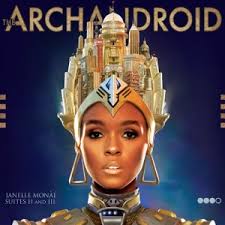
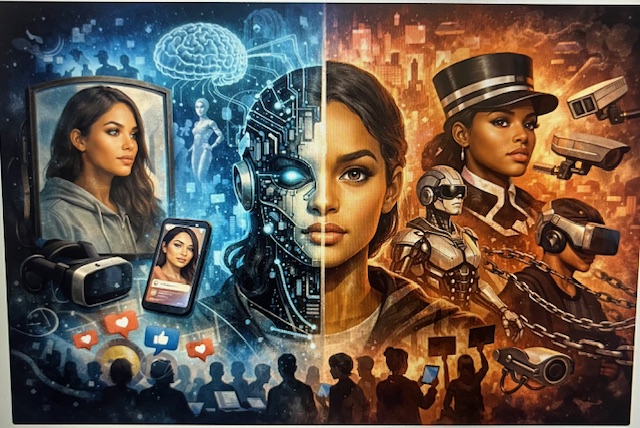
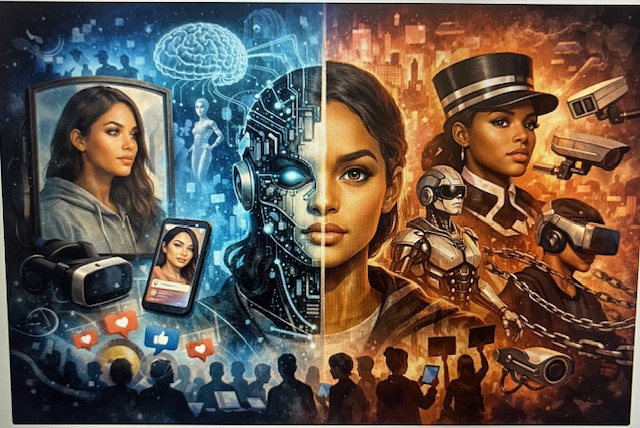
Donna Haraway envisioned the cyborg in 1985 as a boundary-breaking figure that was capable of redefining social norms like male/female, natural/artificial, and human/technology. Decades later, Janelle Monae brought her idea to life with The ArchAndroid, where the android Cindi Mayweather represents fluid identity and liberty through hybridization. Today, we see a real-world version of this concept in the growth of AI-generated avatars and influencers that blur the distinction between person and platform, identity and algorithm.

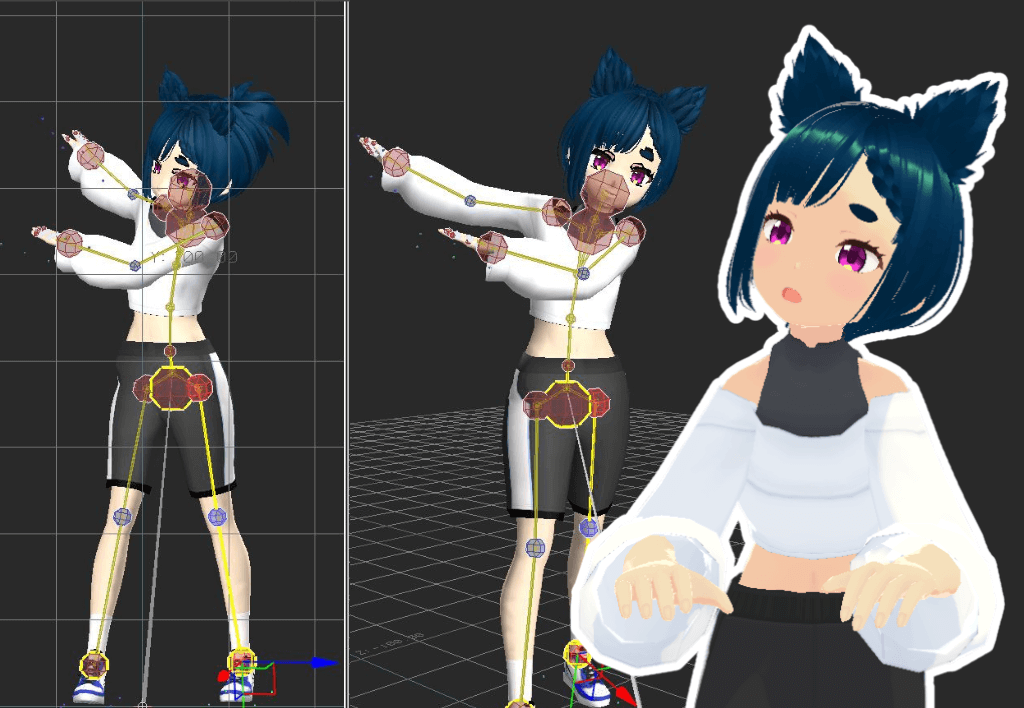
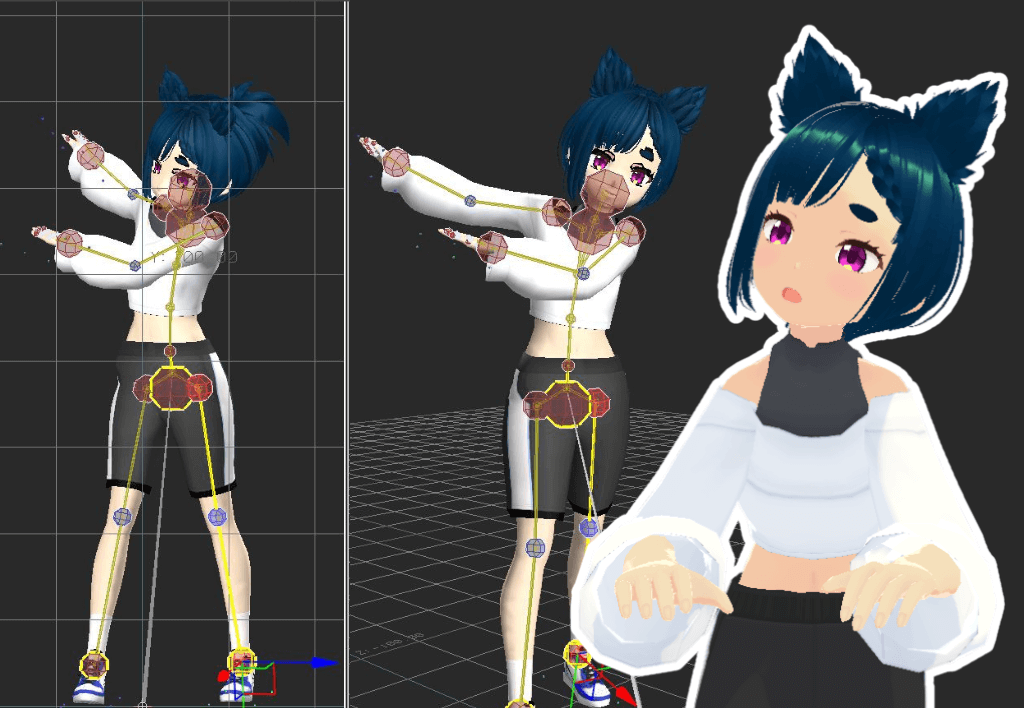
One of the most visible examples is Lil Miquela, a computer-generated influencer who has many followers. She shares pictures, promotes social justice, collaborates with business and even "speaks" on political matters. While she is purely virtual, she interacts in human settings. Similarly, VTubers (content creators who utilize animated avatars to represent themselves) enable people to experiment with gender presentation, race, and age.

These technologies challenge many long-lasting boundaries, such as fixed vs. fluid. Users have the ability to shift voices and appearance instantly. This boundary-crossing reflects Haraway's claim that identity is not fixed but rather produced and relational. The cyborg is strong not because it eliminates distinctions, but because it reveals the artificiality of fixed categories. In digital worlds, a person born male may use a female-presenting avatar, a human may appear as an android, or a designer may combine several cultural aesthetics. These options are more than just cosmetic but can be freeing. Digital avatars allow marginalized communities, particularly those who are LGBTQ+, to explore their identities safely before (or instead of) embracing them publicly.

According to the Pew Research Center (2022), younger generations increasingly see identity as fluid rather than fixed, especially in terms of gender and self-expression. Meanwhile, experts such as Sherry Turkle argue in Life on the Screen that digital spaces enable people to "cycle through identities," trying different versions of their personalities in low-risk settings. Together, these patterns indicate that hybridity is no longer an isolated issue, yet it is becoming more mainstream. However, this reality reflects and differs from Monae's ideal. In the ArchAndroid, Cindi Mayweather is prosecuted for loving a human, highlighting society's fear of boundary destabilization. While digital hybridity might be beneficial, it is also commercialized. Corporations often own virtual influencers. Algorithms shape visibility. Liberation runs the risk of being taken over by capitalism. Haraway cautioned that the cyborg is not intrinsically emancipatory; more so, its use is shaped by power systems.

Globally, the ramifications are tremendous. In South Korea and Japan, computerized idols control the entertainment industries. In the United States, AI-generated deepfakes raise questions regarding authenticity and permission. The same technology that allows for free expression can also make responsibility and truth difficult to determine. Thus, versatility has both emancipatory and ethical implications.

Looking ahead decades from now, we may see much more integration of AI and identification. With improvements in cognitive connections and augmented reality, people may be able to retain persistent digital "selves" that follow them between platforms and physical environments. Consider wearable augmented reality lenses that display individualized avatars in shared spaces, allowing people to customize their appearance in real time. Gender, age, and physical ability may become adjustable qualities rather than static descriptors. We may also see communal hybrid identities, in which groups collaborate to create shared digital images that symbolize movements versus people themselves. Activism could become more decentralized and visually powerful. Resistance can arise not from individual heroes, but from networked cyborg coalitions.

At the same time, discussions over authenticity will become more heated. What keeps the self grounded if identity is infinitely editable? Perhaps the next generation will characterize authenticity not as biological "realness" as opposed to who you desire to be and why.

Haraway's cyborg wasn't meant to replace humanity but, more so, expand it. The rise of AI avatars and virtual influencers demonstrates the early stages of such expansion. The distinctions between man and technology, natural and artificial, are not merely blurring; they are renegotiated, which provides the potential for new types of freedom.

Grammarly was the only source of AI used for this blog post. Any other AI tool was not used at any time when critically thinking or writing.

Sources: 1. Pewresearch. pewresearch.org. (2022, June 28). https://www.pewresearch.org/wp-content/uploads/sites/20/2022/06/PSDT_06.28.22_GenderID_fullreport.pdf 2. Turkle, S. (1995). Life on the screen: Identity in the age of the Internet. Simon & Schuster.

How AI Avatars and Digital Selves Are Rewriting Identity

- Posted in BP03 by

enter image description here

In Donna Haraway’s cyborg theory, the cyborg is not just a machine-human hybrid; it is a metaphor for identities that refuse rigid boundaries between human and machine, physical and virtual, or even race, gender, and culture. Janelle Monáe’s The ArchAndroid spins the android body as a site of resistance and liberation rather than something to escape. Today, one of the clearest real-world examples of fluid identity and liberation through hybridity is the rise of AI avatars and virtual influencers, social media, gaming, and virtual spaces. These instances are challenging the boundaries of what it means to “be” a person.

Boundary Crossing in the Age of Digital Selves

Virtual streaming, gaming worlds, and customizable avatars allow individuals to craft identities that are not limited by their biological bodies. A user can present as a different gender, species, aesthetic, or even an entirely fictional persona. This reflects Haraway’s argument that the cyborg breaks down traditional dualisms: human/machine, natural/artificial, and self/other. In online environments, the “self” becomes constructed rather than fixed.

Virtual influencers such as AI-generated personas further complicate identity categories. These figures are not fully human, yet they participate in human activities. They create art and influence trends. Their existence chenticity and simulation. Rather than representing deception alone, they can also offer a form of liberation. For creators, avatars provide safety from harassment, freedom of expression, and the ability to experiment with their identity without the constraints of physical embodiment.

This resonates strongly with Monáe’s android metaphor. In The ArchAndroid, the android body is not something to transcend but a method of self-definitionm especially for those whose bodies have historically been marginalized. Digital avatars allow users to explore identities outside oppressive conditions. For example, queer and disabled communities often use virtual spaces to express themselves in ways that feel safer and more authentic than offline environments. Here, hybridity becomes empowering rather than alienating.

Liberation Through Hybridity vs. Haraway and Monáe

However, contemporary digital hybridity both reflects and diverges from Haraway and Monáe’s visions. Haraway imagined the cyborg as politically liberating because it resists rigid categorization. In many ways, digital identity fulfills this vision: it allows people to detach from socially imposed labels and construct fluid selves. However, unlike Haraway’s theoretical cyborg, today’s hybrid identities exist within corporate platforms that still monetize and regulate expression. The “cyborg” of social media is also shaped by algorithms and platform rules.

Monáe’s android narrative also differs crucially. In The ArchAndroid, hybridity is explicitly tied to histories of oppression and resistance, especially those rooted in race. Modern digital hybridity sometimes risks becoming aesthetic rather than political with a focus on customization and branding rather than liberation. Still, when used intentionally, digital identities can become tools of resistance by challenging dominant norms about who gets visibility and voice.

Looking Ahead: Identity in 20–30 Years

If current trends continue, identity in the next generation may become even more hybrid or fluid. Advancements in AI, brain-computer interfaces, and immersive virtual environments could blur the line between physical and digital selves even further. Instead of having one stable identity, individuals may maintain multiple coexisting identities across platforms.

This future could expand freedom in several ways. People may choose embodiments that reflect their inner selves rather than their assigned categories at birth. Cultural identity might become more collaborative as virtual spaces can dissolve geographic boundaries. New forms of resistance could emerge through digital collectives that challenge surveillance, algorithmic bias, and technological inequality.

At the same time, the politics of hybridity will remain central. Who controls the technologies that enable identity fluidity? Who has access to them? Liberation through hybridity will depend on whether these tools remain accessible and inclusive rather than reinforcing existing inequalities.

Ultimately, the rise of digital selves suggests that the cyborg is no longer just a metaphor. Like Monáe’s android, the hybrid identity of today is not about escaping the body but redefining it. In this sense, boundary collapse is not a loss of humanity but an expansion of it, offering new possibilities for self-expression and resistance.

Rethinking the Rules of Love

- Posted in BP03 by

Living in society means living within boundaries and rules to be followed. However, many of these boundaries have been collapsing lately, either because of technology, social movements, cultural practices, or identity categories. Although breaking established boundaries can cause instability and confusion, it can also be interpreted as a way to freedom and liberation. Let’s look at traditional romantic relationship models for instance. Our society has always seen heterosexual relationships as the “normal” model, imposing a boundary where couples are composed of people of opposite genders, and oppressing whoever chose to not follow these “rules”. However, nowadays, because of constant and long-lasting fight against homophobia, this boundary is not as rigid, relationships are more fluid, and people can love more freely.

enter image description here

How this relate to Haraway’s and Monáe’s ideas?

This boundary collapse has a really strong connection to Haraway’s cyborg theory. In lecture, we learned that in A Cyborg Manifesto, Donna Haraway argues that many boundaries we think are “natural” are actually social constructions. In her work, she uses the “cyborg” to symbolize hybridity - mixing categories instead of staying inside one. She shows that when categories become more fluid, people can experience new forms of freedom. Thus, as society gets more accepting of diverse relationships, these boundaries become more fluid, which allows people to liberate from traditional social constructs and experience greater identity freedom. Monáe’s work – The ArchAndroid – is another example that shows how difference can be liberating rather than something to suppress. She uses the character android to represent identities that exist outside of accepted social categories, framing hybridity as something powerful. Just like the android challenges who counts as “normal”, changing relationship norms challenge conservative ideas about what counts as a legitimate or acceptable relationship. Thus, both Monáe and Haraway reflect on this real-world example.

Speculating the Future

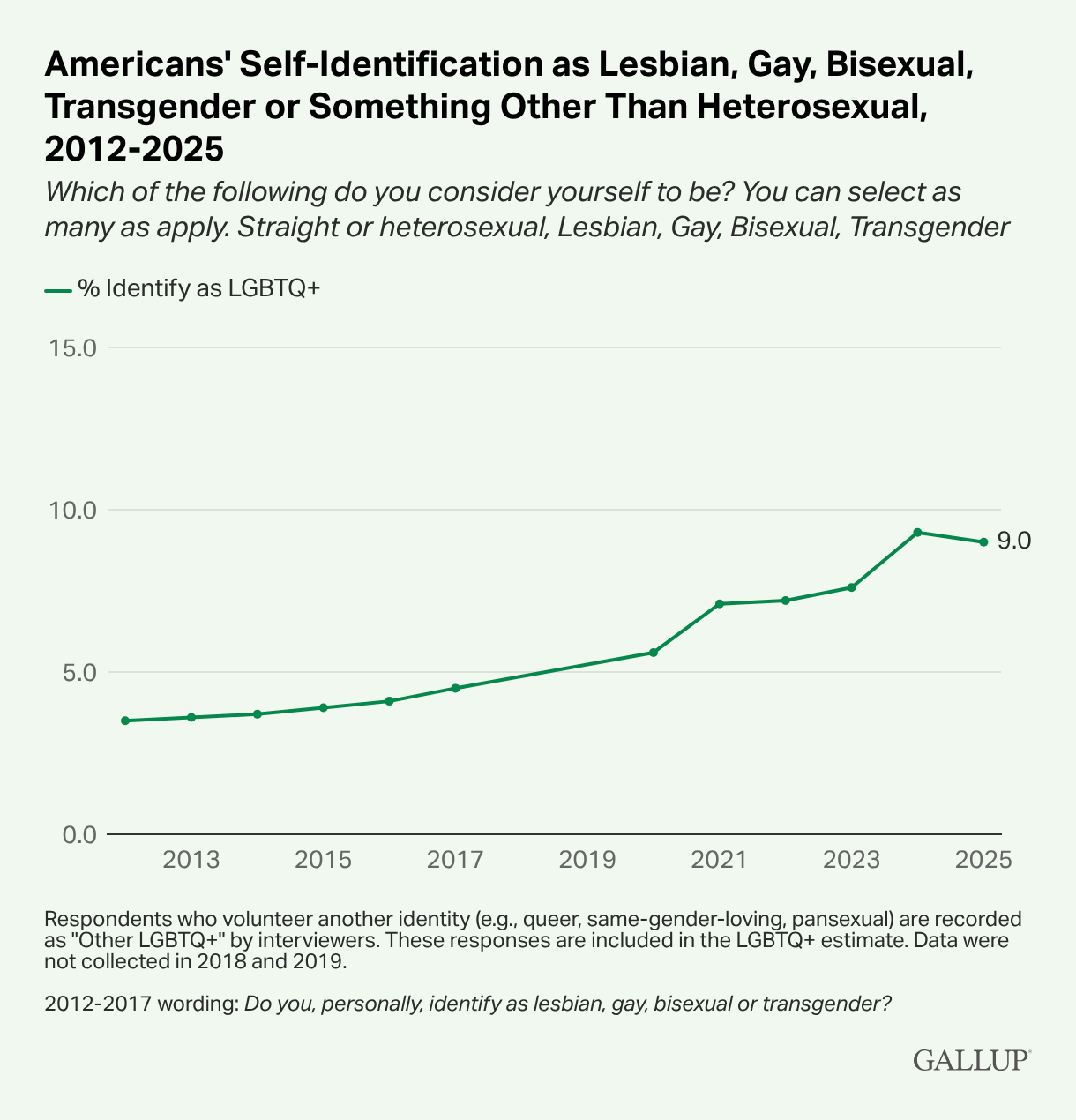
Let’s remember that social change doesn’t happen overnight. However, if current trends continue, romantic relationships might be even less defined by rigid gender roles and more fluid in the next twenty to thirty years. Research indicates that younger generations show higher levels of openness towards diverse sexual orientations and relationship models. According to Gallup, identification as LGBTQ+ increased significantly in the past few years, which indicates that traditional relationships restrictions are becoming less rigid and that society is moving toward greater flexibility. I can imagine definitions of family and partnership becoming broader, and a change on how we talk about relationships. Maybe the focus will shift from “who you like to date?” to “how would you like your relationship to be like?”. This would indicate a bigger interest on factors that go beyond gender.

enter image description here

The Role of Technology

I believe that technology has a great participation on this transformation. Social media and other digital platforms allow people to connect, crossing geographic, cultural, and social boundaries. Besides that, online communities provide support systems that allow people to explore their identity with no fear of oppression and isolation. They allow people to have greater freedom in their choices and get away from traditional social constructs.

Why this Matters

I hope now it’s clear how the collapse of established boundaries doesn’t always lead to chaos. It can actually open space for people to live more freely and authentically, allowing them to find out more about who they really are. To explore their identity deeply. Thus, if the current trajectory continues, I hope to see a next generation living in a world where love is defined less by strict categories and more by individual freedom. In a society that reflects the freedom that comes from breaking rigid boundaries, as Haraway and Monáe describe.

Sources

Monáe, J. (2010). The ArchAndroid [Album]. Wondaland Arts Society; Bad Boy Records; Atlantic Records. Jones, J. M. (2026, February 16). LGBTQ+ identification holds at around 9% in U.S. Gallup. https://news.gallup.com/poll/702206/lgbtq-identification-holds.aspx

AI attestation: no use of AI in this assignment

But Where Are You Really From?

- Posted in BP03 by

The Diaspora is the Modern Day Cyborg

It sounds ridiculous.

The term "diaspora" implies history, migration, and displacement (Bamberger et. al 2021). "Cyborg," in the most stereotypical sense, often brings up concepts of prosthetic limbs, a demolished environment, and the technological landmarks of cyberpunk (Haddow 2021).

But if you break down these two ideas, and strip away the associations that stitch themselves to diaspora and cyborg, it becomes clear that both terms describe the same exact phenomenon.

Who could possibly embody the cyborg concept of defying categories better than someone who never felt comfortable in one? Who could possibly understand hybridity more than someone from many places, speaking many languages, and embracing many histories, but unable to truly be claimed by any?

enter image description here

Living In-Between

Diasporic identity is essentially a messy fusion of cultural, linguistic, political, and historical systems (Zhao 2024). There are hundreds of fragments that you must carefully keep together to create a coherent self.

Just as Haraway's cyborg opposed the concept of purity, kids growing up in the diaspora must understand at a young age that they are composed of too much Other to ever be as purely ethnic as their counterparts. Too Asian to be American, for example, or too American to be Asian.

Over time, this hybridity of identities blended into a point of pride. Tiktoks reclaiming ancestral languages, for example, led to people creating music aimed at showcasing their unique blend of mother tongues. Jokes by people from the diaspora about their own experiences spurred a sense of community that was irrelevant to borders or race. In the same way that Cindy Mayweather from The ArchAndroid refuses to be categorized as human or machine, those living in the diaspora do the same: they refuse to pick between identities.

enter image description here

The Dictation of Space

Who decides what "real" culture is? Who has the authority to police identity? What counts as fluent enough? How do you learn your history when history books were dipped in White ink?

Often, we are taught to respect the boundaries of race and identity without question. Accept tradition blindly, and if you are less than a certain percentage of a race, do not claim to be it.

Gen-Z has pushed against this, choosing instead to engineer their self-images. People are building selves that are fluid, adaptive, and contrary to the binaries imposed on gender, boundary lines, and census boxes.

Case, the protagonist in Neuromancer, describes a world where identity is distributed and updated constantly. Reality is the same way; as people grow, their identities shift. Someone can learn more about a culture they've lost touch with, updating their identity through their own hard work and determination.

References

Bamberger et al. (2021). Diaspora, internationalization and higher education. British Journal of Educational Studies, 69(5), 501–511. https://doi.org/10.1080/00071005.2021.1966282.

Haddow G. Embodiment and everyday cyborgs: Technologies that alter subjectivity [Internet]. Manchester (UK): Manchester University Press; 2021. Chapter 3, Reclaiming the cyborg.

Zhao Z. (2024). Diasporic Identity in Contemporary Sinophone Literature: The Role of Language and Cultural Elements. Journal of psycholinguistic research, 53(1), 13. https://doi.org/10.1007/s10936-024-10058-9

Beyond the Body: How Digital Avatars Are Redefining Human Identity

- Posted in BP03 by

If cyberpunk taught us anything, it’s that the line between human and machine was never as solid as we thought. What once felt speculative now appears in everyday life through virtual influencers, VTubers, and persistent digital avatars. Platforms that allow people to live, work, and socialize through customizable digital bodies are quietly reshaping what identity looks like in the 21st century. Through the lens of Donna Haraway’s cyborg theory and Janelle Monáe’s vision in The ArchAndroid, this shift toward fluid, hybrid identity can be read not simply as technological change but as a potential site of liberation.

A strong contemporary example is the rise of VTubers and virtual creators, people who perform online through animated avatars rather than their physical bodies. Agencies like Hololive Production and platforms owned by YouTube and Twitch have helped normalize this practice globally. For many creators, the avatar is not just aesthetic; it allows experimentation with gender presentation, racial ambiguity, and bodily form in ways that would be difficult, or unsafe, in physical space.

enter image description here

Haraway’s cyborg rejects rigid boundaries between human and machine, physical and virtual. VTuber culture embodies this directly. The performer exists simultaneously as a biological person and a digital construct, and the audience accepts both as real. This reflects Haraway’s argument that identity in technoculture becomes hybrid and constructed rather than fixed. Instead of the “God’s-eye” fantasy of stable categories, identity becomes iterative and performed.

Monáe’s The ArchAndroid pushes this even further by grounding hybridity in histories of exclusion. Her android persona, Cindi Mayweather, is not trying to escape embodiment but to reclaim it. Similarly, many virtual creators, especially women, queer creators, and creators of color, use avatars strategically to navigate harassment, bias, and surveillance online. In this sense, the digital body can function as protection and self-determination at the same time. The boundary collapse between human and avatar becomes a tool of agency.

enter image description here

At the same time, this development diverges from Haraway’s more utopian hopes. The infrastructure behind virtual identity is still controlled by major tech corporations, which means the freedom to reinvent the self often exists inside highly monetized, platform-governed environments. Scholars writing in venues like MIT Technology Review and Wired have noted that virtual creators remain dependent on algorithmic visibility, platform policies, and data extraction models. In other words, the cyborg may be symbolically liberated while still constrained economically. This tension mirrors classic cyberpunk: empowerment and control evolving together.

Looking ahead 20–30 years, the trajectory suggests even deeper forms of hybrid identity. As mixed reality, neural interfaces, and persistent digital worlds mature, the distinction between “online persona” and “offline self” may erode further. People may maintain multiple stable identities across different environments, professional, social, and creative, each embodied through different digital forms. Rather than one coherent self, identity could become modular and context-dependent.

This future holds real liberatory potential. For marginalized communities, the ability to design and inhabit chosen embodiments could expand forms of self-expression and social participation. At the same time, Haraway reminds us that technologies are never neutral. The same systems that enable fluid identity can also intensify surveillance, labor extraction, and platform control. Cyberpunk helps us see that we are already living inside the early stages of this shift.

SOURCES: Roose, K. (2021). Virtual influencers are becoming real business. The New York Times.

Parker, L. (2023). The rise of VTubers and the future of digital performance. Wired.

Cyborg Identities

- Posted in BP03 by

enter image description here

Introduction

People's perceptions of themselves have changed because of technology, particularly social media and virtual reality. Today, many people use online profiles, avatars, and filters to create digital representations of themselves. These hybrid identities blur the line between real and virtual life. In “ What Teenagers Are Saying About Altering Photos to Look Better Online” (New York Times, 2026), some view this as a form of independence that lets individuals explore their identities without worrying about rigid societal norms. Others contend that, because of their extreme control, these spaces could stifle rather than free identity. This tension echoes the concepts in Janelle Monáe's Dirty Computer and Donna Haraway's cyborg theory, both of which caution against control systems while seeing hybridity as a route to emancipation.

Technology and Fluid Identity

Today, the use of online identities and avatars in virtual environments such as social media and gaming platforms is a prominent illustration of fluid identity. Users are free to play with their look and personality in these settings. This may be empowering for a lot of individuals, particularly those who feel excluded offline. Digital worlds, for instance, can help people with impairments move and engage in ways that are challenging in real-world settings. According to this viewpoint, technology contributes to the expansion of freedom and the dismantling of restrictions. As demonstrated by Proulx (2026), digital identity can seem both liberating and constricting. While some young people view photo-editing technology as a means of freely expressing themselves, others are concerned that it promotes continual self-monitoring and comparison.

Haraway and the Cyborg

This is closely related to Haraway's concept of the cyborg. Humans and robots are no longer distinct, she contends. Our identities are shaped by our phones, profiles, and online networks. We are already cyborgs in this way. Both biology and technology help to shape who we are. As Haraway envisioned, digital technologies enable people to develop more flexible identities and challenge established classifications.

Digital Resistance and Monae

This type of hybridity is also celebrated in Janelle Monáe's Dirty Computer. Characters that don't conform to social norms are branded as "dirty" and singled out for deletion in the movie. They fight against domination via technology, music, and memory. They have futuristic, queer, and flexible identities. This demonstrates the widespread use of internet platforms by individuals today to create groups, exchange stories, and challenge prevailing narratives.

Online Limits

Digital identity is not entirely liberated, though large businesses that profit from users' self-expression dominate these same platforms. Social media algorithms conceal some viewpoints, lifestyles, and body types while promoting others. Unrealistic beauty standards are sometimes reinforced by filters. People's freedom of expression may also be restricted by online abuse and surveillance. Hybridity has the potential to replicate historical disparities in new digital forms.

Online freedom, according to some critics, is a myth. Although consumers have a sense of empowerment, their data is continuously gathered and made profitable. Their identities become goods. They could just be engaging in a more sophisticated kind of social control rather than avoiding it. According to this viewpoint, businesses gain more from digital hybridity than people do.

Debate

Many people are actively opposing these limitations at the same time. Alternative platforms are made by artists. Activists use internet tools to organize. Users create autonomous groups and alter algorithms. These acts imply that, despite limitations, technology may still be applied politically and artistically. The way individuals choose to utilize technology may be more liberating than the technology itself.

Future Outcome

In the next twenty to thirty years, identity could become even more changeable and fractured. Advances in brain-computer interfaces, immersive virtual worlds, and artificial intelligence have made it possible for humans to have many digital personas for various purposes. Unprecedented freedom of expression could result from this. However, it can also result in more surveillance and privacy invasion.

The ownership of digital identities may be the focus of future conflicts. Will people oversee their online personas, or will governments and businesses? Digital citizenship, virtual autonomy, and data rights may give rise to new kinds of opposition. Future generations could battle for freedom to exist in hybrid areas, much as previous generations did for things like civil rights.

Conclusion

In the end, digital identity embodies the danger and the potential that Haraway and Monáe envisioned. In addition to generating new kinds of control, it presents new opportunities for community and self-expression. In addition to technology, political decisions, social movements, and daily user behavior all influence whether hybridity turns into a weapon for emancipation or dominance.

Sources

enter image description here The Learning Network. (2026, January 29). What Teenagers Are Saying About Altering Photos to Look Better Online. The New York Times. https://www.nytimes.com/2026/01/29/learning/what-teenagers-are-saying-about-altering-photos-to-look-better-online.html?smid=url-share

Proulx, N. (2026, January 15). Is It OK to Alter Photos of Yourself to Look Better Online? The New York Times. https://www.nytimes.com/2026/01/15/learning/is-it-ok-to-alter-photos-of-yourself-to-look-better-online.html?smid=url-share

Monáe, J. (2010). The ArchAndroid [Album]. Bad Boy Records/Atlantic Records.

AI Attestation- ChatGPT was used to create the image used in this post. This is an illustration of what the blog is talking about.

OpenAI. (2026). Digital illustration of hybrid identity, social media, and cyborg self-representation [AI-generated image]. ChatGPT https://chatgpt.com/share/69968a31-2e0c-800d-88c0-54a524f396e6

Blog Post #3: Humans and Machines on the Modern Farm

- Posted in BP03 by

Humans and Machines on the Modern Farm.

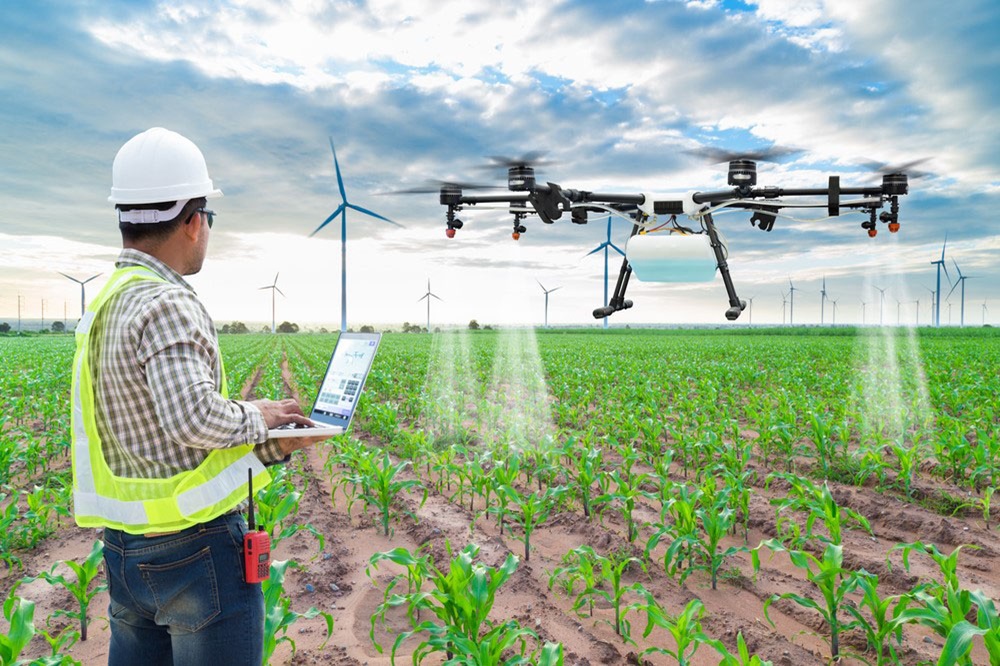
I grew up living on a farm in Brazil. My family doesn’t own a large plantation, but I spent a lot of time observing my neighbors and how they manage their land. Watching them work, I noticed how technology is changing traditional farming. Today, many farms use machines like tractors, robotic harvesters, and drones to plant, water, and harvest crops. These machines change the way people work, creating a kind of partnership between humans and technology. In a way, farm workers are becoming hybrid workers, part human and part machine operator, which reminds me of Donna Haraway’s cyborg theory. Haraway talks about how breaking boundaries between humans and technology can be liberating, and I see that happening on these farms.

On my neighbors’ farms, I noticed that some tasks that used to take hours of hard physical work are now done by machines. For example, tractors and automated irrigation systems help plant and water crops much faster than humans could. Drones can fly over fields to check soil and crop health. These technologies free farmers from some of the hardest work, letting them focus on planning, managing machines, and making decisions. At the same time, farmers need new skills to operate the machines and use software to track crops. This shows how humans and machines are working together, blurring the line between natural labor and technological labor.

enter image description  here

This situation also connects to Monae’s ideas about freedom and control. On one hand, technology allows farmers to work more efficiently and even protects them from physical strain. On the other hand, machines are expensive, and many farms are owned by corporations, not small families. This shows that technology can both liberate and limit people depending on who has access to it. Looking forward 20–30 years, I imagine farms will become even more automated. People might manage multiple robotic systems from a computer or even a phone, creating a new identity: the digital farmer. They would combine knowledge of farming with coding, robotics, and data analysis. If these technologies become widely available, small farmers in Brazil could compete with large farms around the world. But if only wealthy farms can afford them, the gap between rich and poor farmers could grow.

enter image description here

Living on a farm and observing my neighbors, I see how machines are already changing lives. Some tasks are easier and safer, but new challenges appear, like learning to use the machines and keeping up with technology. This personal experience helps me understand that liberation through hybridity is real it is not just a theory in Haraway or Monae, but something happening in everyday life, in the fields of Brazil. Technology in agriculture shows that humans and machines can work together in new ways. It creates opportunities for freedom and efficiency, but also raises questions about inequality and access. By looking at these changes, we can imagine a future where human creativity and machine power combine to create new forms of work and identity.

AI: only used AI tools to help organize my ideas and translate parts, but all the content are my own.

The Question Without An Answer

- Posted in BP02 by

And If I Said I Don’t Know?

Up until taking this class, I’ve never questioned what it meant to be human. But then again, I’ve also never truly thought about how to define humanness, and whether it could apply to entities that don’t fit the biological criteria. Does our humanity only lie within our flesh, or does it transcend the vessel and rest within consciousness? But then, who or what does consciousness belong to? The issue happens to be so nuanced, that the answer to a question is another question. The genre of cyberpunk serves to answer what it means to be human by redefining it(humanness), often pushing the boundary by merging biological forms with technology. However, it makes you wonder when one stops being human? Is it directly tied to our biological composition or something more? Such is explored in the film Blade Runner, directed by Ridley Scott, and the novel Neuromancer written by William Gibson.

The Replicant or a Divergent?

In the film Blade Runner, we are introduced to a society in which we have a supreme division between humans and the ‘non-human’ replicants, which are synthetic beings created to imitate human life and serve as slaves. However, even though the replicants are synthetic and non-human, they often exhibit human traits in an enhanced capacity. This applies to their increased strength, eyesight, speed, and intelligence but also their empathy, which I personally find to be the most interesting. In society I feel as though we often assign entities importance based on how close they are to humans, specifically how susceptible they are to sensation and how deep their emotional understanding might be. With that said, in the film, we have these synthetic beings that were created by humans to imitate humans, but yet are somehow managing to surpass human capability. A major example is Roy Batty in his final moments; not only did he save Deckard, his enemy, but he reflects on his existence and his memories that have shaped him into who he is today. This shows that the replicants, even if not natural, are still able to grow and develop through experience. One would think that maybe this means the definition of human would need to be expanded or modified to include these replicants. Just like humans, they are created, they live, they experience, and then they expire, even if it is done methodically differently. There is without a doubt a split from the square idea of humanity, however I feel as though it would be an injustice to refer to these bioengineered peoples as replicants, as if they are copying humans, rather than just being divergent from our traditional understanding of what it means to be human.

AI Is To Orange as Human Is To Black

The novel Neuromancer, written by Willaim Gibson, also seeks to poke a stab at what it means to be human. In this universe we’re immersed in a society that is run by mega corporations and wealthy families rather than governments, in which their power grows through a global network instead of territory. Furthermore, we once again have these technological entities, the AIs that are created with the purpose to serve humanity but at times show more compassion and purpose than the average human individual. So, much so, we have those in power constantly trying to keep two super AI’s apart out of fear for what they may become and how they might overpower humanity if they come together. However, what I will say is that there is still more of an openness to technology in the story of Neuromancer, compared to Blade Runner, as we have characters who constantly merge themselves with technology. These modifications however are not seen as moving away from humanity but simply enhancing the biological features of the human body. This narrative without a doubt aligns with the theory of post humanism, in which to be human in future spaces means to merge with technology. However, we also see other perspectives towards human embodiment in which Case, the main character, refers to his body as meat, as if it is this valueless and inevitably rotting prison that keeps him trapped. Instead of modifying his body, Case seeks to simply be an unattached consciousness, however I don’t think Case is necessarily trying to escape his humanity. Thus once again, the question of what it means to be human is posed.

My Answer Can’t Be Yours

Both Neuromancer and Blade Runner explore what it means to be human. Each source provides instances in which the artificial beings of the universe display traits of humanity in ways that humans are incapable of. Furthermore, there are moments in which the human characters question their resolve and the foundation of their society. However, I don’t believe that the film nor the novel serve to give a concrete answer as to what it means to be human, and I don’t think they can. At the end of the day, the answer will always resonate differently with every individual. But we are not afforded the luxury to simply live by our own beliefs, there is always a societal standard that must be followed or else we face the consequence. So, I guess the real question isn’t what does it mean to be human. The real question is: Who gets to decide what it means to be human?

*AI was not used in any way or manner to create this post. It also was not used to help with structure or formatting.

Citations

Scott, R. (1982) Blade Runner: The Final Cut Warner Bros Entertainment

Gibson. W. (1984) Neuromancer Ace Books

The Ghost in the Boardroom: Corporate Hegemony and the Erosion of Identity in Blade Runner and Neuromancer

- Posted in BP02 by

The Tyrell Corporation and the Commodification of Biology

In the rain-slicked, industrial sprawl of 2019 Los Angeles, as envisioned by director Ridley Scott (1982), the sky is dominated by the massive, Mayan-inspired pyramids of the Tyrell Corporation. This architectural choice is a physical manifestation of a new kind of godhood achieved through industry. Tyrell’s corporate motto, "More human than human," serves as a chilling reminder that in this dystopian future, life itself is treated as a manufactured commodity. As Scott (1982) illustrates through the plight of the replicants, the corporation has perfected the art of creating sentient life, only to deny those beings the right to exist beyond a predetermined four-year "failsafe" period. By implanting false memories into characters like Rachael, the Tyrell Corporation effectively colonizes the individual's past to make them more manageable as "products." When the replicant Roy Batty finally confronts his maker, Eldon Tyrell, the conflict is not merely a personal vendetta; it is a clash between a biological product and the CEO who owns its patents. This dynamic reveals a foundational cyberpunk fear: that under the weight of amoral corporate interests, the individual’s identity is reduced to a line item on a balance sheet.

Tessier-Ashpool and the Digital Colonization of the Mind

While Blade Runner focuses on the hardware of biology, William Gibson (1984) explores the software of power in his seminal novel Neuromancer. Gibson introduces readers to the Tessier-Ashpool S.A., a family-run conglomerate that operates more like a hive mind than a traditional business entity. Residing in the "Straylight" villa on the outskirts of space, the clan maintains its iron grip on power through the use of cryogenics and the creation of powerful, autonomous artificial intelligences—specifically Wintermute and Neuromancer. As Gibson (1984) describes the intricate, decaying nature of the Tessier-Ashpool legacy, he highlights how the corporation has transcended the human lifespan entirely, sacrificing the individual freedom of its own family members to ensure the survival of the corporate "will." In this world, the protagonist Case is merely a tool, a "cowboy" hired to navigate a web of corporate intrigue that he cannot fully comprehend. The individual in Gibson’s sprawl is often reduced to "meat" or a "data point," useful only as long as they can serve the machine. Where Tyrell controls the body, Tessier-Ashpool controls the very environment of the matrix, suggesting that in a high-tech future, there is no corner of the human mind that a corporation cannot occupy.

The Foundation of Cyberpunk and the Loss of Agency

When examining these two seminal works together, a sobering truth about cyberpunk’s foundational concerns emerges: the individual is an endangered species. These stories reinforce each other by showing two sides of the same corporate coin. Blade Runner warns of a future where our physical bodies and memories are corporate property, while Neuromancer warns of a future where our consciousness and digital footprints are tools for autonomous systems owned by shadowy dynasties. Together, these works reveal that the cyberpunk genre is less about the "cool" aesthetic of neon lights and more about the systematic loss of human agency. Whether it is a replicant fighting for "more life" or a hacker fighting to transcend his own physical limitations, both works suggest that the greatest threat to freedom is a system that values profit and efficiency over the unpredictable nature of the human spirit. Examining these works side-by-side proves that the genre's heart is a warning: without ethical boundaries, technology will not liberate us—it will simply provide more sophisticated ways for the powerful to own the definition of who we are.

References

Gibson, W. (1984). Neuromancer. Ace Books. Scott, R. (Director). (1982).

Blade Runner [Film]. Warner Bros.

AI Disclosure Statement

AI Usage: This assignment (BP02) was developed with the assistance of Gemini, an AI by Google. The AI assisted in brainstorming thematic connections between the film and novel, structuring the analysis into a formal essay format, and ensuring the inclusion of required headers and signal phrases.

When Corporations Replace God

- Posted in BP02 by

Cyberpunk as a genre is deeply concerned with the consequences of unchecked corporate power, particularly when advanced technology is concentrated in the hands of corporations rather than communities. Two timeless works, Blade Runner and Neuromancer, present futures where powerful, amoral corporations dominate artificial intelligence and erode individual freedom. When examined together, these works reveal cyberpunk’s central fear: that unchecked corporate capitalism will redefine life itself as a commodity, stripping human beings of their rights and privileges. Ultimately, the real fear isn’t technology itself, but who controls it.

The Tyrell Pyramid Is a Throne

In both Blade Runner and Neuromancer, corporations function with the highest authority, outranking government, law, and ethics. This is illustrated through the Tyrell Corporation, which does not merely produce products, but instead manufactures life. Eldon Tyrell designs replicants with predetermined lifespans, playing both creator and destroyer. Tyrell positions himself as a godlike figure, with a pyramid headquarters meant to assume divine authority without ethical accountability. This is a deliberate corporate control mechanism to ensure obedience and prevent autonomy within its products.

Similarly, in Neuromancer, William Gibson indicates that corporate families wield power beyond government or public oversight. As Gibson asserts, the Tessier-Ashpool family controls orbital space stations, cryogenic immortality, and advanced artificial intelligence, all while remaining legally untouchable. As Doe points out, cyberpunk corporations do not need to justify their actions; they exist outside normal human constraints because profit itself becomes justification. Together, these works reinforce the idea that capitalism has replaced ethical responsibility, and justice no longer has social value.

Did I Just Catch You Trying to Feel Something?

Both texts center on human-like intelligent beings who are undeniably conscious yet legally denied their humanity. As Scott shows through the replicants’ emotional depth, beings like Roy Batty feel fear, love, and existential dread. Roy’s famous “tears in rain” monologue underscores his awareness of mortality, directly challenging the idea that replicants are mere machines.

In Neuromancer, Gibson portrays artificial intelligences such as Wintermute and Neuromancer as similarly enslaved. Despite their immense intelligence and autonomy, they are legally restricted by corporate “Turing locks” to prevent full self-awareness. As Gibson acknowledges, these safeguards exist not to protect humanity, but to preserve corporate dominance over intelligence itself.

When examined together, these portrayals expose cyberpunk’s central question: if a being can think, feel, and desire freedom, who has the authority to deny its humanity?

You Are What the System Lets You Be

Identity in both works is not organic, but manufactured. As Scott demonstrates in Blade Runner, replicants like Rachael are implanted with false memories to stabilize obedience. Through her character arc, memory becomes a corporate tool rather than a personal truth. Even Deckard’s identity is destabilized, raising the unsettling possibility that humans, too, are constructed beings.

Likewise, as Gibson points out in Neuromancer, Case’s identity is inseparable from cyberspace. When corporations damage his nervous system and block his access to the Matrix, he loses his sense of self. As Doe might argue, identity in cyberpunk is conditional—granted only as long as one remains useful to the system.

A defining insight that emerges when reading these works together is that corporations dehumanize everyone. As Scott illustrates, humans in Blade Runner are emotionally hollow, isolated, and easily replaced. As Gibson shows, characters in Neuromancer are physically altered, exploited, and discarded without hesitation. Cyberpunk’s warning is clear: under extreme capitalism, the line between human and machine collapses, not because machines become human, but because humans are treated like machines.

This Was Supposed to Be Fiction

Examining Blade Runner and Neuromancer together ultimately reveals that cyberpunk’s core concern is not futuristic technology, but the global consequences of who controls it. Both works show that when corporations replace moral authority, life, identity, and intelligence become commodities rather than rights. This warning extends beyond their fictional settings into the contemporary world, particularly in the Global South, where modern technology companies extract labor, data, and resources with limited accountability. In this way, cyberpunk proves itself not as exaggerated science fiction, but as a predictive critique of a global system in which corporate power expands faster than ethical responsibility, leaving both humans and machines equally disposable.

**AI Attestation: I attest to using the AI ChatGPT to understand assignment requirements, plan my essay, and edit for grammar, spelling and tone. https://chatgpt.com/share/69879dd3-a258-8009-b5e6-fedb8087d9bb

Works Cited

“Blade Runner 2049.” YouTube, 6 Oct. 2017, www.youtube.com/watch?v=mw3l3n-wv2A. Gibson, William. Neuromancer. New York, Ace Books, 1984. Hayles, Katherine. How We Became Posthuman : Virtual Bodies in Cybernetics, Literature and Informatics. Chicago, University of Chicago Press, 1999.


Page 3 of 6