Intro
In Donna Haraway’s “A Cyborg Manifesto,” she introduces the concept of the cyborg as a boundary breaking figure that is half organism and half machine, and whose very existence disrupts the story that identity is fixed, black or white, one thing or another. The cyborg is many different things simultaneously which breaks those rigid boundaries. The cyborg is powerful because it possesses a lot of conflicts, such as human versus machine, physical body versus information, nature versus culture, ect.. Rather than grounding identity in biology or origin , Haraway argues that identities are constructed, fluid, and constantly changing and evolving. Haraway’s vision closely aligns with the contemporary experiences of gender fluidity/ nonbinary identity in digital spaces, where individuals are pushing the notion that gender is flexible and is situational rather than being fixed. This real world example while reflecting Haraway’s vision can also be tied to Janelle Monáe’s fundamentals of liberation being mediated through corporate platforms and lived as an everyday negotiation rather than a singular revolution, as shown in the ArchAndroid.
Gender Fluidity Online
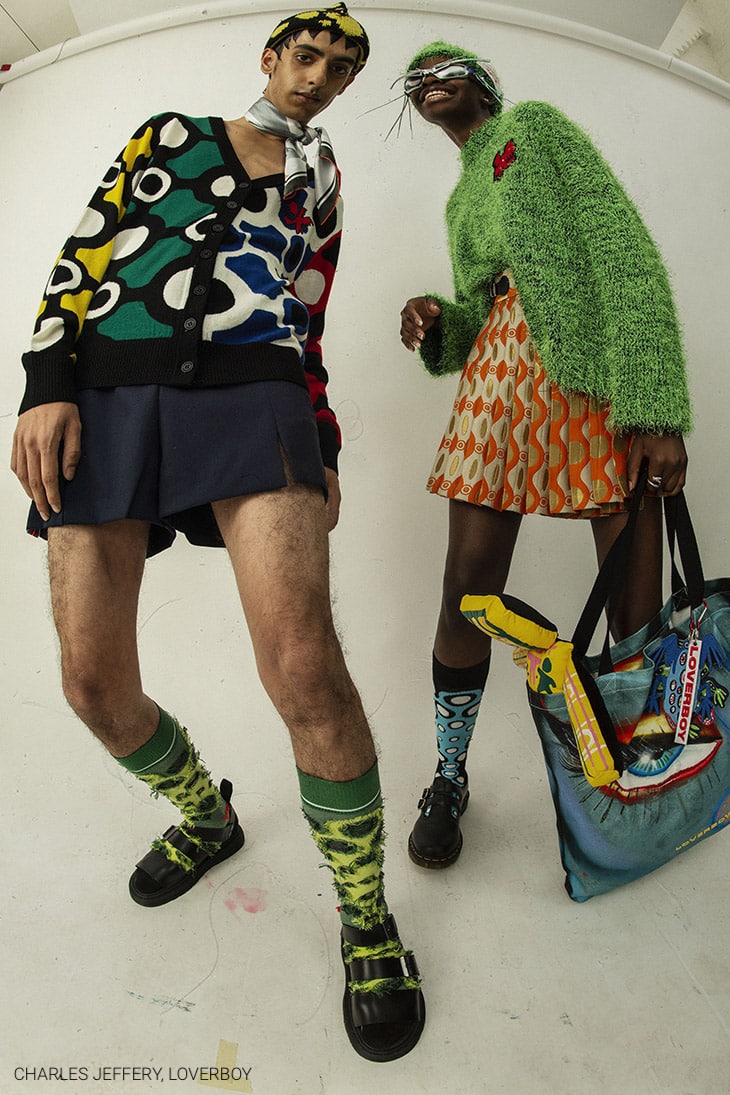
Digital spaces have become cornerstones for gender discovery, experimentation, and expression. They also offer community because they allow people to encounter information as well as share and receive experiences that would not be possible without the use of technology. In the article Gender Fluidity: The ever shifting shape of identity Carlo Hernandp’s self understanding developed through access to media they consumed during Covid-19, which led them feeling “completely different” without discovering terms like “nonbinary” and “gender fluid” that finally resonated (Admin, 2022, pg. 1). The article emphasizes that the phenomenon is not necessarily new, but rather the availability of language and reflection is. Lisa Diamond points out that what has changed is “a new vocabulary available,” and she highlights the internet’s unprecedented capacity to reflect people’s experiences back to them “instantly and with no financial cost,” even across global distance (Admin,2022 pg.1). In other words, digital space doesn’t merely host gender fluidity, it helps make it thinkable and shareable.
These dynamics map cleanly onto how gender is lived online today. Some prime platforms being utilized in order to build this community are Tiktok, Discord, Instagram, and even video game avatars. Similarly to the previous article, in OPINION: Nonbinary people don’t owe anyone androgyny, the author insists that gender expression can shift on a day to day basis which should be allowed to be explored without harsh parameters being set. The author uses language to describe gender as “playful” and the jurisdiction surrounding it as bedding to be “softer”( OPINION: Nonbinary People Don’t Owe Anyone Androgony, 2025, pg.1)
Boundaries Being Challenged
Digital communities make visible what a lot of gender fluid or nonbinary struggle to express. The concept that gender does not always fit into the two categories of male and female. (Admin,2022 pg.1) frames gender fluidity as a concept for those who don’t feel as if they fall into the stereotypical categories and helps them “move away from” feeling like they need a singular label. The article, OPINION: Nonbinary People Don’t Owe Anyone Androgony reinforces the construct of nonbinary identity existing for those who are outside of the typical binary and do not wish to conform. When the traditional structure of male and female begins to change, the power that it holds in society weakens. Liberation can begin when people are no longer confined to an individual box and can expand and become an undiscovered version of themselves. The boundary of fixed gender collapsing relocates authority over gender from institutions and assumptions to the person of their chosen communities. In both articles, liberation is not an abstract ideal but rather it is experienced as safer relationships, stronger boundaries, and the ability to be recognized on one’s own terms.
Haraway’s Cyborg
Haraway’s cyborg is a political myth for the late twentieth century that remains deeply relevant: the cyborg reveals that the self is assembled through systems (biological, technological, cultural) and that this hybridity can be a site of resistance. Digital nonbinary identity is “cyborg” not because nonbinary people are machines, but because online gender is literally mediated through techno-social systems: interfaces, pronoun fields, profile options, avatars, algorithmic visibility, and networked communities. Haraway’s rejection of essentialism is mirrored in both articles’ insistence that gender is flexible and context-sensitive. Gender fluidity is described as a one-day-at-a-time navigation rather than commitment to a single “overarching” label (Admin,2022 pg.1). In OPINION: Nonbinary People Don’t Owe Anyone Androgony , the nonbinary subject refuses the obligation to be legible to others through stereotyped androgyny; identity expands beyond what the dominant gaze expects. Haraway imagines boundary collapse as politically promising, but contemporary digital life shows boundary collapse can be profitable and policed at the same time.
Monáe’s The Arch Android
Monáe’s The ArchAndroid uses the android as a metaphor for marginalization and revolt. Cindi Mayweather is criminalized not merely for actions but for what her existence symbolizes: the collapse of boundaries that uphold social order. Similarly, nonbinary and genderfluid people often become targets of policing because they disrupt the binary system many institutions depend on. Article 1 includes a striking example of institutional friction: medical intake forms requiring “male or female” produce anxiety and signal that systems may not understand what a genderfluid person needs (Admin,2022 pg.1). This echoes Monáe’s world, where bureaucratic systems classify and control bodies and identities. Meanwhile, Article 2’s emphasis on stereotypes and the demand to “look” nonbinary enough speaks to a different kind of policing: cultural surveillance, where people enforce norms through assumptions and misrecognition ( OPINION: Nonbinary People Don’t Owe Anyone Androgony, 2025, pg.1). In Monáe’s narrative, android identity is misread as threat; in contemporary life, nonbinary identity is often misread as inauthentic unless it matches a narrow image. Monáe’s vision spotlights collective uprising while the real world often delivers liberation through micro-resistances and boundary setting. Which is powerful, but less cinematic.
Prediction
In the future I heavily believe that the construct of gender will be all but eradicated. Everyone will be free with no label unless that person specifically wants it. From 2020 to 2026 we have seen a dramatic increase in the use/ asking for other pronouns. That is just the beginning of this phenomenon which I believe could even potentially morph into the medical realm into the future. My inference is that in 30 years birth certificates and legal documents will leave a blank open that the individual can go back and self identify themselves later in life. In 20–30 years, identity may become more “cyborg” in literal interface terms: mixed-reality avatars, voice modulation tools, adaptive pronoun systems, and customizable social profiles across physical and digital spaces. Gender expression could become increasingly modular chosen not once but continuously, depending on community, setting, and personal feeling.
Conclusion
Gender fluidity and nonbinary identity in digital spaces show how Haraway’s cyborg theory is playing out in everyday life. Online communities challenge boundaries that once seemed natural, such as male versus female, biology versus social identity, and fixed identity versus change. The two articles highlight that gender fluidity is experienced as something that shifts over time and across situations, made possible by online access to language, representation, and community. They also show that true liberation for nonbinary people requires rejecting stereotypes that limit them to one specific appearance or way of expressing gender. This collapse of boundaries is liberating because it gives individuals and their communities more control over how gender is defined and understood. It allows people to set clearer personal boundaries, form safer relationships, and develop identities that can grow rather than conform to rigid norms. At the same time, this reality differs from Haraway’s and Monáe’s visions because online liberation is shaped by digital platforms that can profit from identity and create new forms of monitoring and judgment. Instead of a dramatic revolution, liberation often appears as everyd
ay acts of resistance and self-assertion. Still, if future generations continue to normalize flexible and self-defined gender, new forms of freedom may emerge, along with new struggles over visibility, control, and the right to change.
Sources
admin. (2022, September 15). 'Gender fluidity': The ever-shifting shape of identity. Yerepouni Daily News. https://advance.lexis.com/api/document?collection=news&id=urn%3acontentItem%3a66CY-2XG1-F11P-X477-00000-00&context=1519360&identityprofileid=NZ9N7751352
(2025, September 30). OPINION: Nonbinary people don't owe anyone androgyny. The Technician: North Carolina State University. https://advance.lexis.com/api/document?collection=news&id=urn%3acontentItem%3a6GW2-B5D3-SHDN-22NF-00000-00&context=1519360&identityprofileid=NZ9N7751352