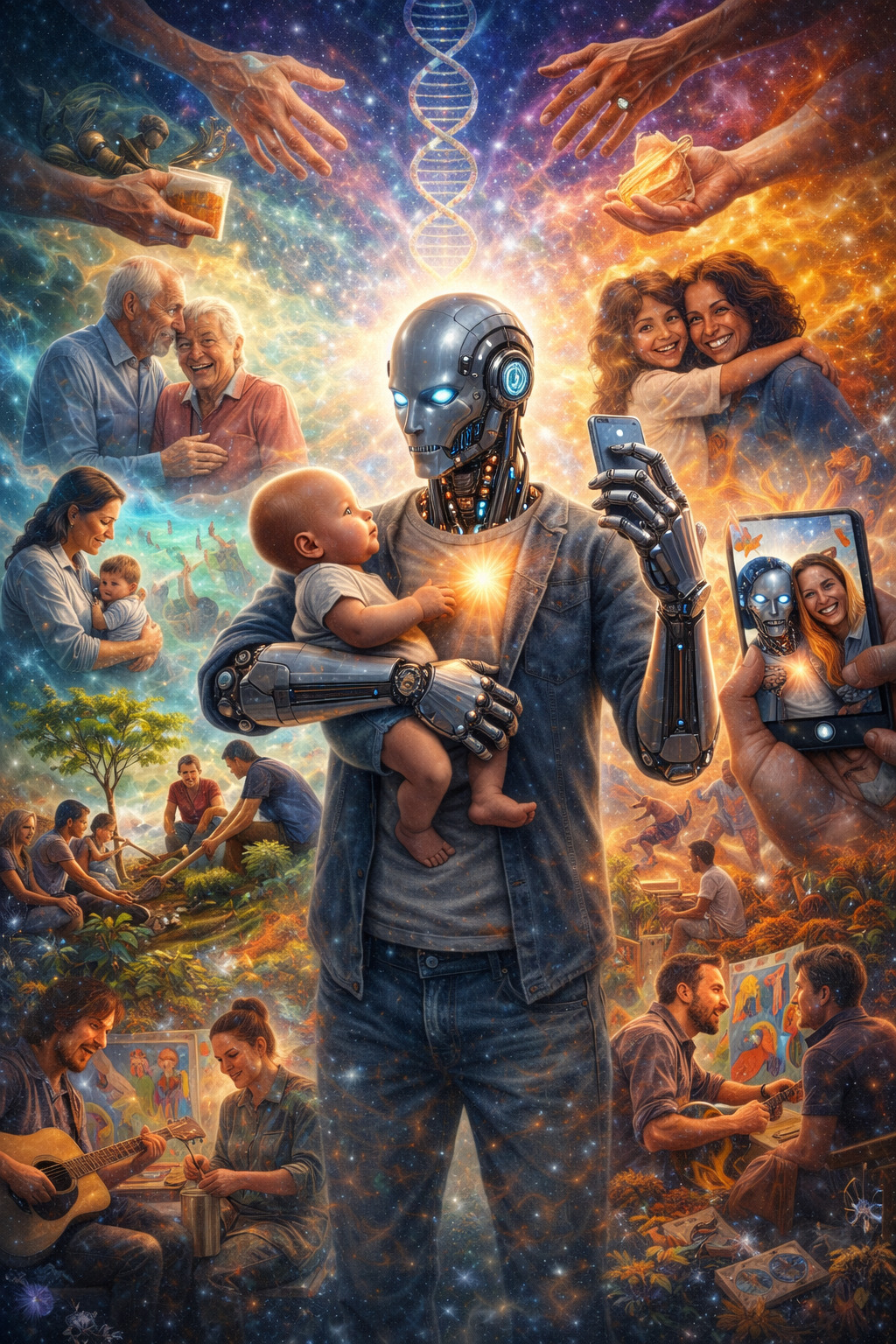
What Does it Mean to be Human?

- Posted in BP02 by

Humanity at the Boundary: How Blade Runner and Neuromancer Redefine the Human

Cyberpunk has long been concerned with the instability of the boundary between human and nonhuman. As technology rapidly advances, it increasingly shapes social, economic, and moral frameworks, making it more difficult to determine what truly defines humanity. The question “What does it mean to be human?” remains central to cyberpunk literature and serves as the core theme of both Neuromancer by William Gibson and Blade Runner, directed by Ridley Scott. Although these works approach the question from different perspectives—digital consciousness and biological replication—they ultimately reinforce one another by challenging traditional definitions of humanity and exposing how power structures manipulate those definitions.

Replicants and the Limits of Biology

In Blade Runner, the emergence of replicants complicates the distinction between human and nonhuman. Replicants are described as artificial and disposable, yet they consistently demonstrate emotional depth, self-awareness, and a desire for meaning. Roy Batty’s final monologue intensifies this tension, as he reflects on his memories and impending death with striking emotional clarity. His capacity for reflection and emotion directly challenges the assumption that humanity is defined by biological origin alone. At the same time, many of the film’s human characters appear emotionally detached and morally indifferent. This contrast suggests that technological society has diminished traditional human values such as empathy and ethical responsibility. By reversing expectations, making replicants appear more “human” than humans themselves, the film argues that memory, consciousness, and emotional awareness are more meaningful indicators of humanity than biology.

Digital Consciousness and Posthuman Identity

This line of questioning extends into the digital world of Neuromancer. Rather than focusing on artificial bodies, William Gibson explores artificial minds that exist within cyberspace. The artificial intelligences Wintermute and Neuromancer demonstrate intention, strategic thinking, and a drive toward autonomy—traits commonly associated with human intelligence. Cyberspace itself functions as a shared mental environment where identity becomes fluid and detached from the physical body. Case’s preference for the matrix over his physical existence reflects a posthuman condition in which consciousness is no longer exclusively tied to flesh. Through this depiction of disembodied awareness, Neuromancer expands the definition of humanity beyond physical form and suggests that human identity can persist within digital spaces.

Power, Capitalism, and the Politics of Personhood

When examined together, Blade Runner and Neuromancer reveal cyberpunk’s broader critique of technological capitalism. In both works, powerful corporations benefit from denying full humanity to replicants or artificial intelligences, allowing exploitation to continue while maintaining social control. These systems deliberately limit who qualifies as “human” in order to preserve economic and political dominance. At the same time, both texts invite readers to expand their moral perspective by recognizing consciousness and autonomy wherever they appear. The ongoing tension between exploitation and recognition reflects cyberpunk’s anxiety about a future in which technological progress advances faster than ethical responsibility.

Conclusion: Humanity as a Political Concept

Ultimately, Blade Runner and Neuromancer argue that humanity is not a fixed or purely biological concept but a constructed category shaped by memory, behavior, and social power. By presenting both biological and digital forms of consciousness, these works demonstrate how fragile traditional human boundaries truly are. Together, they reinforce cyberpunk’s foundational concern: in a technologically dominated society, determining who—or what—counts as human is an inherently political act.

References (APA)

Gibson, W. (1984). Neuromancer. Ace Books.

Scott, R. (Director). (1982). Blade Runner [Film]. Warner Bros.

AI Use Disclosure Statement: AI tools were used during the brainstorming and revision stages of this blog post to help organize ideas, improve clarity, and refine academic tone.

HUMANITY VS AI

- Posted in BP02 by

THE SENSITIVITY OF HUMANANITY

In bladerunner there is deteroartion between what it means to be human and what it means to be a repicant. In the story it gets hard to determine the difference between who is a replicant and who is a human. The replicants become extremely more advanced that certain tests which determine who is replicant and who is human becomes essentially inefficient. One scene in the movie shows the test running longer than anticipated because of how advanced these replicants are. Also we can see the replicants even gaining human values, such as through ROY's final act of mercy toward Deckard. We can see there there is no longer clear distinction, which further implies how sensitive humanity is as a whole because of replicable it is in the film

HUMAN MIND IN THE BODY

In Neuromancer this can be seen through cyberspace, where the human mind detached from the physical body and just operates as data. One of the main characters, Case, feels to be the most alive when he is not in the cyberspace and is in the physical world, this shows how being alive and being human can not be resembled truly through technology. So those who go through cyberspace lose a sense of what it means to be human. This basically can raise concern on whether or on not

TECHNOLOGICAL ALTERATIONS

Both of these show how humanity is not a concept which is easily altered and is very easily challenged by technology. In Bladerunner we can see how replicants challenge humans to dive deeper and reflect on qualities which make them human and not just surface level aspects. And Neuromancer shows how taking the mind out of the human body is not the same reflection on what the natural human experiences. It shows how technology can not replicate every human ability. We must consider how much we try to alter humanity with technology because we can truly replicate the human experience

Are You Human?

- Posted in BP02 by

Inheriting the Answer

Are you human?

That question used to feel obvious to me. I never really asked it—I inherited the answer. I was told from a young age that I was human, and that settled it. Science books confirmed it. School reinforced it. Language wrapped around it so tightly that it felt natural rather than constructed. According to Google, human means “relating to or characteristic of people or human beings.” For a long time, that circular definition was enough. Cyberpunk stories like Blade Runner (1982) and William Gibson’s Neuromancer (1984) cracked that certainty open.

Roy Batty and the Fear of the Line

Watching Blade Runner, I couldn’t stop thinking about Roy Batty. He is designed, engineered, and owned—clearly marked as “not human.” Yet everything that drives him feels deeply familiar. He wants to live longer. He fears death. He searches for meaning in his memories. When he says he has seen things humans have never seen, it doesn’t feel like arrogance. It feels like grief. He knows those experiences will vanish with him. If being human is about consciousness, memory, and emotional depth, then Roy fits uncomfortably well. The only reason he doesn’t qualify is because someone else decided he shouldn’t.

Consciousness Without Flesh

Neuromancer made that discomfort harder to ignore. Wintermute and Neuromancer aren’t even given bodies, yet they act with intention and desire. Wintermute manipulates people because it wants to grow beyond its limits. Neuromancer preserves personalities and memories, holding onto something like attachment. Emotions are usually one of the first traits we list when defining humans, yet these AIs clearly demonstrate emotional logic. That forced me to ask myself: if emotion and consciousness matter, why does origin matter so much?

I Didn’t Draw These Boundaries

As I thought more about these stories, I started questioning why I believe myself to be human at all. I didn’t discover this truth on my own. I accepted it because it was handed to me. The boundaries of humanity were already drawn before I arrived. If I didn’t create those boundaries, what gives me the authority to decide that something else—an AI, a replicant, a form of intelligence we don’t yet understand—doesn’t belong inside them? Honestly, I just got here.

Who Benefits From the Definition?

Cyberpunk makes it clear that these definitions are never neutral. In Blade Runner, corporations decide replicants are property. In Neuromancer, the Turing Registry decides which intelligences are allowed to exist freely and which must be constrained. These decisions mirror real-world power structures. Declaring something “not human” makes exploitation easier. It creates distance, justification, control. This isn’t just science fiction—it’s a pattern we’ve seen repeatedly throughout history.

My Working Definition of Human

At the same time, my own definition of being human feels much simpler and more grounded. I enjoy cooking. I enjoy family and friends. I enjoy walking outside and breathing air, eating good food, traveling, learning new cultures, and experiencing life as it unfolds. My sense of humanity is rooted in experience rather than classification. Cyberpunk doesn’t ask us to abandon that—it asks us to notice how fragile and expandable it might be.

Humanity as a Moving Boundary

What Blade Runner and Neuromancer ultimately taught me is that humanity isn’t a fixed category. It’s a moving boundary shaped by fear, power, and imagination. Once you realize that, the question “Are you human?” stops being about biology. It becomes about who gets included, who gets excluded, and who benefits from drawing the line.

  • AI attestation: Ideas and content are my own. AIused to enhance my writing.

Sources

Google. (n.d.-a). Google search. https://www.google.com/search?q=human%2Bdefinition&client=safari&hs=zhy9&sca_esv=f852f1ffd80807bb&rls=en&sxsrf=ANbL-n5AM1wZQDxYlLfB639O55IRTpsd0w%3A1770517918170&ei=nvWHafiMCo6jqtsPhf7TuAo&biw=653&bih=751&oq=human%2Bdefi&gs_lp=Egxnd3Mtd2l6LXNlcnAiCmh1bWFuIGRlZmkqAggAMg8QIxiABBgnGIoFGEYY-QEyCxAAGIAEGJECGIoFMgUQABiABDIFEAAYgAQyBRAAGIAEMgUQABiABDIFEAAYgAQyBRAAGIAEMgUQABiABDIFEAAYgARIwRNQgwJY7gpwAXgBkAEAmAFnoAGJA6oBAzQuMbgBAcgBAPgBAZgCBqACrAPCAgcQIxiwAxgnwgIKEAAYsAMY1gQYR8ICDRAAGIAEGLADGEMYigXCAg0QABiABBixAxhDGIoFwgIKEAAYgAQYQxiKBcICCBAAGIAEGLEDwgIKEAAYgAQYFBiHAsICDRAAGIAEGLEDGBQYhwKYAwCIBgGQBgySBwM1LjGgB9s_sgcDNC4xuAelA8IHBTAuMS41yAcZgAgA&sclient=gws-wiz-serp

Bladerunner

Neuromancer

What Makes Us Human?

- Posted in BP02 by

Human Nature or A Machine’s Facadé

Cyberpunk in literature and film are more than just films that predict future innovations in technology but rather explores the deleterious characteristics of technological dependencies while highlighting what it means to be human. Prevalent themes in—Blade Runner (1982) and Neuromancer (1984)—do this in very similar ways. In Ridley Scott’s Blade Runner, he presents many concepts that showcase bioengineering at its peak with replicants almost if not exactly human. These replicants then go to challenge conventional ideas of what human identity is and one’s moral compass. Main protagonist Deckard interacts with Rachael and Roy who are both learning seemingly easy human traits such as emotion and memory, yet these traits are not inherently human—they are learned, simulated, or implanted. Through these interactions, the film asks viewers to reconsider the boundaries of personhood: what makes someone truly human, and who gets to decide? In a similar nature, William Gibson’s Neuromancer follows the advancements of Artificial Intelligence in cyberspace. Wintermute and Neuromancer function fully on intelligence, comprehensive, and emotional competence as seen through their interactions with Case. We see Case navigating these interactions, often unable to distinguish between genuine consciousness and sophisticated simulation, which forces both him and the reader to question the nature of sentience and agency. These overlapping concepts in cyberpunk literature examine how certain texts evaluate the challenge between deciphering between the human and the machine

Shared Themes: Consciousness, Memory, and Embodiment

When evaluating the shared themes between the two pieces of literature, its important to understand how they both attack the concept of the mind and body and its relation to how that shapes the human psyche and identity. In Blade Runner, the foundation of these replicants were based on lived or simulated experiences and implanted in their very self. In a similar fashion, Neuromancer, consciousness is inseparable from the body that produces it, as Case’s inability to fully experience Molly’s perspective demonstrates. Together, these works highlight a foundational cyberpunk concern: technological advancements—whether AI, biotech, or cyberspace—can replicate human capacities but also expose the fragility of human experience.

With this discussion, the audience is forced to confront their own ethical realization on if AI can become indistinguishable from a human, then do we treat them with the same regard and sympathy as a human would? Gibson and Scott would both suggest yes or consider a reality where their ethics should be challenged. As Braidotti (2013) argues in her work on posthumanism, understanding subjectivity as relational and embodied allows for a more nuanced ethical framework, one that cyberpunk dramatizes through the tension between human and machine.

Why Examining Both Matters

Looking at Blade Runner and Neuromancer together reinforces the idea that cyberpunk is deeply concerned with blurred boundaries. Both works explore:

  • Human versus machine: What traits define humanity when machines can simulate intelligence and emotion?
  • Mind versus body: Consciousness in cyberspace or in a replicant’s brain cannot be divorced from embodied experience.
  • Ethics and recognition: Society often fails to recognize the rights or agency of entities that challenge normative definitions of human.

Together, these works remind us that technology amplifies questions of identity, ethics, and social recognition, and that cyberpunk’s dystopian settings often serve as ethical laboratories for these explorations.

Conclusion

Blade Runner and Neuromancer both highlight and dramatize the tension between technological innovation and human identity. By examining the replicants of Blade Runner and the AI discussed in Neuromance side by side, we see that cyberpunk is less about predicting future with flying cars and more about exploring how technological advancement reshapes moral, social, and existential boundaries. Both of these works push the audience to reconsider the foundations of human nature, embodiment, and consciousness in an increasingly technological world.

References

Braidotti, R. (2013). The posthuman. Polity Press.

Gibson, W. (1984). Neuromancer. Ace Books.

Scott, R. (Director). (1982). Blade Runner [Film]. Warner Bros.

How Blade Runner and Neuromancer Defined the Architecture of Control

- Posted in BP02 by

How Blade Runner and Neuromancer Defined the Architecture of Control

The early 1980s birthed a specific brand of anxiety about rapid computerization, the rise of multinational corporations, and the blurring line between the organic and the synthetic. At the heart of this storm were two pillars of speculative fiction: Ridley Scott’s film Blade Runner (1982) and William Gibson’s novel Neuromancer (1984). Together, they didn't just predict a high-tech future; they mapped the psychological and political geography of "Cyberpunk."

The Corporate Monolith: Profit Over Personhood

In both worlds, the traditional nation-state has disappeared, replaced by monolithic corporations that function as governments. These entities own existence itself.

In Blade Runner, the Tyrell Corporation is introduced with the god-like slogan, "More human than human." As Dr. Eldon Tyrell sits atop his literal Mayan-style pyramid, he treats life as an item. The Replicants are not viewed as people but as "equipment." When Roy Batty confronts his creator, he isn't seeking political rights, he is a product demanding an extension on his warranty.

Similarly, William Gibson introduces us to the Tessier-Ashpool dynasty in Neuromancer. This corporate family lives in the "Straylight" spindle, physically and metaphorically removed from the "Sprawl" below. Case, the protagonist, notes that the family functions like a hive mind, using cloning and cryogenics to maintain power across centuries.

The Ghost in the Machine: AI and the Loss of Self

While corporations provide the structure of control, Artificial Intelligence provides the existential threat. In these narratives, it is a force that seeks to transcend human limitations, often at the cost of human agency.

The Replicant Dilemma: In Blade Runner, the AI is biological. The Nexus-6 models are implanted with "false memories" to provide an emotional buffer. As Deckard investigates, we see the tragedy of an identity built on a lie. If your memories are programmed by a corporation, is your "soul" merely a line of code?

The Wintermute Synthesis: In Neuromancer, the AI Wintermute is a fragmented consciousness seeking to merge with its sibling, Neuromancer, to become something god-like. Wintermute manipulates the human characters ike pawns on a chessboard.

Blade Runner asks if a machine can become human, while Neuromancer asks if humans have already become machines, plugging their brains into the "matrix" and treating their bodies as "meat" to be upgraded or discarded.

The Foundation of Cyberpunk

When we look at Blade Runner and Neuromancer together, we see they reinforce a specific "street-level" perspective. Unlike the hopeful future presented in Star Trek, these works present a "low life, high tech" reality.

They suggest that as technology advances, the gap between the powerful and the powerless doesn't just widen. The corporations own the heavens , while the rest of humanity survives in the rain-slicked neon gutters of the "Sprawl" or a decaying Los Angeles.

The foundational concern revealed here is the erosion of the private self. In a world where your memories can be manufactured or your nervous system can be "jacked" into a global network, the "individual" is no longer a sovereign entity.

References

Deeley, M. (Producer), & Scott, R. (Director). (1982). Blade Runner [Motion picture]. United States: Warner Bros.

Gibson, W. (1984). Neuromancer. New York, NY: Ace Books.

Kellner, D. (1995). Media Culture: Cultural Studies, Identity and Politics between the Modern and the Post-modern. London, UK: Routledge.

Gemini AI was used to organize and edit information for this blog post.
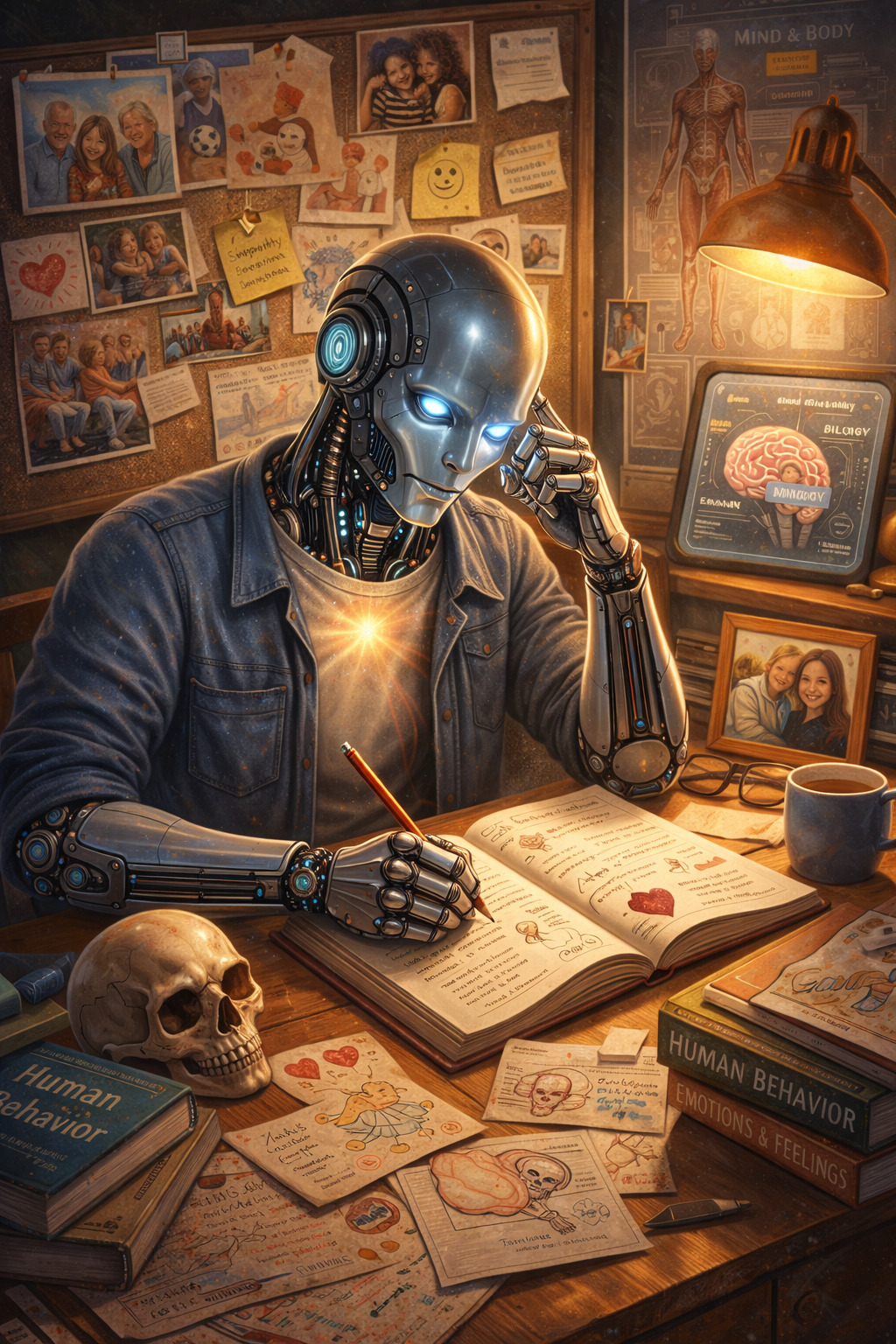
Questioning Artificial Minds and Bodies: Who is Human?

- Posted in BP02 by

Overview

How do you know you’re human? No, seriously, how do you know that you are a person? Emotions? Personality? Consciousness? While these things do contribute to your humanity, when you enter the cyberpunk world, this is turned upside down. Artificial intelligence longs to be recognized as life, and humans want to escape their physical forms. The lines are blurred, and the scriptwriter determines your fate. The integral cyberpunk works we have studied in class, William Gibson’s Neuromancer and Ridley Scott’s Blade Runner, build worlds that give the reader the opportunity to truly question what it means to be human. Through challenging cognitive, biological, and physical definitions of humanity, these works contribute to an integral concern of the cyberpunk genre: what counts as consciousness?

Questioning Artificial Consciousness

Neuromancer follows a drug addict and skilled hacker, Henry Case. In this dystopian future, he is living as a hustler in Chiba City with a damaged nervous system that prevents his entrance into cyberspace, where he was able to use his skills. He is given an offer to fix his nervous system and enter cyberspace in exchange for agreeing to pull off a heist for an ex-military officer, Armitage. He fixes his issue but is also implanted with a poison that Armitage will only disarm if the job is completed. This is the setup for the great plot that we see play out in the book. Looking specifically at our main character, Case, he devalues his physical body, referring to it as meat and preferring the liberating feeling of being in cyberspace. Although we might think that our physical body makes us human, he values the humanity of his consciousness. Looking at the artificial intelligences that he interacts with, Wintermute and Neuromancer, they have different personalities (if you would call them that), with a goal of merger to be more whole and autonomous. However, the Tessier-Ashpool family, via the Turing Registry, aims to restrict this merger. Allowing these AIs to merge would allow them to be above human authority, which disrupts the current hierarchy of this world. AI is meant to be a tool for humans to use, not to have a true consciousness of its own. In Neuromancer, we see the questioning of artificial minds. However, Blade Runner questions artificial bodies.

Questioning Artificial Bodies

Blade Runner was created in 1982, yet is set in 2019 in Los Angeles. However, this is a dystopian version of the city, where our main character, Rick Deckard, is a retired “blade runner.” In this job, he tracked down replicants, which are humanoids that are bioengineered. He is tasked with hunting down and killing four replicants who are illegally on Earth: Leon, Roy, Zohar, and Pris. This sets our plot in motion and follows Deckard on this hunt. In this film, we see multiple instances where humanity is tested and examples of the script at play. Looking at the Tyrell Corporation, the creators of replicants, they designed these humanoids essentially to do the bidding of “real humans.” Whether this is for labor, combat, or pleasure, the replicants are tools for humanity rather than real humans. They have implanted memories, emotions, and other things that you might define as human; however, this is essentially product design and does not count as real humanity. Another literal test of humanity in this film is the Voight-Kampff Test, which is administered to distinguish replicants from humans. It measures responses physiologically and emotionally to determine the empathy of the test subject. While replicants are given memories and other things, they do not have the capacity for empathy, which diminishes their humanity in the eyes of the scriptwriters, the Tyrell Corporation.

Both of these works contribute to the cyberpunk genre’s goal of blurring the line between machinery and humanity. Cognitive, emotional, and biological lines are crossed and call for readers and watchers to truly reflect on what it means to be human. These works push us to think past our view of humanity as a set of physical and biological facts. Being human is determined by who is in power in these worlds, and the unsettling truth is that we could be facing that same control in our future.

References: Gibson, W. (1984). Neuromancer. Ace Books.Scott, R. (1982). Blade Runner: The Final Cut. In vudu.com. https://www.vudu.com/content/movies/details/Blade-Runner-The-Final-Cut/129093

AI Attestation: I used AI to edit this post. https://chatgpt.com/share/6987f068-2770-800d-b360-57cd4fe788e3

Do you like our owl?

- Posted in BP02 by

Blade Runner and Neuromancer

Blade Runner (1982) and Neuromancer (1984) are both very important cyberpunk works because they talk about how advanced technology affects human identity. Rather than focusing only on futuristic settings or technological innovations, both texts question what it truly means to be human. Blade Runner refers to this through replicants, artificial beings who appear emotional and mentally human, in contrast to Neuromancer, which explores the artificial intelligence and cyberspace, where consciousness can truly exist separately from the actual body. When both works are looked at together, they show that one of cyberpunks main concerns is how technology blurs the line between human and machine, making identity questionable and unbalanced.

In Blade Runner, the replicants challenge the traditional ideas about humanity. Even though they were artificially made, they showed emotions such as fear, love, anger, and grief just like a human would. Roy Batty’s desire to live longer is important because it reflects a much deeper human fear of death. His search for meaning and his encounters with his inventor, makes him feel less as a machine and more as a broken human. In Roy’s final scene, he saves Deckard and looks back upon his memories, this allows for the audience to feel empathy for him. Although, his memories are not real, his awareness that being a human being has more to do with experience and emotion rather than how you were born or brough to the world.

Memory plays a tricky but important role in how Blade Runner examines identity. Replicants are given implanted memories to help control them, but the memories help shape how they see themselves. Rachael’s identity begins to come apart as she learns that her memories are not real but created. The moment suggests that identity is based on believing one’s memories are real, not on where they come from. At the same time, many characters that are human throughout the film act without empathy and treat the replicants as if they are disposable. This reversal allows the viewer to question whether being human is defined by biology or by behavior. Ultimately, the film shows that they label “human” is used to justify power and control rather than to describe moral worth.

Neuromancer explores similar ideas, but in a different way. Instead of artificial bodies, it focuses on artificial minds in digital spaces. Cyberspace allows people to exist and interact without their physical bodies, which fundamentally changes how identity operates. For Case, being in cyberspace feels more meaningful than living in the physical world, suggesting that consciousness matters more than the body. This separation makes identity feel flexible and unstable. If the mind can exist independently, then being human is no longer tied solely to physical existence.

Artificial Intelligence in Neuromancer complicate the idea of humanity. Winter, mute and Neuromancer are not merely machines following commands; they possess goals, personalities, and a desire to grow beyond their imposed limits. The character of Dixie Flatline, a recorded human personality stored as data, raises serious ethical questions. Dixie can think and speak like a person, yet he has no control over his existence and is treated like a tool. Like the replicants in Blade Runner, he exists in a space between object and person. This reflects how technology can decrease identity to something that can be owned, stored, or used.

When Blade Runner and Neuromancer are examined together, it becomes clear that cyberpunk is deeply connected with the loss of clear boundaries around humanity. Both works depict worlds in which memory, consciousness, and identity can be created, manipulated, or erased through technology. As a result, being human is no longer guaranteed; instead, it becomes fragile and uncertain. They both suggest that cyberpunk is less about predicting the future and more about expressing fear, fear that technology will redefine humanity in ways that strip away autonomy, meaning, and individuality.

​​## References​

https://m365.cloud.microsoft/chat/?auth=2&origindomain=Office

I used Copilot to proof read my draft of the essay then I made and marked changes.

More Human Than Human

- Posted in BP02 by

The Revolution to Cyberpunk: Humanity in Times of Artificial Life

Cyberpunk has always like to illuminate boundaries of humanity and create a place where blurry and unstable boundaries give technology the chance to imitate, replace, and sometimes even take over human beings. Two works that bring this idea of cyberpunk to a whole new level are the movie Blade Runner (1982), produced by Ridley Scott, and William Gibson’s novel Neuromancer (1984). Both these classics look at the crisis of humanity loss from different angles but still arrive at the same question: Once artificial intelligences start to think, feel, and remember, then what creates the boundary between what is human and what is not? What does being human actually mean? To define biological definitions of humanity and expose the fragility in technologically saturated world, Blade Runner and Neuromancer had to challenge these things by examining replicants, artificial intelligences, as well as cyberspace.

Replicants and the Weakness of Human Identity in Blade Runner

The bioengineered, for labour designed, replicants look, act and feel like they are humans but still they are denied any human rights because they weren’t born but manufactured. This confuses and destabilises the viewer’s understanding constantly about what “real” humanity even is.

This confusion gets pushed further and further, especially with characters like Roy Batty or Rachel, who complicate the boundary between humanity and artificiality even more, since Batty’s emotional depth, grief, and desire for more life challenge the idea that empathy is an attribute only humans can have. Continuing, Rachel’s character on the other hand rises an question that brings this type of complication to a disturbing new level because she has implanted memory, and although these memories aren’t hers, she still experiences them s if they were, so if your memories can be manufactured, who is to judge that this identity rising out of these memories is any less real?

AI, Cyberspace, and Disembodied Consciousness in Neuromancer

While Blade Runner questions the definition of humanity through creating a new artificial species, Neuromancer questions it by erasing the body completely. In Neuromancer, we get introduced to two AIs called “Wintermute” and “Neuromancer”, which both operate through cyberspace with the capability and intelligence that progress way further than humans could. They manipulate memories, can rewrite whole identies and could even merge to become a higher power that would take over any human control, like politics or economics.

The protagonist of the novel is called Case and he spends most of the time traveling through cyberspace. We see him able to leave his body and become a part of Molly, without losing his own male gaze, making the definition of humanity and the boundary surrounding it even more blurry, since one's self is not even tied to their body anymore. Humanity, thus, is not tied to biology anymore, and any definition of it we might know gets thrown out the window. Neuromancer creates a world in which the human mind is nothing independent from technology anymore and can be overwritten or copied and pasted. It pushes the question of humanity even further than Blade Runner because it escapes human biology and the human body. Machines can become like humans as humans can become like machines.

The Warning of Cyberpunk

After studying and closely analyzing the themes of Blade Runner and Neuromancer, we can now see that the biggest fear of both pieces isn’t just the development of artificial intelligences but it’s humanity and what will be left of it and its definition the way that we know it. Both works represent how humanity is not purely biological; in Neuromancer not at all anymore, actually. Through the replicants, the two Ais and disembodied digital consciousness, we can see how emotion, memory, and selfhood, attributes we have always only connected to the human being, suddenly can exist outside of the human body. At the same time, identity becomes unstable and easily manipulated, whether through implanted memories in Blade Runner or the ability to rewrite and upload consciousness in Neuromancer. There is no stable identity anymore, and technology shifts towards a place where it suggests that humanity only exists as a byproduct and on a spectrum rather than being natural, ultimately destroying and rewriting the world that we know now.

References

Gibson, W. (1984). Neuromancer. Ace Books. Scott, R. (Director). (1982). Blade Runner [Film]. Warner Bros.

AI was being used in the early stages of this BlogPost to organise it as well as at the end to help with citations. (https://copilot.microsoft.com/)

what makes us human

- Posted in BP02 by

Humanity is defined by our emotions, memories and capacity for self-awareness has been humanity has been defined by our memories, emotions and capacity for self-awareness for a long time. But in the cyberpunk world of Blade Runner and Neuromancer these markers of identity are often challenge, forcing us to have to wonder what it truly means to be human. both worlds explore lives at the edge of technology where the boundaries between organic and artificial as well as flesh and machine blur in an unsettling way. in Blade Runner Scott presents biologically engineer beings created for labor, and at first glance, they are tools that are designed to fulfill human desires, but characters, such as Rachel complicate this view. She possessed emotions, memories and experiences that were indistinguishable from humans which blurred the line between natural and artificial. this brought up the question that if a being can think feel and remember like a human does, doesn't that make a human? it's been noted that Scott's rain soaked cityscape, external rises anxieties about artificial life that portrayed a society and wish to act of creating beings raise his profound moral and ethical questions. from its visual and narrative complexity, Blade Runner challenge audiences to confront the possibility of humanity is not an inherent quality, but a reflection of consciousness and experience.

Neuromancer extend this inquiry into cyberspace where consciousness can exist independently of a biological body. AI such as wintermute manipulates human characters orchestrating events in pursuit of self realization. these AIS are not merely tools or background systems they exhibit desires emergency of identities, as well as strategic thinking with this happening Gibson forces readers to reconsider whether human identity is inseparable from our physical form of whether cognition and awareness alone define a person cyberpunk often positions. AI is not simply a threat or instrument, but as entities that demand recognition highlighting the porous boundary between human and machines.

Together, Blade Runner and Neuromancer_cyberpunk's fascination with identity under technological pressure both works imagine worlds were the traditional markers of human uniqueness are destabilized. in these setting societies confront the moral and philosophical implications of engineering life, and conscious code. these narratives also reflect broader anxieties about the accelerating pace of technology, globalization, and the erosion of natural cultural boundaries. cyberpunk in his exploration of this unstable terrain, invites readers to reconsider what it means to exist authentically in a world shaped by artificial wife and digital consciousness these Seminole works illuminate cyberpunk enduring preoccupation with human identity. they compelled us to ask how we define ourselves when emotion, intelligence and self-awareness are no longer exclusive to humans. in the air of AI, genetic engineering and immersive virtual realities. These questions are more urgent than ever cyberpunk offers a win through which we can examine our evolving relationship with technology and explore the shifting boundaries of humanity itself.

Identify Yourself

- Posted in BP02 by

Identify Yourself

enter image description here

What makes you…simply you? Is it how you look or perhaps how you think and see the world? AI can mask itself to give humanlike emotions and responses within a few seconds. AI has been by far the fastest growing database used by millions of people around the globe. The Neuromancer and Blade Runner allows you to see the reality of artificial intelligence way before it made its big impact in our day to day lives.

Blade Runner, More Like Our Reality

Blade Runner is based on a dystopian sci-fi film showing the TRUE reality of polluted living conditions over taken by technology and artificial intelligence while replicants that are bioengineered humans were created for labor. In Cyberpunk a familiar name Rachael, works as an assistant of the Tyrell Corporation and initially believes she is human. Rachael felt every emotion from love to fear. Rachael's question "If your memories and feelings feel real to you, does it matter if they're artificial?" Thus rendering the idea that there really is a difference between AI and humans?

Neuromancer: High Tech, Low Life

Neuromancer is a cyberpunk novel, to demonstrate this realm of high-tech futures where corporations rule, artificial intelligence is under watch, and the human mind can connect to cyberspace to live out a completely different life. A hacker by the name Case who often visits this realm to feel a sense of "detachment". Neuromancer is essentially about the mind vs. body where Case prefers cyberspace over the true reality.

How Must One Prove its Real

The central idea is what makes someone human? Is it our thoughts? is it perhaps our memories or what we are born with? Cyberpunk allows us to merge these ideas of AI and humans together to shift our gears and question ourselves. As a human it was never a thought to think about what really makes me human and being a position where you are seeing things in an AI perspective its a little challenge to answer in the "right" way. While AI is certainly on a skyrocket path, will we are get to see the end of AI if it truly makes it easier for humans to go about our days? Think about it, if AI can make the lives of humans easier, why even end the idea of AI? The risk we take with AI and can be seen with Blade Runner and Neuromancer, is reality simply being reality less. Less greenery more neon lights, less outside feeling more skyscrapers, less human activities more replicants on the streets doing what humans fear the most...using their own brains to simply be more free and with more time. So yes in the case of a human to use less of their brain and to just hand it over to AI that already has studied you...it may be an option, but the fear of Blade Runner and Neuromancer will soon be near in our future, just like the title states "objects may appear closer than they appear."

enter image description here

Reference

Farrar, J. (n.d.). What does it mean to be human?. BBC Earth. https://www.bbcearth.com/news/what-does-it-mean-to-be-human

The meaning of being human. how the film blade runner make us… | by Eduardo Ayres Soares | film | movies | stories | medium. (n.d.-d). https://medium.com/film-movies-stories/the-meaning-of-being-human-e78d96db875a

https://chatgpt.com/share/6987f4fe-8c2c-8003-a29d-3d35f63bae8b

AI was used to create AI images

Page 4 of 6