Fluid Fabric, Digital Flesh: Who Are We Becoming?
One Boundary That Has Shifted
One boundary that has shifted dramatically in the last decade is the boundary between masculinity and femininity.
That’s a broad claim. Let me explain.
In A Cyborg Manifesto, Donna Haraway argues that the cyborg breaks down rigid dualisms: human/machine, male/female, natural/artificial. Identity, in her vision, is not pure. It is a hybrid. It is stitched together from culture, technology, and lived experience.
Then you move to The ArchAndroid by Janelle Monáe, where the android Cindi Mayweather exists between categories (human and machine, outsider and revolutionary.) Monáe uses hybridity as liberation. The android becomes powerful precisely, because she does not fit.
Now look at your closet.
The Closet as Cyborg Space
“More bling in the men’s section than the little girls’ section nowadays.”
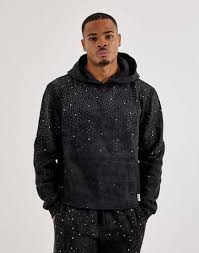 That sentence says more than it seems to.
Jewelry on men. Oversized blazers on women. Painted nails. Pearls. Hoodies with rhinestones. Skirts styled with combat boots. Streetwear, cottagecore, Y2K aesthetics colliding in the same Instagram feed. Platforms like TikTok and Instagram don’t just display trends, they accelerate identity experiments. The algorithm becomes a stylist, a mirror, sometimes even a co-author of the self.

Gender is often defined as the classification of male or female that includes social, psychological, emotional, and intellectual characteristics. Fluidity suggests that individuals may move in and out of those categories. The key word there is move. Movement implies change. Change implies instability. And instability, culturally speaking, can be either terrifying or freeing.
The words “masculinity” and “femininity” only mean something within particular cultures and languages. They are not laws of physics. They are agreements. And agreements can be renegotiated.
Clothing has become one of the most visible sites of that renegotiation.
More Bling in the Men’s Section
Fashion today is not just fabric.
When men wear pearls or women adopt traditionally “masculine” silhouettes, they are not simply following a trend. They are participating in a cultural redefinition. Queer theory has long argued that the way we think and talk about gender changes how we live it. When the visual codes shift, the social rules shift with them.
But here’s where it gets interesting.
This shift mirrors Haraway’s cyborg. Our identities are no longer anchored solely in biology. They are mediated by screens, online communities, and digital marketplaces. We scroll, we curate, we remix. In turn, the self becomes a hybrid mix of part body, part algorithm, part aesthetic collage.
At the same time, there’s tension. Haraway imagined hybridity as political resistance. Monáe’s android confronts oppression. Today’s gender-fluid fashion sometimes risks being absorbed into consumer culture. Liberation becomes a marketing category. The system adapts.
Hybridity can be radical. It can also be sold.
Both things can be true at once.
Algorithms and Identity
We are living in a moment where global media, constant connectivity, and hyper-consumerism blur the edges of who we are. Your “For You” page may know your aesthetic before you do. Your search history feeds your wardrobe. The digital and the embodied are no longer separate spaces instead, they are layered.
In this sense, we are all minor cyborgs now.
But unlike the posthuman argument that reduces us to information processors, lived experience still matters. An algorithm can predict your next purchase. It cannot feel the social risk of stepping outside a dress code. It cannot know the quiet courage of wearing what feels true to you.
That interiority is what keeps the human from dissolving entirely into the digital.
Twenty Years From Now
Project forward 20 to 30 years.
Wearable technology is already advancing. Smart fabrics exist. Digital fashion is growing. Younger generations increasingly identify outside rigid gender binaries, according to surveys from organizations like the Pew Research Center.
Imagine clothing that shifts color or silhouette with mood. Imagine augmented reality layers that allow you to project different aesthetics depending on context. Imagine identities that are not fixed at birth but continuously assembled across physical and digital spaces.
The boundary between body and interface may thin even further.
But here’s the question: will that hybridity serve human flourishing, or simply deepen surveillance and commodification?
Haraway would likely argue that the outcome depends on how we build these systems, whether they reinforce old hierarchies or genuinely expand freedom. Monáe’s vision reminds us that those who exist between categories often reveal where power hides.
Hybridity alone is not liberation. Intent matters.
Who Are You?
So here we are.
Men in pearls. Women in oversized suits. Screens shaping closets. Closets reshaping culture. Culture reshaping identity.
The boundary between masculinity and femininity is not gone, rather it is loosening. It is becoming permeable. And in that permeability, something new is emerging: a sense of self that is less confined by inherited scripts and more open to self-authorship.
The cyborg is not just metal and code.
It might be standing in front of a mirror, choosing what to wear.
If identity is no longer a fixed category… If hybridity is becoming ordinary… If clothing can be both expression and resistance…
Who are you becoming?
Source:
Harraway, Donna. (2016). Gender Fluidity. In A Cyborg Manifesto (pp. 118–130). Lutterworth Press. https://www.lutterworth.com/wp-content/uploads/extracts/thinking-woman-ch4-extract.pdf
*AI Attestation: Used to enhance and edit original ideas and content