Beyond Male and Female: How Transgender and Nonbinary Identities Show Liberation Through Hybridity
Beyond Male and Female: How Transgender and Nonbinary Identities Show Liberation Through Hybridity
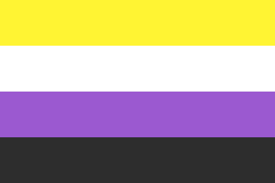
One powerful example of fluid identity and liberation through hybridity today is the growing visibility of transgender and nonbinary identities. Around the world, more people are openly rejecting the strict boundary between "male" and "female." Instead of seeing gender as fixed and biological, many now understand it as fluid, personal, and shaped by both culture and self-expression.
This real-world shift connects closely to Donna Haraway's cyborg theory. In "A Cyborg Manifesto," Haraway 1985/2016) argues that traditional boundaries such as human/machine, male/female, and natural/artificial-are breaking down. She writes that the cyborg is a figure that "skips the step of original unity" and rejects rigid categories (Haraway, 2016). In simple terms, she believes we do not have to fit into old boxes. We can build new identities by mixing and crossing boundaries.
We also see this idea in Janelle Mone's album The ArchAndroid. In her music and storytelling, Mone creates the character Cindi Mayweather, an android who does not fully belong to one group. The android is both human and machine. Through this hybrid identity, Mone explores freedom, resistance, and self-definition. She uses science fiction to imagine a world where difference is not punished but celebrated. Today, transgender and nonbinary communities reflect this same kind of boundary-crossing. The line between male and female is no longer treated as natural and permanent by everyone. According to the Pew Research Center (2022), about 1.6% of U.S. adults identify as transgender or nonbinary, and younger generations are more likely to identify this way (Brown, 2022). This shows a generational shift toward fluid identity.
Technology also plays a role in this liberation. Social media platforms like Instagram and TikTok allow people to share their pronouns, document transitions, and build supportive communities. Online spaces help people experiment with identity in ways that may feel safer than offline spaces. This reflects Haraway's idea that humans and technology are deeply connected. Our identities are shaped not only by biology but also by digital tools and networks.
At the same time, this movement challenges major boundaries: • The boundary between biological sex and gender identity • The boundary between private identity and public recognition • The boundary between "natural" and "constructed" categories
However, this real-world example also differs from Haraway and Mone in some ways. Haraway's cyborg is symbolic and theoretical. Mone's android is fictional. But transgender and nonbinary people face real social and political struggles. For example, debates about healthcare access and legal recognition show that boundary collapse is not always welcomed (ACLU, 2023). Liberation through hybridity can create backlash because it threatens traditional power structures.
Looking 20-30 years into the future, fluid identities may become even more common. Younger generations already show greater acceptance of gender diversity (Brown, 2022). Technology may also expand possibilities. For example, virtual reality and digital avatars could allow people to express gender in new ways beyond the physical body. Advances in medical technology may make gender-affirming care safer and mole accessible.
We may also see new forms of resistance and freedom. Instead of fighting only for inclusion within old systems, future movements might redesign institutions entirely-such as removing gender markers from IDs or creating more gender-neutral spaces. The idea of identity itself may shift from something fixed to something flexible and evolving. Still, challenges will remain. Liberation through hybridity does not automatically create equality. As Haraway reminds us, cyborg identities exist within systems of power. The question is not only whether boundaries collapse, but who benefits from that collapse.
In conclusion, the rise of transgender and nonbinary identities shows how fluid identity can be a source of liberation. Like Haraway's cyborg and Mone's android, these identities challenge old categories and imagine new futures. They show that boundaries are not natural laws-they are social constructions that can change. If current trends continue, the next generation may live in a world where identity is less about fitting into boxes and more about creating yourself.
References
ACLU. (2023). Mapping attacks on LGBQ rights in U.S. state legislatures. https://www.aclu.org
Brown, A. (2022). About 5% of young adults in the US. say their gender is different from their sex assigned at birth. Pew Research Center.
Haraway, D. (2016). A cyborg manifesto. In D. Haraway, Manifestly Haraway (pp. 3-90). University of Minnesota Press. (Original work published 1985).
Monáe, J. (2010). The ArchAndroid [Album]. Bad Boy Records.