Cyberpunk Says...
Cyberpunk fiction often depicts large corporations as more powerful than governments themselves, with a wide scope of capabilities and very little consequence to their gross misconduct. Human lives are reduced to a question of profit and loss, as was the case with the Tyrell Corporation in Blade Runner.
This dystopian perspective is truly not that removed from the real world. Capitalism itself relies heavily on the question of prioritization: to prioritize anything outside of generating revenue immediately risks the very foundation of a multitude of organizations. It's why Disney treats animators terribly, and why the niche marketplaces of webcomics or galleries severely underpay and mistreat their content creators.
The American military-industrial complex, which includes defense contractors, government agencies, politians, and soldiers quite literally infiltrate every single level of international society (Weber 2019). Ghost in the Shell serves as wonderful propaganda, arguably, in favor of the militarization of technology; the line between military and civilian life dissolves completely, as facial recognition and drone tech are as heavily utilized in the media as they are in the modern world.
Everyone's Favorite Military
Glancing Over Numbers
Lockheed Martin, one of the largest defense contractors in the United States, perfectly depicts the blend of corporate profit and national defense.
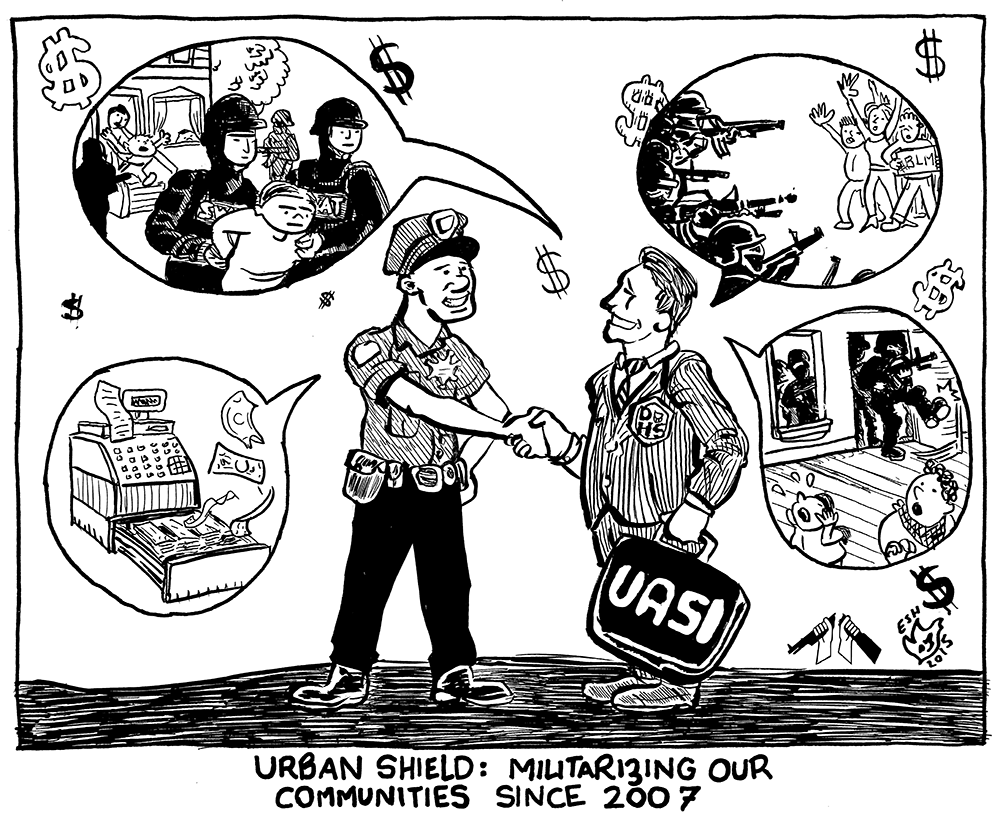
In the year 2020, Lockheed recieved over $75 billion in Pentagon contracts, a figure that was somehow more than the entire budget of the State Department and USAID combined (Hartung & Semler 2025). In spite of critiques for the F-35 fighter jet being overpriced and underperforming, Lockheed continues recieving massive funding with little to no governmental oversight, mirroring the Tyrell Corporation's prioritization of technological dominance over all ethical obligations.
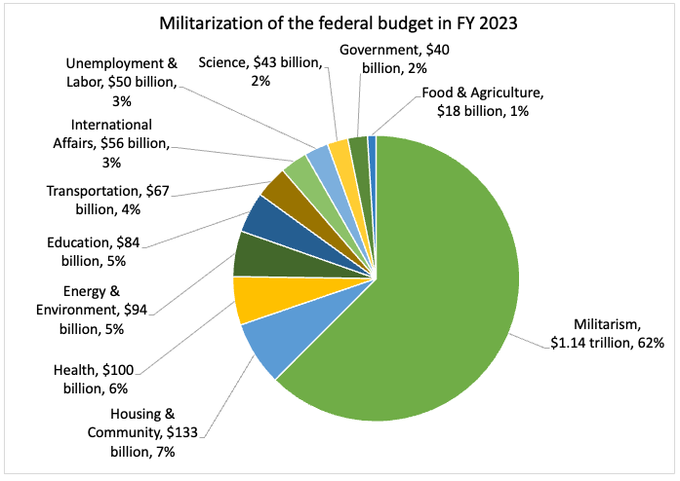
The military-industrial complex thrives on constant conflict, which directly impacts the quality of life worldwide and the national budget. In 2023, the budget for the military reached $1.14 trillion dollars; for contrast, the budget for public health that same year was $100 billion. The budget for education, just to further the point, was $84 billion.
The Department of Homeland Security recieved more than seven times the funding for the Centers for Disease control over the past seven years. The Congressional Budget Office found that the U.S. military could save $100 billion without changing the country's national security strategy, and a Department of Defense study found $125 billion in unnecessary back-office expenses could easily be trimmed. Instead, recent years have found an increase in military budget, cutting even more funding from healthcare, education, public transportation, energy, and housing (National Priorities Project 2023).
Glancing Over Policies
The military industrial complex does not merely include manufacturing weapons. It shapes foreign policy, surveillance practices, and domestic policing. Defense contractors lobby Congress, fund think tanks, and advocate for contracts that continue their powerful hold on global politics, much like cyberpunk's themes of surveillance capitalism.
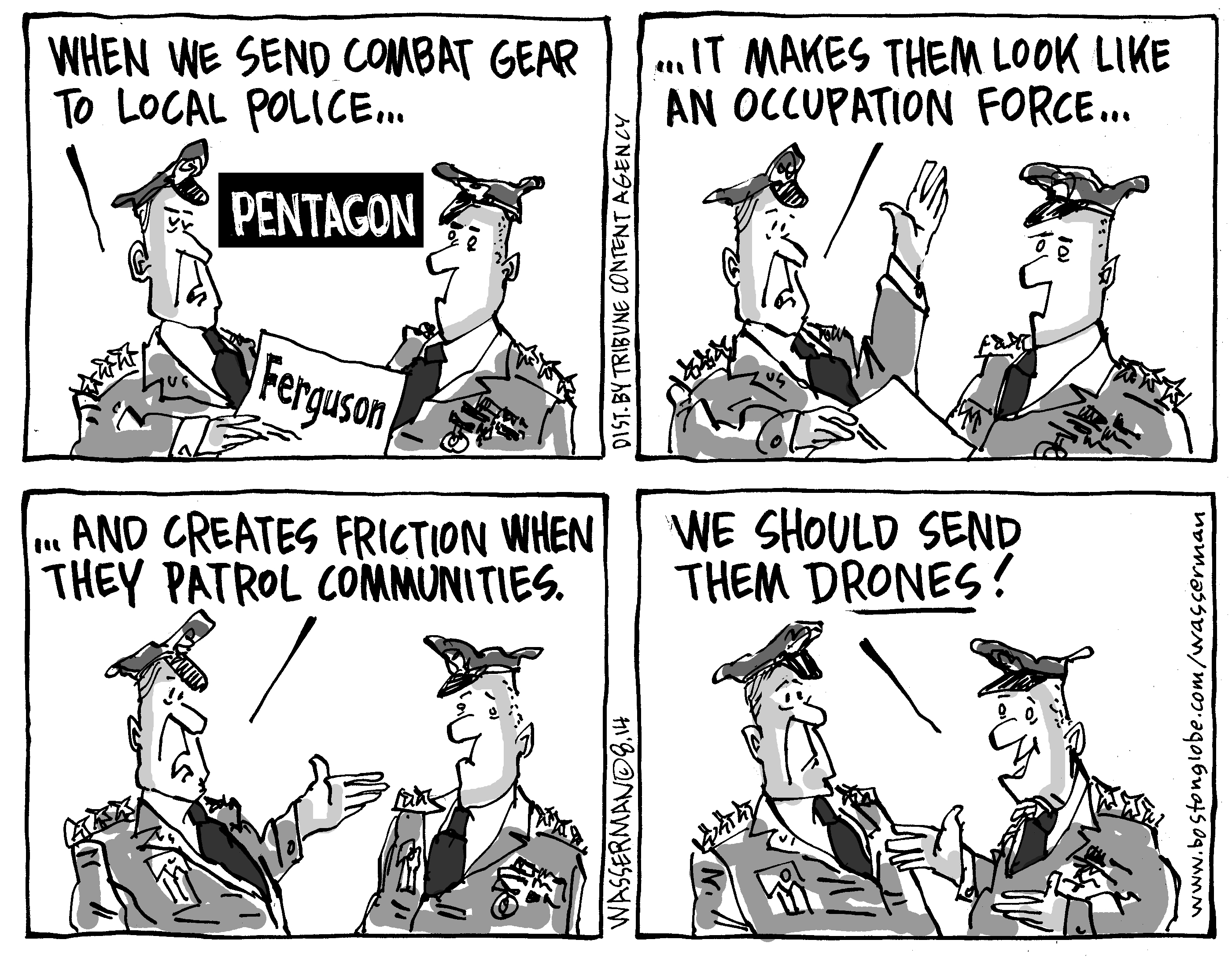
Globally, the military destabilizes various countries by promoting military solutions over diplomatic ones. There are a plethora of examples: currently, America's seige on Iran stems from America's military support of an ongoing genocide, and the American support for Middle Eastern suffering stems from American interests in natural resources and political alliances.
America's bombing of a girl's school in Iran served no political interests, offered no economic benefit, and established no military strategy outside of maximizing harm and grief to leverage against American enemies, the vast majority of whom are merely civilians.

Glimpsing Our Future
The unchecked growth, lack of transparency, and prioritization of profit absolutely indicates that cyberpunk was right. Corporations influence foreign policy more than diplomats. Surveillance is privatized. War is automated; people have been expecting a so-called "World War III" for nearly a decade. Profit literally dictates what matters more, fear tactics or a school's worth of elementary lives.
Works Cited
Hartung W.D. & Semler S. (2025). Profits of War: Top Beneficiaries of Pentagon Spending, 2020 – 2024 (2020) Costs of War | Brown University. Available at: https://costsofwar.watson.brown.edu/paper/profits-war-top-beneficiaries-pentagon-spending-2020-2024.
National Priorities Project. (2023). The Warfare State: How Funding for Militarism Compromises Our Welfare. National Priorities Project. https://www.nationalpriorities.org/analysis/2023/warfare-state-how-funding-militarism-compromises-our-welfare/
Weber, R. N. (2019). Military-industrial complex. In Encyclopædia Britannica. https://www.britannica.com/topic/military-industrial-complex
AI attestation: No AI was used in the creation of this post. Genuinely none; I'm far too passionate about how horrifying America's military industrial complex is to rely on some computer telling me what I know. I know this was very late in being written, and I'm truly so sorry.