In classic cyberpunk stories like Blade Runner and Neuromancer, corporations don't just influence society-they run it. Governments fade into the background while companies decide who lives comfortably and who is left behind. What once felt like dystopian exaggeration is starting to look increasingly familiar. Today, real-world tech corporations are shaping democracy, labor, and even human identity in ways that echo these fictional worlds.
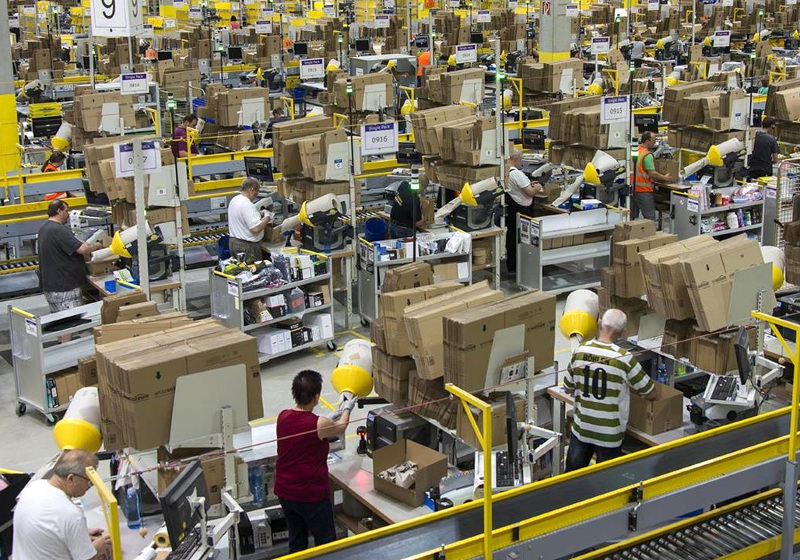
One of the clearest examples comes from Amazon and its treatment of gig and warehouse labor. Reports from sources like The New York Times and BBC have documented intense productivity tracking, algorithmic management, and harsh working conditions. Workers are monitored in real time, their movements optimized for efficiency, and their performance judged by systems they cannot question. This resembles the dehumanized labor structures seen in cyberpunk fiction, where individuals are reduced to data points in a corporate machine.
Similarly, Meta Platforms (formerly Facebook) demonstrates how corporations can influence democratic processes. Investigations into misinformation and targeted political advertising covered by outlets like Reuters and The Washington Post-show how platform algorithms can amplify certain voices while silencing others. In Neuromancer, the Tessier-Ashpool corporation manipulates global systems from behind the scenes; today, algorithmic control over information flows raises similar concerns about who really holds power in society.
Another powerful example is OpenAl and the broader Al industry. Al development is concentrated in a small number of private companies, giving them outsized influence over the future of work, creativity, and knowledge. As Al tools automate tasks once performed by humans, the relationship between labor and value becomes increasingly unclear. This directly connects to cyberpunk themes, where technology often displaces human agency while enriching corporate elites.
These developments raise an important question: are we actually heading toward a cyberpunk future, or is this just a hyperbolic critique? The answer is somewhere in between. While corporations today wield immense power, they are not entirely unchecked. Governments still regulate industries, public backlash can force change, and investigative journalism continues to expose harmful practices. For example, antitrust cases in the United States and the European Union show that legal systems can still challenge corporate dominance.
However, the conditions that enable cyberpunk-like worlds are undeniably present. Globalization allows corporations to operate across borders, often avoiding regulation. Digital platforms scale rapidly, creating monopolies or near-monopolies. Most importantly, users willingly participate in these systems-trading data, labor, and attention for convenience. This dynamic reflects what scholars call "surveillance capitalism, where human experience itself becomes a resource to be extracted and monetized.
It's also worth noting that this is not just an American issue. In Europe, stricter data privacy laws like the GDPR show a different cultural approach to corporate power. Meanwhile, countries like China have their own complex relationships between corporations and the state, where government control and corporate influence are deeply intertwined. These variations suggest that while cyberpunk themes are global, their expression depends on cultural and political contexts.
Ultimately, cyberpunk is less a prediction and more a warning. The genre exaggerates trends already present in society to make them visible and urgent. Corporate power becomes dangerous not simply because it exists, but because it goes unquestioned. This is where critique-through journalism, activism, and even classroom discussions-plays a crucial role. By analyzing these systems, we create the possibility of resisting them.
We may not yet live in a world dominated entirely by corporations, but the parallels are too strong to ignore. The question is no longer whether cyberpunk is realistic-it's how much of it we are willing to accept.
References (APA 7th Edition)
Bucher, T. (2018). If..then: Algorithmic power and politics. Oxford University Press.
European Union. (2016). General Data Protection Regulation (GDPR). https://gdpr.eu/&
Kang, C., & Frenkel, S. (2021, October 25). Facebook papers show struggle to curb misinformation. The New York Times. https://www.nytimes.com/
Satariano, A. (2020, February 17). Europe's new rules for big tech. The New York Times.
https://www.nytimes.com/
Stone, B. (2021). Amazon unbound: Jeff Bezos and the invention of a global empire. Simon & Schuster.
Tufekci, Z. (2015). Algorithmic harms beyond Facebook and Google. Colorado Technology Law Journal, 13(2), 203-218.
Zuboff, S. (2019). The age of surveillance capitalism. PublicAffairs.