Are Those Glasses Real or Fake?

- Posted in BP05 by

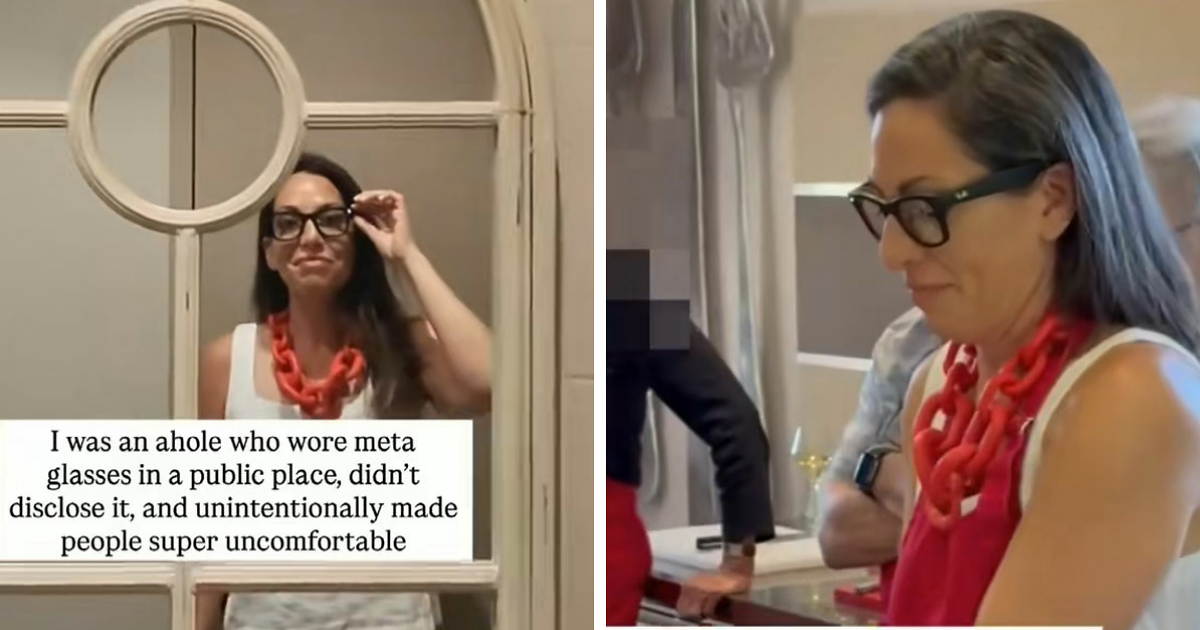
enter image description hereDo you feel as though you can be anonymous? If you wanted to scrub yourself from the internet forever, could you? The simplest answer is no. (Maybe if you’re in witness protection, but that is the government changing your life, and not you). There is always a chance that your data can be hacked, stolen, or your face put on the internet. For a specific example, I will address the Rayban Meta Glasses. Meta itself has been no shy stranger for its encroachment on user data. Mark Zuckerberg, the founder of Meta, testified in a trial questioning Meta’s data concerns in 2024 (Milman, 2024). There is simply no denying that if you own any Meta device or service, that there is a significant chance that there is excessive data collected on you. That includes: Facebook, Instagram, Rayban Meta Glasses, WhatsApp, and Threads, for short. Meta was accused of sending the data of over a million Facebook users to servers in the United States (Milman, 2024). Data and privacy is something that is an essential human right. There should be an option for such to be compromised. Your data should never be compromised without your knowledge and used in something unknown. Although this should be a standard, it is not, and remains a prominent issue. This issue has also been set physically. Specifically looking at Meta glasses, the company that has already breached users’ privacy countless times, has created a product that can further breach people's privacy. Upon initial release, many people were unaware of the use of Meta glasses, considering they look like regular glasses or shades. A person can record someone’s face and actions without anyone but them being aware. So not only is there a big company that is able to breach your data, they made a product allowing anybody that owns it to encroach on your privacy without your knowledge. This is not solely a western issue. The lawsuit against Meta in 2024 was called by the European Consumer Organization (ECO). Meta owns two social media platforms, that is not going to solely be a western issue. This is going to be a problem essentially anywhere the servers work. Products such as Meta Glasses are typically going to be a western issue, however. Situations such as the trial concerning Meta allows for checks to be made, however, the data was still breached. It is more so a warning of the public than a complete halting of the process. This is an issue many platforms face, and not each one will be brought to trial. Since it is more of a global issue, it does seem to have more checks. Again in this instance, Meta is being questioned by a European company. This is very similar to Ghost in a Shell which has everyone connected to a neurointerface controlled and surveilled by the government. There is no such thing as private in Ghost in a Shell, and with the actions of many current companies, there is little privacy left.

References Milman, O. (2024, February 29). Meta faces complaints in Europe over 'massive' and 'illegal' data processing. CNN. cnn.com

I attest that no AI was used

Surviving the Man-Machine Civil War

- Posted in BP03 by

Spider-Man 2 (2004) is widely considered the best Spider-Man movie of all time. Peter Parker is grappling with his identity as Spider-Man encroaching on his non-superhero persona. Peter finds himself battling his Spider-Man persona and momentarily loses his powers, and gives up his role as New York City’s protector. For so long, Spider-Man was the highest priority and not Peter Parker, which cost him greatly in every aspect. Only until an equilibrium was found to allow the dynamic between either persona to be fluid rather than a rigid belief of putting Spider-Man first, did Peter’s powers come back. He was then capable of to be one being containing two different foundations. This is exactly what Donna Haraway’s Cyborg theory embodies. Haraway’s theory accentuates that established conflicting roles are not purely one against the other, but rather a complex, fluid, and dynamic symbiosis (Philosopheasy, 2025). Peter Parker and Spider-Man co-exist in the same being, and when there was no established mutualism, there was conflict between the roles of man and hero. Similarly, High School Musical explores the issue. Troy Bolton is pulled between his role as a star athlete and as a main cast member in musical theater. His dynamics between each of his roles were unstable, and a purist agenda was pushed to be one or the other. This mindset was very closed off and conservative, and it limited Troy to one realm rather than a transgressive identity that opened a realm of intersectionality. With a newly established identity, exploration is inevitable. Back to Spider-Man 2 (2004), a physical manifestation of the exploration would be with the main antagonist, Doctor Otto Octavius, better known as “Doc Ock.” Doctor Octavius spent his life’s work on a project similar to Neuralink. His invention would allow someone, with the help of an implanted chip, to control prosthetic arms with their mind through AI. This is a perfect example of the beneficial aspect of topics often rooted in the negative atmosphere of the cyberpunk genre. Doctor Octavius is a brilliant and extraordinary researcher who was intentional with his work and its benefits. It is not until an incident causes the implanted AI chip to override and erode his mind that Doc Ock prevails. While Peter Parker (a.k.a. “Spider-Man”) is dealing with a man vs. role conflict, Doctor Octavius is dealing with a man vs. machine conflict. The invention itself would have been monumental, but due to the corruption caused by AI, it was turned into a weapon to be used with ill intention. Focusing on the invention itself, it would have opened doors for those incapable of moving their own body. The invention could have been used for accessibility for the disabled, allowing them to possess the ability to provide for themselves in ways prevented by their body alone. It could have been used as tools for blue-collar workers dealing with heavy loads, and minimizing the risk of accidental injuries or developing chronic pain caused by a physically demanding work environment. The intersectionality of man and the machine, often a warning in the cyberpunk genre, is not always negative. Boundaries need to be pushed to begin to open the minds of humans and explore the possibilities for advancement. Janelle Monae’s The ArchAndroid similarly expands on the need to explore to push possibilities into inclusivity. Monae explores an Afrofuturistic society as the character Cindi Mayweather, who is a cyborg in the literal sense. Throughout the album, the character is constantly trying to break the social barrier, the “Great Divide,” separating humans and machines. Cindi is trying to show society that when you cross these boundaries, there are unlimited and boundless opportunities for self-exploration and a new sense of unconfined freedom. Peter Parker lost his powers when his personas were clashing due to a confining mentality that solely focused on one aspect of his identity until he gave each their respect. This newfound sense of self can create a new identity and intersectionality that was not recognized previously. Doctor Octavius’s invention, for instance, dared to blur the lines of man and machine and could be used to allow accessibility to those who were not able to interact with the world that way. The social and technological future depends on pushing boundaries and exploring new possibilities and mindsets in order to allow for diversity, intersectionality, and identities that are not linear and binary.

References Monáe, J. (2010). The ArchAndroid [Album]. Bad Boy; Wondaland Arts Society Philosopheasy. (2025, January 14). Donna Haraway’s Cyborg Theory and reimagining identity. Substack. https://www.philosopheasy.com/p/donna-haraways-cyborg-theory-and Raimi, S. (Director). (2004). Spider-Man 2 [Film]. Columbia Pictures; Marvel Enterprises Turner-Williams, J. (2025, May 18). Janelle Monáe's 'The ArchAndroid' invited us to free our minds. AFROPUNK. afropunk.com

I attest that no AI was used

More Human Than Human

- Posted in BP05 by

Introduction Elon Musk’s xAI operation influences AI development control by constructing unprecedented computing infrastructure, bypassing regulatory oversight, and accelerating the pace of AI advancement beyond what public institutions can meaningfully regulate. Reporting shows that xAI is operating dozens of methane‑powered turbines, many without proper permits. While building Colossus, a supercomputer projected to be the largest in the world. This gives Musk enormous control over how quickly AI evolves and who can participate in the AI race.

Cyberpunk Comparison This dynamic mirrors the corporate dominance seen in Blade Runner. In the film, the Tyrell Corporation controls replicant production, a technology so advanced and essential that the government cannot regulate it effectively. Tyrell’s motto, “More human than human,” reflects a corporation whose technological ambition outpaces ethical oversight—much like what we see with Musk’s rapid expansion of compute capacity. xAI’s operation of unpermitted methane turbines, its overwhelming influence on local political structures, and its externalization of environmental harm all reinforce this comparison. Like Tyrell, xAI advances its technology at a pace that makes traditional regulation feel slow and outdated. Whoever controls the infrastructure controls the future; this is a form of de facto control.The parallels to Machinehood are equally striking. The pill funders in the novel drive technological acceleration at any cost, hiding the human and environmental consequences behind the promise of innovation. Their power comes not only from wealth but from their ability to dictate the terms of technological progress. The Memphis situation reflects this same logic: a predominantly Black neighborhood becomes a “sacrifice zone” so that xAI can power its AI models. Just as the pill funders obscure the true costs of their technology, xAI frames its project as cutting‑edge innovation while concealing the pollution, health risks, and regulatory violations that make that innovation possible.

Both fictional worlds show corporations gaining control over technological development by centralizing resources, evading oversight, and externalizing harm. xAI’s actions reflect the same logic. By consuming enough electricity to power 100,000 homes, the company consolidates AI development into the hands of a single billionaire. By operating turbines without proper permits, it demonstrates that AI progress can be pursued outside traditional regulatory frameworks. By placing the environmental burden on marginalized communities, it reinforces a cyberpunk pattern in which technological advancement is purchased at the expense of those with the least power. xAI influences AI development control in ways that closely resemble the megacorporations of Blade Runner and Machinehood—through scale, secrecy, political influence, and a willingness to treat human lives as collateral in the pursuit of technological dominance.All the evidence from Memphis suggests that the United States is already experiencing early forms of the corporate dominance depicted in cyberpunk fiction. When private corporations can run industrial‑scale infrastructure in residential neighborhoods—producing more nitrogen oxides than the city’s chemical plants, refineries, airport, and power station combined—they demonstrate a level of autonomy that resembles the megacorporations in these works. Cyberpunk’s warnings are not exaggerated fantasies but emerging realities. What is happening in Memphis shows how quickly technological ambition can outpace democratic oversight and how easily vulnerable communities can be sidelined in the process.

Sources Brabenec, R., et al. (2025, July 7). A billionaire, an AI supercomputer, toxic emissions and a Memphis community that did nothing wrong. Tennessee Lookout. https://tennesseelookout.com/2025/07/07/a-billionaire-an-ai-supercomputer-toxic-emissions-and-a-memphis-community-that-did-nothing-wrong/

AI Attestment AI was used to review the grammar and structure of this essay as well as provide an APA style citation for the source.

When Corporations Start Writing Democracy: Is Microsoft the New Tyrell?

- Posted in BP05 by

In classic cyberpunk works like Blade Runner, corporations like the Tyrell Corporation hold more power than governments, shaping not only economies but human identity itself. While this once seemed like dystopian fiction, the growing influence of modern tech companies, especially Microsoft, raises an unsettling question: are we already living in the early stages of a cyberpunk reality?

Microsoft is no longer just a software company; it is a global infrastructure provider. Through its Azure cloud platform, the company supplies digital services to governments, militaries, and public institutions worldwide. According to reporting from outlets like The New York Times and MIT Technology Review, cloud providers like Microsoft play a critical role in election security, data storage, and even cybersecurity for democratic systems. While this may seem beneficial, it also means that a private corporation is deeply embedded in the functioning of democracy itself.

This reflects a key cyberpunk theme: the outsourcing of public power to private entities. In Neuromancer, corporations operate beyond regulation, controlling information flows and shaping global systems. Similarly, Microsoft’s influence over cloud infrastructure gives it a form of “soft power” that governments increasingly rely on. If a corporation controls the systems that store voter data, secure elections, or manage public communication platforms, the line between public governance and corporate control begins to blur.

Another major concern is artificial intelligence. Microsoft’s partnership with OpenAI and its integration of AI into products like Copilot further expands its influence over how information is generated, distributed, and consumed. AI systems shape what people see, how they understand political issues, and even how they engage with democratic processes. This introduces the idea of algorithmic influence, where decisions that affect millions are guided not by elected officials, but by corporate-designed systems.

However, it is important not to overstate the case. Unlike in cyberpunk fiction, corporations like Microsoft still operate within legal frameworks and are subject to government regulation. Laws regarding data privacy, antitrust enforcement, and AI governance act as checks on corporate power. Additionally, democratic societies still retain the ability to challenge corporations through public pressure, legislation, and activism.

At the same time, this is not just an American issue. Globally, countries interact with tech corporations differently. In the European Union, stricter regulations like the GDPR aim to limit corporate data control. In contrast, other regions may rely more heavily on corporate infrastructure due to limited state resources. This variation highlights how corporate power is shaped by political and cultural contexts, not just technological capability.

So, are we heading toward cyberpunk’s corporate dominance? The answer is complicated. Cyberpunk may exaggerate reality, but it also serves as a warning. The increasing reliance on companies like Microsoft suggests that we are moving toward a world where corporations play a central role in shaping democratic systems. However, the future is not fixed. The presence of regulatory frameworks, public accountability, and global diversity in governance means that this trajectory is still being negotiated.

Ultimately, cyberpunk is less a prediction and more a critique. It forces us to question who holds power and how that power is used. As technology continues to evolve, maintaining a balance between innovation and democratic control will be essential. Otherwise, the line between fiction and reality may become thinner than we expect.

Who Owns Our Food?

- Posted in BP05 by

Who Owns Our Food?

When we talk about corporate power, most people think about tech companies or social media, not agriculture. But one of the most important forms of control today is also food, through seeds. Some corporations have a big influence over what farmers can grow and how food is produced, mainly through patents on genetically modified seeds. This kind of control over the foundation of the food system can raise questions that feel very close to cyberpunk worlds, where corporations sell and plant products and also decide who gets to profit from it.

Real-World Example

Monsanto, which is currently owned by Bayer, is one of the most well-known examples of this. The company became controversial for developing genetically modified seeds that are patented, which means that farmers cannot legally save and reuse seeds from their own crops (Howard, 2009). Because of that, they often have to buy new seeds every season, which makes them less independent. This control over food production starts to feel similar to the corporations we see in cyberpunk worlds. Powerful companies sell products but above all also control entire systems. Looking at corporations in Blade Runner and Neuromancer, companies such as the Tyrell Corporation or Tessier-Ashpool also control and determine life, whether through artificial humans or genetic engineering. Patented seeds can be seen as a real-world version of this, since biological life is turned into something that can be owned and controlled. Just like replicants in Blade Runner, it makes me wonder to what extent we can morally accept these changes, because the issue is not only about humans, but also about something as essential as food.

Are we becoming cyberpunk?

However, I do not think we are fully living in a cyberpunk world yet, but we are definitely moving in that direction. According to Clapp (2014), large multinational corporations have a serious influence over markets, regulatory policies, and essential systems like food production. We cannot forget though, that governments and public criticism still provide some limits. These limits might not always be strong enough.

This issue is also not experienced the same way everywhere. In the United States, genetically modified crops and seed patents are more widely accepted and used. In contrast, countries in the European Union, for example, tend to have stricter rules on genetically modified organisms. It is often seen as more skeptical toward corporate control over food systems, which leads to stronger restrictions. This shows that the system can depend on political decisions, cultural attitudes, and regulation. At the same time, global companies like Bayer still operate widely, which makes it difficult for any single country to fully control their influence.

Conclusion

What makes this issue dangerous is how it becomes normal while we are not noticing it. The control over seeds does not look as dramatic as the worlds of cyberpunk, but it raises similar questions about power, ownership, and dependence. If food can become part of a system determined by profit and control, then the line between fiction and reality is not really as clear as it seems. So the main problem is how much control we are willing to accept before we start to notice it.

References

Clapp, J. (2021). The problem with growing concentration and power in the global food system. Nature Food, 2–2, 404–408. https://uwaterloo.ca/scholar/sites/ca.scholar/files/jclapp/files/corporate_power_in_the_food_system_for_archive.pdf

Howard, P. (2009). Visualizing Consolidation in the Global Seed Industry: 1996–2008. Sustainability, 1(4), 1266–1287. https://doi.org/10.3390/su1041266

AI was used at the beginning to help gather ideas of what examples to use.

Highway to Cyberpunk

- Posted in BP05 by

Thank You, Next

When watching cyberpunk movies or reading cyberpunk stories, one thing is always very similar. Technology has advanced that jobs change, new jobs get created, and others get taken. In the 1982 movie Blade Runner, we see the manufacturing of replicants, artificial humans who are just created for labor from a company called Tyrell. They are used for jobs that are considered dangerous, exhausting or morally questionable so in other words, those that no one else wants to do. But since these replicants aren’t actually human, they get treated like products, no matter if they feel like a human. They serve, obey and then die when they are no longer useful, with a build in expiration date and no rights. But this is all only fiction right?

Human Replacements at Amazon

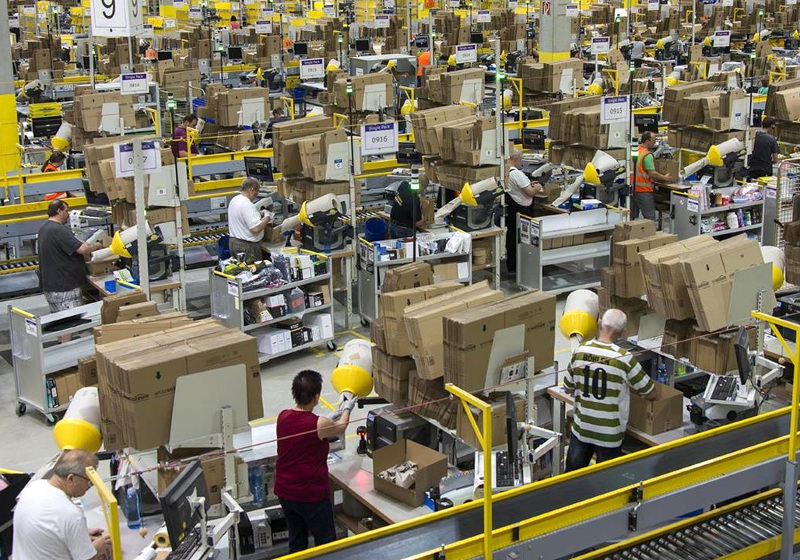
In the last couple of years more and more information has come out about the working conditions that Amazon warehouse workers have to work under. Automated systems track worker productivity, expecting them to pack more than one hundred boxes an hour. If these expectations aren’t met it can lead to warnings or a direct termination without a human supervisor reviewing the situation. This has lead to roughly 300 people being fired in the proximity of one year. enter image description here

In addition to this an open letter has ben signed by 1000 Amazon employees that have warned about unethical use of AI. It is being used for mass layoffs and is planned to lay off 14,000 employees to do its initiatives. But the ironic thing is, the workers themselves are even saying AI is not ready to do so and even acts sloppy and inconsistent in its duties making work harder for those workers who are still human. This is why they are signing the letter to demand ethical AI working groups that help when and how to use AI efficiently.

Amazon in Neon Lights

Just like Tyrell Amazon has a tendency to see its employees as products and not human beings seen through the way that they just fire people as they please, regarding inhuman efficiency and expectations. The workers are being monitored, controlled, and “eliminated” when not useful anymore, just like in Blade Runner with the only difference that they get fired and not actually eliminated. It is algorithms that deviate on who works and who gets fired and the corporation gains power over human lives in a way that governments didn’t intend them to and that is exactly the kind of dehumanising corporate control that cyberpunk warns about and shows through Tyrell. The expectations of packing hundreds of boxes per hour and being terminated when failed also shows this blur between human and machine that Amazon does the same way as Tyrell does. Humans must perform at machine speed and their value is measured on output only, making their bodies pushed to the breaking point. Tyrell creates replicants for labour only which is why they definitly only measure them in output and push their body to the breaking point to use them as much as they can before they have to get another one. The replicants are expected to do inhuman tasks just like the Amazon workers and are discarded when they fail, also just like the Amazon workers. Corporations demand machine like performance from humans showing how society shifts to a cyberpunk model where labour is dehumanised and expendable. When it comes to the use of AI we see how it is slowly replacing humans in labour as well to increase profit, truant accountability, and centralise power. Amazon employers are thus fearing that AI is becoming a corporate weapons and not just a tool for human benefit. With the Tyrell corporation we can similarities in their way of using genetic engineering to create a labor force that it controls. Both show a world where technology amplifies corporate dominance.

Futuristic or Realistic?

Amazon is just one such corporation that shows us that we are moving toward a cyberpunk world because corporation like Amazon increasingly use automation and AI to control workers, replace human judgements, and consolidate power. These practices mirror fictional corporations like Tyrell from Blae Runner in their dehumanisation of labour and willingness to let technology override ethics.

Work Cited AITechTrend. (2025, November 27). AITechTrend. https://aitechtrend.com/amazon-workers-warn-of-ai-rollouts-ethical-risks/Jee, C. (2019, April 26).

Amazon’s system for tracking its warehouse workers can automatically fire them. MIT Technology Review. https://www.technologyreview.com/2019/04/26/1021/amazons-system-for-tracking-its-warehouse-workers-can-automatically-fire-them/

Bird's Eye View

- Posted in BP04 by

Apex Vision

To have the thought that a human can remove an eye and replace it with a robotic eye to give a vision beyond what a human can see seems rather close to happening. However, the chances of that in a safe and a reversible procedure seems very difficult. But if I did have to choose, I would go for an eagle. The only portion I suggest to have and it isn't what most would want such as its wings, I on the other side want its cognitive peak focus. While an eagle is known to have immaculate eyesight and have beyond 20/20 shaper vision. For one to have the eye sight of an eagle means to have such sharper detail and a different perception of the world.

enter image description here

The Bald Eagle

In a sense not only is an eagle known for its physical traits hence the reason why it is the National bird of The United States of America, "The bald eagle represents freedom, strength, courage, and independence." I have a heightened experience and to see the world in a different perception to me seems like a way to cancel out all the noise and just focus on what matters to a bird. But to not be picky, I truly would want just the bird's eye vision to escape the thoughts of remembering

enter image description here

The question remains, how much humanity would I be willing to give up is more complex. While prosthetics or a medical implant would be the route to take if ever considered, technology has become so advanced that to differentiate between what is real and what is artificial seems hard to decipher. But to think more realistically, if we do have the technology to make these alterations and maybe not take the eye out of an eagle, but to fabricate one to have the same feeling can be a route to take. However, it is then a person should be aware that they are human and not consumed by artificial intelligence.

In comparison to my beliefs and values, self-awareness is deeply rooted in me. To be able to make human connections and use what was gifted to me naturally, I am also thankful for. But many can wish to have the abilities like an eagle to fly or even see so clearly. But the power to see farther than one should does not mean they should lose the ability to feel disconnected with the human race.

The scary part to even take part of this is that it may be even possible for the wealthy to do. However, those in low income communities would be left out when in a world of advancement that could possibly take part in a competitive job seeking. Over time, this could create a biological divide between those you can find the funds to take this operation against those can not. While an eagle-like enhancement would simply be a step forward to technology advancement, I would consider myself a human with a clear train of thought and being ok with having less than a 20/20 vision....then again that's what contact lenses are for.

Reference:

AI was used to create images

https://chatgpt.com/share/69accdd3-7b70-8003-a3aa-3ff05e664658

The American bald eagle the Bald Eagle has been the National Bird. (n.d.-e). https://www.va.gov/opa/publications/celebrate/eagle.pdf

Visual learning: An interview with James Dicarlo | AI in Neuroscience. (n.d.-g). https://www.liebertpub.com/doi/full/10.1089/ains.2024.0002

Year of the Horse

- Posted in BP04 by

Imagining the Posthuman

Cyberpunk stories often explore the moment when the boundaries between human and nonhuman begin to disappear. Donna Haraway’s idea of the cyborg challenges the belief that humans exist separately from technology, animals, and machines. Instead, she argues that modern society already blurs those lines in many ways (Haraway, 1985). Stories like Blade Runner and Ghost in the Shell continue this conversation by asking difficult questions about identity, consciousness, and what it actually means to be human.

Thinking about these ideas leads to an interesting thought experiment. If safe and reversible technology existed that allowed humans to hybridize with animals, how far should we go? What would we gain, and what might we lose? While this idea may sound like science fiction, it forces us to reflect on the deeper question cyberpunk constantly asks: what defines humanity when the boundaries of the body can be changed?

Why I Would Choose a Horse

If I could hybridize with an animal, I would choose a horse, similar to the centaurs in Greek mythology. Horses represent speed, strength, and freedom. They are also some of the most noble animals in the natural world. Horses are known for their loyalty and their connection with humans, and I think that loyalty is a trait that could benefit humanity beyond just physical improvements.

Hybridizing with a horse would not only provide practical advantages like speed and stamina, but it would also symbolize something deeper. Horses represent independence and movement, the ability to travel long distances and explore the world freely. That sense of freedom is something that many people today feel they lack in modern society.

At the same time, this choice feels more grounded than some other possibilities. Becoming something like an octopus might be fascinating, but it would also drastically change how a person exists and interacts with the world. A human-horse hybrid feels like a balance between transformation and familiarity.

How Much Should We Change?

If I had the choice, I would only transform half of my body, specifically my legs and the lower part of my torso, similar to a centaur. This would provide the physical advantages of a horse such as greater speed, endurance, and strength, without completely removing the human aspects of identity.

This balance is important. Enhancement technologies should improve human abilities without completely erasing what makes us human in the first place. A transformation that changes too much might lead to a loss of connection with our own humanity.

Cyberpunk stories often explore this exact tension. In Ghost in the Shell, characters struggle with the idea that their bodies can be replaced with cybernetic parts while their consciousness remains the same. At what point does someone stop being human? That question becomes even more complicated when physical changes alter how we experience the world.

What Defines Humanity? For me, humanity is not just about physical biology. Humanity is defined by the ability to think beyond immediate situations and consider the well-being of others. It means being able to act selflessly and make decisions that benefit both our communities and the global population.

To be human means showing compassion, protecting others, expressing humility, and recognizing that our actions affect more than just ourselves. Humanity is the ability to care, to protect, and to cooperate with others in order to create a better world.

Even if technology changes our bodies, these qualities should remain at the center of what defines us.

The Problem of Access and Inequality

One of the biggest issues with enhancement technology is access. In many cyberpunk stories, new technologies are controlled by powerful corporations or governments, which creates massive inequalities between those who can afford enhancements and those who cannot.

In my view, if this kind of hybridization technology existed, access should be equal for everyone who wants it. The improvements should be standardized so that no one gains unfair advantages over others. Without equal access, society could easily divide into enhanced and non-enhanced populations, which would create new forms of inequality.

Philosopher Nick Bostrom has warned that human enhancement technologies could eventually create social divisions between enhanced and non-enhanced individuals (Bostrom, 2005). Cyberpunk stories often show how dangerous that divide can become.

New Forms of Discrimination

Even if the technology were accessible to everyone, it could still create new social tensions. Some people might choose to hybridize while others might prefer to remain completely human. This difference alone could lead to discrimination or cultural divisions.

There are also practical questions to consider. For example, if the transformation were reversible, some people might want to switch back and forth between forms depending on their lifestyle or needs. Others might feel strongly that changing the human body at all crosses an ethical line.

Because of these possibilities, hybridization technology would not just change individuals, it would reshape society itself.

Conclusion

The possibility of human–animal hybridization raises deep questions about identity, ethics, and equality. While the idea of becoming a horse-human hybrid could provide physical advantages like speed and stamina, it also forces us to think about what parts of humanity we want to preserve.

Cyberpunk stories remind us that technological progress always comes with consequences. The real challenge is not just what technology can do, but how humanity chooses to use it. No matter how advanced enhancement technologies become, the qualities that define humanity like compassion, cooperation, and responsibility should remain at the center of our decisions.

AI Attestation: I attest I did not use AI to generate this post

References: Haraway, D. (1991). 1 Donna Haraway, "A cyborg manifesto: Science, technology, and socialist-. https://www.sfu.ca/~decaste/OISE/page2/files/HarawayCyborg.pdf

Bostrom, N. (2005). A history of transhumanist thought. Journal of Evolution and Technology. https://nickbostrom.com/papers/a-history-of-transhumanist-thought/
Designing an Eagle–Human Hybrid Body

- Posted in BP04 by

Why I’d Hybridize with an Eagle

If a safe and reversible technology existed that allowed humans to take on animal traits, I would choose to hybridize with an eagle. I would say eagles represent freedom, independence and especially sharp vision, qualities I often wish I had in my everyday life. I would not want a full transformation, but I would choose meaningful physical and cognitive adaptations without losing my sense of self.

The first trait I would want is enhanced vision, so I could see long distances and notice details much more clearly. This ability would give me a new way of experiencing the world, almost like gaining a second layer of awareness. I would also choose lightweight wings or gliding structures that allow controlled flight or long jumps. I do not need full bird anatomy, but the ability to move through space in a new way feels very exciting. I would also accept some behavioral traits, like sharper focus and stronger situational awareness. Eagles are known for their calm but alert presence, and I think this could help me manage stress. These changes feel like enhancements rather than replacements of who I am. At the same time, I would not want to lose basic human traits like speaking, writing, or making emotional connections with others. I do not want to give up my face, my voice, or my ability to relate to people as a human. For me, “humanity” means having emotions, self‑awareness, memory, moral responsibility and consciousness. So I would accept physical adaptations, but I would want my personality, memories, and sense of self to stay mostly the same.

Blurring the Boundaries Between Human and Animal

Thinking about human–animal hybrids also connects to Haraway, who argues that modern technology breaks down the traditional boundaries between human, animal, and machine. The cyborg represents a world where these categories are no longer clearly separated. A human with eagle traits would be another example of this blurred boundary. This also connects to Blade Runner, where replicants look human but are treated differently because they were artificially created and meant to be “retired.” The film asks whether humanity is defined by biology or by experience and emotion. If someone had enhanced eagle vision or the ability to glide through the air, they might look different, but they could still think, feel, and make decisions like any other human.

Who Gets to Be Enhanced?

Another important issue is who would actually have access to this type of technology. In reality, many advanced technologies first become available only to wealthy individuals or powerful organizations. Philosopher Nick Bostrom has argued that human enhancement technologies could create new forms of inequality if only certain groups are able to use them. If only some people could enhance their physical abilities or senses, they might gain advantages in education, jobs, or even security. This raises ethical questions about fairness and access. Would governments regulate these technologies? Would they be available to everyone, or only to those who could afford them?

Conclusion

Thinking about hybridization and becoming part eagle makes me reflect on what truly defines a person. I believe humanity is more about memory, emotion and consciousness and if those remain intact, even major physical changes would not erase the self. But as i mentioned, the real danger is not transformation itself but mainly who controls it and who gets access to it. Enhancement technologies could expand human potential, but they could also deepen inequality if we are not careful enough.

AI was not used for any part of this assignment.

Sources

Bostrom, N. (2005). IN DEFENSE OF POSTHUMAN DIGNITY. Bioethics, 19(3), 202–214. https://doi.org/10.1111/j.1467-8519.2005.00437.x

Hybrid? I Hardly Know Her!

- Posted in BP04 by

What of the Human?

The question of hybridization is an intriguing yet complicated one. Though I have, admittedly, had the question of what animal I would be if I were to be one, the real-life implications of transferring said traits to my human body give me pause. There are numerous reasons for this hesitation including the fact that many animals though cute in nature have morally questionable behaviors. Another part of the reason is that many animals are treated poorly in general by humans and if I have to be a hybrid with anything/anyone I would want to be treated the same if not better than if I was purely human. Nevertheless, for the purposes of this post, if I had to pick an animal to become it would be a cat.

What of the Cat?

Though I do not personally own a cat, I do have a fondness for them. Cats often have a bad reputation as being mean, untrustworthy, and bad omens (for Black cats especially). Because of these negative stereotypes, I would not want to have any of the negatively connotated traits that cats are associated with but rather would want their mental abilities. Cats are extremely intelligent and unlike domesticated dogs, can survive by themselves in the world. Their survival skills are admirable, especially in a world where most humans do not even share the same level of survival skill. These are not the only cognitive attributes that I would like to inherit however, I would also like to have the discernment of a cat. Cats are notoriously known for only being kind to people who have “good vibes” and are extremely picky about who they decide to cuddle up and show affection to. This expands further than a basic like or dislike for specific personalities as it has also been discovered that cats may have the ability to sense death. Though it has not been fully scientifically proven yet, some cases such as the case of Oscar the cat may suggest otherwise. Oscar the cat was able to predict fifty deaths correctly, an occurrence that many believe may be linked to cat’s incredible sense of smell (Szawarski, 2016; Ho, 2023). It is for these reasons that I think being a cat would be most beneficial for hybrid-buddying.

What of the Connection?

Though I will be an animal, I do not believe that being a cat will not ask me to limit any of my humanity. A lot of people do see cats as less-than-human because of their nonchalant and stoic nature, but I think that cats are able to feel and understand emotions differently because of their keen sense of smell and discernment. I do acknowledge, however that my choice in animal is tamer. Unfortunately, some people would use their access to these features for harm rather than good, picking animals that would allow them to harm others purposefully. Like most things, I can see this affecting Black and Brown communities the most as being able to do something like this is expensive. Because the wealthy would mainly have access to this technology, I can only assume that they would use it to make them wealthier, perpetuate more harm, and have benefits only for themselves.

No AI was used to make this post. All words, thoughts, and ideas are my own unless quoted as otherwise.

References Cats.com, & Ho, B. (2022, November 8). Can Cats Sense Death? Cats.com. https://cats.com/can-cats-sense-death Szawarski, P. (2016). Classic cases revisited: Oscar the cat and predicting death. Journal of the Intensive Care Society, 17(4), 341–345. https://doi.org/10.1177/1751143716646123

Page 1 of 4