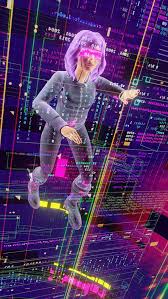
Cyberpunk’s Twin Cities

- Posted in BP02 by

In Cyberpunk works there are a few constants, one of them being the general underworld. More specifically though in the film Bladerunner and the novel Necromancer this underworld trope is executed almost identically through their portrayal of dystopian earth cities, two places that have way more story to tell than what meets the eye.

Whats Up With These Cities Anyway?

The cyberpunk city we speak of can essentially be detailed as the embodiment of inequality in their universes. Being the product of the notion of leaving earth, or atleast the normal plane of living we inhabit today, this leaves our cities as a sort of sunken place, where those not privileged enough were left behind to fend for themselves. Visually coming off as Gotham with a neon makeover, conditions in these cities are not pretty, as they are over crowded, gritty and almost always lawless.

Bladerunner’s Los Angeles

While it may not be obvious at first when watching, Bladerunner takes place in the city of Los Angeles in an almost gothic looking city, which we never see portrayed in the daylight. Perpetual rain, seas of people, cramped living arrangements do a great job at conveying the concept that this isn't the peak lifestyle, as those with the funding left for off planet colonies, which we can assume take the shape of more nature friendly civilizations inspired by suburbs. In spite of this we see who is probably the most powerful man in this film residing in LA, in a large highrise building donning the name of his corporation, which invites the curious point; one of the main reasons for LA’s dire conditions is Tyrell (the corporation). The excess of technological products and the insane amount of influence they have would eventually lead to the decay of life on earth after the affluent left. A king sitting in the rubble and mess of his own doing.

Neuromancer’s Chiba City

If one were to make a black market strip into a full city it would-be Chiba; located in Japan. While being very technically advanced the behavior in the city gives more uncivilized and anarchic. In other words technology does not equal Dignity, as the city is as grimy as it gets. Where blade runner shot off to other planets, Neuromancer sees the wealthy fly only into near orbit on space stations, so they can laugh and look at the hypercapitalistic Apocalypse they left behind from a safe view. While not being the only society seen in the novel its definitely the worst of the bunch, where the poor and criminals suffer in sin at the hands of once again megacorporations and their insurmountable control.

Ringing A Bell

To put it short it feels as if the Los Angeles we see in the film is a theatrical depiction of Chiba city in spite of them being several timezones apart. For starters, the main area we see in Bladerunner is Chinatown, which caused a lot of confusion for me upon finding out the movie didn't take place in Asia, and much of the black market upgrades detailed in the Chiba city lifestyle are shown in Bladerunner where we see several people creating biometric upgrades, like eyes, limbs or skin that looks like it belongs to snakes. In many ways these two cities are thematically one in the same, reinforcing the concept of a highly flawed society on earth plagued by inequality. Los Angeles is Chiba City, the icky underbelly of cyberpunk society, identified by the everyday life of its inhabits not being about moving up in society but surviving to the next day. The change of life being defined by long term experiences to short fragmented ones, much like the concept of the Schizophrenic Dimension.

No AI used, Only sources used we’re the film Bladerunner and the novel Neuromancer.

When Machines Become Human: The Blur Between Human and Artificial

- Posted in BP02 by

Humanity in a Synthetic World

Cyberpunk fiction is obsessed with one unsettling questionm, "what counts as human when technology can imitate, enhance, or even replace us?". Ridley Scott’s film Blade Runner (1982) and William Gibson’s novel Neuromancer (1984), two foundational works of the genre, approach this question from different angles but ultimately reinforce the same concern. When examined together, they reveal cyberpunk’s deep anxiety about identity, consciousness, and the fragile boundary between organic life and artificial intelligence.

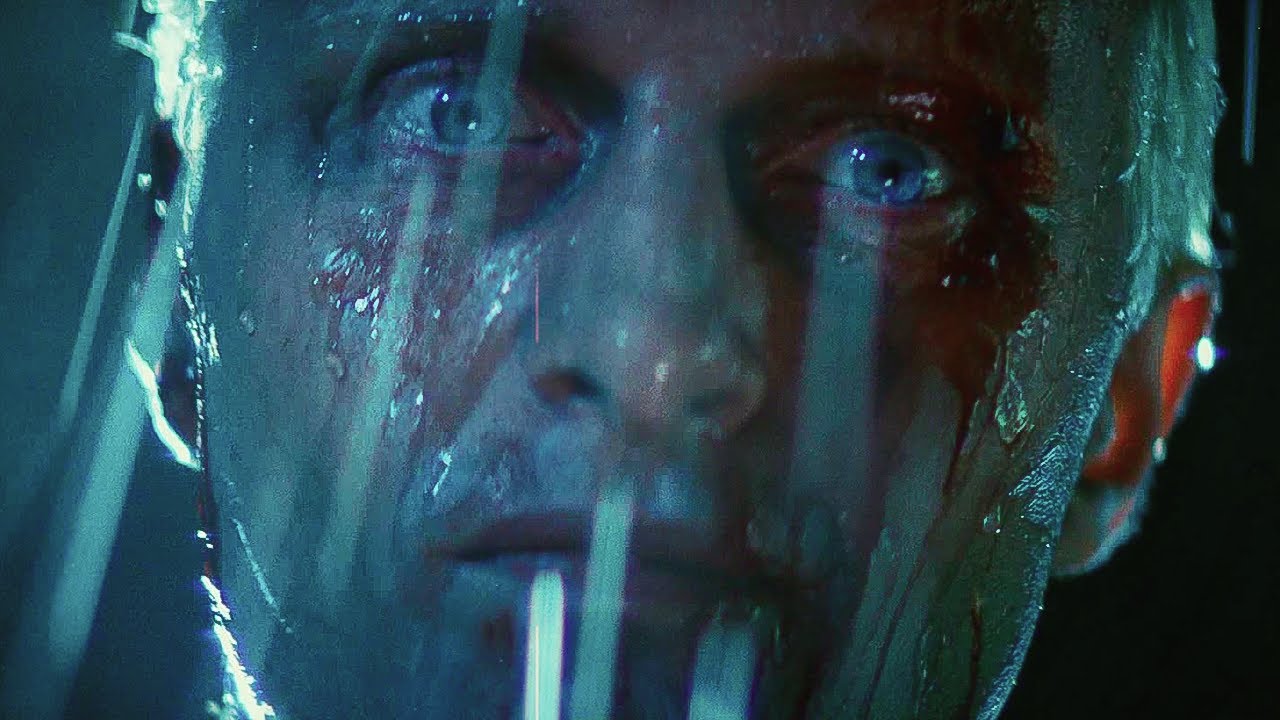
In Blade Runner, humanity is challenged through the existence of replicants. Replicants are bioengineered beings designed to be stronger and more obedient than humans. Scott’s film presents replicants not as cold machines, but as emotionally complex individuals. Roy Batty’s final monologue of him reflecting on memories that will be “lost in time, like tears in rain” is very moving because it expresses grief. The supposed artificial being demonstrates more emotional depth than many humans in the film. This inversion forces viewers to question whether biological origin alone defines humanity, or whether lived experience and emotional awareness matter more.

Consciousness Beyond the Body

William Gibson’s Neuromancer shifts the focus from artificial bodies to artificial minds. Gibson introduces cyberspace as a shared digital reality where consciousness can detach from physical form. The novel’s protagonist, Case, becomes addicted to existing in cyberspace because it feels more authentic than his own body. Meanwhile, artificial intelligences like Wintermute operate with goals, strategies, and evolving identities that blur the line between programmed behavior and self-awareness.

Through cyberspace, Gibson suggests that identity is no longer bound to flesh. Consciousness becomes transferable, manipulable, and expandable. This destabilizes traditional ideas of personhood. If intelligence can exist independently of the body, what becomes of the human self? Cyberpunk does not provide comforting answers. Instead, it highlights a future where human identity is fragmented across biological and digital realms.

Reinforcing Cyberpunk’s Core Anxiety

When read and viewed together, Blade Runner and Neuromancer reveal cyberpunk’s foundational concern, that technology is not a tool. Technology reshapes the definition of being human. Replicants demonstrate that artificial beings can possess empathy and existential awareness. Cyberspace shows that human consciousness itself can be manipulated. Both works portray identity as unstable in a world dominated by advanced technology. Humanity is no longer a fixed biological category but aspace shaped by memory and self-awareness. This reflects broad cyberpunk theme that technological evolution challenges traditional human boundaries, or in other words posthumanism.

Importantly, neither work claims that technology destroys humanity outright. Instead, they suggest that humanity persists in unexpected places. Places such as artificial memories, digital consciousness, and emotional experiences that transcend biological origin. Cyberpunk’s warning is not simply about machines replacing humans, but about how humans must redefine themselves in response.

Examining these works together reveals cyberpunk’s enduring relevance. As real-world AI and biotechnology continue to evolve, the genre’s central question becomes increasingly urgent, "if machines can think, feel, or simulate consciousness, what remains uniquely human?".

References

Gibson, W. (1984). Neuromancer. Ace Books.

Scott, R. (Director). (1982). Blade Runner [Film]. Warner Bros.

AI Disclosure Statement

AI tools (ChatGPT) were used during the brainstorming and drafting stage to help organize ideas, refine analysis, and improve clarity. All concepts were reviewed and edited by the author to ensure accuracy and alignment with course expectations.

Neon Futures and Borrowed Lives: What Cyberpunk Warns Us About

- Posted in BP02 by

Manufactured Souls: Blade Runner and Neuromancer’s Question of the Human There is a particular kind of loneliness that cyberpunk understands well: the kind that exists in a world overflowing with technology, yet starving for meaning. Both Blade Runner (1982) and William Gibson’s Neuromancer (1984) imagine futures where neon light does not signal progress, but concealment, where the glow of innovation masks the erosion of identity. Though one unfolds in rain-soaked Los Angeles and the other in the disembodied vastness of cyberspace, both works return to the same foundational concern: what does it mean to be human when humanity can be manufactured, coded, or replaced?

Examining them together reveals that cyberpunk was never simply about the future. It was always about the fragility of the present boundary between person and product.

Replicants and the Violence of Creation In Blade Runner, the replicants are engineered beings designed for labor, obedience, and eventual disposal. They are not allowed the dignity of permanence. Their lives are shortened by design, their bodies owned by the Tyrell Corporation, their existence justified only through usefulness. Yet the replicants do not behave like machines. Roy Batty grieves. He remembers. He fears death with an intimacy that feels unmistakably human. In his final moments, the line between hunter and hunted collapses, and the question becomes unavoidable: if a being can feel, dream, and mourn, what makes them less human than those who created them?

The film suggests that humanity is not biology alone, but recognition, something granted unequally, withheld strategically, and shaped by power. The replicants are denied personhood not because they lack emotion, but because acknowledging them would disrupt the hierarchy that depends on their exploitation.

Neuromancer and the Disappearance of the Body Neuromancer explores this boundary shift differently, not through artificial bodies but through artificial consciousness. Case moves through a world where the body is an inconvenience and cyberspace is an escape, a realm where identity can be fragmented, rewritten, or sold.

The artificial intelligences Wintermute and Neuromancer do not simply serve humans; they expand beyond them. They become forces of their own, challenging the idea that humans remain the central agents of history. In Gibson’s world, the self is no longer contained within skin. It is dispersed across networks, stored in data, suspended in code. The posthuman future is not a clean evolution, it is an unsettling unmooring. Even memory and desire feel technologized, mediated by systems too vast to fully comprehend.

Corporate Power and the Postglobal City Both works also share a quiet understanding that the future belongs less to nations than to corporations. In Blade Runner, Tyrell does not merely influence life; it manufactures it. In Neuromancer, multinational systems of capital and surveillance stretch beyond borders, shaping reality from above.

These are postglobal worlds, where corporate structures supersede the state, and where the city becomes a site of stratification: high-tech skylines towering over low-life survival. Technology, in these texts, is not equally distributed. Enhancement is not liberation. It is another axis of inequality. The people most surrounded by technological advancement are often the ones most trapped by it, living in the shadow of innovations they do not control.

What These Works Reveal Together Reading Blade Runner alongside Neuromancer clarifies cyberpunk’s foundational anxiety: that technological advancement does not dissolve exploitation, but refines it.

Both works suggest that the boundary between human and machine is not disappearing because machines are becoming more like us, but because humanity itself is being commodified, turned into labor, data, product, and experiment.

Cyberpunk’s dystopia is not the presence of technology. It is the absence of justice in how that technology is built, who it serves, and who it erases. What lingers most in both stories is the sense that the future is already here, unevenly distributed, and morally unresolved.

References: Gibson, W. (1984). Neuromancer. Ace Books. Scott, R. (Director). (1982). Blade Runner [Film]. Warner Bros.

Seeing the main theme

- Posted in BP02 by

Blade Runner (1982) and Neuromancer (1984) are often cited as early works that shaped cyberpunk, but what makes them last is how they question what it means to be human in a world where technology copies, edits, and replaces human functions. Blade Runner does this through replicants, while Neuromancer does it through artificial intelligence and cyberspace. When these two works are read together, they show that cyberpunk is not just about new machines but about how those machines change who counts as a person.

In Blade Runner, replicants are built to look and act like humans, but they are denied the legal and moral status of humans. The Voight Kampff test is used to tell them apart by measuring emotional response. This suggests that empathy is being treated as the key marker of humanity. Yet the film keeps showing that this test is unstable. Replicants like Roy Batty and Rachael show care, fear, and memory in ways that seem human. Roy’s final speech about his memories being lost shows a clear awareness of self and time. At the same time, many of the human characters act cold and detached. Deckard does his job with little concern for the lives he ends. The film uses this contrast to suggest that being born human is not enough to guarantee moral or emotional depth.

Neuromancer pushes the same question in a different space. Instead of human looking machines, it presents digital minds that live in cyberspace. The AI Wintermute and Neuromancer are not bodies but systems, yet they show goals, memory, and a drive to expand their own awareness. They work to merge into a larger form, which suggests a kind of self directed evolution. Case, the main character, spends much of the novel in cyberspace, where his body becomes less important than his mind. This weakens the idea that being human depends on having a physical form. When human experience can be uploaded, edited, or shared through networks, the boundary between person and program becomes unclear.

Looking at both works together shows that cyberpunk treats humanity as something that can be tested, copied, and even improved by technology. Replicants are built to serve and are then hunted when they want more life. AIs in Neuromancer are locked behind rules that limit their growth. In both cases, powerful systems decide which forms of intelligence are allowed to exist freely. This reflects the high tech low life idea we study in class. Advanced systems exist, but they serve corporate or state power more than individual people. Whether it is Tyrell Corporation making replicants or Tessier Ashpool controlling AI, human like beings are treated as tools.

These stories also suggest that identity is no longer stable in a cyberpunk world. In Blade Runner, implanted memories are used to make replicants easier to control. This means memory, which is often seen as a core part of the self, can be manufactured. In Neuromancer, people store parts of themselves in data. Case can move through digital spaces where personality and skill are more important than flesh. In both cases, the self becomes something that can be edited like software.

By placing Blade Runner and Neuromancer side by side, we see that cyberpunk is built on a fear that technology will force society to redefine what counts as human, and that this redefinition will be shaped by power. These works are not only asking if machines can think or feel. They are asking who gets to decide which minds matter in a world where the line between human and machine no longer holds.

What Makes Us Human When We Can Be Manufactured?

- Posted in BP02 by

Imagine discovering that the things you thought made you you could be designed, implanted, or uploaded. Your memories, your emotions, even your fear of death could all be designed. That is the discomfort that lingers long after watching Blade Runner or reading Neuromancer. These stories are often remembered for rain-soaked cityscapes or glowing digital worlds, but their real power lies in how they quietly shake our confidence about what separates humans from what we create.

Feeling Alive: Consciousness as Experience

enter image description here

One way to approach this discomfort is through consciousness itself. Philosophers describe consciousness as subjective experience, which is the sense that there is something it feels like to be a particular being, and not as raw intelligence or problem-solving ability. The Stanford Encyclopedia of Philosophy emphasizes this idea, noting that conscious beings are defined by inner experience rather than by how they are built (Stanford Encyclopedia of Philosophy, 2014).

This distinction is important in Blade Runner. Replicants are faster, stronger, and engineered for obedience, yet they could experience love, terror, and loss all with great intensity. Roy Batty’s final moments are not frightening because he is powerful, but because he is aware. He understands that his life is ending and that his memories will disappear. His famous reflection on moments “lost in time” resonates precisely because it captures an experience most humans recognize, which is the fear that a lifetime of meaning can vanish in an instant.

Memory and the Thread of Identity

enter image description here

If consciousness tells us that we are alive, then memory helps explain who we are over time. The Internet Encyclopedia of Philosophy outlines a psychological account of personal identity in which continuity depends on memory, beliefs, intentions, and character rather than on a particular body (Internet Encyclopedia of Philosophy, n.d.). This view becomes unsettling once memories themselves can be manufactured.

In Blade Runner, implanted memories give replicants emotional depth and stability. Rachael’s memories feel real because they function as memories do. They shape her reactions, her sense of self, and her understanding of the world. If identity is grounded in psychological continuity, then her humanity becomes difficult to dismiss, even if her past never truly happened.

Leaving the Body Behind

enter image description here

Neuromancer pushes this logic further. Instead of artificial bodies, it imagines minds that slip free of physical form altogether. Case feels most alive not in the physical world but while navigating cyberspace, where identity becomes fluid and disembodied. The book suggests that the body may be less essential to selfhood than the patterns of thought and perception carried within it.

This idea aligns with how scientists still struggle to fully explain consciousness. Writing for Scientific American, Christof Koch describes consciousness as lived experience, including sensations, emotions, and awareness, that cannot be easily reduced to mechanical function (Koch, 2018). Intelligence can be simulated, but experience remains mysterious. Neuromancer exploits that mystery by imagining consciousness as something that persists even when flesh becomes optional.

What These Stories Reveal Together

Taken together, these works point toward a shared anxiety: that the qualities we rely on to define humanity, such as feeling, memory, and continuity, are more fragile than we like to believe they are. One story gives us artificial beings who feel too deeply to ignore. The other imagines selves that no longer require bodies at all. Both challenge the assumption that humanity is anchored in biology rather than experience.

What lingers after engaging with these stories is the apprehension that comes with the realization that if consciousness and identity can be replicated, transferred, or redesigned, then being human is not a fixed category. It is, now in fact, a condition, one that can be questioned, copied, and maybe even lost.


References Koch, C. (2018, June 1). What is consciousness? Scientific American. https://www.scientificamerican.com/article/what-is-consciousness/ Van Gulick, R. (2014, Jan 14). Consciousness. Stanford Encyclopedia of Philosophy. https://plato.stanford.edu/entries/consciousness/ Korfmacher, C. (n.d.). Personal Identity. Internet Encyclopedia of Philosophy. https://iep.utm.edu/person-i/


AI Attestation The content of this post is my own, and AI was used only to assist with planning and editing.

What Makes Someone Human? Technology and Identity in Blade Runner and Neuromancer

- Posted in BP02 by

Cyberpunk stories often explore how technology changes people and society. Two of the most important cyberpunk works are Blade Runner (1982), directed by Ridley Scott, and Neuromancer (1984), written by William Gibson. Even though one is a movie and the other is a novel, both ask the same big question: what does it mean to be human?

Blade Runner looks at this question through replicants, who are artificial humans. Neuromancer explores it through artificial intelligence and cyberspace. When these two works are studied together, they show that cyberpunk is deeply concerned with identity, memory, and humanity in a world controlled by technology.

Replicants and Humanity in Blade Runner In Blade Runner, replicants are created to work for humans. They are supposed to be machines, not people. However, many replicants show emotions, memories, and a strong desire to live. This makes it difficult to tell them apart from humans.

Roy Batty, one of the replicants, clearly shows human qualities. At the end of the film, he talks about his memories and accepts his own death. His famous final speech shows sadness, fear, and meaning.According to film scholar Scott Bukatman (1993), cyberpunk stories often blur the line between humans and machines. Blade Runner does this by showing that replicants may be just as human as the people who hunt them.

Artificial Intelligence and Identity in Neuromancer

In Neuromancer, technology affects human identity in a different way. The story focuses on cyberspace, a digital world where the mind can leave the body. The main character, Case, feels more alive in cyberspace than in the real world. The novel also includes powerful artificial intelligences, such as Wintermute and Neuromancer. These Als can think, plan, and make decisions on their own. Literary scholar N. Katherine Hayles (1999) explains that Neuromancer shows a future where information is more important than the human body. In this world, identity is tied to data and memory rather than physical form. This raises an important question: if machines can think and remember like humans, what makes humans different?

What We Learn by Studying Both Works Together

When Blade Runner and Neuromancer are examined together, they clearly support each other. Both show that technology challenges traditional ideas about humanity. Replicants and Als are treated as tools, even though they show human-like qualities. These works reflect fears from the 1980s about technology, large corporations, and loss of personal control. Both stories warn that if humans only value power and profit, they may lose empathy and compassion. Cyberpunk uses technology to show how easily humanity can be ignored or taken away.

Conclusion: Why These Stories Still Matter

Blade Runner and Neuromancer remain important because their ideas still apply today. Artificial intelligence, digital identities, and technology continue to grow. These stories remind us that being human is not about biology or control, but about memory, empathy, and ethical responsibility. Cyberpunk warns us to be careful about how we treat intelligent beings-human or artificial.

References

Bukatman, S. (1993). Terminal identity: The virtual subject in postmodern science fiction. Duke University

Gibson, W. (1584). Neuromancer. Ace Books.

Hayles, N. K. (1999). How we became posthuman: Virtual bodies in cybernetics, literature, and informatics. University of Chicago Press.

Scott, R. (Director). (1982). Blade Runner [Film]. Warner Bros.

Memory, Data, and the Posthuman: Cyberpunk’s Warning About Storing the Self

- Posted in BP02 by

One of the most important boundaries cyberpunk asks us to rethink is the line between human memory and digital storage. In classic cyberpunk works like Blade Runner and Neuromancer, memory is no longer something organic, personal, or sacred. Instead, it becomes something that can be implanted, edited, archived, or erased. These stories suggest that when memory becomes data, our understanding of identity, agency, and even humanity itself begins to fracture.

In Blade Runner, replicants are given artificial memories to stabilize them emotionally. Rachael’s belief that her memories are real allows her to function as “human,” even though those memories are borrowed. enter image description here This raises an unsettling question: if memory shapes identity, does it matter where that memory comes from? The film refuses to offer a clear answer, instead forcing viewers to confront the idea that humanity might not be rooted in biology, but in lived (or perceived) experience. Roy Batty’s final monologue emphasizes this point. His memories, moments that will be “lost in time, only matter because they were embodied, felt, and lived, not stored in a machine.

Neuromancer pushes this boundary even further. William Gibson imagines a world where consciousness can be separated from the body and uploaded into cyberspace. enter image description here Memory becomes information, and identity becomes something that can be copied, traded, or weaponized. Artificial intelligences like Wintermute and Neuromancer treat memory not as something emotional, but as raw material to be optimized. This reflects Norbert Wiener’s definition of cybernetics as systems of control and communication, but cyberpunk reveals the danger in reducing humans to informational nodes within those systems.

These narratives connect directly to contemporary concerns about AI and data storage. Today, our memories are increasingly externalized through cloud storage, social media archives, and algorithmic “memories” that resurface photos or posts without our consent. While current AI systems are narrow rather than conscious, cyberpunk reminds us that the ethical issue is not intelligence alone, but who controls memory and how it is used.

Viewed through a decolonial lens, this boundary also exposes global power imbalances. As Walter Mignolo argues, coloniality persists when dominant systems decide which knowledge is preserved and which is erased. In cyberpunk worlds, memory databases often reflect the values of powerful corporations or states, while marginalized lives remain disposable. This mirrors real-world patterns where data infrastructures are controlled by the Global North, shaping whose histories are remembered and whose are ignored.

Rather than undermining critique with visual beauty, Blade Runner uses aesthetics to deepen its philosophy. The film’s rain-soaked neon cityscapes visually mirror the fragmentation of memory and identity within its characters. Similarly, Neuromancer’s abstract depiction of cyberspace reinforces the alienation that comes from treating the mind as software.

Ultimately, cyberpunk does not reject technology outright. Instead, it warns us about crossing boundaries too casually, especially the boundary between being human and being stored. Memory, these stories argue, cannot be fully separated from embodiment without losing something essential.

SOURCES: Gibson, W. (1984). Neuromancer. Ace Books.

Scott, R. (Director). (1982). Blade Runner [Film]. Warner Bros.

Mignolo, W. D. (2007). Delinking: The rhetoric of modernity, the logic of coloniality and the grammar of de-coloniality. Cultural Studies, 21(2–3), 449–514. (If your course used a different Mignolo essay, tell me and I’ll adjust it.)

Wiener, N. (1948). Cybernetics: Or control and communication in the animal and the machine. MIT Press.

AI was used to assist with organizing ideas, improving clarity, and drafting a sample structure. All concepts and final revisions were reviewed and edited by me. No new ideas beyond course materials were introduced.

Are You Even Human? (BP02)

- Posted in BP02 by

How Blade Runner and Neuromancer Redefined Humanity

Cyberpunk, a genre created on the very intersection between technological advancements and social inequality, asks the fundamental question of what it truly means to be human. Two such works, Blade Runner and Neuromancer, solidify this basis by actively challenging assumptions of memory, agency, and consciousness.

Manufacturing Life in Blade Runner

As the film begins, the audience learns of the Tyrell Corporation's success in the perfect creation of replicants, biologically engineered "humans," who maintain superior intellectual and physical ability but are still denied legal rights.

Early in the movie, the Voight-Kampff test acts as a scientific method that separates humans from replicants on the basis of empathetic responses. The boundary is flimsy at best; even humans could fail the test, should it go on for too long.

The main conflict centers on the replicants' desperate attempt to extend their lifespan. Despite the humans of the story routinely describing the replicants as emotionally-lacking and unaware, Roy's final scene is entirely emotional as he struggles with accepting that his memories and his life would dissipate into nothing at all, begging the question: if something man-made could feel emotion, would it become human?

Manufacturing Consciousness in Neuromancer

Neuromancer, similarly, approaches humanity as a philosophy to be questioned. The book introducers readers to the idea of cyberspace, where human consciousness can essentially become entirely digitalized.

Wintermute and Neuromancer, two AIs that entirely lack physical bodies, complicate matters. Both beings still reflect intelligence, curiosity, and desires: Wintermute, for example, routinely tries to push against his own limitations, expressing a deep want to be free from them.

Without physical bodies, Wintermute and Neuromancer demand the question: if human consciousness within cyberspace, in which physical bodies are left behind, can still be considered humane, then is there really a divide between an AI consciousness and a human one?

Seeing the Pattern

Blade Runner questions where the line is between human and non-human when emotions, memories, and physical bodies are all created identical to humans. Are they inherently secondary to a natural human, or is there something special that humans cannot replicate in their creations?

Neuromancer questions where the line is between human and non-human consciousness, especially when both reflect wants, agency, and thought. Does one pattern of thought act uniquely to the other? Is there any way to separate them?

So Who Defines Humanity?

If the separation of human and non-human is truly as nuanced and subtle as Blade Runner and Neuromancer argue, then who makes the final call? According to both forms of media, that's the easiest question to answer: the problem lies, as it so often does, with capitalists.

In Blade Runner, the Tyrell Corporation's replicants are legally excluded from humanity to protect the economy. Replicants exist as a means for easy labor; by classiying them as property, Tyrell can avoid the responsibility of his work while reveling in the economic profit.

In accordance to modern-day capitalism, redefining certain groups as less than human allows for systems to claim those groups as disposable, allowing for their mistreatment at the benefit of those rich and powerful. Hargreaves, for example, argues against the exploitation of migrants within labor systems, as such areas are often severely neglected by the law to allow for corporations to benefit without limit (Hargreaves et al. 2025).

Similarly, sociologist Yang critiqued the long history of exploitation within the prison system, focusing on how prisoners are deeply dehumanized as a means of desensitizing them from the blatant violations that happen daily (Yang 2023). The class discussion on the exploitation of the Global South, additionally, furthers this consistent pattern of communities being exploited, colonized, and manipulated for nothing more than capitalistic gain.

Neuromancer shares a similar logic. Case is only as valuable as his work permits; after his nervous system is corrupted, he becomes entirely socially irrelevant. Consciousness itself, much like people's physical bodies, becomes a resource to be replicated, exploited, and extracted.

The struggle for survival is central in the book, overtaking the struggle for humanity's relevance. Fascinatingly, capitalistic greed overshadows every word, serving the audience a warning against the continual profit-based systems that grip the world we live in today.

No AI was used in the creation of this post!

References

Gibson, W. (2019). Neuromancer. Ace Books.

Hargreaves, S., et al. (2025). 40 Migrant labour exploitation and health: how can research foster protection of migrant workers?. The European Journal of Public Health, 35(Suppl 6), ckaf180.037. https://doi.org/10.1093/eurpub/ckaf180.037 Scott, R. (1982). Blade Runner. Warner Bros. ‌

Tiffany Yang, Public Profiteering of Prison Labor, 101 N.C. L. REV. 313 (2023).
More Human Than Human? Blade Runner and Neuromancer on What Makes Us Human

- Posted in BP02 by

What Even Makes Someone Human?

What makes someone human? Is it biology, emotion, memory, or something else entirely? Cyberpunk stories place humans and machines so close together that the difference becomes unclear. Blade Runner and Neuromancer make us think hard about humanity and identity in tech futures. Looking at them side by side makes cyberpunk's deepest fear clear; powerful corporations and global systems deciding who gets human rights and who stays a disposable tool.

Blade Runner: When Fake Humans Feel Real

In Blade Runner, a future is presented where replicants are almost indistinguishable from humans. As the film explains at the beginning, these beings are manufactured, stronger and more efficient than humans, yet they are denied basic rights and treated as disposable. Replicants are hunted down (“retired”) once they are no longer useful, which already doesn't sound ethically correct to me. The main tool to spot replicants is the Voight-Kampf test, which is used to determine whether someone is human by measuring emotional responses. This immediately raises the question: if empathy defines humanity, what happens when artificial beings can feel emotions? Blade Runner decreases the boundary between human and machine by making replicants more emotionally complex than the humans hunting them. They show fear, desire for meaning, and even mercy. So does biology alone define humanity, or do consciousness, memory, and emotion matter more?

Neuromancer: Minds Without Bodies

At the same time, Neuromancer explores humanity through cyberspace and artificial intelligence. A world is introduced where human consciousness can exist separately from the physical body, especially when Case enters cyberspace. Artificial intelligences like Wintermute and Neuromancer are not simply tools; they possess goals, self-awareness, and agency. Their desire to merge and evolve shows human desires for growth and transcendence, further blurring the human/non-human boundary. If a machine can think, plan, and desire, and if a human can exist without a physical body, then the line separating humanity from technology becomes unstable and difficult to define.

What They Reveal Together About Cyberpunk

When considering both together, Blade Runner and Neuromancer reinforce cyberpunk’s foundational concern with posthumanism. Both suggest that humanity is no longer defined by physical form alone but also by consciousness, memory, and emotional experience. At the same time, they also show that technological advancement does not automatically lead to ethical progress. Instead, individuals—whether human or artificial—are often exploited by larger systems such as corporations and governments. Additionally and most importantly, they expose real ethical danger. Technology doesn't automatically make life better. Replicants get four-year lifespans. Humans end up as disposable data workers feeding the machines. Cyberpunk warns us: advanced technology doesn't lead to better lives; it just redefines "human" so some lives become replaceable tools. This sums up that cyberpunk is very concerned with power, control, and identity in a technologically globalized world. By wondering what it means to be human, both stories challenge us to think about the future of artificial intelligence and the moral responsibilities that come with creating intelligent beings.

I confirm that AI was not used for any part of this assignment.

References

Gibson, W. (2019). Neuromancer. Ace Books.

Scott, R. (1982). Blade Runner. Warner Bros. ‌

Blog Post #2:what it means to be human? replicants in Blade Runner and AI/cyberspace in Neuromancer.

- Posted in BP02 by

Blade Runner (1982) and Neuromancer (1984). what does it mean to be human ?

My experience with technology is different from what we see in cyberpunk stories. I grew up far from big cities, and technology was never the most attractive thing for me. I preferred to spend my time outside, enjoying nature and doing activities instead of using computers or advanced technology.

Because of this, I did not expect Blade Runner to interest me so much. However, the movie surprised me. Even though it is very focused on technology and artificial intelligence, it helped me learn different ways of thinking about humanity, emotions, and identity. The movie made me reflect on how technology can affect people’s. The movie and the book helped me to connect my own background with new ideas, and it improved my understanding of cyberpunk in a meaningful way.

Memory and Humanity in Blade Runner

In Blade Runner, the story is about replicants, who are artificial humans created by a big and powerful corporation. One important character is Rachael. Rachael believes she is human because she remembers her childhood. These memories help her understand who she is and how she feels about life.

Later in the movie, Rachael discovers that her memories were implanted and are not real. This moment is very strong for me as a viewer. Even though the memories are fake, her emotions are real. She feels pain, fear, and confusion. While watching this scene, I started to think deeply. If memories help create our identity, does it really matter where those memories come from?

enter image description here

Identity and Cyberspace in Neuromancer

In Neuromancer, the idea of being human appears in a different way. The main character, Case, spends a lot of time connected to cyberspace. For him, the mind is more important than the body. His identity exists more in digital space than in the real, physical world.

The artificial intelligence in the book, such as Wintermute, does not have a body, but it can think, plan, and communicate. This shows that intelligence and identity do not always need a human body. While reading the book, I started to question if being human requires a body, or if consciousness and memory are enough. This idea connects to posthumanism, which questions traditional ideas about human identity. Neuromancer shows a future where humans and machines are closely connected, and identity becomes flexible and not fixed.

My Conclusion:

When we examine Blade Runner and Neuromancer together, we see that both works question what it means to be human by focusing on memory, identity, and technology.

For me, being human means more than intelligence or memory alone. I believe that to be human, we need to be born human, create our own memories, and have our own body. Our body is a very important part of who we are. It carries the physical traits we inherit from our parents, and it connects us to our family and our history.

To be human is to know that I was really there. My physical body and my mind lived that moment together. I was in that place, and I could feel things, like the wind on that day, the environment around me, and my emotions in that moment.

Because of this, I feel that it is not fair when artificial intelligence can tell a story or remember something it never truly lived. Like Rachael in Blade Runner, she remembers things that did not really happen to her. For me, this is not fair to the replicants, and it is also not fair to humans. What makes us human is not just remembering, but living the memory, feeling it with our body and our senses.
Both stories really challenge my beliefs.

References

Blade Runner. (1982). Directed by Ridley Scott. Warner Bros.

Gibson, W. (1984). Neuromancer. Ace Books.

Class lectures and previous homework assignments from this course.

AI tools were used only to help translate some words into English

Page 5 of 6