Memory, Data, and the Posthuman: Cyberpunk’s Warning About Storing the Self
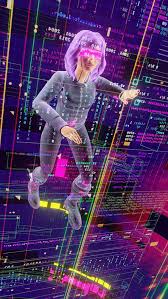
One of the most important boundaries cyberpunk asks us to rethink is the line between human memory and digital storage. In classic cyberpunk works like Blade Runner and Neuromancer, memory is no longer something organic, personal, or sacred. Instead, it becomes something that can be implanted, edited, archived, or erased. These stories suggest that when memory becomes data, our understanding of identity, agency, and even humanity itself begins to fracture.
 In Blade Runner, replicants are given artificial memories to stabilize them emotionally. Rachael’s belief that her memories are real allows her to function as “human,” even though those memories are borrowed. This raises an unsettling question: if memory shapes identity, does it matter where that memory comes from? The film refuses to offer a clear answer, instead forcing viewers to confront the idea that humanity might not be rooted in biology, but in lived (or perceived) experience. Roy Batty’s final monologue emphasizes this point. His memories, moments that will be “lost in time, only matter because they were embodied, felt, and lived, not stored in a machine.
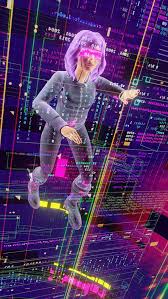 Neuromancer pushes this boundary even further. William Gibson imagines a world where consciousness can be separated from the body and uploaded into cyberspace. Memory becomes information, and identity becomes something that can be copied, traded, or weaponized. Artificial intelligences like Wintermute and Neuromancer treat memory not as something emotional, but as raw material to be optimized. This reflects Norbert Wiener’s definition of cybernetics as systems of control and communication, but cyberpunk reveals the danger in reducing humans to informational nodes within those systems.
These narratives connect directly to contemporary concerns about AI and data storage. Today, our memories are increasingly externalized through cloud storage, social media archives, and algorithmic “memories” that resurface photos or posts without our consent. While current AI systems are narrow rather than conscious, cyberpunk reminds us that the ethical issue is not intelligence alone, but who controls memory and how it is used.
Viewed through a decolonial lens, this boundary also exposes global power imbalances. As Walter Mignolo argues, coloniality persists when dominant systems decide which knowledge is preserved and which is erased. In cyberpunk worlds, memory databases often reflect the values of powerful corporations or states, while marginalized lives remain disposable. This mirrors real-world patterns where data infrastructures are controlled by the Global North, shaping whose histories are remembered and whose are ignored.
Rather than undermining critique with visual beauty, Blade Runner uses aesthetics to deepen its philosophy. The film’s rain-soaked neon cityscapes visually mirror the fragmentation of memory and identity within its characters. Similarly, Neuromancer’s abstract depiction of cyberspace reinforces the alienation that comes from treating the mind as software.
Ultimately, cyberpunk does not reject technology outright. Instead, it warns us about crossing boundaries too casually, especially the boundary between being human and being stored. Memory, these stories argue, cannot be fully separated from embodiment without losing something essential.
SOURCES
Gibson, W. (1984). Neuromancer. Ace Books.
Scott, R. (Director). (1982). Blade Runner [Film]. Warner Bros.
Mignolo, W. D. (2007). Delinking: The rhetoric of modernity, the logic of coloniality and the grammar of de-coloniality. Cultural Studies, 21(2–3), 449–514. (If your course used a different Mignolo essay, tell me and I’ll adjust it.)
Wiener, N. (1948). Cybernetics: Or control and communication in the animal and the machine. MIT Press.
AI was used to assist with organizing ideas, improving clarity, and drafting a sample structure. All concepts and final revisions were reviewed and edited by me. No new ideas beyond course materials were introduced.