The Body Is Not the Limit
When Donna Haraway describes the cyborg, she is not predicting a chrome-plated robot future. She is pointing out something more unsettling and more empowering: the human body has never been sealed off from technology. We are hybrid beings already. The question is whether that hybridity expands our freedom or narrows it. One contemporary example where hybridity is playing out as liberation is the rise of biohacking and wearable self-tracking culture. From NFC chips implanted in hands to smart rings that monitor sleep and heart rate, people are voluntarily merging with technology in order to extend their capabilities. This is not science fiction. It is happening in gyms, tech communities, medical labs, and even everyday households.
Extending the Body Through Feedback
At the heart of cyborg theory is the idea of a feedback loop. A feedback loop is a system where biological processes and machines communicate continuously. Today’s wearable devices already function this way. For example, smartwatches monitor heart rate and adjust exercise recommendations. Continuous glucose monitors help users regulate diet in real time. Adaptive deep brain stimulation systems for Parkinson’s adjust electrical signals based on neural activity. These systems don’t just “assist” the body. They become part of how the body regulates itself. Technology participates in homeostasis. That shift reflects Haraway’s insight that the line between organism and machine is less solid than we imagine. Instead of replacing humanity, these devices reconfigure what human capability looks like. A runner using biometric data to optimize performance, a diabetic using real-time glucose tracking to maintain stability, or a person using neural interfaces to restore movement these are not diminished humans. They are augmented ones.
Liberation Through Access and Enhancement
Hybridity becomes liberating when it increases agency. For many disabled communities, assistive technologies have already transformed quality of life. But the newer wave of biohacking moves beyond medical necessity into elective enhancement.
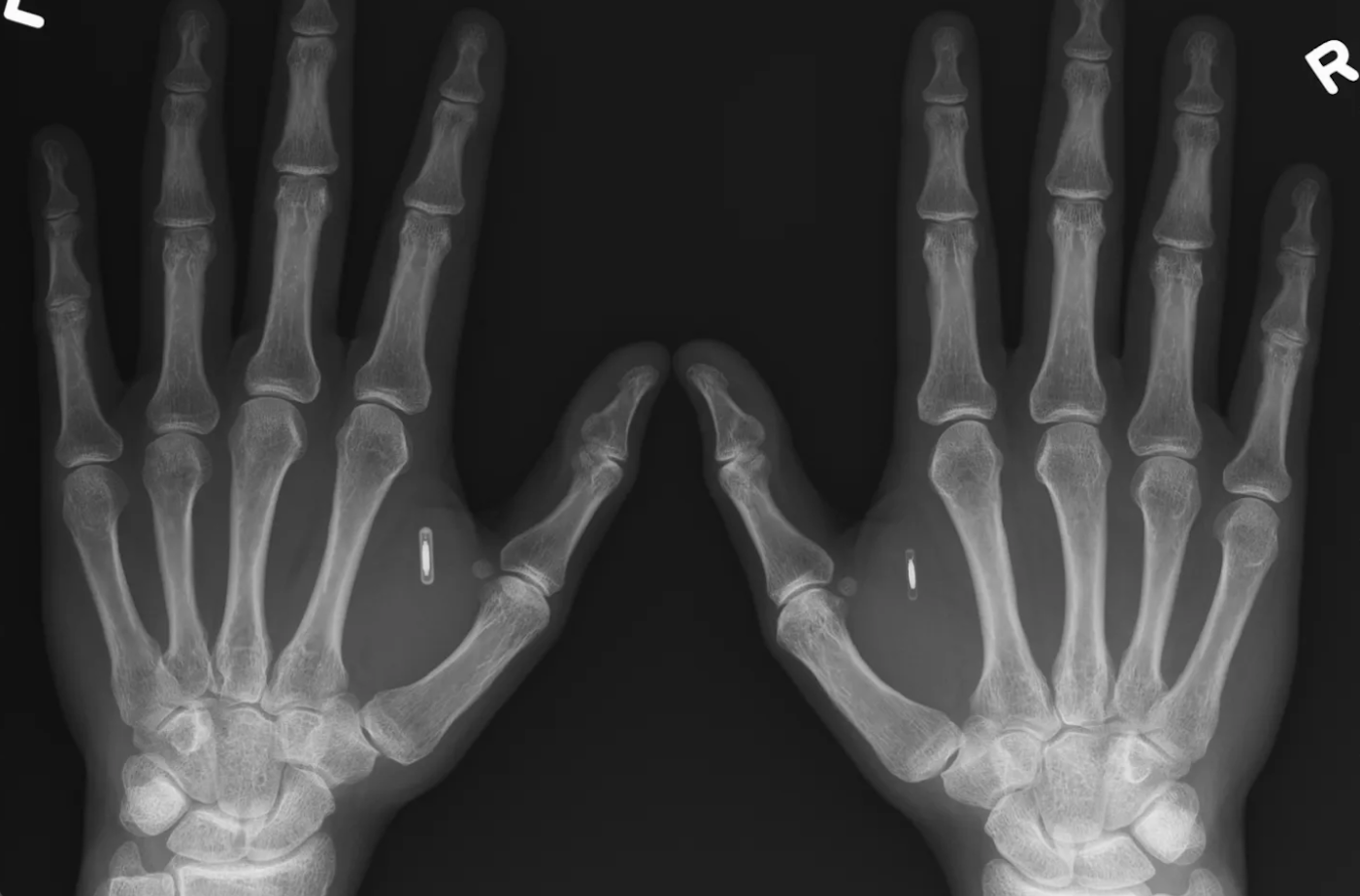
Individuals implant NFC chips to unlock doors with their hands. Others use subdermal magnets to sense electromagnetic fields. Wearables provide insight into sleep cycles, stress patterns, and metabolic responses. What’s significant here is not the gadget, it’s the mindset. The body is treated as adaptable, upgradeable, open to redesign. That perspective challenges the idea that the “natural body” is fixed or complete. Janelle Monáe’s android persona in The ArchAndroid reimagines technological embodiment not as loss of humanity but as expanded identity. In real life, biohackers often describe implants and devices as ways of becoming “more fully themselves,” not less. Technology becomes a creative medium for the self.
Where This Reflects and Complicates Haraway
Haraway calls cyborgs “illegitimate offspring” of militarism and capitalism. That warning still matters. Many wearable devices collect data for corporate ecosystems. Health tracking can slide into surveillance. Insurance companies are already experimenting with incentive-based biometric monitoring. So the same feedback loops that empower users can also discipline them. The difference lies in control. When individuals choose technologies to expand capacity, hybridity becomes self-authored. When institutions mandate monitoring, hybridity becomes regulatory. Right now, we are in the middle of that tension.
What Might This Look Like in 20–30 Years?
If current trends continue, the next generation of cyborg life could include:
Seamless Bio-Digital Integration Wearables may become implantables. Health metrics could be continuously optimized by AI systems that learn individual patterns over decades. Instead of checking your stats, your body will quietly self-adjust.
Personalized Neural Interfaces Non-invasive brain-computer interfaces are already improving. In a generation, mental commands might control devices as easily as touchscreens do now. This would not replace physical interaction but extend it.
Community-Based Biohacking As open-source hardware grows, communities may build and modify their own enhancement systems. Instead of relying solely on corporate tech, grassroots innovation could reshape access and affordability.
Redefined Ideas of “Normal” If augmentation becomes widespread, baseline expectations of human capability may shift. Enhanced memory recall, improved metabolic regulation, or optimized cognitive focus could become ordinary rather than exceptional.
The important shift is psychological. Hybridity is no longer framed solely as medical repair or dystopian takeover. It is increasingly framed as customization, optimization, and creative redesign. We are not witnessing the collapse of humanity into machinery. We are witnessing a transformation in how people understand embodiment. The body is no longer seen as a closed system but as an evolving interface. Haraway’s cyborg was always about possibility. Today, that possibility is no longer theoretical. It is wearable, implantable, and increasingly personal. In the hands of those who choose it, hybridity can be a form of freedom.
AI statement- Generative AI was used to give me topic ideas for the blog post and was not used furthermore after that.