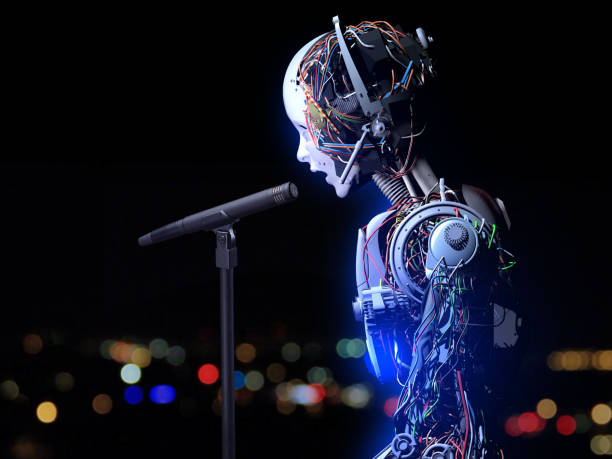
Redefining the Natural Body
We can see fluidity and liberation through hybridity in today’s society, enabled by advanced technological innovations that transform the bodies of disabled people. The boundary being blurred is between the limitations disabled people may face, as well as all the benefits/enhancements they may face from assistive technologies. This reflects Harway’s perspective of rejecting the idea that entities, identities, or categories possess a fixed meaning or definition. Haraway theorized the cyborg. Also, Monae’s liberating ideas and celebration of uniqueness can reflect a redefinition of what a normal body is. Harway and Monae discuss how the disabled cyborg body moves through the world through its own unique combination of biology and technology, creating a sense of normalcy in our society, crossing the boundary.
The basis of the boundary between artificial and natural, as well as limitations and enhancements that are being crossed, creates a sense of liberation and freedom for those whose bodies are not the “norm”. Haraway argues that these boundaries were never natural truths; they were ideological constructions used to organize power by placing “natural bodies” higher in the hierarchy than those who are disabled. Harways also discusses how identity is not a fixed concept, which means that she believes that cyborgs challenge essentialism by saying there is no clear defining standard for them. Cyborgs are hybrid and fluid beings. This theory is also similar to Janelle Monae conveys the android, as a being which symbolizes something that is unlabeled and inferior. The android is a completely new form of a being. This being and its hybrydity is liberating and resembles power.
Some real world technologies, that reflect Harway’s and Monae’s visions is the increase in innovative techniques and practices used to help those with disabilities. The technologies which are used to assist the people with disabilities become a apart of them and all of their senses. Some research conducted by Cornell students discuss how wearable AI for blind and visually impaired (BVI) users demonstrates how multi-modal generative AI models integrated into devices like Meta Ray-Bans can enhance access to visual information. These tools allow real-time scene description, object detection, and OCR through wearable interfaces. Similarly to Haraway’s description of cyborg, sensory experience becomes hybrid and networked. Also like Monáe’s android, the othered body becomes technologically powerful and liberated.
In 20-30 years, current disability advocacy and AI policy debates suggest that hybrid embodiment will increasingly be shaped by disabled people themselves, as organizations push for technologies developed disabled communities. If this participatory model holds, wearable AI and augmented reality could evolve from assistive devices into customizable sensory systems. This would further dissolve the boundary between body and machine, transforming disability from a category of limitation into a site of identity and innovation.This trajectory reflects Haraway's cyborg as a politically constructed hybrid subject, while extending Monáe's vision of technological otherness into a collective, socially embedded form of liberation.
In refusing the norm, the disabled cyborg body does not exist on the margins of Haraway's vision or Monáe's world. It stands at the center of both.