 #### Introduction
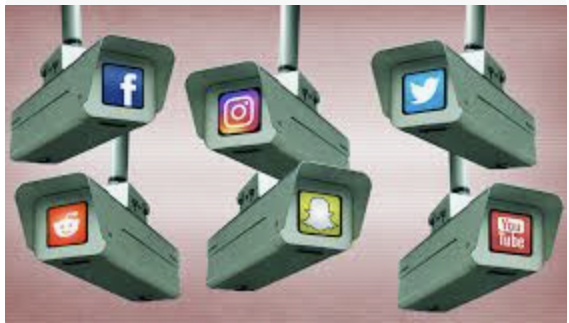
Having privacy used to be personal to yourself where what you did was unnoticed. Within the last five years, that boundary has changed tremendously. Digital surveillance, whether that is through games, apps, cameras, and facial recognition, has made and allowed being constantly monitored very normal on a day to day basis. This shows a core theme of cyberpunk, technology develops faster than its rules and regulations to maintain its ethics.
What Has Changed
Surveillance is not just at the government and law enforcement level. It is with civilians using our phones. An article by Wired talks about TikTok collecting and storing data from users, that includes location and data that can identify specific devices (Wired, 2026). This goes on in the background even when app users are not posting and unfortunately the users do not even know the extent of their data being collected. This blurs lines between sharing the information being shared and being constantly monitoring.
Surveillance goes beyond apps, it also includes studying and scanning people’s facial and physical features. Facial recognition is being put in public places that can identify people based on their biometric data. According to an article by ISACA, this brings lots of privacy concerns because biometric information like faces cannot be changed like a password and credit card information. This data can be stored, shared, and used without people even knowing they are being tracked. Additionally, facial recognition data is normally not encrypted so it is easier to be hacked and exploited by criminals (ISACA, 2025). This also weakens the boundary between public spaces and personal privacy.
These show how privacy has to be guarded and protected opposed to it being the default that most people would expect.
What Is Driving This Shift
Several of things are speeding up the growth of surveillance:
Technological advancement: AI and facial recognition tools are cheaper, faster, and more accurate.
Financial benefits: Companies make profit from collecting and selling user data, while cities are encouraged to use technology to monitor public places
Social Acceptance: Constant data collection has become expected in exchange for convenience and connectivity.
Weak regulation: Lawmakers struggle to keep up with quickly evolving surveillance technologies.
These agree with cyberpunk’s focus on powerful systems working beyond meaningful public control (ISACA, 2025).
Cyberpunk Connections
A common theme within cyberpunk is a world where people are being constantly watched by powerful companies or governments. This is not just an idea from a movie or a book anymore, but real life. As the idea of privacy goes away, technology gains more power and control over people which turns normal everyday activities into an opportunity for their data to be collected.
The posthuman idea is also relevant as people are less defined by themselves, but by their digital footprint and online profiles. These surveillance systems only see people as data and digital points.
Who Benefits, Who Is Harmed
These surveillance technologies can and do improve security and its efficiency, but also bring about problems and concerns. It has the potential to benefit governments, companies, and civilians, but can also hurt civilians. The more data that is collected, the more control civilians lose. As their information is collected, stored, and shared, the less they can protect it. The chances of this data being leaked and exploited goes up, and the blame typically falls on the user (ISACA). Users are typically unaware of how much of their information is being collected. Therefore, the consequences of surveillance also harms civilians the most.
Conclusion
Digital surveillance is a part of everyday life, but still leaves questions. What or who controls the data collected about civilians? How much privacy do civilians have to sacrifice for convenience and safety? At what point is surveillance not protecting, but controlling?
These issues show that society is already living out the ideas of cyberpunk where there is a thin line, if any, between privacy and public.
Sources
Ahmed-Adnan-Sheikh, H.(2025, November 13) Facial Recognition and Privacy: Concerns and Solutions in the Age of AI. ISACA https://www.isaca.org/resources/news-and-trends/isaca-now-blog/2025/facial-recognition-and-privacy-concerns-and-solutions-in-the-age-of-ai
Rogers, R.(2026, January 23) TikTok Is Now Collecting Even More Data About Its Users. Here Are the 3 Biggest Changes. Wired https://www.wired.com/story/tiktok-new-privacy-policy/