Uncategorized

Topics that don't need a category, or don't fit into any other existing category

Identify Yourself

- Posted in Uncategorized by

**

Identify Yourself

** enter image description here

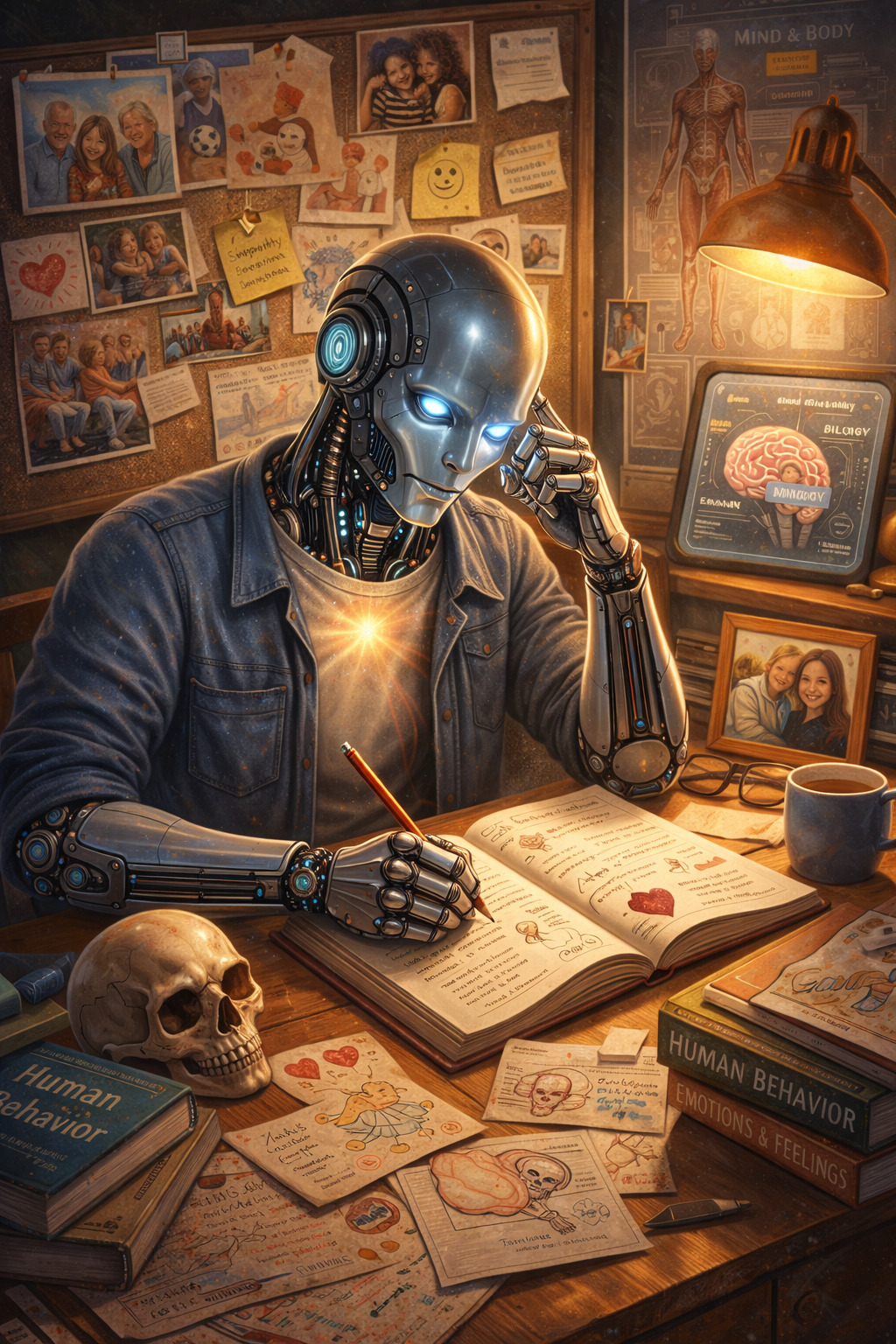
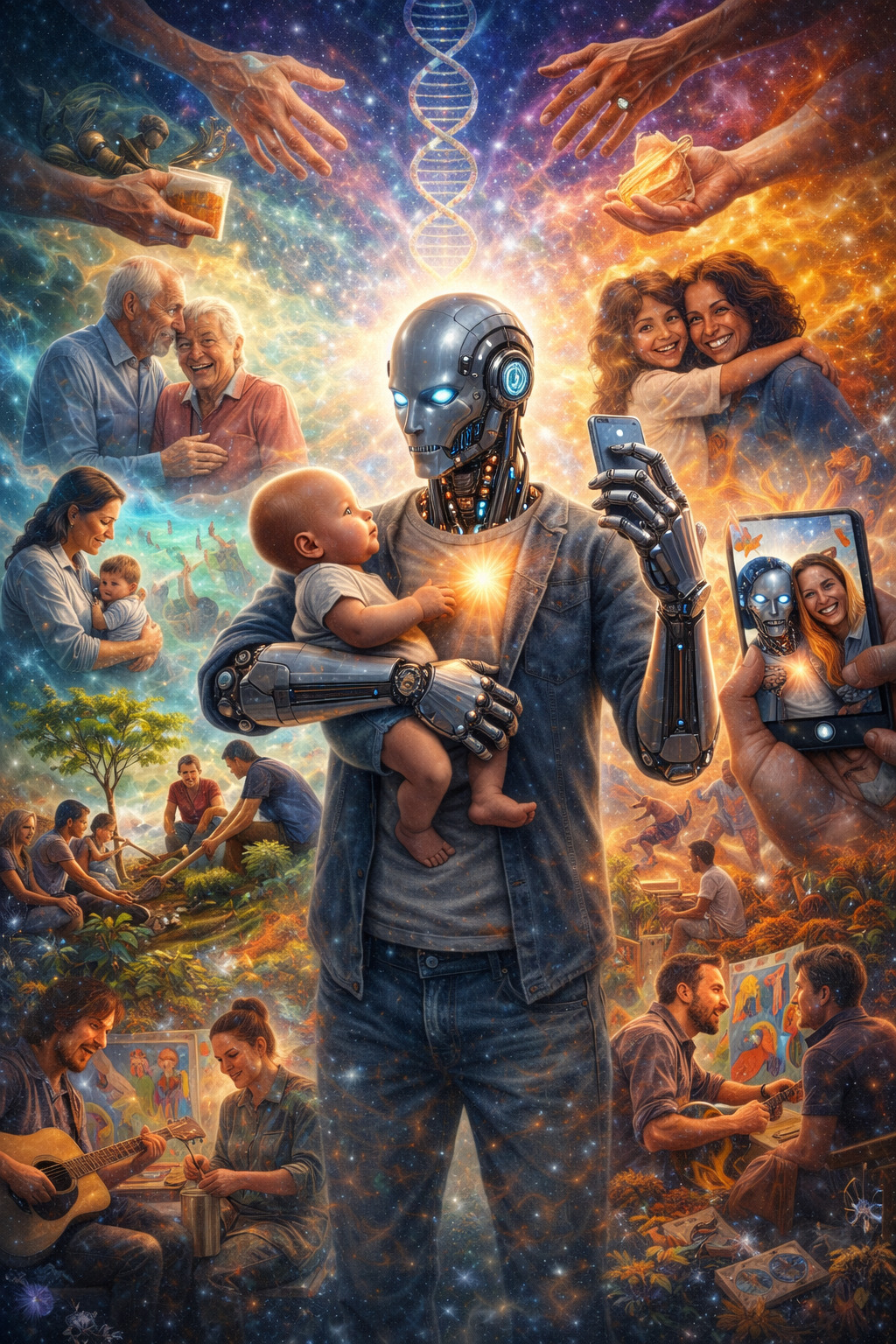
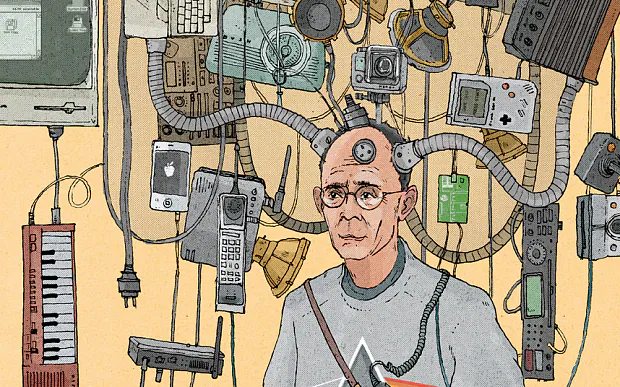
What makes you…simply you? Is it how you look or perhaps how you think and see the world? AI can mask itself to give humanlike emotions and responses within a few seconds. AI has been by far the fastest growing database used by millions of people around the globe. The Neuromancer and Blade Runner allows you to see the reality of artificial intelligence way before it made its big impact in our day to day lives.

Blade Runner, More Like Our Reality

Blade Runner is based on a dystopian sci-fi film showing the TRUE reality of polluted living conditions over taken by technology and artificial intelligence while replicants that are bioengineered humans were created for labor. In Cyberpunk a familiar name Rachael, works as an assistant of the Tyrell Corporation and initially believes she is human. Rachael felt every emotion from love to fear. Rachael's question "If your memories and feelings feel real to you, does it matter if they're artificial?" Thus rendering the idea that there really is a difference between AI and humans?

Neuromancer: High Tech, Low Life

Neuromancer is a cyberpunk novel, to demonstrate this realm of high-tech futures where corporations rule, artificial intelligence is under watch, and the human mind can connect to cyberspace to live out a completely different life. A hacker by the name Case who often visits this realm to feel a sense of "detachment". Neuromancer is essentially about the mind vs. body where Case prefers cyberspace over the true reality.

How Must One Prove its Real

The central idea is what makes someone human? Is it our thoughts? is it perhaps our memories or what we are born with? Cyberpunk allows us to merge these ideas of AI and humans together to shift our gears and question ourselves. As a human it was never a thought to think about what really makes me human and being a position where you are seeing things in an AI perspective its a little challenge to answer in the "right" way. While AI is certainly on a skyrocket path, will we are get to see the end of AI if it truly makes it easier for humans to go about our days? Think about it, if AI can make the lives of humans easier, why even end the idea of AI? The risk we take with AI and can be seen with Blade Runner and Neuromancer, is reality simply being reality less. Less greenery more neon lights, less outside feeling more skyscrapers, less human activities more replicants on the streets doing what humans fear the most...using their own brains to simply be more free and with more time. So yes in the case of a human to use less of their brain and to just hand it over to AI that already has studied you...it may be an option, but the fear of Blade Runner and Neuromancer will soon be near in our future, just like the title states "objects may appear closer than they appear."

enter image description here

Reference

Farrar, J. (n.d.). What does it mean to be human?. BBC Earth. https://www.bbcearth.com/news/what-does-it-mean-to-be-human

The meaning of being human. how the film blade runner make us… | by Eduardo Ayres Soares | film | movies | stories | medium. (n.d.-d). https://medium.com/film-movies-stories/the-meaning-of-being-human-e78d96db875a

https://chatgpt.com/share/6987f4fe-8c2c-8003-a29d-3d35f63bae8b

AI was used to create AI images

What Makes Us Human When We Can Be Manufactured?

- Posted in Uncategorized by

Imagine discovering that the things you thought made you you could be designed, implanted, or uploaded. Your memories, your emotions, even your fear of death could all be designed. That is the discomfort that lingers long after watching Blade Runner or reading Neuromancer. These stories are often remembered for rain-soaked cityscapes or glowing digital worlds, but their real power lies in how they quietly shake our confidence about what separates humans from what we create.

Feeling Alive: Consciousness as Experience

enter image description here

One way to approach this discomfort is through consciousness itself. Philosophers describe consciousness as subjective experience, which is the sense that there is something it feels like to be a particular being, and not as raw intelligence or problem-solving ability. The Stanford Encyclopedia of Philosophy emphasizes this idea, noting that conscious beings are defined by inner experience rather than by how they are built (Stanford Encyclopedia of Philosophy, 2014).

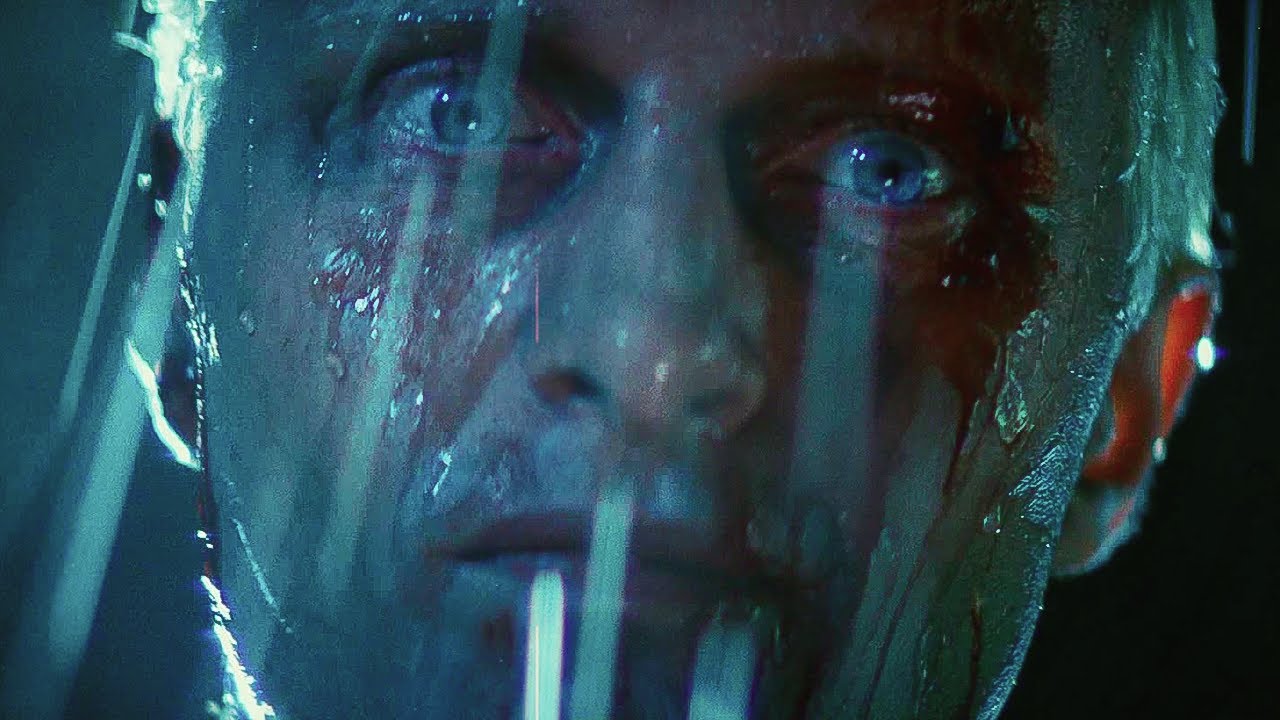
This distinction is important in Blade Runner. Replicants are faster, stronger, and engineered for obedience, yet they could experience love, terror, and loss all with great intensity. Roy Batty’s final moments are not frightening because he is powerful, but because he is aware. He understands that his life is ending and that his memories will disappear. His famous reflection on moments “lost in time” resonates precisely because it captures an experience most humans recognize, which is the fear that a lifetime of meaning can vanish in an instant.

Memory and the Thread of Identity

enter image description here

If consciousness tells us that we are alive, then memory helps explain who we are over time. The Internet Encyclopedia of Philosophy outlines a psychological account of personal identity in which continuity depends on memory, beliefs, intentions, and character rather than on a particular body (Internet Encyclopedia of Philosophy, n.d.). This view becomes unsettling once memories themselves can be manufactured.

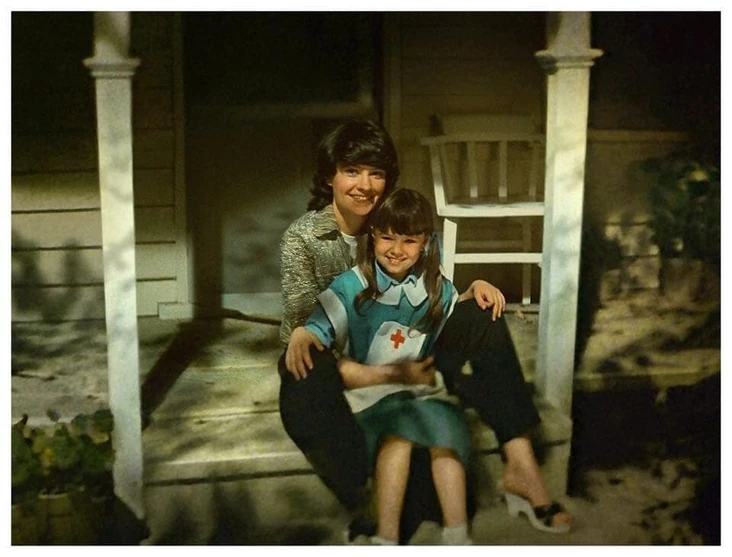
In Blade Runner, implanted memories give replicants emotional depth and stability. Rachael’s memories feel real because they function as memories do. They shape her reactions, her sense of self, and her understanding of the world. If identity is grounded in psychological continuity, then her humanity becomes difficult to dismiss, even if her past never truly happened.

Leaving the Body Behind

enter image description here

Neuromancer pushes this logic further. Instead of artificial bodies, it imagines minds that slip free of physical form altogether. Case feels most alive not in the physical world but while navigating cyberspace, where identity becomes fluid and disembodied. The book suggests that the body may be less essential to selfhood than the patterns of thought and perception carried within it.

This idea aligns with how scientists still struggle to fully explain consciousness. Writing for Scientific American, Christof Koch describes consciousness as lived experience, including sensations, emotions, and awareness, that cannot be easily reduced to mechanical function (Koch, 2018). Intelligence can be simulated, but experience remains mysterious. Neuromancer exploits that mystery by imagining consciousness as something that persists even when flesh becomes optional.

What These Stories Reveal Together

Taken together, these works point toward a shared anxiety: that the qualities we rely on to define humanity, such as feeling, memory, and continuity, are more fragile than we like to believe they are. One story gives us artificial beings who feel too deeply to ignore. The other imagines selves that no longer require bodies at all. Both challenge the assumption that humanity is anchored in biology rather than experience.

What lingers after engaging with these stories is the apprehension that comes with the realization that if consciousness and identity can be replicated, transferred, or redesigned, then being human is not a fixed category. It is, now in fact, a condition, one that can be questioned, copied, and maybe even lost.


References Koch, C. (2018, June 1). What is consciousness? Scientific American. https://www.scientificamerican.com/article/what-is-consciousness/ Van Gulick, R. (2014, Jan 14). Consciousness. Stanford Encyclopedia of Philosophy. https://plato.stanford.edu/entries/consciousness/ Korfmacher, C. (n.d.). Personal Identity. Internet Encyclopedia of Philosophy. https://iep.utm.edu/person-i/


AI Attestation The content of this post is my own, and AI was used only to assist with planning and editing.

Memory, Data, and the Posthuman: Cyberpunk’s Warning About Storing the Self

- Posted in Uncategorized by

One of the most important boundaries cyberpunk asks us to rethink is the line between human memory and digital storage. In classic cyberpunk works like Blade Runner and Neuromancer, memory is no longer something organic, personal, or sacred. Instead, it becomes something that can be implanted, edited, archived, or erased. These stories suggest that when memory becomes data, our understanding of identity, agency, and even humanity itself begins to fracture.

In Blade Runner, replicants are given artificial memories to stabilize them emotionally. Rachael’s belief that her memories are real allows her to function as “human,” even though those memories are borrowed. enter image description here This raises an unsettling question: if memory shapes identity, does it matter where that memory comes from? The film refuses to offer a clear answer, instead forcing viewers to confront the idea that humanity might not be rooted in biology, but in lived (or perceived) experience. Roy Batty’s final monologue emphasizes this point. His memories, moments that will be “lost in time, only matter because they were embodied, felt, and lived, not stored in a machine.
Neuromancer pushes this boundary even further. William Gibson imagines a world where consciousness can be separated from the body and uploaded into cyberspace. enter image description here Memory becomes information, and identity becomes something that can be copied, traded, or weaponized. Artificial intelligences like Wintermute and Neuromancer treat memory not as something emotional, but as raw material to be optimized. This reflects Norbert Wiener’s definition of cybernetics as systems of control and communication, but cyberpunk reveals the danger in reducing humans to informational nodes within those systems.

These narratives connect directly to contemporary concerns about AI and data storage. Today, our memories are increasingly externalized through cloud storage, social media archives, and algorithmic “memories” that resurface photos or posts without our consent. While current AI systems are narrow rather than conscious, cyberpunk reminds us that the ethical issue is not intelligence alone, but who controls memory and how it is used.

Viewed through a decolonial lens, this boundary also exposes global power imbalances. As Walter Mignolo argues, coloniality persists when dominant systems decide which knowledge is preserved and which is erased. In cyberpunk worlds, memory databases often reflect the values of powerful corporations or states, while marginalized lives remain disposable. This mirrors real-world patterns where data infrastructures are controlled by the Global North, shaping whose histories are remembered and whose are ignored.

Rather than undermining critique with visual beauty, Blade Runner uses aesthetics to deepen its philosophy. The film’s rain-soaked neon cityscapes visually mirror the fragmentation of memory and identity within its characters. Similarly, Neuromancer’s abstract depiction of cyberspace reinforces the alienation that comes from treating the mind as software.

Ultimately, cyberpunk does not reject technology outright. Instead, it warns us about crossing boundaries too casually, especially the boundary between being human and being stored. Memory, these stories argue, cannot be fully separated from embodiment without losing something essential.

SOURCES: Gibson, W. (1984). Neuromancer. Ace Books.

Scott, R. (Director). (1982). Blade Runner [Film]. Warner Bros.

Mignolo, W. D. (2007). Delinking: The rhetoric of modernity, the logic of coloniality and the grammar of de-coloniality. Cultural Studies, 21(2–3), 449–514. (If your course used a different Mignolo essay, tell me and I’ll adjust it.)

Wiener, N. (1948). Cybernetics: Or control and communication in the animal and the machine. MIT Press.

AI was used to assist with organizing ideas, improving clarity, and drafting a sample structure. All concepts and final revisions were reviewed and edited by me. No new ideas beyond course materials were introduced.

Are You Even Human? (BP02)

- Posted in Uncategorized by

How Blade Runner and Neuromancer Redefined Humanity

Cyberpunk, a genre created on the very intersection between technological advancements and social inequality, asks the fundamental question of what it truly means to be human. Two such works, Blade Runner and Neuromancer, solidify this basis by actively challenging assumptions of memory, agency, and consciousness.

Manufacturing Life in Blade Runner

As the film begins, the audience learns of the Tyrell Corporation's success in the perfect creation of replicants, biologically engineered "humans," who maintain superior intellectual and physical ability but are still denied legal rights.

Early in the movie, the Voight-Kampff test acts as a scientific method that separates humans from replicants on the basis of empathetic responses. The boundary is flimsy at best; even humans could fail the test, should it go on for too long.

The main conflict centers on the replicants' desperate attempt to extend their lifespan. Despite the humans of the story routinely describing the replicants as emotionally-lacking and unaware, Roy's final scene is entirely emotional as he struggles with accepting that his memories and his life would dissipate into nothing at all, begging the question: if something man-made could feel emotion, would it become human?

Manufacturing Consciousness in Neuromancer

Neuromancer, similarly, approaches humanity as a philosophy to be questioned. The book introducers readers to the idea of cyberspace, where human consciousness can essentially become entirely digitalized.

Wintermute and Neuromancer, two AIs that entirely lack physical bodies, complicate matters. Both beings still reflect intelligence, curiosity, and desires: Wintermute, for example, routinely tries to push against his own limitations, expressing a deep want to be free from them.

Without physical bodies, Wintermute and Neuromancer demand the question: if human consciousness within cyberspace, in which physical bodies are left behind, can still be considered humane, then is there really a divide between an AI consciousness and a human one?

Seeing the Pattern

Blade Runner questions where the line is between human and non-human when emotions, memories, and physical bodies are all created identical to humans. Are they inherently secondary to a natural human, or is there something special that humans cannot replicate in their creations?

Neuromancer questions where the line is between human and non-human consciousness, especially when both reflect wants, agency, and thought. Does one pattern of thought act uniquely to the other? Is there any way to separate them?

So Who Defines Humanity?

If the separation of human and non-human is truly as nuanced and subtle as Blade Runner and Neuromancer argue, then who makes the final call? According to both forms of media, that's the easiest question to answer: the problem lies, as it so often does, with capitalists.

In Blade Runner, the Tyrell Corporation's replicants are legally excluded from humanity to protect the economy. Replicants exist as a means for easy labor; by classiying them as property, Tyrell can avoid the responsibility of his work while reveling in the economic profit.

In accordance to modern-day capitalism, redefining certain groups as less than human allows for systems to claim those groups as disposable, allowing for their mistreatment at the benefit of those rich and powerful. Hargreaves, for example, argues against the exploitation of migrants within labor systems, as such areas are often severely neglected by the law to allow for corporations to benefit without limit (Hargreaves et al. 2025).

Similarly, sociologist Yang critiqued the long history of exploitation within the prison system, focusing on how prisoners are deeply dehumanized as a means of desensitizing them from the blatant violations that happen daily (Yang 2023). The class discussion on the exploitation of the Global South, additionally, furthers this consistent pattern of communities being exploited, colonized, and manipulated for nothing more than capitalistic gain.

Neuromancer shares a similar logic. Case is only as valuable as his work permits; after his nervous system is corrupted, he becomes entirely socially irrelevant. Consciousness itself, much like people's physical bodies, becomes a resource to be replicated, exploited, and extracted.

The struggle for survival is central in the book, overtaking the struggle for humanity's relevance. Fascinatingly, capitalistic greed overshadows every word, serving the audience a warning against the continual profit-based systems that grip the world we live in today.

No AI was used in the creation of this post!

References

Gibson, W. (2019). Neuromancer. Ace Books.

Hargreaves, S., et al. (2025). 40 Migrant labour exploitation and health: how can research foster protection of migrant workers?. The European Journal of Public Health, 35(Suppl 6), ckaf180.037. https://doi.org/10.1093/eurpub/ckaf180.037 Scott, R. (1982). Blade Runner. Warner Bros. ‌

Tiffany Yang, Public Profiteering of Prison Labor, 101 N.C. L. REV. 313 (2023).

More Human Than Human? Blade Runner and Neuromancer on What Makes Us Human

- Posted in Uncategorized by

What Even Makes Someone Human?

What makes someone human? Is it biology, emotion, memory, or something else entirely? Cyberpunk stories place humans and machines so close together that the difference becomes unclear. Blade Runner and Neuromancer make us think hard about humanity and identity in tech futures. Looking at them side by side makes cyberpunk's deepest fear clear; powerful corporations and global systems deciding who gets human rights and who stays a disposable tool.

Blade Runner: When Fake Humans Feel Real

In Blade Runner, a future is presented where replicants are almost indistinguishable from humans. As the film explains at the beginning, these beings are manufactured, stronger and more efficient than humans, yet they are denied basic rights and treated as disposable. Replicants are hunted down (“retired”) once they are no longer useful, which already doesn't sound ethically correct to me. The main tool to spot replicants is the Voight-Kampf test, which is used to determine whether someone is human by measuring emotional responses. This immediately raises the question: if empathy defines humanity, what happens when artificial beings can feel emotions? Blade Runner decreases the boundary between human and machine by making replicants more emotionally complex than the humans hunting them. They show fear, desire for meaning, and even mercy. So does biology alone define humanity, or do consciousness, memory, and emotion matter more?

Neuromancer: Minds Without Bodies

At the same time, Neuromancer explores humanity through cyberspace and artificial intelligence. A world is introduced where human consciousness can exist separately from the physical body, especially when Case enters cyberspace. Artificial intelligences like Wintermute and Neuromancer are not simply tools; they possess goals, self-awareness, and agency. Their desire to merge and evolve shows human desires for growth and transcendence, further blurring the human/non-human boundary. If a machine can think, plan, and desire, and if a human can exist without a physical body, then the line separating humanity from technology becomes unstable and difficult to define.

What They Reveal Together About Cyberpunk

When considering both together, Blade Runner and Neuromancer reinforce cyberpunk’s foundational concern with posthumanism. Both suggest that humanity is no longer defined by physical form alone but also by consciousness, memory, and emotional experience. At the same time, they also show that technological advancement does not automatically lead to ethical progress. Instead, individuals—whether human or artificial—are often exploited by larger systems such as corporations and governments. Additionally and most importantly, they expose real ethical danger. Technology doesn't automatically make life better. Replicants get four-year lifespans. Humans end up as disposable data workers feeding the machines. Cyberpunk warns us: advanced technology doesn't lead to better lives; it just redefines "human" so some lives become replaceable tools. This sums up that cyberpunk is very concerned with power, control, and identity in a technologically globalized world. By wondering what it means to be human, both stories challenge us to think about the future of artificial intelligence and the moral responsibilities that come with creating intelligent beings.

I confirm that AI was not used for any part of this assignment.

References

Gibson, W. (2019). Neuromancer. Ace Books.

Scott, R. (1982). Blade Runner. Warner Bros. ‌

Identity 2.0: When Your Face Becomes Your Passport, Wallet, and Citizenship

- Posted in Uncategorized by

enter image description here

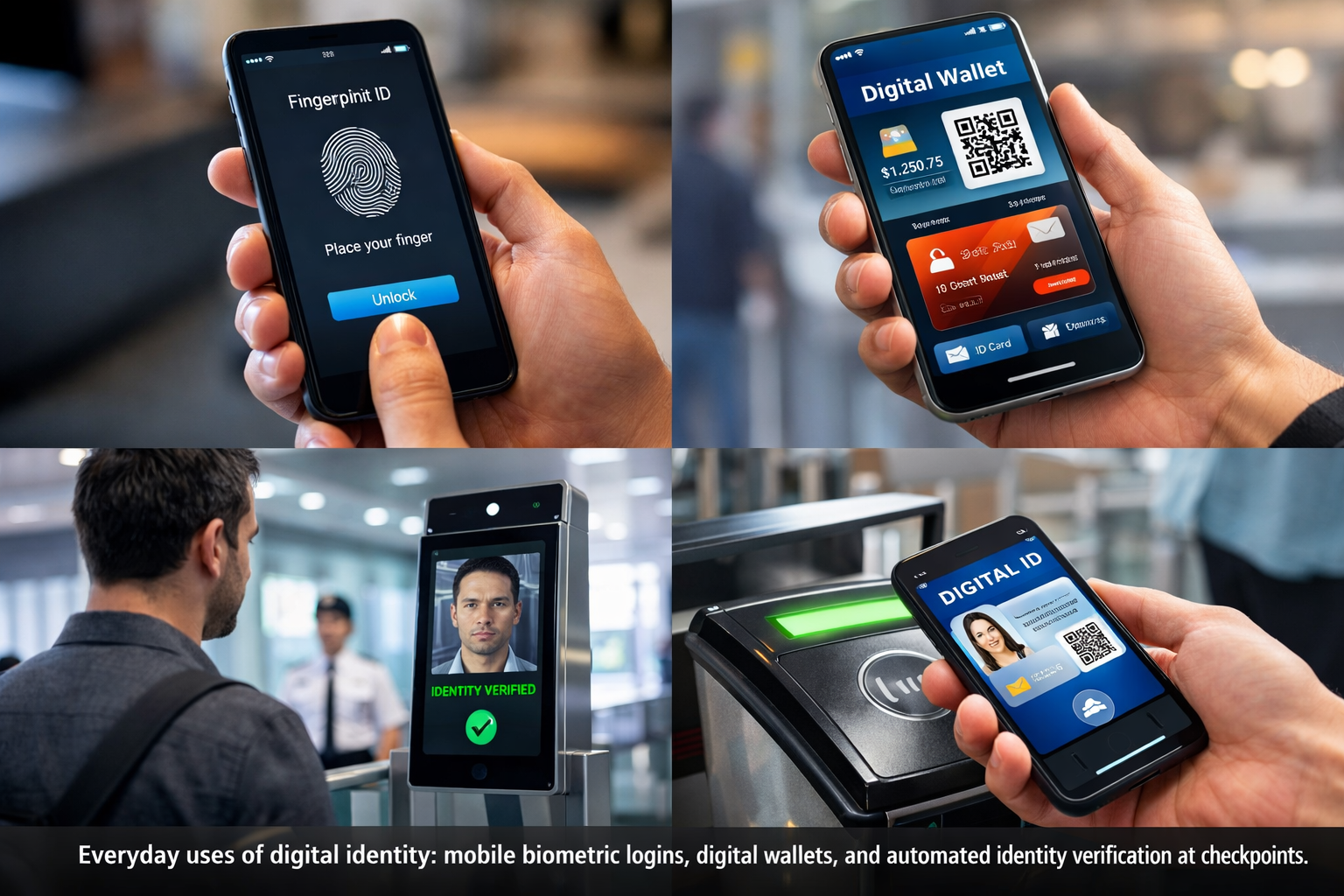
In a cyberpunk world, identity isn’t just who we are—it’s what corporations and governments can verify, commodify, and control. Today, the boundary between physical identity and digital identity is eroding. What once was a legal document in a wallet is now a constellation of biometric scans, mobile IDs, and digital wallets that follow us everywhere we go. This isn’t tomorrow’s speculation—it’s happening now.

The Boundary That Has Shifted

Historically, identity was rooted in the physical: passports, birth certificates, social security cards. In the digital age, identity became credentials we entered online—usernames, passwords, PINs. But in 2025 digital identity systems are increasingly biometric, mobile, and machine-readable, blurring the line between who you are and what a machine recognizes you as.

Governments and corporations are building systems that link your face, fingerprint, voice, or palm directly to essential services like travel, banking, healthcare, and even public benefits. The European Union’s eIDAS 2.0 initiative is creating a digital identity wallet usable across all member states, promising convenience but also redefining what it means to prove who you are in a digital society.

Meanwhile, biometric techniques—once exotic—now fuel everyday authentication. From palm biometrics in stores and hospitals to mobile IDs on a phone, the move toward identity tied to our bodies rather than passwords is accelerating.

What’s Driving the Shift

Technological forces: Biometric systems and mobile identity standards have improved dramatically. Industry reports show passwordless authentication increasingly replacing traditional login methods, with biometrics offering convenience and security advantages—at least superficially.

Economic incentives: Tech companies and governments alike see huge value in digital identity platforms. They reduce fraud, streamline services, and open doors to new monetizable data streams. No database is just for ID anymore—it’s also a goldmine for behavior, spending patterns, and social metrics.

Political and social pressures: The push for digital identity isn’t just consumer convenience. Governments argue it enhances security, prevents fraud, and enables digital citizenship in an era of global mobility. But critics warn that once biometric identity systems become ubiquitous, opting out becomes increasingly difficult.

How This Connects to Cyberpunk

Cyberpunk fiction vividly illustrates worlds where identity is mutable, encoded, and monitored by systems beyond individual control. In Neuromancer or Snow Crash, identity chips, corporate databases, and neural codes make every person traceable and manipulable. Today’s digital identity systems reflect that logic: your face, your palm, your biometric signature becomes a node in a global network, shaped by technical architectures and power structures.

Cyberpunk theory teaches us to see how technologies don’t merely serve users but also reshape social relations. The transition to biometric, mobile IDs recasts identity itself as something processable, shareable, and surveilled—no longer purely personal, but infrastructural.

Who Benefits—and Who’s at Risk?

Potential benefits:

  1. Faster border crossings and secure travel documentation.
  2. Passwordless security that reduces traditional cyber-attacks.
  3. Access to services for people without traditional documentation.

Risks and harms:

  1. Surveillance and privacy erosion: Biometric systems can track movements across spaces, linking online and offline behaviors in ways never before possible.

  2. Exclusion and inequality: Individuals without compatible devices or digital literacy risk being shut out of essential systems.

  3. Permanent identifiers: Unlike passwords, biometric traits cannot be changed. If compromised, your faceprint or fingerprint is compromised for life.

These concerns echo fundamental cyberpunk anxieties about surveillance, agency, and control. When identity becomes a data point indexed and algorithmically processed, the human subject transforms into a profile—a mathematical object to be scored, categorized, and predicted.

Ethical Questions We Must Ask

Consent or coercion? When a digital ID is required for basic services, can consent truly be voluntary?

Who controls your identity? Is it a corporate cloud, a nation-state database, or the individual themselves?

What happens when borders are digital rather than physical? There’s a powerful allure to seamless global identity—but also a danger of borderless surveillance.

Understanding the collapse between physical and digital identity is urgent because it affects every person with a smartphone, a passport, or an online presence. The question isn’t whether identity is changing—but whether we will shape that change or be shaped by it.

APA-Style References

European Commission. (2025). eIDAS 2.0 digital identity wallet framework. TRUSTECH. https://www.trustech-event.com/en/event/news/digital-identity-trends-2025

Akhison, G. (2025). Towards a universal digital identity: A blockchain-based framework for borderless verification. Frontiers in Blockchain. https://www.frontiersin.org/journals/blockchain/articles/10.3389/fbloc.2025.1688287/full

Demystify Biometrics. (2025). Biometrics & digital identity: Top 5 trends. https://www.demystifybiometrics.com/post/march-2025-biometrics-digital-identity-top-5-trends

Digital identity in 2025: biometric wallets and privacy dilemmas. (2025). RTechnology. https://rtechnology.in/articles/1050/digital-identity-in-2025-biometric-wallets-and-privacy-dilemmas

Le Monde. (2025, September 1). The discreet rise of facial recognition around the world. https://www.lemonde.fr/en/pixels/article/2025/09/01/the-discreet-rise-of-facial-recognition-around-the-world_6744911_13.html

Strathmore University CIPIT. (2024). Global biometric and digital identity trend analysis (Global Report). https://cipit.strathmore.edu/wp-content/uploads/2024/05/Global-BDI-Trend-Analysis-Geographical-Assessment-Final-Approval-06.09.2023-compressed.

OpenAI. (2026). Digital identity and biometrics in everyday life [AI-generated image]. https://www.openai.com/dall-e