Dear Sir, Madam, or Algorithm,
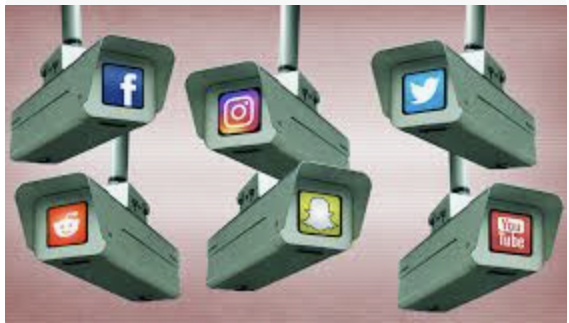
I assume you are reading this. Not because I have done anything remarkable, but because in a world shaped by digital systems, observation has become routine rather than something exceptional.
Five years ago, I still thought of privacy as something I possessed, imperfectly, maybe, but meaningfully. I assumed that my movements, conversations, and online habits were largely my own unless I chose to share them. That assumption has quietly worn away. Not through a single policy change or technological breakthrough, but through countless small decisions like agreeing to terms of service, enabling location access, and storing personal information in the cloud.
There was no clear moment when the boundary disappeared. It simply stopped being visible.
What has shifted most in recent years is not the existence of surveillance, but its structure. Governments increasingly rely on private companies to collect and organize personal data and then access it through legal requests or market transactions. According to reporting by Proton, authorities worldwide, particularly in the United States of course, have dramatically increased their requests for user data from major technology firms, often with limited transparency and oversight (Koch, 2025). In this arrangement, corporate data collection and state surveillance are no longer meaningfully separate.
This shift reflects a broader normalization of data as a form of currency. Individuals exchange personal information for convenience, connectivity, and access to digital services. Companies monetize that data. Governments acquire it. Each step is justified as efficient, legal, or necessary. However, when taken together, they blur the line between consent and compliance.
The American Civil Liberties Union has documented how U.S. agencies such as the Department of Homeland Security have purchased location data from brokers rather than obtaining warrants, effectively bypassing constitutional safeguards (Venkatesh & Yu, 2026). While the proponents argue this practice operates within existing legal frameworks, it raises important questions about whether privacy protections remain meaningful when personal data is treated as a commodity.
Similar patterns appear beyond the United States. In Jordan, authorities reportedly used phone-extraction tools to access activists’ devices, targeting political dissent through technological means (Kirchgaessner, 2026). These cases highlight how surveillance technologies are easily transferred across borders and contexts, and how they often impact those already vulnerable to state power.
Even technical protections such as encryption, which are framed as firm barriers to access, prove now to be conditional. In early 2026, Microsoft confirmed that it provided encryption keys to U.S. authorities when legally compelled to do so, prompting concern among privacy advocates about precedent and potential misuse (O’Brien, 2026). Security, it seems, depends less on technological limits than on institutional trust.
To be clear, surveillance systems are frequently defended on grounds of public safety, efficiency, and national security. These concerns deserve serious consideration. Yet the collective effect of extensive data collection and expanded access warrants equally serious scrutiny. Who benefits from this visibility? Who bears the risks? And how should societies balance collective security with individual autonomy?
I do not offer simple answers. What I do offer is a sense that we have crossed a boundary without fully acknowledging it. Privacy has now been redefined and negotiated continuously in ways that are often invisible to the people most affected. It is well on its way to completely vanishing.
Thank you for your time and attention.
Warm regards,
One of your many data points
References:
Kirchgaessner, S. (2026, January 22). Jordan used Israeli firm’s phone-cracking tool to surveil pro-Gaza activists, report finds. The Guardian. https://www.theguardian.com/world/2026/jan/22/jordan-israeli-spyware-gaza-activists
Koch, R. (2025, February 27). Authorities worldwide can see more than ever, with Big Tech as their eyes. Proton. https://proton.me/blog/big-tech-data-requests-surge
O’Brien, T. (2026, January 24). Microsoft handed the government encryption keys for customer data. The Verge. https://www.theverge.com/news/867244/microsoft-bitlocker-privacy-fbi
Venkatesh, A., & Yu, L. (2026, January 12). DHS is circumventing Constitution by buying data it would normally need a warrant to access. American Civil Liberties Union. https://www.aclu.org/news/privacy-technology/dhs-is-circumventing-constitution-by-buying-data-it-would-normally-need-a-warrant-to-access
 #### Introduction
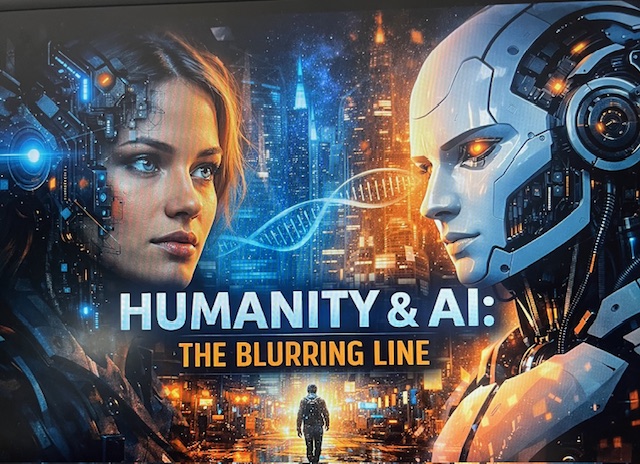 Intelligence seemed to be exclusively human for most of human history. While machines could compute, store data, and obey commands, thinking and creativity were thought to be exclusively human qualities. That barrier doesn't feel steady anymore. These days, artificial intelligence can write, create graphics, help with diagnosis, and have human-like conversations. The distinction between human and machine intellect, which we formerly took for granted, is what has changed, not simply technology.